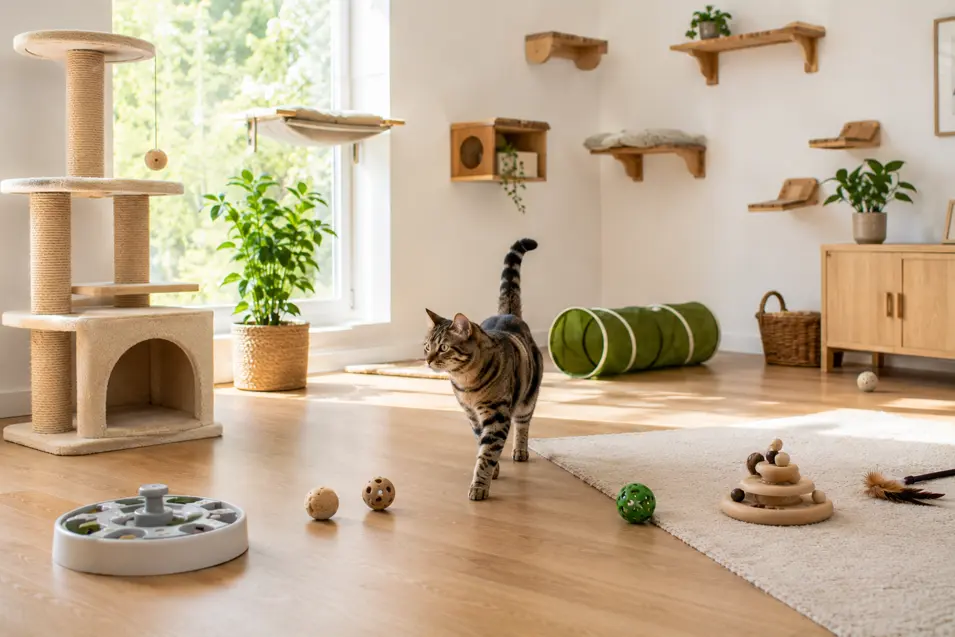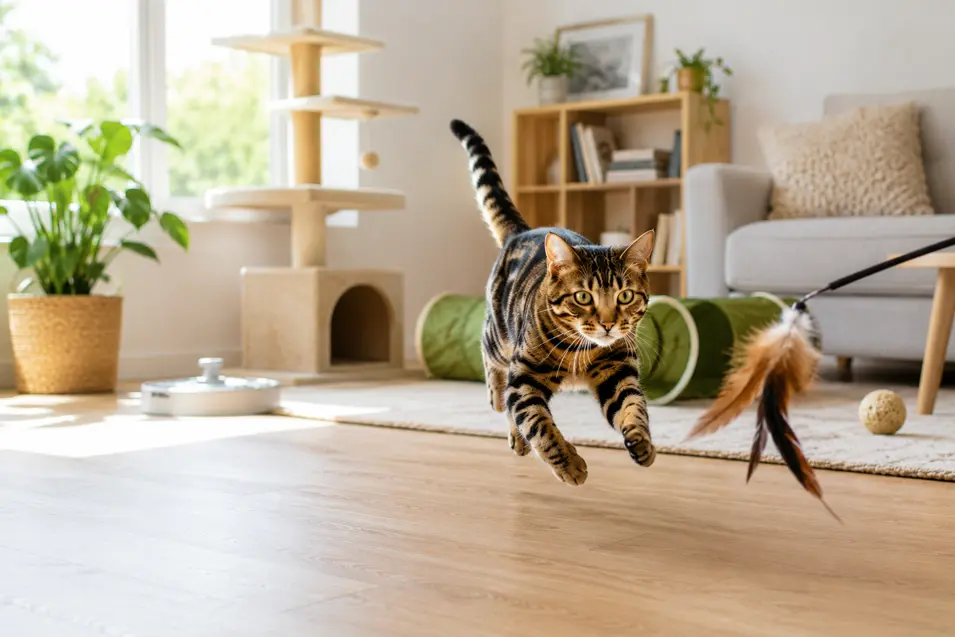
As cats grow older, their needs often change. While senior cats may spend more time resting and less time racing through the house, they still benefit greatly from enrichment. In fact, providing age-appropriate opportunities for mental stimulation and gentle physical activity can play an important role in maintaining quality of life.
Many owners mistakenly assume that older cats no longer need enrichment. The reality is that enrichment can help support cognitive health, mobility, confidence, and emotional well-being throughout a cat’s senior years.
With a few adjustments, owners can create an environment that keeps aging cats comfortable, engaged, and happy.
Understanding the Needs of Senior Cats
Cats are generally considered seniors around 10 to 12 years of age, although individual aging rates vary.
As cats age, they may experience:
- Reduced mobility
- Arthritis
- Decreased vision
- Hearing changes
- Lower energy levels
- Cognitive decline
These changes may affect how they interact with their environment, but they do not eliminate the need for stimulation and enrichment.
Why Enrichment Matters for Older Cats
Enrichment provides benefits beyond simple entertainment.
For senior cats, it can help:
- Encourage gentle movement
- Support mental engagement
- Reduce boredom
- Maintain confidence
- Improve overall well-being
A stimulating environment can help older cats remain active and interested in their surroundings.
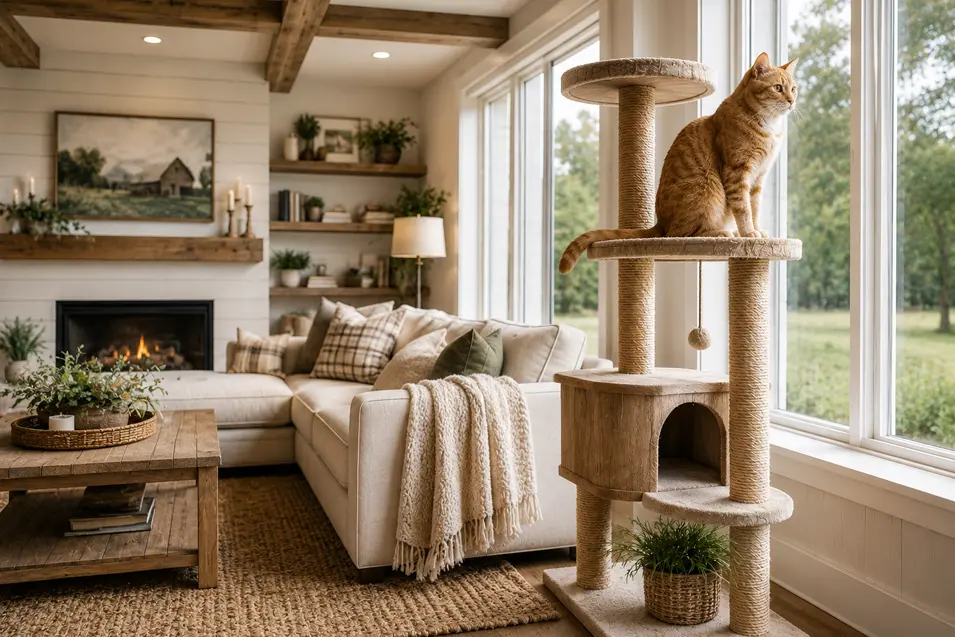
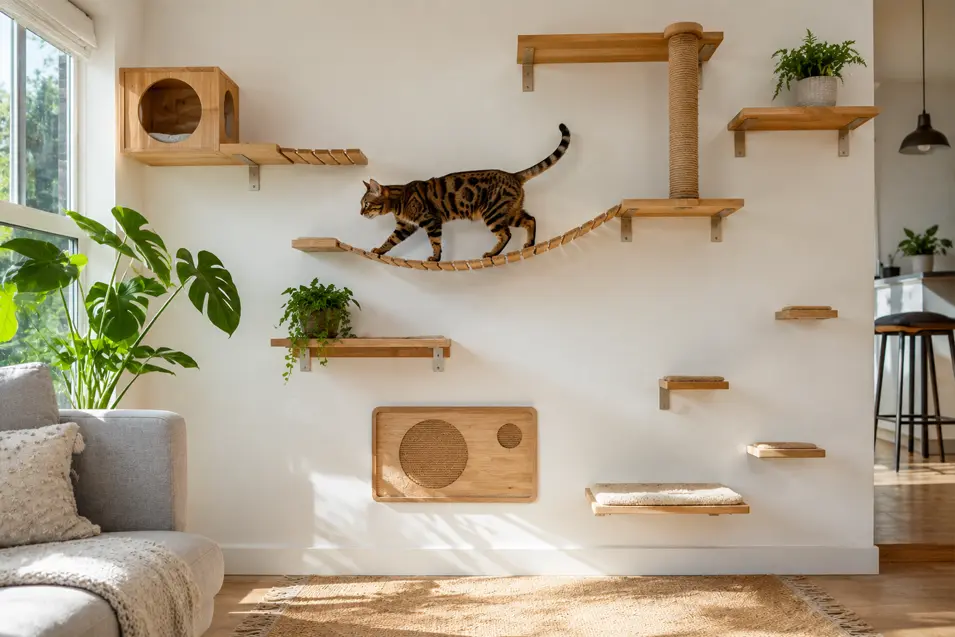
Provide Easy Access to Favorite Spaces
Many senior cats still enjoy climbing and observing their environment, but jumping may become more difficult.
Consider adding:
- Pet stairs
- Ramps
- Lower shelves
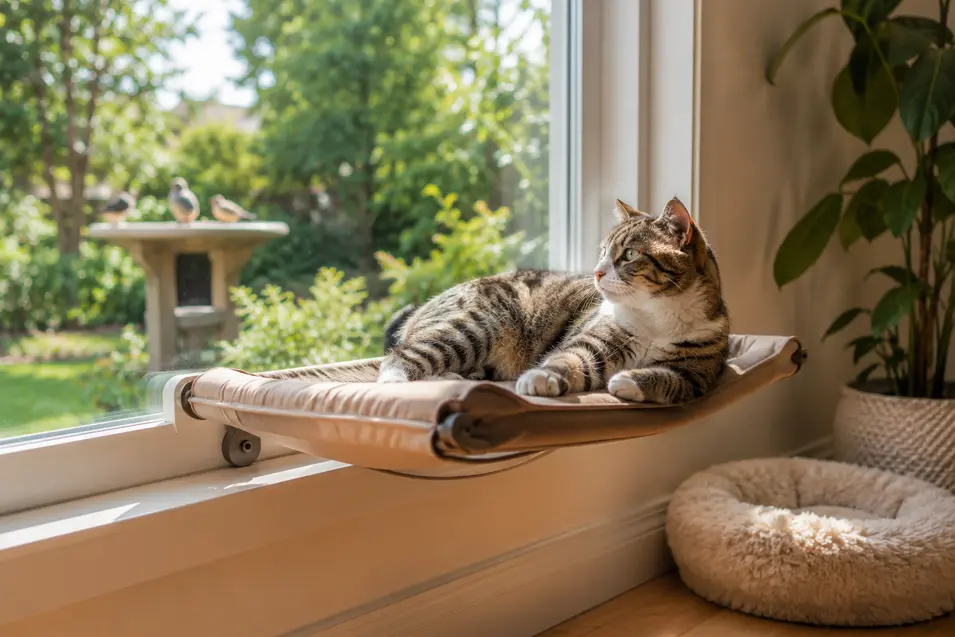
- Accessible window perches
These modifications allow cats to continue enjoying favorite locations without excessive strain.
Encourage Gentle Play
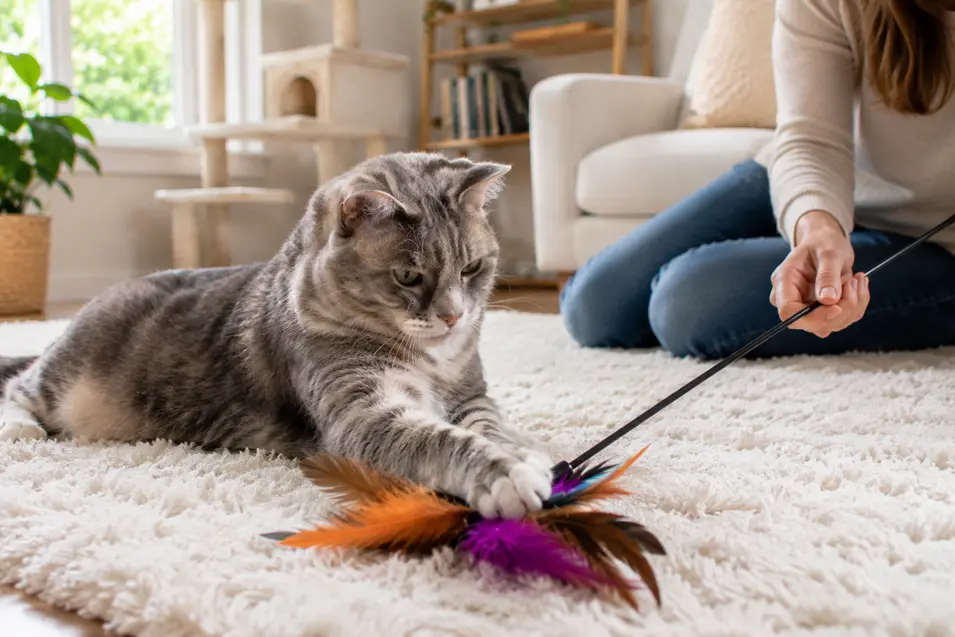
Interactive play remains valuable throughout life.
Choose toys that encourage movement without requiring intense activity.
Good options include:
- Feather wands
- Soft toys
- Lightweight balls
- Slow-moving interactive toys
Short play sessions often work better than extended periods of activity.
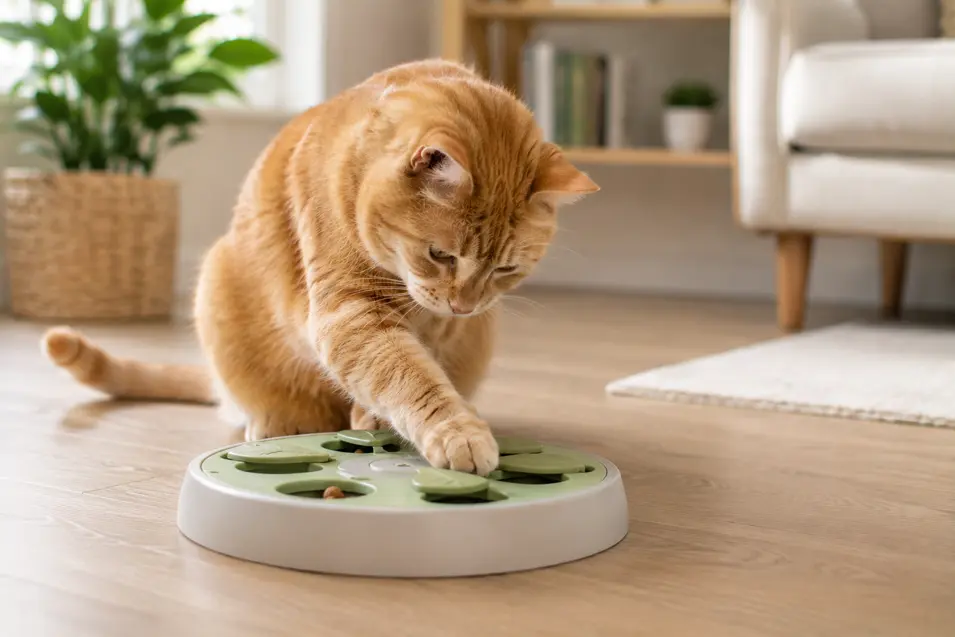
Use Puzzle Feeders
Food puzzles can provide mental stimulation without requiring vigorous physical exertion.
Benefits include:
- Problem-solving opportunities
- Increased engagement
- Slower eating
- Daily mental exercise
Simple puzzles are often best for older cats.
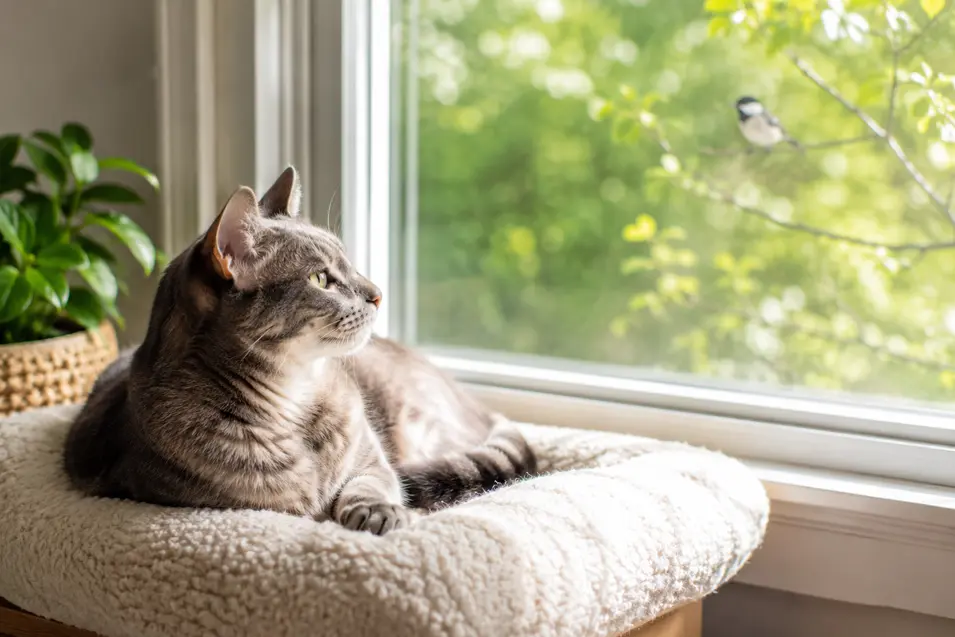
Create Comfortable Observation Areas
Many senior cats enjoy quietly observing their surroundings.
Provide comfortable locations near:
- Windows
- Family gathering areas
- Sunny spots
- Outdoor views
Observation is a valuable form of passive enrichment.
Introduce Cat-Safe Plants
Plants can provide sensory stimulation through scent, texture, and exploration.
Popular options include:
Always choose plants that are considered safe for cats.
Maintain Routine
Older cats often appreciate consistency.
Try to keep:
- Feeding schedules
- Play sessions
- Sleeping areas
- Daily interactions
relatively predictable.
Routine can help reduce stress and increase confidence.
Support Cognitive Health
Mental stimulation becomes increasingly important as cats age.
Activities that encourage thinking and problem-solving may help keep the mind active.
Examples include:
- Puzzle feeders
- Treat hunts
- Interactive toys
- Learning simple tricks
Even small challenges can help engage a senior cat’s brain.
Make Resting Areas Comfortable
Senior cats spend a significant portion of the day resting.
Provide:
- Soft bedding
- Heated beds (when appropriate)
- Quiet sleeping locations
- Easy-to-access resting spots
Comfort contributes significantly to overall quality of life.
Monitor Changes in Behavior
Changes in behavior may indicate discomfort or health concerns rather than boredom alone.
Watch for:
- Reduced mobility
- Changes in appetite
- Confusion
- Excessive vocalization
- Withdrawal
If significant changes occur, consult your veterinarian.
Enrichment for Cats with Arthritis
Arthritis is common in older cats.
Helpful modifications include:
- Non-slip surfaces
- Lower climbing structures
- Ramps
- Accessible litter boxes
- Elevated food and water bowls
These adjustments can make enrichment more accessible and enjoyable.
Balancing Activity and Rest
Senior cats still benefit from activity, but balance is important.
Allow your cat to:
- Explore at their own pace
- Rest when needed
- Choose preferred activities
The goal is gentle engagement rather than intense exercise.
Helping Senior Cats Thrive
Growing older doesn’t mean enrichment should stop. With thoughtful adjustments, owners can continue providing opportunities for exploration, play, comfort, and mental stimulation throughout a cat’s golden years.
By supporting both physical and emotional well-being, enrichment can help senior cats remain active, confident, and content for many years to come.
Related Reading
Looking for more ways to enrich your cat’s environment?
Explore these helpful guides:
- Indoor Cat Enrichment: Keeping Indoor Cats Happy, Healthy, and Active
- How to Keep Indoor Cats Active and Prevent Weight Gain
- Puzzle Feeders for Cats: Benefits and How They Keep Cats Mentally Stimulated
- Cat Climbing Walls and Shelves: Ideas for Vertical Enrichment
- Cat-Safe Houseplants: Indoor Plants Safe for Cats
- Best Interactive Toys for Indoor Cats
These resources can help you create an enriching and comfortable environment for cats of all ages.