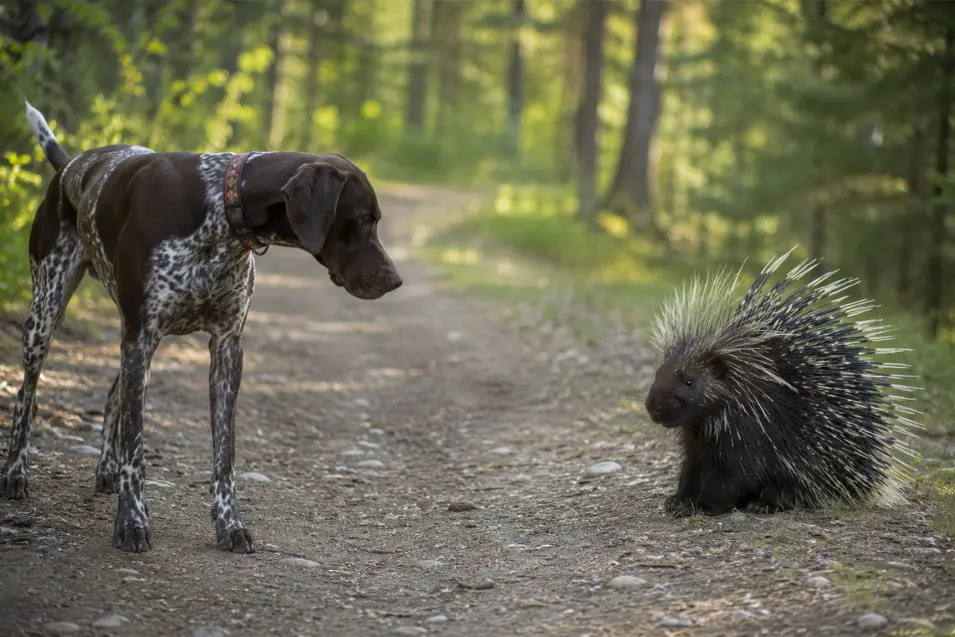
If you enjoy hiking, camping, or spending time outdoors with your dog, porcupines are one of the most overlooked wildlife hazards. Curious dogs often approach these slow-moving animals, only to end up with dozens—or even hundreds—of painful quills embedded in their face, mouth, chest, and paws.
Fortunately, most porcupine encounters can be avoided. Knowing where porcupines live, how they behave, and what to do if your dog is quilled can help prevent a frightening experience from becoming a medical emergency.
Why Dogs Get Quilled
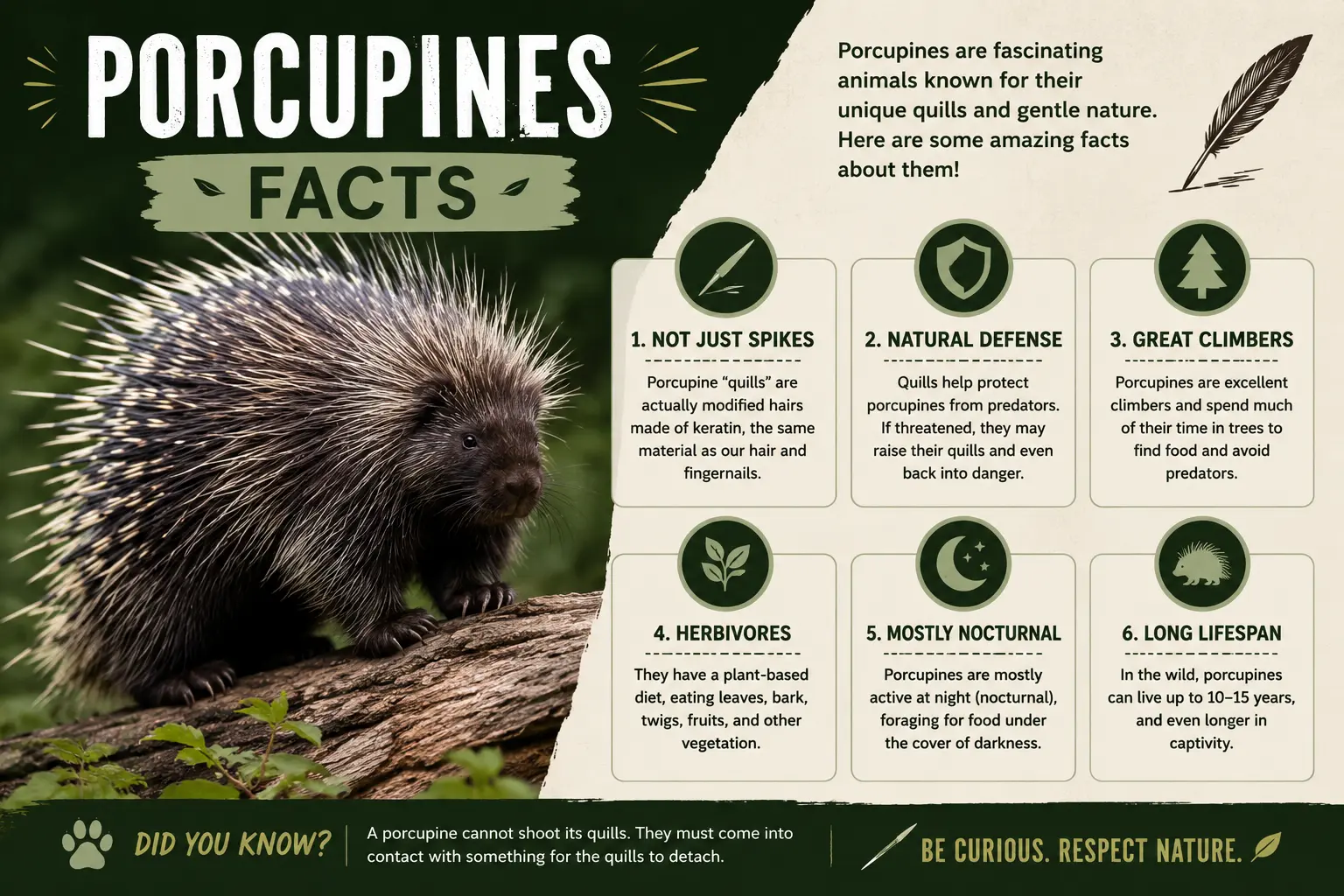
Porcupines are not aggressive animals. They don’t shoot their quills or chase people and pets. Instead, they rely on their sharp quills as a last line of defense.
Dogs are naturally curious. Many will investigate a porcupine by sniffing, barking, or attempting to play. When the porcupine feels threatened, it raises its quills and may swing its tail. A quick swipe is often enough to leave a dog’s face covered in quills.
Most injuries occur because the dog approaches the porcupine—not the other way around.
Where You’re Most Likely to Encounter Porcupines
Porcupines are found throughout much of Canada and the northern United States. They prefer wooded areas but can also be found near campgrounds, rocky hillsides, and rural properties.
Common places include:
- Forest trails
- Campgrounds
- Wooded parks
- Rocky outcrops
- Cabin properties
- Fallen logs
- Areas with dense shrubs
They’re most active from dusk through dawn, although daytime sightings aren’t uncommon.
Signs Your Dog Has Encountered a Porcupine
Even a brief encounter is usually obvious.
Common signs include:
- Quills embedded in the face
- Quills around the nose or lips
- Quills in the chest or front legs
- Pawing at the face
- Whining or crying
- Excessive drooling
- Difficulty closing the mouth
- Bleeding around quill wounds
If your dog was bitten while trying to grab the porcupine, quills may also be lodged inside the mouth or throat.
Why Porcupine Quills Are So Dangerous
A porcupine quill isn’t just sharp—it has tiny backward-facing barbs near the tip that make it difficult to remove.
As your dog moves, quills can work deeper into the skin and surrounding tissue. Left untreated, they may lead to:
- Infection
- Abscesses
- Damage to muscles
- Injury to the eyes
- Damage inside the mouth
- Difficulty eating or drinking
Prompt veterinary care greatly reduces the risk of complications.
Should You Pull the Quills Out Yourself?
If only one or two quills are loosely embedded and your dog remains calm, they may be removed carefully with pliers by pulling straight out.
However, most dogs require veterinary treatment.
Do not attempt to remove dozens of quills from an anxious or struggling dog. Sedation is often necessary to remove every quill safely.
Never:
- Cut the ends off the quills
- Push quills deeper into the skin
- Leave quills behind
- Delay treatment until the next day
Contrary to a common myth, cutting the quills does not make removal easier.
When to See a Veterinarian Immediately
Seek emergency veterinary care if:
- There are numerous quills.
- Quills are near the eyes.
- Quills are inside the mouth.
- Your dog has trouble breathing.
- Your dog cannot close its mouth.
- A quill has broken off beneath the skin.
- Your dog appears lethargic or in severe pain.
Veterinarians may sedate your dog to locate and remove hidden quills before they migrate deeper into the body.
How to Prevent Porcupine Encounters
The best treatment is prevention.
When hiking or camping:
- Keep your dog on a leash in porcupine habitat.
- Avoid letting dogs investigate hollow logs or brush piles.
- Use a flashlight when walking after dark.
- Keep your dog close around camp.
- Watch for slow-moving wildlife along trails.
- Practice a reliable “Leave It” command.
- Never encourage your dog to chase wildlife.
Curiosity is the leading cause of porcupine injuries.
Camping Tip
Camping Tip: Moose aren’t the only wildlife your dog should avoid. Learn how to safely react if you encounter one on the trail.
Related: How to Keep Your Dog Safe Around Moose
Can Dogs Learn Their Lesson?
Some do—but many don’t.
Veterinarians regularly treat dogs that have been quilled multiple times. Hunting breeds and highly curious dogs are especially likely to repeat the experience.
Don’t assume one painful encounter will prevent another.
Frequently Asked Questions
Do porcupines shoot their quills?
No. Porcupines cannot shoot their quills. The quills detach only when another animal makes contact with them.
Can porcupine quills move deeper into the body?
Yes. The barbed structure allows quills to migrate deeper into tissue as the dog moves, making prompt removal important.
Are porcupine quills poisonous?
No. The quills are not poisonous, but they can cause severe pain, infection, and tissue damage if left untreated.
Should I remove every quill?
Yes. Even small or broken quills left beneath the skin can lead to infection or migrate deeper into the body.
Can my dog recover completely?
Most dogs recover fully when quills are removed promptly and appropriate veterinary care is provided.
Final Thoughts
Porcupines are fascinating wildlife, but they’re best admired from a distance. A single curious sniff can leave your dog with dozens of painful quills and an unexpected trip to the emergency veterinarian.
By keeping your dog leashed in porcupine habitat, staying alert on the trail, and seeking prompt veterinary care after an encounter, you can greatly reduce the risk of serious injury and continue enjoying safe outdoor adventures together.
Related Articles
- How to Keep Your Dog Safe Around Moose
- Heatstroke in Dogs | Risks, Signs and Treatment
- Snake Bites in Dogs | Prevention, Symptoms and Treatment
- Dog First Aid Kit Checklist for Camping and Hiking