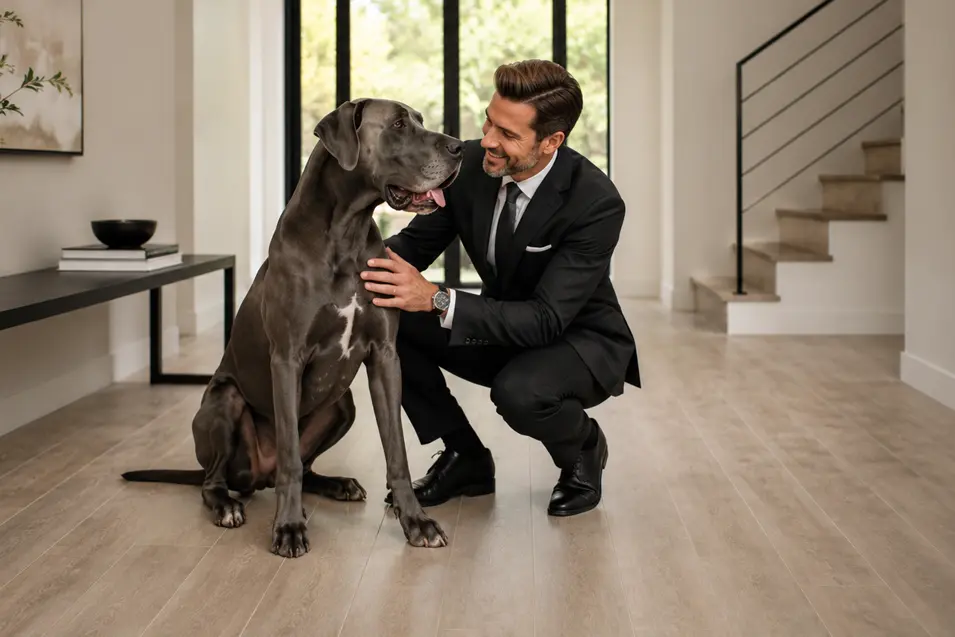
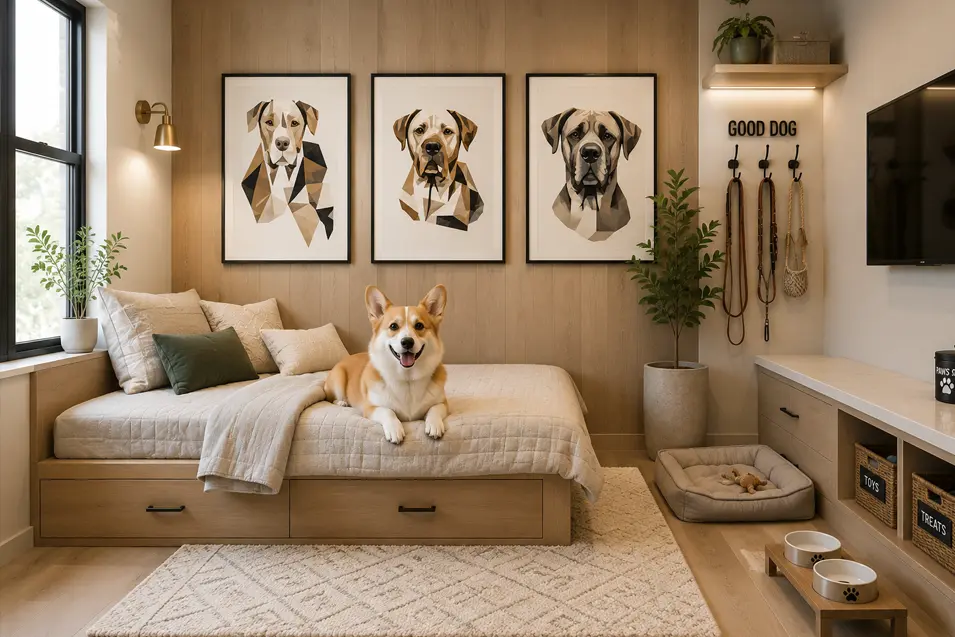
When designing a dog room, flooring is one of the most important decisions you’ll make. While comfortable beds, toy storage, and feeding stations all contribute to a functional space, the floor serves as the foundation of the entire room. The right flooring can make cleaning easier, improve your dog’s comfort, reduce odors, and withstand years of daily wear and tear.
Dogs can be tough on floors. Muddy paws, shedding, occasional accidents, scratching, water spills, and active play all place demands on flooring materials. Choosing a surface that balances durability, maintenance, comfort, and appearance is essential if you want a dog room that remains attractive and practical over time.
Fortunately, today’s flooring options offer solutions for every type of dog owner, whether you’re designing a luxury pet retreat or simply creating a dedicated space for your canine companion.
What Makes Flooring Dog-Friendly?
Not all flooring materials perform equally well in a pet-focused environment.
The best dog room flooring should offer:
- Durability
- Scratch resistance
- Moisture resistance
- Easy cleaning
- Good traction
- Comfort underfoot
- Resistance to odors and stains
The ideal flooring will depend on your dog’s size, age, activity level, and habits, as well as how the room will be used.
Luxury Vinyl Plank Flooring
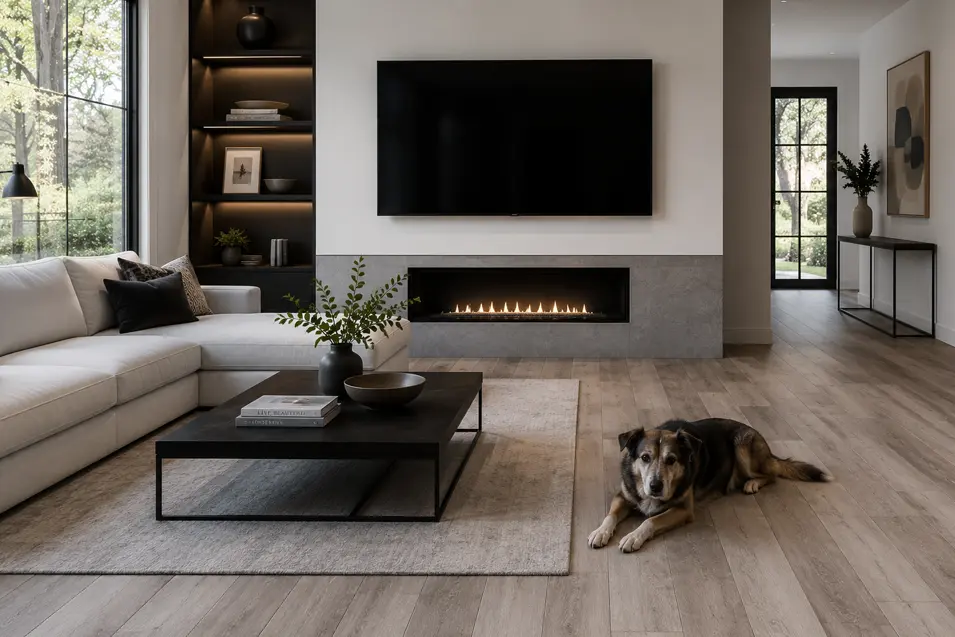
Luxury vinyl plank (LVP) has become one of the most popular flooring choices for pet owners.
Designed to mimic hardwood flooring, LVP combines attractive appearance with exceptional practicality.
Benefits of luxury vinyl plank include:
- Waterproof options available
- Scratch-resistant surfaces
- Easy cleanup of accidents
- Comfortable feel underfoot
- Excellent durability
- Affordable pricing
Many pet owners appreciate that vinyl flooring doesn’t absorb odors or moisture the way some other materials can.
For most dog rooms, luxury vinyl plank offers one of the best overall combinations of performance and appearance.
Luxury Vinyl Tile
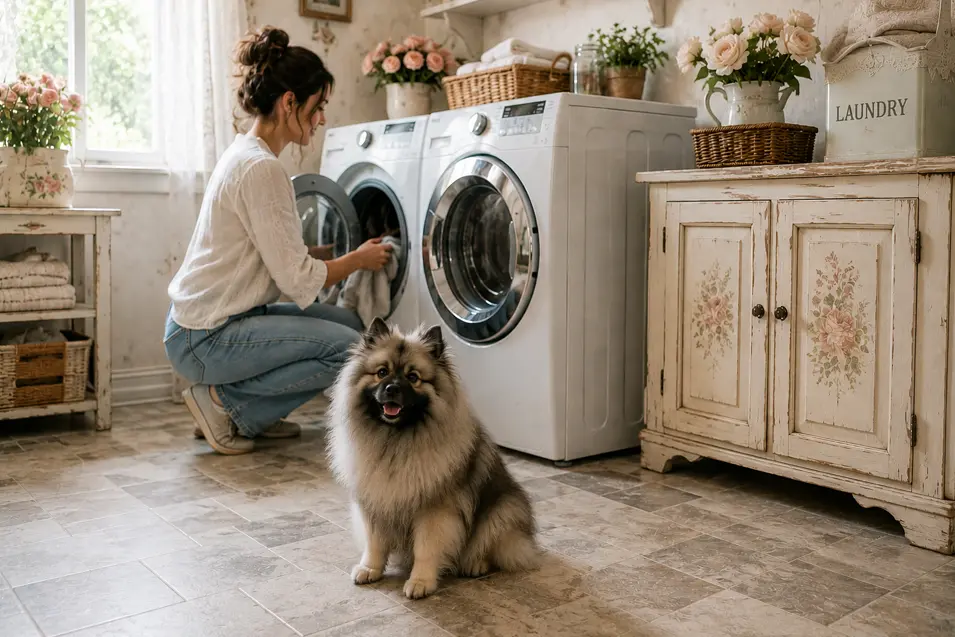
Luxury vinyl tile (LVT) provides many of the same advantages as vinyl plank while offering the appearance of stone or ceramic tile.
Advantages include:
- Water resistance
- Easy maintenance
- Excellent durability
- Wide design variety
- Comfortable surface
This flooring works especially well for homeowners who want an upscale appearance without the maintenance concerns associated with natural stone.
Ceramic and Porcelain Tile
Tile flooring has long been considered one of the most durable options available for pet owners.
Benefits include:
- Exceptional scratch resistance
- Waterproof surface
- Easy cleaning
- Stain resistance
- Long lifespan
Tile is particularly useful for dog rooms that include feeding stations, washing areas, or direct outdoor access.
However, tile does have a few drawbacks.
It can feel cold during winter months and may be less comfortable for senior dogs with joint problems. Adding rugs or orthopedic beds can help offset these concerns.
Rubber Flooring
Rubber flooring is becoming increasingly popular in pet rooms due to its combination of comfort and durability.
Benefits include:
- Excellent traction
- Joint support
- Noise reduction
- Moisture resistance
- Easy cleaning
Rubber flooring is particularly beneficial for:
- Senior dogs
- Large breeds
- Active dogs
- Dogs recovering from injuries
Its cushioned surface can help reduce strain on joints while minimizing slips and falls.
Many pet owners use rubber flooring in dedicated playrooms or training spaces.
Sealed Concrete Flooring
Concrete is often overlooked, but it can be an excellent flooring option in certain dog rooms.
When properly sealed, concrete offers:
- Outstanding durability
- Moisture resistance
- Easy maintenance
- Resistance to scratches
- Affordable installation costs
Concrete works particularly well in:
- Basement dog rooms
- Mudrooms
- Dog washing stations
- Utility spaces
The primary drawback is comfort. Concrete can feel hard and cold, so comfortable bedding becomes especially important.
Pet-Friendly Carpet Options
Carpet remains a popular choice for homeowners who prioritize warmth and comfort.
Modern carpet technology has improved significantly, making some products more suitable for dog rooms than in the past.
Look for carpets that feature:
- Stain-resistant fibers
- Moisture-resistant backing
- Low-pile construction
- Durable synthetic materials
Popular pet-friendly carpet fibers include:
- Nylon
- Polyester
- Triexta
While carpet provides comfort and insulation, it typically requires more maintenance than hard-surface flooring and may retain odors if accidents occur frequently.
Engineered Hardwood Flooring
Many homeowners love the appearance of hardwood flooring, and engineered hardwood offers some advantages over traditional solid wood.
Benefits include:
- Attractive appearance
- Added home value
- Warm, natural feel
- Improved moisture resistance compared to solid hardwood
However, engineered hardwood can still be susceptible to scratches, stains, and moisture damage.
For highly active dogs or puppies, more durable alternatives may provide better long-term performance.
Flooring Options That May Not Be Ideal
While every household is different, some flooring materials tend to be less practical for dog rooms.
Solid Hardwood
Although beautiful, hardwood is vulnerable to:
- Scratching
- Water damage
- Staining
- Wear from heavy activity
High-Pile Carpet
Thick carpeting may trap:
- Pet hair
- Dirt
- Odors
- Allergens
It can also make cleaning more difficult.
Unsealed Concrete
Without proper sealing, concrete may absorb moisture and stains, leading to long-term maintenance challenges.
Traction Matters More Than Many Owners Realize
When evaluating flooring options, many pet owners focus on durability while overlooking traction.
Slippery floors can create problems for dogs of all ages.
Poor traction may contribute to:
- Falls
- Joint strain
- Anxiety when walking
- Difficulty standing up
This concern becomes particularly important for:
- Senior dogs
- Large breeds
- Dogs with arthritis
- Dogs recovering from injuries
Textured flooring surfaces and strategically placed rugs can significantly improve safety.
Consider Cleaning and Maintenance
Dog rooms naturally require regular cleaning.
Before selecting flooring, consider:
- How often your dog sheds
- Whether accidents are likely
- The amount of outdoor activity your dog enjoys
- Your preferred cleaning routine
Low-maintenance flooring can save significant time over the years.
Hard-surface options generally make it easier to remove pet hair, dirt, and debris.
Matching Flooring to Your Dog’s Lifestyle
The best flooring often depends on your dog’s specific needs.
Active Dogs
Consider:
- Luxury vinyl plank
- Rubber flooring
- Tile
Senior Dogs
Consider:
- Rubber flooring
- Textured vinyl
- Soft area rugs
Puppies
Consider:
- Waterproof vinyl
- Tile
- Easy-to-clean surfaces
Multi-Dog Households
Consider:
- Durable vinyl
- Tile
- Sealed concrete
The more activity the room experiences, the more important durability becomes.
Finding the Best Flooring for Your Dog Room
There is no single flooring material that works perfectly for every dog room. However, luxury vinyl plank flooring consistently ranks among the best options because it offers durability, moisture resistance, comfort, and ease of maintenance at a reasonable cost.
Tile, rubber flooring, sealed concrete, and select carpet products can also perform exceptionally well depending on your priorities and your dog’s needs.
By choosing flooring that balances comfort, safety, and practicality, you can create a dog room that remains attractive and functional for years to come. The right floor will support everything else in the room while helping your dog enjoy a space designed specifically with their comfort and well-being in mind.