

There are hundreds of millions of dogs living around the world, sharing our homes, sleeping on our furniture, walking through our neighbourhoods and, in many countries, becoming an increasingly important part of family life.
But where are all those dogs?
The answer is more interesting than you might expect.
The United States has one of the largest pet dog populations in the world, with estimates approaching 90 million dogs. China also has tens of millions. Brazil has more than 60 million, while Mexico’s most recent national survey counted an extraordinary 43.8 million dogs.
Then there are countries where the total number isn’t nearly as large, but dogs are remarkably common in everyday life.
Australia has an estimated 7.37 million dogs, yet almost half of Australian households have at least one. Canada has more dogs overall, at roughly 8.3 million, although dogs are found in a smaller proportion of Canadian households than in Australia.
In parts of Europe, the numbers become even more interesting. Germany has around 10 million dogs, while countries including Poland, Romania, Hungary and Portugal stand out not simply because of how many dogs they have, but because of the proportion of households that share their lives with one.
And then there are countries such as India, where a rapidly growing pet dog population exists alongside a much larger and more complicated population of free-roaming dogs. It is one of several reasons why comparing dog populations around the world isn’t quite as straightforward as putting 25 numbers into a list.
There is no worldwide dog census.
Some countries conduct detailed national pet surveys. Others rely on household surveys, veterinary records, registrations, pet industry research or market estimates. Some statistics count only dogs living as pets, while others may include dogs that would not be considered household pets at all.
That means these numbers should be understood for what they are: the best available estimates of dog populations, rather than a precise head count of every dog on Earth.
For each country, we’ve looked for the most reliable and recent information available, while paying attention to what was actually being counted and when the research was conducted.
But the numbers are only part of the story.
Dogs have very different histories around the world. Some countries have produced dozens of recognizable breeds. Others have ancient native dogs that remain relatively unknown outside their borders. In some places dogs have traditionally worked alongside farmers, hunters and fishermen; elsewhere, the modern dog is increasingly likely to live in an apartment, sleep in the bedroom and be treated very much as a member of the family.
So we’re going beyond simply asking which country has the most dogs.
We’re looking at where the world’s dogs live, how common dog ownership really is, the breeds different countries have given us, and what the numbers reveal about our relationship with dogs around the world.
| Country | Estimated Dogs | Data Year | Households With Dogs |
|---|---|---|---|
| United States | ~90M | 2025 | — |
| China | ~83.9M | 2025 | ~14% |
| Brazil | ~62.2M | 2023 | — |
| Mexico | 43.8M | 2021 | ~70% have pets* |
| India | 33.4M | 2025 | ~8% |
| Philippines | 21.3M | 2025 | ~40% |
| United Kingdom | ~11.7M | 2024/25 | ~36% |
| Germany | ~10.0M | 2025 | ~21% |
| Spain | ~9.5M | 2024 | ~27% |
| Argentina | ~9.2M | Estimate | — |
| Thailand | ~9.1M | 2025 | ~26% |
| Italy | ~8.8M | 2024 | ~28% |
| Poland | ~8.4M | 2024 | ~49% |
| Canada | ~8.3M | 2024 | ~38% |
| France | ~7.6M | 2024 | ~20% |
| Australia | ~7.4M | 2025 | ~49% |
| Japan | ~6.8M | 2025 | — |
| Peru | ~6M+ | Recent estimate | ~52% |
| Colombia | ~5M | Estimate | — |
| Romania | ~4.3M | 2024 | ~45% |
| South Korea | ~3.4M | 2024 | ~12% |
| Portugal | ~3.0M | 2024 | ~39% |
| Hungary | ~2.8M | 2024 | ~50% |
| Czechia | ~2.2M | 2024 | ~42% |
| Ireland | ~517K | 2024 | — |
How We Counted the World’s Dogs
Counting the world’s dogs sounds as though it should be relatively simple.
It isn’t.
There is no international dog census, and countries don’t all measure their dog populations in the same way. Some conduct large national household surveys, while others rely on pet registrations, veterinary records, industry research or estimates from organizations that track pet ownership.
Even the definition of a dog population can change from one source to another.
Some figures count only dogs living in households as pets. Others may include registered dogs, working dogs or animals living outside traditional households. In countries with significant free-roaming dog populations, the total number of dogs may be considerably larger than the number officially counted as pets.
For this article, we’ve concentrated primarily on dogs living as pets, using the most recent and reliable information we could find for each country. Whenever possible, we prioritized government statistics, national pet surveys and established industry organizations. Where those weren’t available, we used reputable market research and other published estimates.
You’ll also notice that the data years aren’t identical. Australia may have a comprehensive national survey from one year while another country’s best available figure comes from several years earlier. Rather than pretending those numbers were collected at the same time using the same methodology, we’ve included the year wherever possible.
The same caution applies to household dog ownership.
Knowing that a country has 10 million dogs tells us something about the size of its dog population, but it doesn’t necessarily tell us how common dogs are in everyday homes. A country with a huge human population can have millions of dogs while only a relatively small percentage of households own one. A much smaller country can have fewer dogs overall while dogs are present in nearly half of all households.
That’s why we’ll look at both numbers whenever reliable information is available.
The result isn’t a perfect census of every dog on Earth. No such census exists.
Instead, it’s a snapshot built from the best available data — and a fascinating look at just how differently dogs fit into life around the world.
Dog Populations Around the World
The numbers become much more interesting when we look beyond the table.
A country’s total dog population is influenced by its human population, household size, urbanization, housing, culture and the changing role dogs play in everyday life. That means the countries with the most dogs aren’t necessarily the countries where dog ownership is most common.
We’ll begin with five countries that account for an enormous share of the world’s pet dogs: the United States, China, Brazil, Mexico and India.
United States

Estimated Dog Population: Approximately 90 million
Households With Dogs: Approximately 71 million
Data Year: 2025
Dogs From Here: Boston Terrier, American Staffordshire Terrier, Chesapeake Bay Retriever, Alaskan Malamute
The United States is home to one of the largest populations of pet dogs anywhere in the world. Estimates of the number of dogs vary depending on the source and methodology, but the figure is commonly placed around 90 million.
Perhaps the more revealing number is the number of American homes that include a dog. According to the American Pet Products Association, approximately 71 million U.S. households owned a dog in 2025, representing about 53% of households. That was up from approximately 68 million dog-owning households the year before.
Dogs occupy an unusually broad place in American life. They are family pets, hunting companions, livestock dogs, service animals, police and military dogs, sporting partners and, increasingly, companions that travel, dine and vacation alongside their owners.
The country’s geography has also helped produce very different kinds of American dogs. The powerful Alaskan Malamute developed for demanding work in the Arctic, while the Chesapeake Bay Retriever became known for retrieving waterfowl in the cold waters around Chesapeake Bay. At the other end of the spectrum is the compact Boston Terrier, a breed so closely associated with its birthplace that it became the official state dog of Massachusetts.
The scale of American dog ownership has created an enormous industry around them, but the more interesting story may be how thoroughly dogs have moved into the centre of everyday home life.
For tens of millions of American households, owning a dog is no longer simply about having a pet in the backyard.
The dog lives with the family.
Love New York? See the city at dog level as we wander through parks, neighbourhoods and unmistakably New York moments in A Dog Walk Through New York City →
China

Estimated Dog Population: Approximately 83.9 million
Households With Dogs: Approximately 14%
Data Year: 2025
Dogs From Here: Chow Chow, Shar Pei, Pekingese, Chinese Crested
China’s dog population demonstrates why simply ranking countries by the number of dogs doesn’t tell the whole story.
With an estimated 83.9 million pet dogs in 2025, China has one of the largest pet dog populations in the world. Yet only about 14% of Chinese households own a dog. The country’s enormous human population means that even a relatively modest rate of household ownership translates into tens of millions of dogs.
China is also unusual because its pet dog population has recently been moving in the opposite direction from many growing pet markets. Estimates indicate that the number of pet dogs declined from approximately 92.2 million in 2021 to 83.9 million in 2025, while the share of households owning dogs fell from roughly 16.7% to 14.2% over a similar period.
Urban living is an important part of the story. Hundreds of millions of people live in China’s densely populated cities, where apartment size, local regulations and the practical realities of keeping a dog can influence both whether people own one and what kind of dog they choose.
China’s relationship with dogs, however, stretches back thousands of years.
Several of the world’s most recognizable breeds have Chinese origins. The Pekingese was closely associated with China’s imperial court. The distinctive Chow Chow has an ancient history in northern China, while the deeply wrinkled Shar Pei originated in southern China. Even today, these breeds make China’s contribution to the history of the domestic dog far larger than its modern ownership statistics alone would suggest.
China is therefore a particularly good example of the two different ways we can look at dog populations.
By sheer numbers, it is a giant.
By the percentage of households that actually own a dog, it looks very different.
Brazil

Estimated Dog Population: Approximately 62.2 million
Data Year: 2023
Dogs From Here: Fila Brasileiro, Brazilian Terrier
Brazil has one of the largest dog populations in the world, with an estimated 62.2 million dogs. That puts it behind only a handful of countries despite Brazil having a much smaller human population than either China or India.
Dogs are also the largest category within Brazil’s enormous pet population. The country is home to more than 160 million pets overall, and dogs account for well over a third of them. Cats are growing quickly in popularity, particularly in urban areas, but dogs remain firmly established in Brazilian households.
Brazil is an interesting country for dogs because the environments in which they live can be dramatically different. A dog in a high-rise apartment in São Paulo has a very different daily life from one living on a rural property in Minas Gerais or on a farm in the country’s vast interior. Brazil’s combination of enormous cities, tropical regions, agricultural land and coastal communities means there really isn’t a single version of Brazilian dog ownership.
The country has also produced breeds shaped by very different jobs.
The Fila Brasileiro is a large working breed historically associated with farms and estates, where strength, tracking ability and guarding instincts were valuable. The considerably smaller Brazilian Terrier, meanwhile, developed as an agile farm and companion dog and remains one of Brazil’s best-known native breeds.
What makes Brazil particularly significant, however, is simply the scale of its relationship with pets.
More than 60 million dogs means Brazil isn’t merely a country where dogs are popular. It represents one of the largest concentrations of domestic dogs anywhere on Earth.
And unlike countries where a huge human population can make an enormous dog population almost inevitable, Brazil’s numbers suggest something more.
This is a country that really does live with a lot of dogs.
Mexico
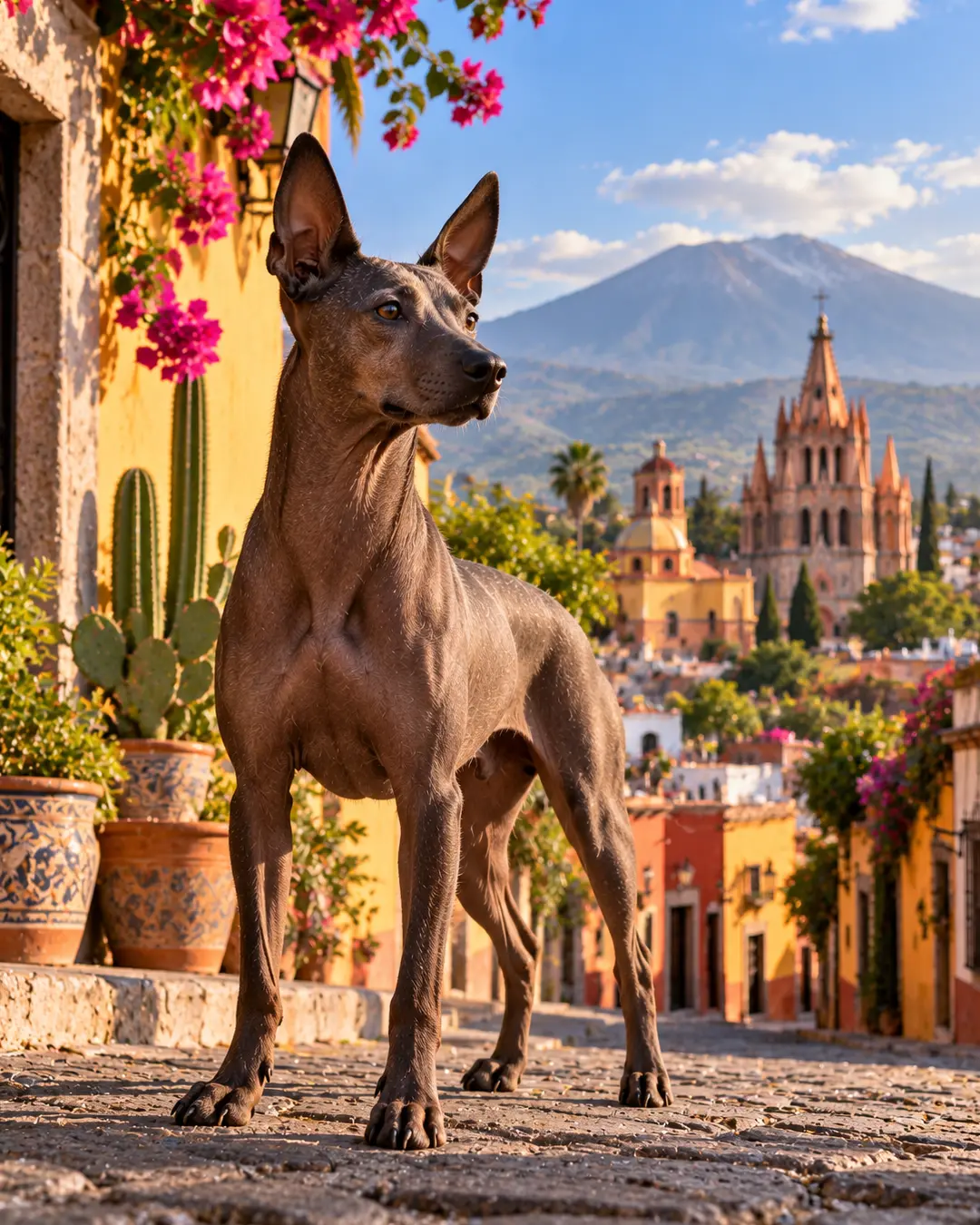
Estimated Dog Population: Approximately 43.8 million
Data Year: 2021
Dogs From Here: Chihuahua, Xoloitzcuintli
Mexico’s dog population is one of the more surprising numbers on this list.
According to Mexico’s national statistics agency, INEGI, the country’s 2021 pet survey estimated that there were approximately 43.8 million dogs living in Mexican households. The same survey found that almost 70% of Mexican households had at least one pet, although that figure includes animals other than dogs.
That puts Mexico among the world’s major dog-owning nations, but the country’s relationship with dogs goes back much further than modern pet ownership.
The Xoloitzcuintli, often shortened to Xolo, has lived in Mexico for thousands of years. Archaeological evidence connects dogs resembling the modern Xolo with pre-Columbian civilizations, where dogs had practical, cultural and spiritual significance. Today, the breed is recognized around the world and remains one of Mexico’s most distinctive native dogs.
Then there is the Chihuahua.
Named for the Mexican state of Chihuahua, the tiny breed became one of the most recognizable dogs on the planet. Its precise ancestry has been debated, but its development is firmly associated with Mexico, and dogs resembling its ancestors were present in the region long before the modern breed became internationally popular.
Modern Mexico presents a much broader picture of dog life. Dogs live in dense neighbourhoods in Mexico City, suburban family homes, small towns, rural communities and on farms and ranches across a country stretching from desert to tropical coastline.
Mexico also illustrates one of the difficulties in comparing dog populations internationally. Its 43.8 million figure comes from a large government survey conducted in 2021, while some countries on this list have estimates from 2024 or 2025. It is older data, but its national scope makes it valuable enough that we would rather show the year clearly than replace it with a newer but less reliable estimate.
Whatever the exact number is today, the larger point is difficult to miss.
Mexico has an extraordinary number of dogs.
India

Estimated Dog Population: Approximately 33.4 million pet dogs
Households With Dogs: Approximately 8%
Data Year: 2025
Dogs From Here: Mudhol Hound, Rajapalayam, Chippiparai, Kombai
India is another country where the raw population figure and the percentage of households with dogs tell very different stories.
India is estimated to have approximately 33.4 million pet dogs in 2025, up from around 25 million in 2020. That represents substantial growth in only five years and makes India one of the largest pet dog populations in the world.
Yet dogs are estimated to live in only about 8% of Indian households.
The explanation is largely one of scale. India has more than 1.4 billion people and hundreds of millions of households, so even a relatively low rate of dog ownership produces an enormous dog population.
There is also another complication that makes India particularly difficult to compare with countries such as Canada, Australia or the United Kingdom. The pet dog population represents only part of India’s overall dog population. The country also has a very large population of free-roaming and community dogs that aren’t included in estimates specifically measuring household pets.
India’s own dog history is remarkably diverse.
The country has a number of indigenous breeds that remain relatively unfamiliar outside South Asia. The elegant Mudhol Hound, associated particularly with Karnataka, is a fast and athletic sighthound traditionally used for hunting. The Rajapalayam, named after the town in Tamil Nadu, is a powerful white hound historically used for hunting and guarding. Tamil Nadu is also home to breeds such as the Chippiparai and Kombai, dogs developed for work rather than simply appearance.
Modern pet ownership in India is changing quickly, particularly in cities. Rising incomes, changing family structures and a growing pet-care industry have helped move more dogs from primarily functional roles into the home as companions.
And that makes India’s relatively low household ownership rate somewhat deceptive.
Only a small percentage of Indian households may currently have a pet dog, but in a country of India’s size, a small percentage still adds up to more than 33 million dogs.
Philippines

Estimated Dog Population: Approximately 21.3 million
Households With Dogs: Approximately 40%
Data Year: 2025
Dogs From Here: Philippine Forest Dog, Asong Gubat
The Philippines may be one of the biggest surprises on this list.
With an estimated 21.3 million pet dogs in 2025, the country has a larger dog population than many much wealthier and more populous nations that are more commonly associated with pet ownership.
Dogs are also remarkably widespread in Filipino homes. Approximately 40% of households own a dog, meaning the Philippines stands out not simply because of its total number of dogs, but because of how common dog ownership is across the country.
That relationship takes many forms.
The Philippines consists of more than 7,000 islands, ranging from the enormous urban landscape of Metro Manila to small towns, agricultural communities and remote rural areas. Dogs can be apartment companions in the country’s rapidly growing cities, family dogs living around open-air homes, or working and community animals in more rural parts of the archipelago.
One particularly interesting part of the country’s dog story is the Asong Gubat, sometimes referred to as the Philippine Forest Dog. These native dogs have attracted increasing interest from researchers and conservationists because of their long history in isolated parts of the Philippines and their physical characteristics that distinguish them from many modern imported breeds.
The country’s modern pet industry is changing as well. As more Filipino households treat dogs as companion animals, spending on commercial dog food, veterinary care, grooming and other pet services has been increasing. In major cities, the familiar global shift toward dogs living more closely with their owners is clearly visible.
But the population figure itself remains the fact most likely to surprise people.
The Philippines has roughly a quarter of the human population of the United States, yet it is home to more than 21 million pet dogs.
It is a useful reminder that some of the world’s biggest dog countries aren’t necessarily the ones most people would think of first.
United Kingdom

Estimated Dog Population: Approximately 11.7 million
Households With Dogs: Approximately 36%
Data Year: 2025
Dogs From Here: Labrador Retriever, English Springer Spaniel, Border Collie, English Bulldog
Few countries have had a greater influence on the dogs we recognize today than the United Kingdom.
The UK is home to an estimated 11 million-plus dogs, with roughly a third of households sharing their home with one. That is a substantial dog population for a country of its size, but Britain’s real significance in the dog world goes well beyond the number living there today.
Britain played an enormous role in the development of modern dog breeds.
Retrievers, terriers, spaniels, sheepdogs, setters and hounds were developed and refined for very specific jobs. Some worked alongside shepherds. Others flushed or retrieved game, controlled vermin, guarded property or accompanied hunters across very different British landscapes.
Many eventually became some of the world’s most familiar family dogs.
The Labrador Retriever, whose early ancestry traces to Newfoundland but whose modern breed was developed in Britain, is perhaps the best example. The Border Collie emerged from the sheep-farming country along the border between Scotland and England and remains one of the world’s great working dogs. The English Springer Spaniel, English Bulldog, numerous terriers and several famous hound breeds add to an unusually long list.
Dogs remain highly visible in modern British life as well.
They walk country footpaths, accompany owners to pubs and cafés, squeeze into city flats, run through enormous urban parks and remain an everyday presence in Britain’s farming communities. The country’s extensive network of public footpaths and walking trails also makes walking with a dog part of the landscape in a way that can be difficult to capture with population statistics alone.
Britain therefore isn’t remarkable simply because millions of dogs live there.
It is remarkable because so much of the way the modern world thinks about dog breeds — what they look like, what jobs they were bred to perform and even how breeds are formally organized — was profoundly shaped there.
For a relatively small group of islands, Britain has given the dog world an extraordinary amount.
Germany

Estimated Dog Population: Approximately 10 million
Households With Dogs: Approximately 21%
Data Year: 2025
Dogs From Here: German Shepherd, Dachshund, Rottweiler, Great Dane
Germany has approximately 10 million pet dogs, putting it among Europe’s largest dog populations. But Germany’s influence on the dog world is considerably greater than that number suggests.
Few countries have produced such a varied collection of internationally recognizable breeds.
The German Shepherd was developed in Germany around the turn of the 20th century from working herding dogs, with an emphasis on intelligence, trainability and usefulness. It subsequently became one of the world’s most versatile working breeds, serving in police and military roles, search and rescue, assistance work and, of course, as a family companion.
Germany also gave us a dog at almost the opposite end of the scale.
The Dachshund was developed to pursue badgers and other animals underground. Its unusually long body and short legs weren’t created simply to make it distinctive; they helped produce a dog capable of entering burrows while retaining the courage and determination required for the work.
Then there are the Rottweiler, whose history is associated with the southern German town of Rottweil, and the Great Dane — a breed whose English name disguises its German development. In Germany, the Great Dane is known as the Deutsche Dogge.
Modern German dog ownership is also shaped by a culture that places considerable emphasis on responsible ownership and training. Dogs are a familiar sight in German cities, parks and public spaces, while the country’s forests, trails and extensive walking infrastructure provide a very different environment outside the urban centres.
Germany becomes particularly interesting when compared with some of its European neighbours.
Its approximately 10 million dogs make it one of the continent’s biggest dog countries in absolute terms, yet dogs are found in only around one in five German households. In Poland, Hungary and Romania, the percentage of households with a dog is considerably higher.
Once again, the largest dog population doesn’t necessarily mean the highest rate of dog ownership.
And when it comes to Germany, the dogs the country has given the rest of the world may ultimately be even more significant than the number living there today.
Spain

Estimated Dog Population: Approximately 9.5 million
Households With Dogs: Approximately 27%
Data Year: 2024
Dogs From Here: Spanish Water Dog, Spanish Mastiff, Galgo Español, Ibizan Hound
Spain is home to approximately 9.5 million dogs, giving it one of the larger pet dog populations in Europe. Around 27% of Spanish households have at least one dog.
But Spain’s relationship with dogs is much older than its modern pet population suggests.
The country has produced breeds shaped by dramatically different landscapes and jobs. The Spanish Mastiff developed as a livestock guardian, protecting enormous flocks of sheep as they moved along traditional migration routes across the country. These were working dogs expected to operate alongside shepherds while being large and powerful enough to defend livestock.
The Spanish Water Dog had a very different role. Traditionally used for herding and other farm work, particularly in southern Spain, its intelligence and distinctive curly coat have helped it become increasingly familiar outside the country.
Then there are Spain’s ancient hunting dogs.
The elegant Galgo Español, or Spanish Greyhound, has a history stretching back centuries and remains closely associated with hunting in parts of rural Spain. The Ibizan Hound, recognizable by its enormous upright ears and athletic build, developed on the Balearic Islands and was traditionally used to hunt rabbits across rugged terrain.
Modern dog life in Spain can look very different.
In Madrid and Barcelona, dogs are increasingly part of dense urban life, living in apartments and accompanying their owners through neighbourhood streets, parks and cafés. Along the Mediterranean coast and in smaller towns, outdoor living and a milder climate create another version of everyday life with a dog. Rural Spain, meanwhile, retains many of the working traditions that produced the country’s native breeds in the first place.
Spain’s numbers also put it in an interesting position within Europe.
It has almost as many dogs as Germany, despite having a substantially smaller human population, and dogs are present in a greater proportion of Spanish households.
Spain may not immediately come to mind as one of Europe’s great dog countries, but both its numbers and its remarkable collection of native breeds suggest otherwise.
Argentina

Estimated Dog Population: Approximately 9.2 million
Data Year: Recent estimate
Dogs From Here: Dogo Argentino, Argentine Pila Dog
Argentina has an estimated 9 million-plus dogs, placing it among the larger dog populations in South America. The exact number is less firmly established than it is in countries with recent national pet surveys, so Argentina’s figure should be treated as an estimate rather than a precise count.
What is much easier to see is how naturally dogs fit into everyday Argentine life.
Buenos Aires is particularly striking. Dogs are a constant presence on neighbourhood streets and in the city’s parks, and professional dog walkers handling several dogs at once have become a familiar part of the urban landscape. Apartment living hasn’t prevented dogs from becoming deeply embedded in life in one of Latin America’s largest cities.
Leave the capital, however, and the relationship changes.
Argentina is a vast country with an equally significant rural tradition. Across the Pampas and other agricultural regions, dogs have long worked around farms and livestock, accompanying people in environments far removed from a Buenos Aires apartment.
Argentina has also produced one of South America’s most recognizable breeds.
The Dogo Argentino was developed in the province of Córdoba during the 20th century. Powerful, athletic and unmistakably white, it was created as a working hunting dog capable of operating across difficult terrain. The breed has since spread internationally and is now recognized far beyond Argentina.
Much less familiar outside the country is the Argentine Pila Dog, a small hairless dog with a history in the region that reaches back much further. It is one of several hairless dog types found in Latin America and remains an unusual part of Argentina’s canine heritage.
Argentina is a country where the estimated population deserves a little more caution than some of the figures elsewhere on this list. That’s why we’re identifying it as an estimate rather than presenting 9.2 million as though someone has counted every dog.
But whether the true figure is somewhat higher or lower, the broader picture is clear.
Dogs are a highly visible part of Argentine life, from the sidewalks of Buenos Aires to the country’s enormous rural landscape.
Thailand

Estimated Dog Population: Approximately 9.1 million pet dogs
Households With Dogs: Approximately 26%
Data Year: 2025
Dogs From Here: Thai Ridgeback, Thai Bangkaew Dog
Thailand is estimated to have approximately 9.1 million pet dogs, with dogs living in roughly one-quarter of Thai households. That gives the country a substantial domestic dog population before we even consider the free-roaming and community dogs that are familiar sights in many parts of Thailand.
That distinction matters.
As with India, estimates of Thailand’s pet dog population shouldn’t be confused with estimates of every dog living in the country. Dogs without a conventional household owner may live around temples, markets, neighbourhoods and other community spaces, making Thailand’s overall relationship with dogs more complicated than a household ownership survey can capture.
Thailand also has its own distinctive native breeds.
The Thai Ridgeback is immediately recognizable by the ridge of hair running in the opposite direction along its back. Developed in relative isolation in eastern Thailand, these athletic dogs were traditionally used for hunting, guarding homes and accompanying carts. Geographic isolation helped preserve the breed’s distinctive appearance for generations.
The Thai Bangkaew Dog takes its name from the village of Bangkaew in Phitsanulok Province. With its thick double coat and alert temperament, it looks remarkably different from the sleek Thai Ridgeback and provides another example of how diverse dogs from the same country can be.
Modern dog ownership in Thailand is changing, particularly in Bangkok and other large cities. Smaller households, condominium living and a growing pet-care industry are helping reshape the role of dogs from primarily working or property animals toward close household companions.
At the same time, community dogs remain a visible part of life in many places, creating a relationship between people and dogs that doesn’t always fit neatly into the Western idea that every dog belongs to one particular household.
That makes Thailand especially interesting for an international comparison.
The 9.1 million pet dogs are only the part of Thailand’s dog population that is easiest to count.
Italy

Estimated Dog Population: Approximately 8.8 million
Households With Dogs: Approximately 28%
Data Year: 2024
Dogs From Here: Cane Corso, Lagotto Romagnolo, Italian Greyhound, Maremma Sheepdog
Italy is home to approximately 8.8 million dogs, with dogs living in around 28% of Italian households. That places Italy among Europe’s larger dog-owning nations, but the country’s canine history is considerably older than any modern population survey.
Italy has produced an unusually diverse collection of breeds, from enormous livestock guardians to some of the smallest companion dogs in the world.
The Maremma Sheepdog, for example, developed as a livestock guardian in central Italy. Rather than herding sheep, these large white dogs lived alongside the flock and protected it from predators — work they continue to perform today.
The Lagotto Romagnolo followed a very different path. Originally associated with waterfowl hunting in the marshlands of Romagna, the curly-coated breed later became famous for something considerably more Italian: finding truffles. Its exceptional sense of smell made it ideally suited to searching woodland floors for the valuable fungi.
Then there is the Cane Corso, a powerful Italian working breed historically used for guarding property and farm work. At the opposite end of the scale, the elegant Italian Greyhound has been associated with European households and aristocratic life for centuries.
Modern Italian dogs inhabit environments every bit as varied as those breeds.
A dog living in a Milan apartment experiences a very different Italy from one accompanying its owner through a Tuscan village, living on a farm in the countryside or walking the streets of a southern coastal town. Italy’s dense historic cities can make space limited, but its culture of walking and outdoor public life also means dogs are highly visible.
Italy is another good example of why population alone doesn’t tell us everything. It has slightly fewer dogs than Spain despite having a larger human population, and dogs are present in only a little more than one-quarter of households.
Still, nearly nine million dogs is a substantial population.
And from truffle hunters to livestock guardians, Italy’s dogs reflect the landscapes and traditions of the country remarkably well.
Poland

Estimated Dog Population: Approximately 8.4 million
Households With Dogs: Approximately 49%
Data Year: 2024
Dogs From Here: Polish Lowland Sheepdog, Polish Tatra Sheepdog, Polish Greyhound, Polish Hunting Dog
Poland is where the household ownership numbers become particularly interesting.
The country has approximately 8.4 million dogs, slightly more than Canada and more than several much larger European nations. But the standout figure is the proportion of Polish households that have one.
Approximately 49% of households in Poland have a dog.
That means dogs are present in close to half of all homes, giving Poland one of the highest rates of household dog ownership among the European countries in our comparison.
Poland also has a long tradition of working dogs shaped by its farms, forests and mountains.
The shaggy Polish Lowland Sheepdog, known in Poland as the Polski Owczarek Nizinny, was developed as a herding and guarding dog. Intelligent, sturdy and covered in a distinctive long coat, it remains one of the country’s best-known native breeds.
In the mountainous south, the considerably larger Polish Tatra Sheepdog developed to protect livestock. Its heavy white coat suited the climate of the Tatra Mountains, while its size and protective instincts made it well suited to guarding flocks rather than moving them.
Poland also has its own native hunting breeds, including the Polish Hunting Dog, as well as the elegant Polish Greyhound, a large sighthound whose history in the country stretches back centuries.
Today, Poland’s dogs are as likely to be household companions as working animals. Urbanization has placed millions of people — and their dogs — in apartments and cities such as Warsaw, Kraków and Wrocław, while dogs remain equally familiar around homes and farms in smaller communities.
And this is where comparing Poland with other countries becomes revealing.
China has roughly ten times as many pet dogs, but dogs are found in only around 14% of Chinese households. Poland has a fraction of China’s population, yet roughly one out of every two Polish households has a dog.
By total population, Poland is a major European dog country.
By household ownership, it is one of the world’s real standouts.
Canada

Estimated Dog Population: Approximately 8.3 million
Households With Dogs: Approximately 38%
Data Year: 2024
Dogs From Here: Labrador Retriever, Newfoundland, Nova Scotia Duck Tolling Retriever, Canadian Eskimo Dog
Canada is home to approximately 8.3 million pet dogs, meaning there is roughly one dog for every five people in the country. Around 38% of Canadian households have at least one dog.
Those numbers put Canada surprisingly high on a worldwide comparison. Despite having a human population of only around 41 million, Canada has almost as many dogs as countries with considerably larger populations.
It also makes for an interesting comparison with Australia.
Australia is often assumed to have more dogs, and older statistics can make it appear that way. But the latest estimates put Canada’s dog population slightly ahead in absolute numbers. Australians, however, are considerably more likely to have a dog in the household: roughly 49% of Australian households have one compared with about 38% in Canada.
Canada’s geography has played an important role in its canine history.
The Newfoundland developed around the working communities of Newfoundland, where its strength, swimming ability and heavy water-resistant coat made it exceptionally useful around fishermen and boats. The smaller Labrador Retriever also traces its early history to Newfoundland, despite taking its name from neighbouring Labrador. Dogs from the region were later developed into the modern Labrador in Britain.
Nova Scotia produced another remarkable working dog. The Nova Scotia Duck Tolling Retriever was developed to lure, or “toll,” waterfowl within range before retrieving them from the water. It remains the smallest of the recognized retriever breeds.
Farther north, the Canadian Eskimo Dog has a much older Arctic history. For generations, these powerful dogs worked alongside Inuit communities, pulling sleds and helping people travel and survive in one of the harshest environments on Earth.
Modern Canadian dogs are more likely to spend their nights on a sofa than pulling a sled, but geography still shapes their lives. Dogs accompany their owners on trails, lakes, farms and city pathways, and Canada’s abundance of outdoor space makes them natural companions for camping, hiking and cottage life.
With more than eight million dogs spread across a relatively small human population, Canada doesn’t simply have a lot of dogs.
It has one of the world’s highest concentrations of them among major developed countries.
Want to see more of Canada with a dog along for the ride? Join us as we travel from coast to coast in Crossing Canada With Your Dog →
France

Estimated Dog Population: Approximately 7.6 million
Households With Dogs: Approximately 20%
Data Year: 2024
Dogs From Here: Poodle, Briard, Dogue de Bordeaux, Basset Hound
France has approximately 7.6 million dogs, making it another of Europe’s substantial dog populations. But compared with several of its neighbours, the more surprising figure is household ownership.
Only around 20% of French households have a dog.
That’s less than half the rate seen in Poland and considerably below countries such as Portugal, Romania and Hungary. France may have millions of dogs, but having one in the home is less common than the country’s overall population might suggest.
France’s influence on the development of dog breeds, however, is enormous.
The Poodle is perhaps the most famous example. Although its deeper ancestry is debated and the breed has historical connections elsewhere in Europe, France played such an important role in its development that the Poodle became closely associated with the country. Its elaborate modern show coat can obscure the fact that this is an exceptionally intelligent working dog with a history connected to retrieving in water.
The Briard comes from a very different tradition. This large, shaggy sheepdog worked with livestock in the French countryside and has a documented history stretching back centuries.
Then there is the unmistakable Dogue de Bordeaux, a powerful mastiff-type breed associated with the Bordeaux region, and the Basset Hound, whose short legs, remarkable nose and long ears trace back to French scent-hound traditions.
France’s dogs today occupy very different worlds.
There are dogs navigating apartment life and café-lined streets in Paris, family companions in suburban homes, hunting dogs in rural areas and working dogs on farms. In smaller towns and villages, a dog accompanying its owner through the local streets or sitting beneath a café table hardly seems unusual.
France therefore creates another useful distinction between dog population and dog prevalence.
More than seven million dogs sounds enormous — and it is.
But compared with countries where a dog lives in nearly every second home, France is a reminder that having a large dog population doesn’t necessarily make dog ownership commonplace.
Australia

Estimated Dog Population: Approximately 7.4 million
Households With Dogs: Approximately 49%
Data Year: 2025
Dogs From Here: Australian Cattle Dog, Australian Kelpie, Australian Terrier, Silky Terrier
Australia has approximately 7.4 million dogs, which is slightly fewer than Canada despite the two countries sharing a similar reputation for outdoor living, open space and people who seem perfectly happy to organize a large portion of their weekend around the dog.
But Australia’s standout number isn’t its total dog population.
It’s the fact that almost half of Australian households have a dog.
According to the 2025 Pets in Australia national survey, dogs live in approximately 49% of Australian households, giving the country one of the highest household ownership rates in our comparison. Australia may have fewer dogs than Canada in absolute numbers, but Australians are considerably more likely to share their home with one.
The country’s enormous agricultural landscape also helped produce some exceptional working dogs.
The Australian Cattle Dog was developed to move cattle across large properties and difficult terrain. Tough, intelligent and famously energetic, it became a dog suited to conditions very different from the smaller fields and cooler climate of Britain.
The Australian Kelpie was also shaped by livestock work. Developed from working collies brought to Australia, Kelpies became extraordinarily capable sheepdogs, valued for their stamina and ability to work across vast properties in heat and challenging conditions.
Australia also developed smaller breeds, including the Australian Terrier and Silky Terrier, demonstrating that the country’s canine history isn’t confined to working dogs on enormous cattle and sheep stations.
Modern Australian dog life is considerably broader.
Dogs live in apartments in Sydney and Melbourne, suburban homes with backyards, coastal communities and rural properties stretching across the interior. Beaches, walking trails and an outdoor lifestyle make dogs highly visible companions, while the country’s growing pet industry reflects the same shift seen elsewhere toward dogs being treated increasingly as members of the family.
Australia is a perfect example of why we’re looking at two numbers throughout this article.
Canada has more dogs.
Australia has more dog households.
And when a dog lives in almost every second home, it’s difficult to argue that Australia is anything other than one of the world’s great dog-owning countries.
Japan

Estimated Dog Population: Approximately 6.8 million
Data Year: 2025
Dogs From Here: Shiba Inu, Akita, Shikoku, Japanese Chin
Japan is home to approximately 6.8 million pet dogs. That is still a substantial population, but Japan stands apart from many of the countries we’ve looked at because its dog population has generally been getting smaller rather than larger.
Over the past decade, the number of dogs in Japan has declined significantly. Estimates put the population at roughly 8 million in 2015, meaning the country has lost well over a million pet dogs in about ten years.
Japan’s changing demographics help explain part of that decline.
The country has an aging and shrinking human population, while a large proportion of people live in densely populated cities where homes can be small. Apartment rules, limited space and the practical demands of caring for a dog can all make dog ownership more difficult.
Those conditions have also influenced the kinds of dogs people choose. Smaller breeds are particularly well suited to Japanese urban life, where a compact dog can be considerably easier to accommodate than a large working breed.
Yet some of Japan’s most famous native dogs come from a very different world.
The Shiba Inu is an ancient Japanese breed originally used for hunting in mountainous terrain. Compact, alert and independent, the Shiba has become internationally recognizable and is now found far beyond Japan.
The much larger Akita originated in northern Japan and developed as a powerful hunting and working dog. The breed remains closely associated with Japanese culture, particularly through the famous story of Hachikō, the Akita remembered for continuing to wait at Tokyo’s Shibuya Station for his owner after the man’s death.
Japan is also home to less internationally familiar native breeds, including the Shikoku, Kishu Ken and Hokkaido, several of which developed in relatively isolated regions and retained distinctive characteristics over generations.
Today, Japan’s relationship with dogs contains an interesting contradiction.
The overall population has declined, yet the dogs that remain are increasingly treated as close companions. In a country with smaller families and a rapidly aging population, the emotional role of the dog can become more important even as the total number of dogs falls.
Japan may have fewer dogs than it once did, but that doesn’t necessarily mean dogs matter any less.
Love Tokyo? Take a walk through the city with us — from cherry blossoms and quiet shrines to neon streets and late-night neighbourhoods — in A Dog Walk Through Tokyo →
Peru
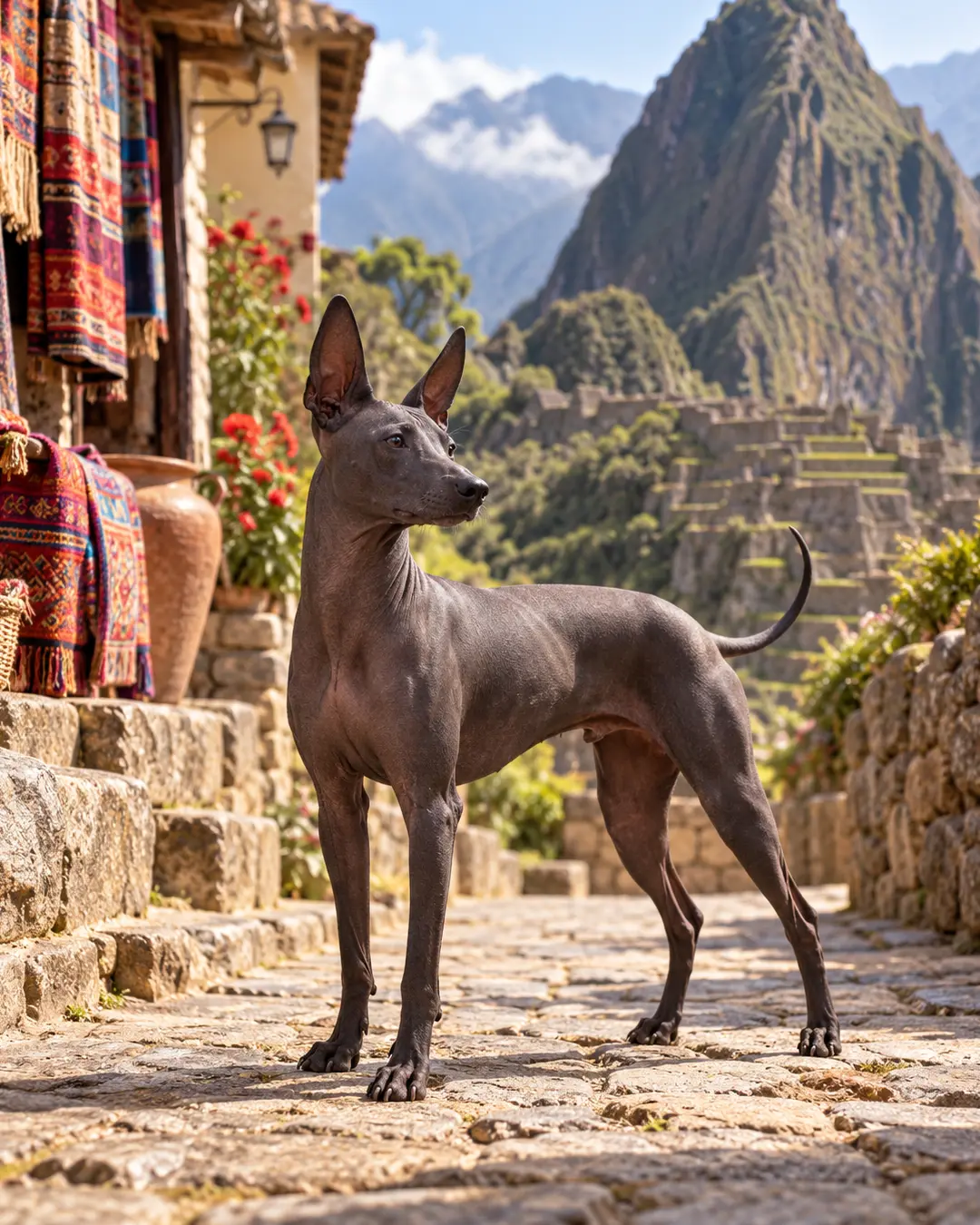
Estimated Dog Population: More than 6 million
Households With Dogs: Approximately 52%
Data Year: 2024 household survey
Dogs From Here: Peruvian Hairless Dog
Peru is another country where the percentage of households with a dog may be more interesting than the estimated total population.
According to Peru’s national statistics agency, INEI, approximately 51.7% of Peruvian households have at least one dog. Among households that own dogs, the average is around 1.8 dogs per household.
That means dogs live in more than half of the country’s homes — one of the highest household ownership rates among the countries we’re looking at.
Establishing the exact number of dogs in Peru is more difficult. Available estimates generally put the population above 6 million, but without a recent national dog census comparable to Australia’s pet survey or Mexico’s national estimate, the total should be treated cautiously.
Fortunately, Peru doesn’t need a population statistic to make its place in dog history interesting.
The Peruvian Hairless Dog, or Perro sin Pelo del Perú, has been present in the region for centuries. Images of hairless dogs appear on ceramics produced by pre-Columbian cultures long before Europeans arrived in South America, providing unusually tangible evidence of the dog’s long relationship with people in the region.
Today the breed is officially recognized as part of Peru’s cultural heritage.
Its mostly hairless body makes it immediately recognizable, but it also reflects an important point about native dog breeds: many existed long before the modern kennel clubs and written breed standards that eventually formalized what we now think of as a “breed.”
Modern Peru presents a very different environment for dogs depending on where they live. Lima is a sprawling metropolitan area of more than 10 million people, while elsewhere dogs live in small coastal communities, agricultural regions and settlements high in the Andes.
Peru also has free-roaming and community dogs that make distinguishing between household pets and the country’s total dog population more difficult.
That’s why the household figure may tell us more than an uncertain national total.
When dogs are present in more than half of the country’s households, Peru is clearly one of the world’s most dog-oriented nations — even if nobody can tell us precisely how many dogs live there.
Colombia
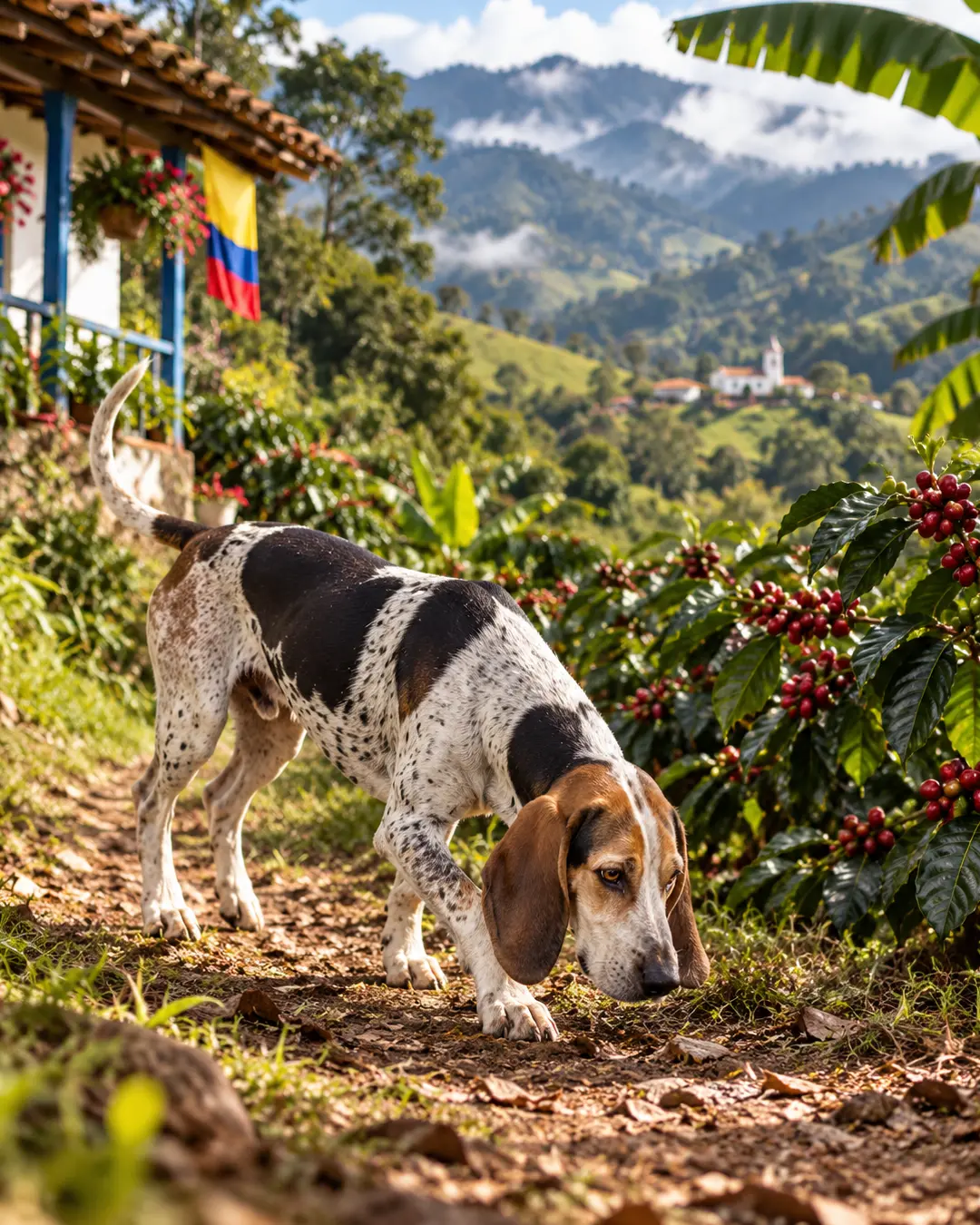
Estimated Dog Population: Approximately 5 million
Data Year: Recent estimate
Dogs From Here: Colombian Fino Hound
Colombia is estimated to have approximately 5 million dogs, although, as with several countries in Latin America, a precise and recent national count is difficult to establish. The figure is best treated as an estimate rather than the result of a comprehensive dog census.
What is much clearer is that dogs have become an increasingly visible part of Colombian household life.
That is particularly apparent in major cities such as Bogotá and Medellín, where dogs are a familiar sight in apartment buildings, neighbourhood parks, cafés and shopping districts. Colombia’s growing urban middle class has also helped support a rapidly developing pet industry, with greater spending on veterinary care, commercial pet food, grooming and other services.
But Colombia is far more geographically diverse than its major cities suggest.
The country stretches from Caribbean coastline to Andean mountains, tropical forests and enormous agricultural regions. Dogs living and working in those environments have traditionally served very different purposes, from household companionship and property protection to hunting and farm work.
One of the country’s most interesting native dogs is the Sabueso Fino Colombiano, or Colombian Fino Hound.
Developed over generations from scent hounds brought to Colombia and adapted to local conditions, the Fino became particularly associated with hunting in rural areas. Rather than being created recently according to a formal breed standard, it developed through practical selection by Colombian hunters who valued scenting ability, endurance and a dog capable of working in the country’s difficult terrain.
That makes it an interesting contrast to many of the highly standardized European breeds found elsewhere in this article.
Colombia also illustrates a recurring problem with international dog statistics. Household pets, working dogs and free-roaming dogs don’t always fit neatly into the same datasets, and estimates from different organizations can vary substantially.
So the 5 million figure should be viewed as a useful indication of scale rather than a definitive count.
What isn’t particularly difficult to establish is the dog’s place in Colombian life.
From Bogotá apartments to rural farms and hunting country, dogs are very much part of the landscape.
Romania

Estimated Dog Population: Approximately 4.3 million
Households With Dogs: Approximately 45%
Data Year: 2024
Dogs From Here: Romanian Carpathian Shepherd Dog, Romanian Mioritic Shepherd Dog, Bucovina Shepherd Dog
Romania has approximately 4.3 million pet dogs, which may not seem particularly remarkable beside the enormous populations of the United States, China or Brazil.
The more revealing number is that dogs are found in approximately 45% of Romanian households.
That puts Romania among Europe’s strongest dog-owning countries by household penetration, considerably ahead of countries such as Germany, France, Italy and Spain.
Romania’s native dogs also tell us something about the country’s landscape and its long pastoral history.
The Romanian Carpathian Shepherd Dog developed alongside shepherds working in the Carpathian Mountains. These are substantial livestock guardian dogs, bred to remain with flocks and protect them from predators in rugged country where wolves and bears remain part of the environment.
The shaggy Romanian Mioritic Shepherd Dog performed similar work. Large, heavily coated and imposing, the breed was developed to guard livestock rather than herd it, requiring independence and the ability to react to threats without constant direction from a person.
The Bucovina Shepherd Dog, another enormous livestock guardian, developed in the northeastern regions of Romania and neighbouring areas. Together, these breeds reflect a very different canine tradition from the small companion dogs increasingly common in Europe’s major cities.
That contrast still exists in modern Romania.
In Bucharest and other urban centres, dogs increasingly live the familiar life of European household pets — apartments, parks, veterinary clinics and pet stores. In rural areas, however, dogs continue to have practical roles around farms, homes and livestock.
Romania has also faced significant challenges involving free-roaming dogs, which makes it particularly important to distinguish estimates of pet dogs from estimates attempting to count every dog in the country.
For our comparison, though, the household statistic tells an unusually clear story.
Romania has roughly half as many pet dogs as Germany.
But a Romanian household is more than twice as likely to have one.
And that makes Romania one of the more surprising dog-owning countries in Europe.
South Korea

Estimated Dog Population: Approximately 3.4 million pet dogs
Households With Dogs: Approximately 12%
Data Year: 2024
Dogs From Here: Jindo, Sapsali, Donggyeongi
South Korea has an estimated 3.4 million pet dogs, a relatively modest number compared with many of the countries on this list. But the country’s dog population is particularly interesting because of how quickly the role of dogs in Korean households has been changing.
Only around 12% of households are estimated to have a dog, putting South Korea well below countries such as Australia, Poland and Romania. Yet pet ownership has become increasingly visible, particularly in Seoul and other large cities.
Urban life has had a significant influence on the kinds of dogs people keep.
South Korea is highly urbanized, and millions of people live in apartments where space is limited. Small companion breeds are consequently common, and an expanding network of veterinary clinics, grooming businesses, dog-friendly cafés, pet hotels and specialty retailers reflects the growing importance of companion animals.
The country also has several distinctive native dogs.
The best known internationally is the Jindo, named after Jindo Island in southwestern Korea. Medium-sized, athletic and famously loyal, the breed developed in relative geographic isolation and became so culturally significant that it is protected in South Korea as a Natural Monument.
The shaggy Sapsali has an equally interesting history. An old Korean breed recognizable by its long coat, it came dangerously close to disappearing during the 20th century before organized preservation efforts helped rebuild its population.
Another native breed, the Donggyeongi, is immediately recognizable by its naturally short or bobbed tail and has historical connections to the area around Gyeongju.
South Korea demonstrates something that raw population rankings can easily miss.
Its dog population isn’t among the world’s largest, and dogs still aren’t found in anything close to half of all households. But the social and economic place occupied by companion dogs is expanding quickly.
In South Korea, the interesting story isn’t simply how many dogs there are today.
It’s how rapidly life with those dogs is changing.
Portugal

Estimated Dog Population: Approximately 3 million
Households With Dogs: Approximately 39%
Data Year: 2024
Dogs From Here: Portuguese Water Dog, Estrela Mountain Dog, Portuguese Podengo, Portuguese Pointer
Portugal has approximately 3 million dogs, a relatively small population in absolute terms compared with its larger European neighbours.
But Portugal has only a little more than 10 million people.
More significantly, dogs are found in approximately 39% of Portuguese households, making dog ownership considerably more common than it is in countries such as France, Germany, Italy and Spain.
Portugal’s native breeds also reflect the country’s remarkably varied geography and history.
The Portuguese Water Dog developed along the country’s Atlantic coast as a genuine working companion to fishermen. These strong swimmers were used to retrieve objects from the water, carry messages between boats and shore, and assist with fishing nets. Their modern reputation as family pets can make it easy to forget that they were once working dogs expected to jump willingly from fishing boats into the Atlantic.
In the mountains, Portugal produced a very different dog.
The Estrela Mountain Dog developed in the Serra da Estrela, where these large livestock guardians protected flocks in rugged terrain. Like the livestock guardian breeds of Romania and other parts of Europe, they needed the size, independence and confidence to work at a distance from their owners.
The Portuguese Podengo represents another old working tradition. Found in different sizes and coat varieties, Podengos were developed primarily as hunting dogs, particularly for rabbits and other game.
Modern Portuguese dogs now occupy everything from Lisbon apartments to village homes, farms and coastal communities. But the country’s traditional breeds still provide a surprisingly clear record of the jobs dogs once performed there.
Portugal is another country where the raw population figure doesn’t tell the most interesting story.
Three million dogs may sound modest beside Germany’s 10 million.
But with dogs living in nearly four out of every ten Portuguese households, Portugal is quietly one of Europe’s more dog-oriented countries.
Hungary
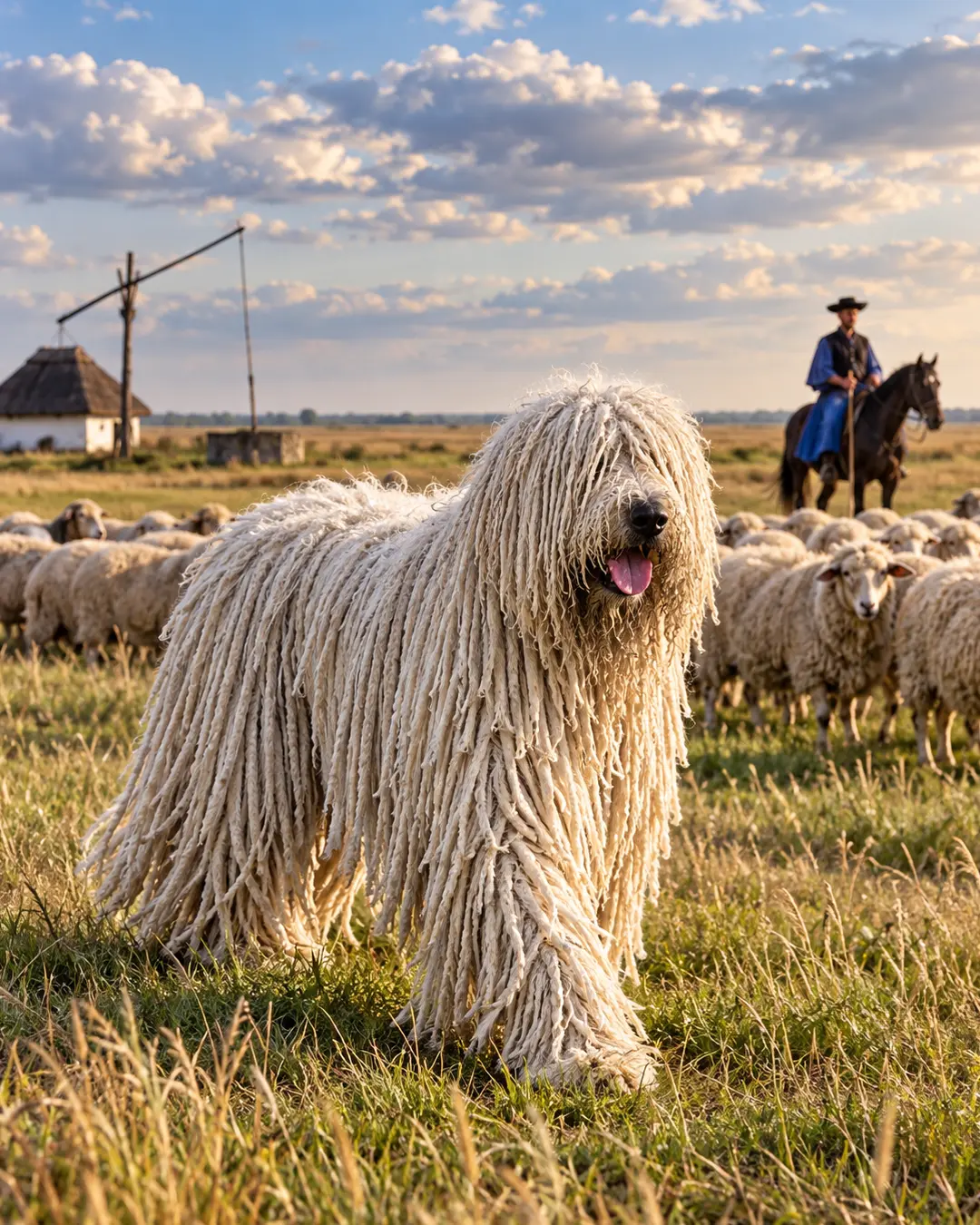
Estimated Dog Population: Approximately 2.8 million
Households With Dogs: Approximately 50%
Data Year: 2024
Dogs From Here: Vizsla, Puli, Pumi, Komondor
Hungary has approximately 2.8 million dogs, which makes its total dog population relatively small compared with countries such as Germany, France or the United Kingdom.
But Hungary has one of the most remarkable household ownership figures in Europe.
Approximately half of Hungarian households have a dog.
That puts Hungary alongside countries such as Australia, Poland and Peru as one of the places in our comparison where living with a dog is particularly common.
Hungary also has an extraordinary collection of native breeds for a country of fewer than 10 million people.
The elegant Vizsla is probably the best known internationally. Developed as a versatile hunting dog, the Vizsla was bred to work closely with hunters, pointing and retrieving game while maintaining the speed and endurance required to cover substantial ground. That close working relationship may help explain the breed’s modern reputation for forming exceptionally strong attachments to its people.
Then there is the unmistakable Puli.
With its naturally corded coat, the Puli looks unlike almost any other dog, but the coat wasn’t created simply for appearance. These agile dogs worked with livestock, and their dense coat offered protection from harsh weather while they moved among sheep.
The much larger Komondor performed a different job. Its heavy white corded coat helped it blend among sheep while guarding flocks from predators. Rather than moving livestock like the Puli, the Komondor was expected to protect it.
Hungary also gave us the Pumi, an energetic herding breed with distinctive upright ears that developed from Hungarian herding dogs and other European influences.
Today, most Hungarian dogs aren’t spending their days guarding sheep or working alongside hunters. They live in Budapest apartments, suburban houses, villages and rural properties like dogs elsewhere in Europe.
But the country’s native breeds preserve an unusually rich record of the work dogs once performed.
And the modern numbers suggest that Hungary’s relationship with dogs remains exceptionally strong.
When a dog lives in roughly every second household, dog ownership isn’t a niche interest. It’s part of everyday life.
Czechia

Estimated Dog Population: Approximately 2.2 million
Households With Dogs: Approximately 42%
Data Year: 2024
Dogs From Here: Český Terrier, Český Fousek, Prague Ratter, Chodský pes
Czechia has approximately 2.2 million dogs, a number that can look relatively small when placed beside the enormous dog populations of the United States, China or Brazil.
But Czechia has fewer than 11 million people.
More significantly, dogs are found in approximately 42% of Czech households, making the country another European standout when we look at how common dog ownership actually is.
Dogs are highly visible in everyday Czech life. In Prague, they share apartments with their owners, ride public transportation and accompany people through the city’s parks and neighbourhoods. Outside the major cities, the country’s forests, countryside and extensive network of walking and hiking trails provide a very different environment for life with a dog.
Czechia has also produced several distinctive native breeds.
The Český Terrier is one of the more unusual. Developed in the 20th century by Czech breeder František Horák, it was deliberately created as a small hunting terrier capable of working in the forests of what was then Czechoslovakia. Today, it remains relatively rare outside its homeland.
The Český Fousek has a much longer working tradition. This rugged, wirehaired pointing dog was developed as a versatile hunting companion capable of pointing, retrieving and working in water as well as on land.
At the opposite end of the size scale is the tiny Prague Ratter, a companion breed with roots stretching back centuries and historical associations with the royal courts of Bohemia.
The Chodský pes, or Bohemian Shepherd, is another Czech breed with a long regional history, traditionally associated with guarding and herding in southwestern Bohemia.
Czechia demonstrates once again why total population and household ownership need to be considered together.
It has only about a quarter as many dogs as neighbouring Germany.
Yet a Czech household is roughly twice as likely to have one.
For a relatively small country, Czechia has a remarkably large place for dogs in everyday life.
Ireland

Estimated Dog Population: Approximately 517,000
Data Year: 2024
Dogs From Here: Irish Wolfhound, Irish Setter, Irish Terrier, Kerry Blue Terrier
Ireland has approximately 517,000 pet dogs, making it the smallest dog population among the countries in our comparison.
But if there is one country where the number of dogs doesn’t adequately reflect its importance to canine history, it may be Ireland.
For a relatively small island, Ireland has produced an extraordinary collection of distinctive breeds.
The Irish Wolfhound is perhaps the most dramatic. One of the tallest dog breeds in the world, its ancestors were associated with Ireland for centuries and were used to hunt wolves and other large game. By the 19th century the old Irish wolfhound had become extremely rare, and the modern breed was reconstructed using the remaining dogs together with other large breeds.
The Irish Setter represents a very different working tradition. Developed as a bird dog, it became famous internationally for its elegant build and rich red coat, although underneath the glamorous appearance remains an athletic sporting dog bred to cover considerable ground.
Ireland also produced several terriers.
The Irish Terrier developed as a versatile farm and working dog, while the distinctive blue-grey Kerry Blue Terrier is associated with County Kerry and was historically expected to tackle everything from vermin control to farm work.
Dogs remain a familiar part of modern Irish life, from Dublin homes and city parks to farms, villages and the country’s extensive rural landscape. Ireland’s relatively small human population means it was never going to compete with the United States, Brazil or China in raw numbers.
And that’s precisely why Ireland is a useful country with which to end this comparison.
A ranking based entirely on population would place it near the bottom.
A ranking based on influence on the history of dogs would look very different.
From the enormous Irish Wolfhound to the elegant Irish Setter and the country’s determined terriers, Ireland has contributed far more to the dog world than its population of roughly half a million dogs might suggest.
When it comes to dogs, the size of the country — and the size of its dog population — only tells part of the story.
A World Full of Dogs
After looking at dog populations around the world, one thing becomes clear fairly quickly.
The biggest number isn’t always the most interesting one.
The United States and China have enormous dog populations, each with tens of millions of dogs. India is growing quickly, adding millions of pet dogs as companion animal ownership expands.
But then you look at Australia, Hungary, Poland and Peru.
None comes close to the United States or China in total numbers, yet dogs are found in roughly half of their households. In those countries, the more revealing statistic isn’t how many dogs there are.
It’s how likely you are to find one living next door.
Then there is Ireland.
Its dog population is tiny by comparison, yet few countries of its size have contributed so many recognizable breeds to the world. The Irish Wolfhound, Irish Setter and Ireland’s remarkable terriers are a reminder that the number of dogs living in a country today tells us very little about the influence that country has had on canine history.
And perhaps that’s the most interesting thing about looking at dogs this way.
The numbers start as statistics.
Then they become a story about people.
A Portuguese Water Dog jumping from a fishing boat into the Atlantic wasn’t there because somebody wanted an interesting pet. He had work to do.
A Canadian Eskimo Dog pulling a sled across the Arctic was part of a partnership that helped people travel and survive in one of the most demanding environments on Earth.
A livestock guardian in the Romanian mountains learned to live among sheep and confront predators.
A hunting dog in India, a cattle dog in Australia, a truffle dog in Italy and a sheepdog along the English-Scottish border were all shaped by the places where people needed them.
And now, in Tokyo, Toronto, Bangkok, Paris, São Paulo and countless other cities, many of their descendants have an entirely different job.
They live with us.
They wait for elevators.
They walk through neighbourhood parks.
They sleep beside the bed.
They occupy the sofa.
They somehow know when someone has opened the refrigerator from three rooms away.
The role has changed enormously.
The relationship hasn’t.
For thousands of years, wherever people have gone, dogs have found a way to come with us. Across mountains, coastlines, farms, forests, deserts, Arctic ice and eventually into some very expensive high-rise apartments.
There may never be a completely accurate count of all the dogs in the world.
But one thing becomes obvious when you start looking for them:
They’re almost everywhere we are.