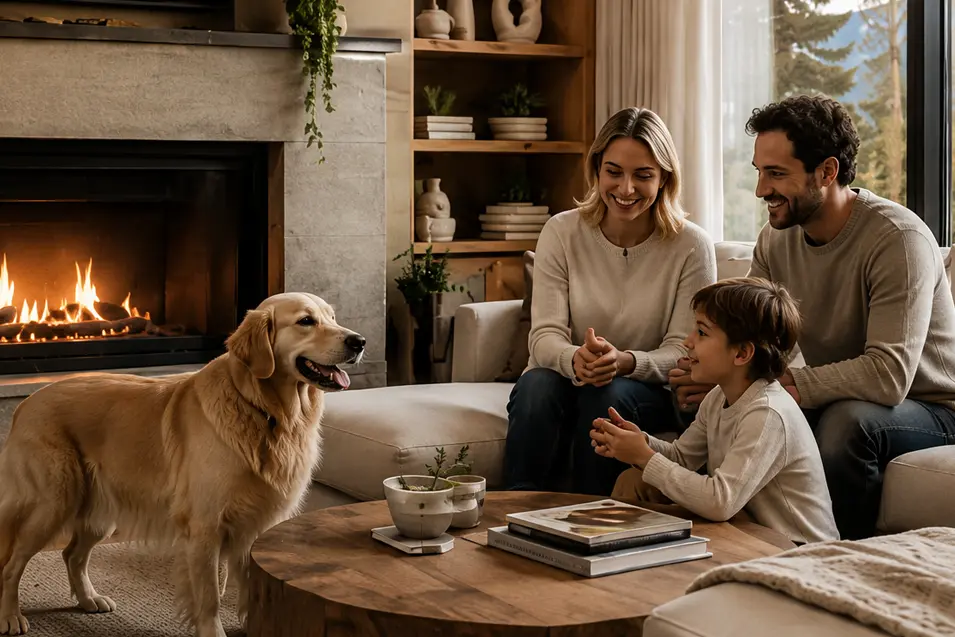
For many families, the living room serves as the heart of the home. It’s where people gather to relax, entertain guests, watch movies, and spend time together. It’s also where many dogs spend a significant portion of their day.
Unfortunately, some homeowners feel they must choose between maintaining a beautiful living room and accommodating their pets. Concerns about pet hair, muddy paws, scratched furniture, and everyday wear often lead people to believe that stylish living spaces and dogs simply don’t mix.
The reality is far different.
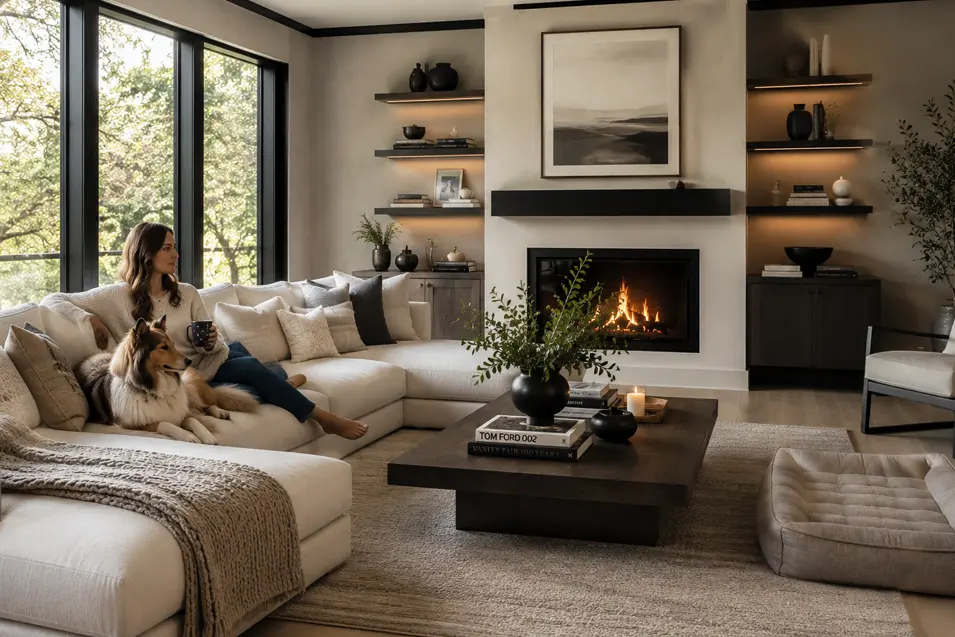
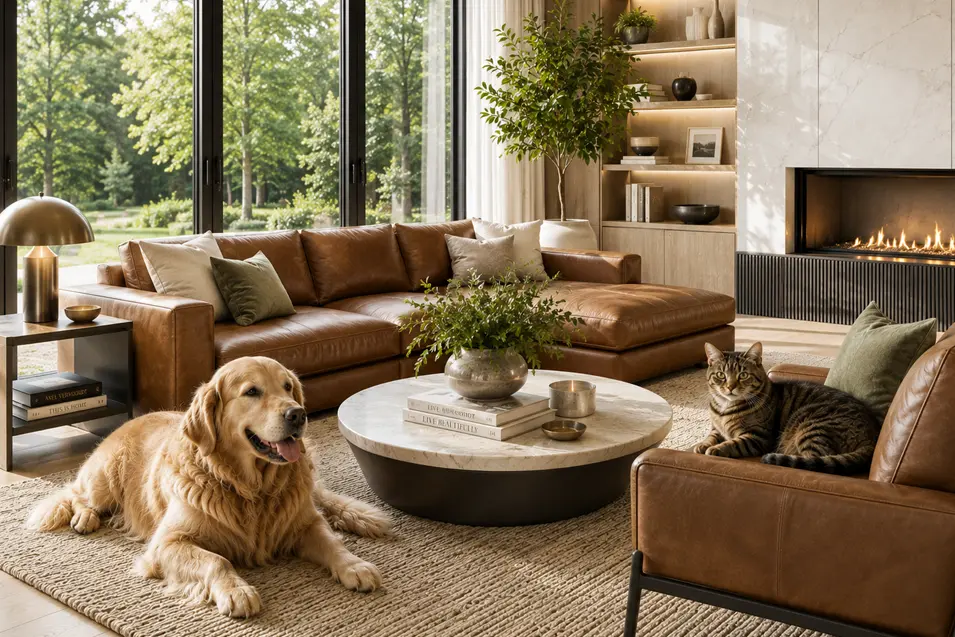
With thoughtful planning and smart design choices, it’s entirely possible to create a living room that feels welcoming , attractive, and functionalfor both people and pets. The best spaces aren’t designed for humans or dogs—they’re designed for both.
Start With Durable Flooring
Flooring is one of the most important decisions in any pet-friendly living room.
Dogs track in dirt, moisture, and debris from outside. Their nails can also take a toll on delicate surfaces over time. Choosing the right flooring helps preserve the appearance of the room while making maintenance easier.
Popular pet-friendly options include:
- Luxury vinyl plank flooring
- Porcelain tile
- Engineered hardwood
- Sealed concrete
- Durable laminate flooring
These materials offer a balance of durability, appearance, and ease of cleaning. Area rugs can still add warmth and texture, but choosing washable or stain-resistant options can help extend their lifespan.
Choose Furniture That Fits Real Life
Living room furniture should be selected with daily use in mind.
Many dogs view sofas and chairs as shared family spaces. Instead of constantly fighting that reality, homeowners can choose furniture that performs well under pet-friendlyconditions.
Consider:
- Performance fabrics
- Leather upholstery
- Removable cushion covers
- Durable frame construction
- Easy-to-clean surfaces
Color selection also matters. Furniture that complements your dog’s coat color may help reduce the visibility of shedding between cleanings.
Create a Place for Your Dog
One common mistake is expecting dogs to stay off furniture without providing a comfortable alternative.
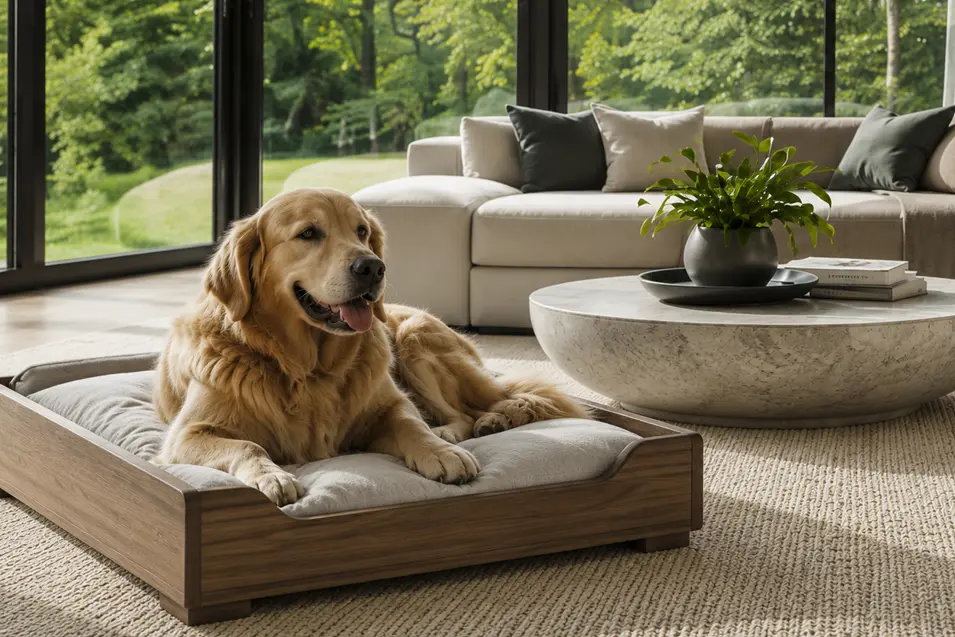
Every dog benefits from having a designated place within the living room where they can relax while remaining close to their family.
Options may include:
- Stylish dog beds
- Built-in pet nooks
- Window-side resting areas
- Decorative crates
- Custom pet furniture
When a dog’s space feels comfortable and inviting, they’re more likely to use it.
Keep Pet Supplies Organized
Leashes, toys, treats, grooming tools, and blankets can quickly create clutter if they don’t have a dedicated storage location.
Fortunately, organization doesn’t have to come at the expense of design.
Consider incorporating:
- Decorative storage baskets
- Built-in cabinetry
- Storage ottomans
- Console cabinets
- Hidden storage benches
A well-organized room feels calmer, cleaner, and more visually appealing for everyone.
Think About Traffic Patterns
Dogs move through a home differently than people do.
When arranging furniture, consider how your dog naturally travels through the room. Blocking common pathways can lead to congestion, bumped furniture, and unnecessary frustration.
Open layouts often work well because they allow both pets and people to move comfortably throughout the space.
Pay particular attention to:
- Access to doors
- Walkways around furniture
- Water bowl locations
- Sleeping areas
- Window views
Designing around natural movement patterns creates a more functional room overall.
Select Pet-Friendly Décor
A beautiful living room doesn’t require fragile decorations on every surface.
Pet-friendly decorating often means choosing items that are both attractive and practical.
Examples include:
- Durable artwork
- Stable furniture
- Washable textiles
- Pet-safe houseplants
- Scratch-resistant finishes
The goal isn’t to eliminate decorative elements. It’s to select pieces that can coexist with everyday life.
Consider Lighting and Comfort
Dogs appreciate comfortable environments just as much as humans do.
Natural light, comfortable temperatures, and cozy resting areas all contribute to a more inviting living room.
Many dogs enjoy observing outdoor activity through windows, making window-adjacent seating areas particularly appealing. At the same time, shaded resting spots can provide relief when sunlight becomes too intense.
A well-balanced room should support relaxation for every member of the household.
Plan for Easy Cleaning
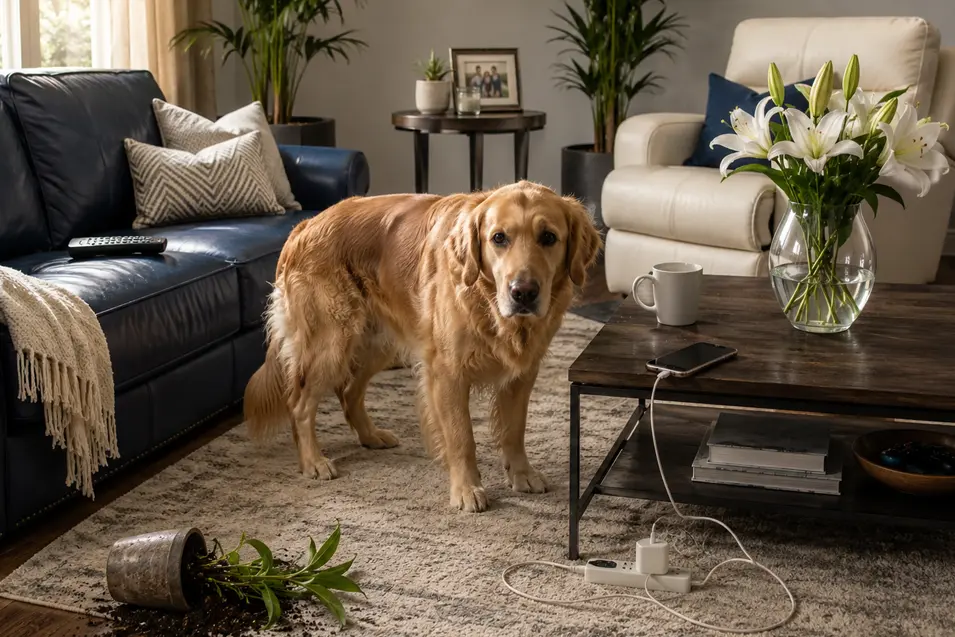
No matter how well-behaved a dog may be, messes are part of pet ownership.
A successful living room design makes routine cleaning as simple as possible.
Helpful features include:
- Washable fabrics
- Durable finishes
- Easy-access vacuum storage
- Stain-resistant rugs
- Hard-surface flooring
The easier a room is to maintain, the easier it is to keep looking beautiful year after year.
Design Around Life, Not Perfection
One of the biggest mistakes homeowners make is designing for appearances alone.
Magazine-perfect rooms often look impressive in photographs but fail to support real life. A truly successful living room balances beauty with functionality.
Dogs are part of the family. Their needs should be considered during the design process rather than treated as obstacles to overcome.
When homeowners embrace this mindset, the result is often a space that feels warmer, more welcoming, and more enjoyable for everyone.
A Living Room That Works for Everyone
The best living rooms aren’t those that prioritize humans over pets or pets over humans. They’re spaces that recognize both belong there.
By choosing durable materials, creating dedicated pet spaces, maintaining organization, and designing for everyday life, homeowners can create living rooms that are stylish, practical, and comfortable.
Beautiful design and dog ownership are not opposing goals. With thoughtful planning, it’s entirely possible to create a living room both dogs and humans will love.