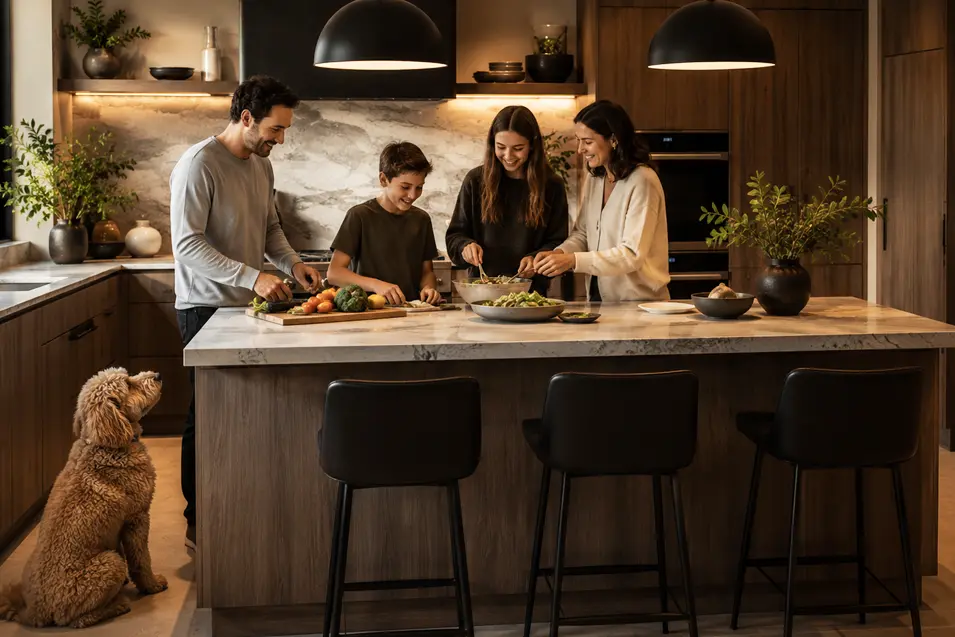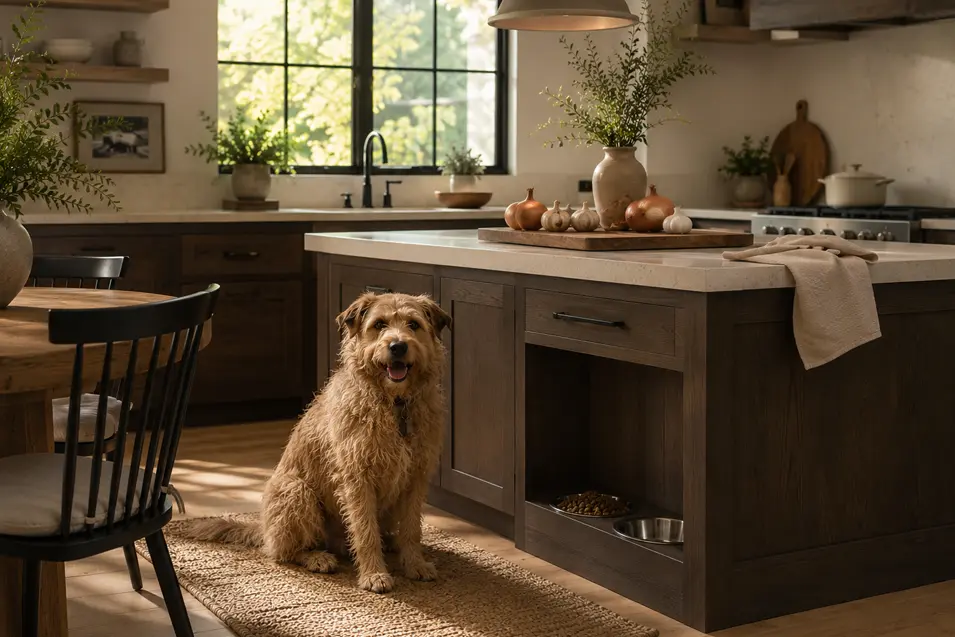
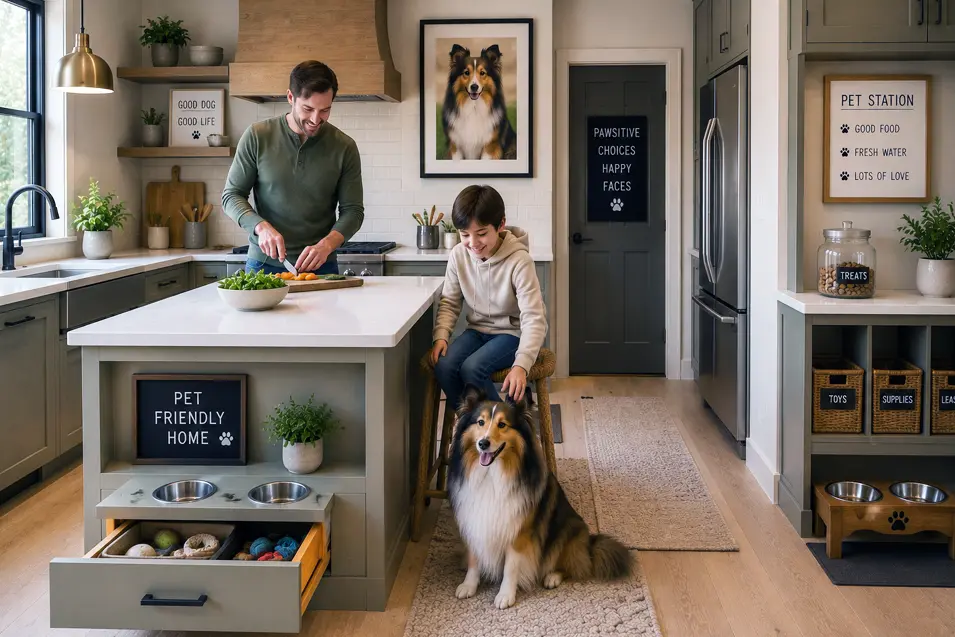
The kitchen is often called the heart of the home, and for many pet owners, it’s also one of the most popular gathering spots for their furry companions. Dogs often wait nearby during meal preparation, hoping for a treat, while cats may perch in sunny corners or observe household activities from a safe distance.
Because the kitchen serves both human and pet needs, thoughtful design can make daily life easier, safer, and more enjoyable for everyone. A well-planned kitchen accommodates food preparation, family gatherings, and pet care without sacrificing functionality or style.
Whether you’re building a new kitchen, renovating an existing one, or simply looking for ways to improve your current setup, incorporating pet-friendly features can create a space that works well for both two-legged and four-legged family members.
Why Pet-Friendly Kitchen Design Matters
Pets spend more time in the kitchen than many homeowners realize.
Common reasons include:
- Feeding routines
- Access to water
- Family interaction
- Treats and rewards
- Comfortable resting areas
Unfortunately, kitchens can also contain numerous hazards and sources of clutter if they aren’t designed with pets in mind.
A pet-friendly kitchen helps:
- Improve safety
- Simplify feeding routines
- Reduce messes
- Enhance organization
- Support daily convenience
The goal is to create a space where people can cook and gather while pets remain safe and comfortable.
Choose Durable, Pet-Friendly Flooring
Kitchen floors experience heavy use from both family members and pets.
The ideal flooring should be:
- Easy to clean
- Moisture resistant
- Scratch resistant
- Comfortable underfoot
- Slip resistant
Popular kitchen flooring options for pet owners include:
- Luxury vinyl plank flooring
- Porcelain tile
- Ceramic tile
- Engineered hardwood
- Sealed concrete
Many pet owners find luxury vinyl plank particularly appealing because it combines durability, water resistance, and comfort.
For senior pets, flooring with good traction can help reduce slips and falls.
Create a Dedicated Feeding Station
One of the easiest ways to improve kitchen organization is to establish a designated feeding area.
A dedicated feeding station can help:
- Reduce clutter
- Prevent spilled food from spreading
- Create routine for pets
- Keep bowls out of high-traffic areas
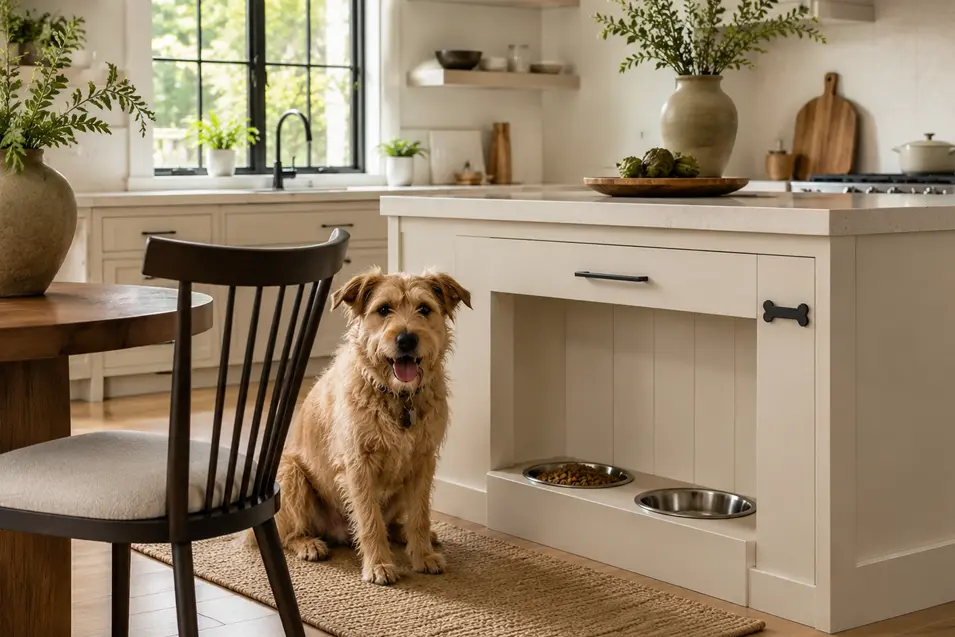
Popular feeding station ideas include:
- Built-in cabinet feeding drawers
- Corner feeding areas
- Recessed bowl stations
- Pull-out feeding shelves
Position food and water bowls where pets can eat comfortably without interfering with cooking activities.
Add Smart Pet Food Storage
Pet food bags can be bulky and difficult to manage.
Proper storage helps:
- Preserve freshness
- Prevent pests
- Reduce clutter
- Simplify feeding routines
Consider storing pet food in:
- Airtight containers
- Pull-out pantry drawers
- Dedicated cabinet spaces
- Built-in storage bins
Labeling containers can be especially helpful in multi-pet households where different foods may be used.
Designate a Water Station
Access to fresh water is essential for every pet.
A dedicated water station can reduce spills while ensuring pets stay hydrated throughout the day.
Options include:
- Traditional water bowls
- Pet water fountains
- Built-in water stations
- Spill-resistant bowls
Placing water stations away from major walkways can help prevent accidental spills and congestion.
Waterproof mats beneath bowls can further protect flooring.
Incorporate Easy-to-Clean Surfaces
Kitchen surfaces should be able to handle both cooking messes and pet-related accidents.
Practical choices include:
- Quartz countertops
- Tile backsplashes
- Washable wall finishes
- Moisture-resistant cabinetry
These materials simplify cleaning while standing up to daily wear.
Smooth surfaces also make it easier to remove pet hair and food debris.
Create a Comfortable Resting Area
Many pets enjoy spending time in the kitchen simply because that’s where their families gather.
Providing a designated resting space can help keep pets comfortable while preventing them from getting underfoot.
Consider adding:
- A dog bed in a quiet corner
- A built-in pet nook
- A cushioned mat
- A nearby crate or retreat space
This gives pets a place to relax while remaining close to household activity.
Keep Safety a Priority
Kitchens contain more potential hazards than almost any other room in the home.
Common dangers include:
- Sharp utensils
- Cleaning chemicals
- Hot appliances
- Open flames
- Toxic foods
- Electrical cords
Improve safety by:
- Using childproof cabinet locks
- Securing cleaning products
- Storing medications safely
- Keeping trash containers covered
- Limiting access during cooking when necessary
Prevention helps reduce the risk of accidents and emergency vet visits.
Install Pet-Friendly Cabinet Features
Modern kitchen design increasingly incorporates pet-specific cabinetry.
Popular features include:
- Pull-out feeding stations
- Built-in pet beds
- Hidden storage compartments
- Integrated food containers
These additions help maximize space while maintaining a clean and organized appearance.
They can be particularly valuable in smaller kitchens where every inch matters.
Manage Pet Hair and Dirt
The kitchen naturally attracts pet hair, especially in homes with dogs and cats that spend time nearby.
To minimize buildup:
- Vacuum regularly
- Use washable mats
- Groom pets consistently
- Choose easy-to-clean flooring
A well-maintained kitchen remains more hygienic and comfortable for everyone.
Routine maintenance is often easier than dealing with large cleaning projects later.
Plan for Traffic Flow
One of the most overlooked aspects of pet-friendly kitchen design is traffic flow.
Pets often establish predictable pathways through the home.
Consider:
- Feeding station placement
- Walkways around islands
- Access to water bowls
- Family movement patterns
A well-planned layout minimizes congestion and reduces the likelihood of pets becoming obstacles during meal preparation.
This is especially important in busy households and homes with multiple pets.
Include Storage for Pet Supplies
Many pet-related items are used daily in the kitchen.
Examples include:
- Treats
- Food scoops
- Medications
- Feeding accessories
- Supplements
Creating dedicated storage helps keep countertops clear and supplies easy to access.
Useful storage solutions include:
- Pantry shelves
- Pull-out drawers
- Labeled bins
- Cabinet organizers
Organization contributes significantly to overall kitchen functionality.
Consider Multi-Pet Households
Homes with multiple pets often require additional planning.
Helpful strategies include:
- Separate feeding stations
- Individual food storage containers
- Designated eating areas
- Multiple water stations
Reducing competition around food and resources can help create a calmer environment.
Thoughtful design can make mealtimes more efficient and less stressful.
Balancing Style and Practicality
A pet-friendly kitchen doesn’t have to look like a pet-focused space.
Modern design solutions allow homeowners to integrate pet features seamlessly into attractive kitchen layouts.
The most successful kitchens balance:
- Functionality
- Safety
- Durability
- Organization
- Style
By considering the needs of both people and pets during the design process, it’s possible to create a space that serves everyone well.
A Kitchen Designed for the Entire Family
The best kitchens recognize that pets are part of the family. By incorporating durable materials, dedicated feeding stations, smart storage, comfortable resting areas, and thoughtful safety measures, you can create a kitchen that supports both human activities and pet routines.
Whether you’re planning a major renovation or making small improvements, pet-friendly design choices can make everyday life more convenient and enjoyable. A well-designed kitchen helps keep pets safe, simplifies household organization, and creates a welcoming