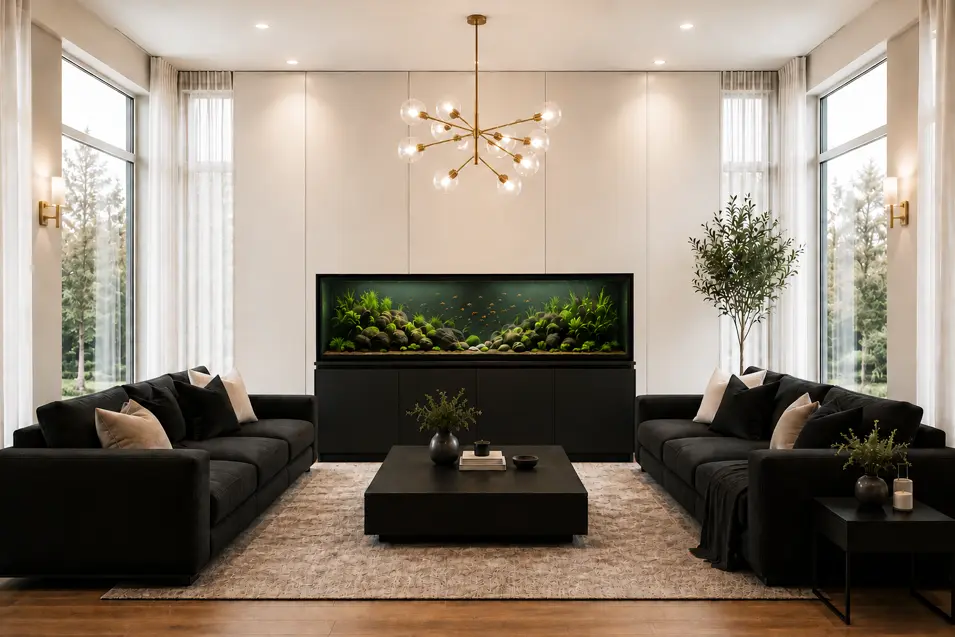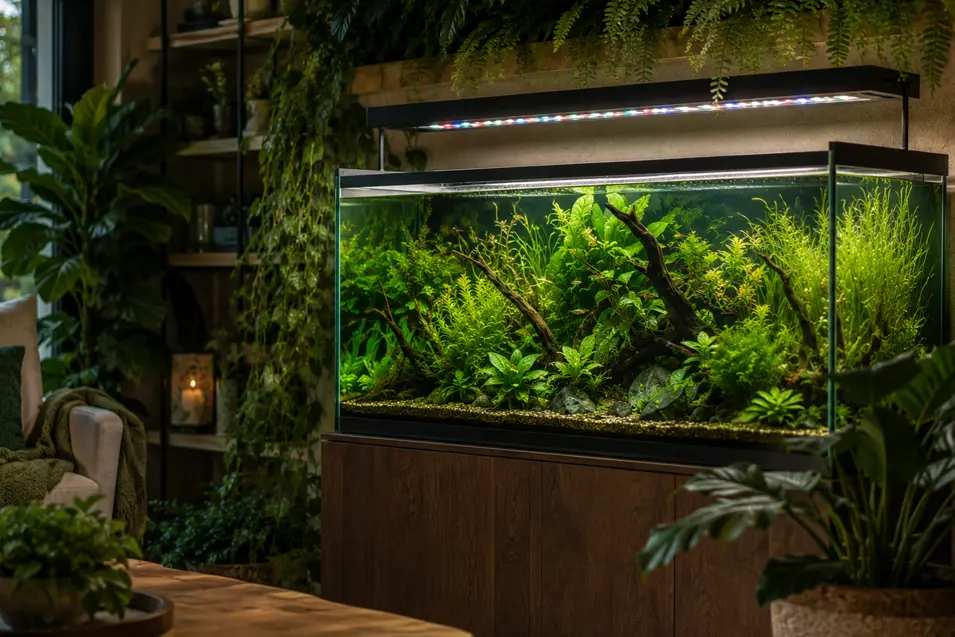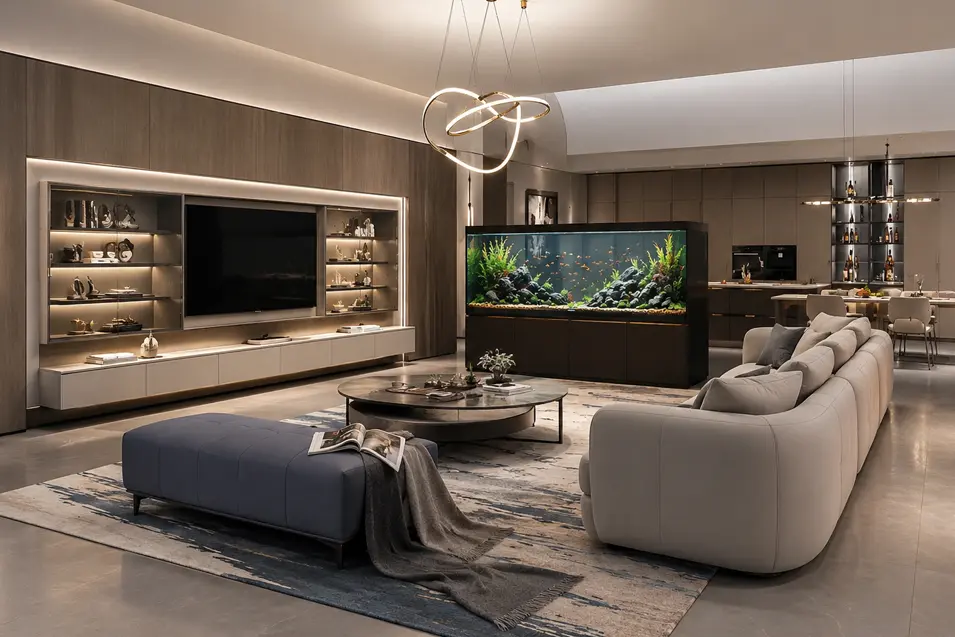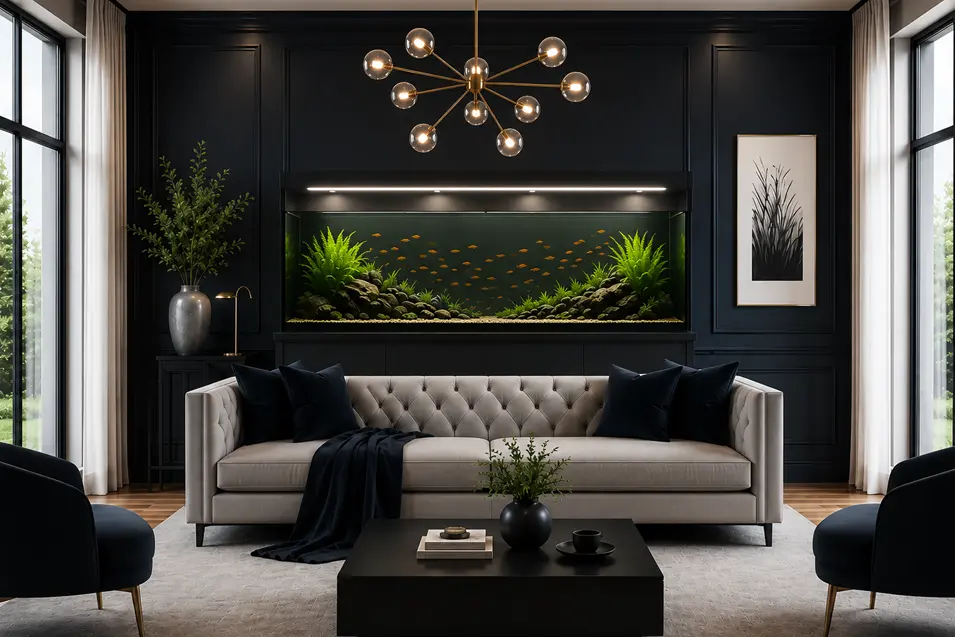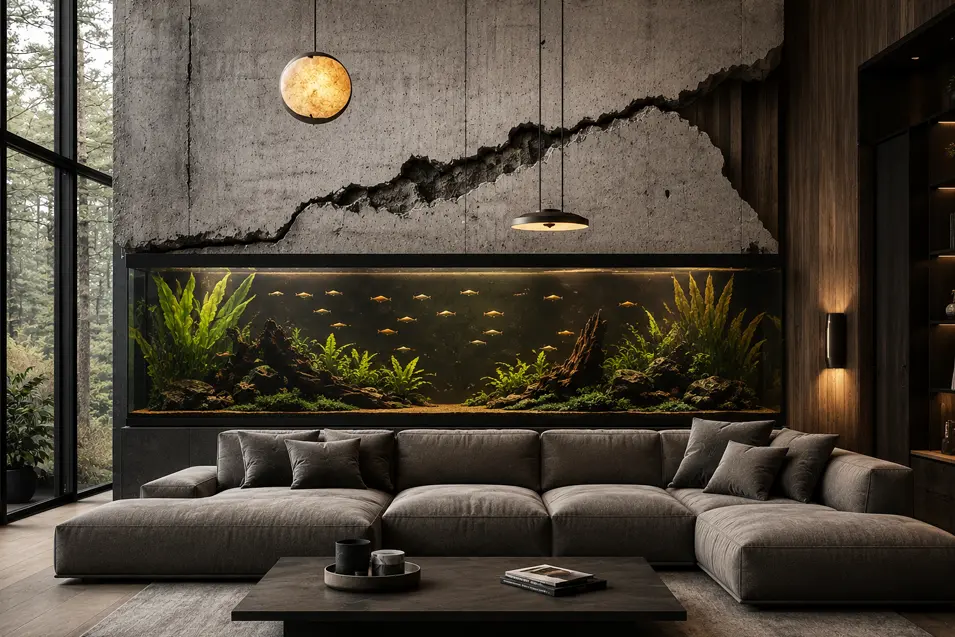
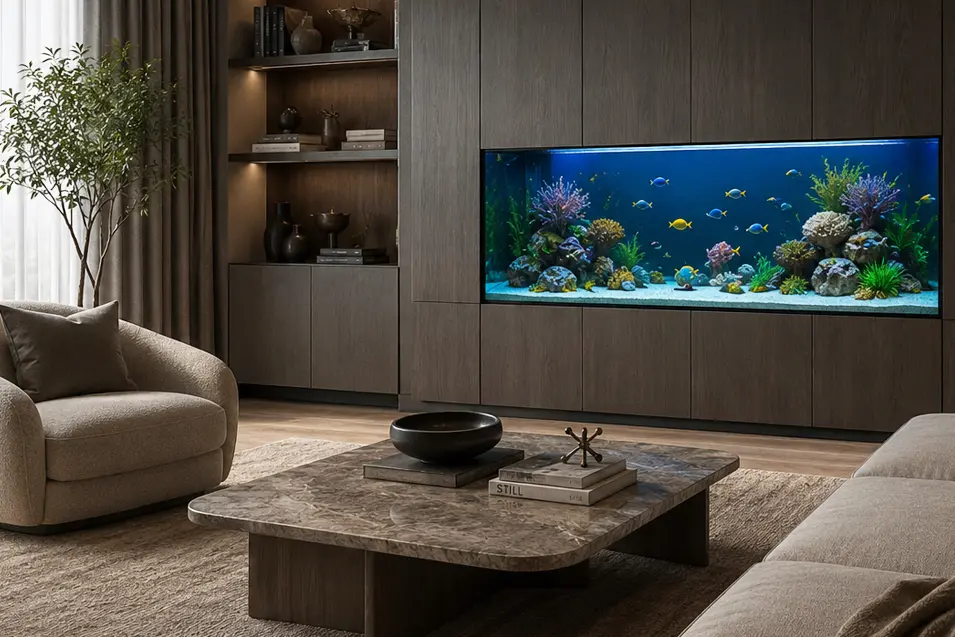
Few home features make a statement quite like a built-in aquarium wall. When thoughtfully designed, a large aquarium integrated into a wall can transform an ordinary room into a living, breathing showcase of nature. Whether it’s a vibrant freshwater community tank, a dramatic reef aquarium, or a peaceful planted aquascape, a built-in aquarium wall combines architecture, interior design, and fishkeeping into a single focal point.
However, creating a successful aquarium wall involves much more than simply cutting an opening and installing a tank. Structural support, maintenance access, electrical planning, filtration systems, and long-term practicality all play important roles in the project’s success.
Before investing in a custom installation, it’s important to understand the key design considerations that separate beautiful aquarium walls from costly mistakes.
Why Homeowners Choose Built-In Aquarium Walls
Aquarium walls create a visual impact that few other home features can match.
Unlike freestanding aquariums, which occupy floor space and function as standalone pieces of furniture, built-in aquarium walls become part of the home’s architecture. The aquarium appears integrated into the room itself, creating a polished and intentional design.
Homeowners often choose aquarium walls because they:
- Create a dramatic focal point
- Enhance luxury home design
- Hide equipment and plumbing
- Save floor space
- Improve room flow
- Add a unique natural element indoors
When properly designed, a built-in aquarium wall can feel like a living work of art.
Choosing the Right Location
Location is one of the most important decisions in the entire project.
A beautiful aquarium wall should be highly visible while remaining practical to maintain.
Popular locations include:
- Living rooms
- Dining rooms
- Home offices
- Entryways
- Hallways
- Open-concept spaces
Some homeowners use aquarium walls to separate rooms while preserving openness and natural sightlines.
Avoid Problem Areas
Even the most beautiful design can create problems if placed incorrectly.
Avoid installing aquarium walls:
- In direct sunlight
- Near heating and cooling vents
- Adjacent to exterior doors
- In rooms with significant temperature fluctuations
- In locations with limited maintenance access
A stable environment benefits both the aquarium and the surrounding structure.
Determining the Aquarium Size
One advantage of a custom aquarium wall is flexibility.
You can design the aquarium around the space rather than selecting from standard tank sizes.
When determining dimensions, consider:
- Room proportions
- Viewing distance
- Structural support
- Maintenance access
- Budget
While larger aquariums often create more visual impact, they also require greater planning and ongoing maintenance.
Interestingly, larger aquariums are often more stable from a water chemistry perspective, making them easier to manage once established.
Structural Considerations
Water is extremely heavy.
A completed aquarium contains:
- Water
- Glass or acrylic
- Gravel or substrate
- Decorations
- Rocks
- Equipment
Even moderately sized aquariums can weigh several hundred pounds, while large built-in systems may weigh thousands.
Before construction begins, homeowners should evaluate:
Floor Support
The floor beneath the aquarium must safely support the total weight of the system.
Depending on size and location, consultation with a structural engineer may be advisable.
Wall Construction
Not every wall can accommodate a built-in aquarium.
Load-bearing walls may require additional planning and reinforcement. In some cases, designing around existing structural elements may be necessary.
Future Access
Structural planning should include access points for:
- Plumbing
- Electrical systems
- Filtration
- Equipment replacement
- Emergency repairs
Many aquarium walls fail because maintenance access was overlooked during construction.
Designing for Maintenance
One of the most common mistakes in custom aquarium projects is prioritizing appearance over practicality.
Every aquarium requires regular care.
Tasks include:
- Feeding fish
- Cleaning glass
- Water changes
- Equipment servicing
- Aquascaping
- Catching fish when necessary
Without adequate access, even routine maintenance becomes frustrating.
Include Service Areas
Professional aquarium installations often include hidden service spaces behind the display.
These areas may contain:
- Sumps
- Filtration equipment
- Water storage containers
- Electrical panels
- Maintenance tools
The more convenient maintenance becomes, the more likely the aquarium will remain healthy and attractive over the long term.
Framing the Aquarium
The way an aquarium is framed significantly affects its visual impact.
Many homeowners choose to create a picture-frame effect around the viewing panel.
Common framing materials include:
- Wood trim
- Custom cabinetry
- Stone veneer
- Tile accents
- Drywall finishes
- Architectural molding
The frame should complement the room’s overall design style.
A contemporary home may benefit from clean, minimalist lines, while traditional interiors may incorporate detailed millwork and decorative trim.
Integrating Cabinetry and Storage
Aquariums require supplies.
Food, test kits, cleaning tools, medications, replacement parts, and maintenance equipment all need storage space.
Built-in cabinetry surrounding the aquarium can provide:
- Hidden storage
- Equipment access
- Electrical concealment
- Visual balance
Well-designed cabinetry helps maintain a clean appearance while keeping essential supplies close at hand.
Lighting Design
Lighting affects both the aquarium and the room itself.
Modern LED aquarium lighting offers excellent control over:
- Brightness
- Color temperature
- Day-night cycles
- Plant growth
- Coral health
Homeowners should also consider ambient room lighting.
Accent lighting around the aquarium can create a dramatic evening display while enhancing the room’s atmosphere.
Many aquarium walls become especially striking after sunset when the illuminated tank becomes the room’s primary focal point.
Freshwater or Saltwater?
The aquarium’s purpose should influence the wall design from the beginning.
Freshwater Aquariums
Freshwater systems generally require:
- Less equipment
- Lower costs
- Simpler maintenance
Popular options include:
- Community fish tanks
- Planted aquariums
- Cichlid displays
- Nature-inspired aquascapes
Saltwater Aquariums
Marine systems often require:
- Advanced filtration
- Protein skimmers
- Additional lighting
- More equipment space
However, they offer stunning opportunities for reef displays and colorful marine fish.
The choice affects both the design and the long-term operating requirements of the aquarium wall.
Creating a Viewing Experience
The best aquarium walls are designed around the viewer’s experience.
Consider:
- Seating locations
- Viewing angles
- Room traffic patterns
- Natural sightlines
The aquarium should be easily visible from the spaces where people naturally gather.
Many homeowners position aquarium walls where they can be enjoyed from sofas, dining tables, home offices, or reading areas.
This maximizes the calming and aesthetic benefits of the display.
Planning for the Future
A built-in aquarium wall is a long-term investment.
Before construction begins, think beyond the initial installation.
Ask yourself:
- Will this aquarium still fit my lifestyle in five years?
- Is there room for equipment upgrades?
- Can major components be replaced easily?
- Will future renovations affect the aquarium?
Planning for long-term flexibility can prevent expensive modifications later.
Conclusion
A built-in aquarium wall can become one of the most impressive features in a home, blending architecture, interior design, and aquatic life into a single breathtaking display. However, successful installations require thoughtful planning that balances aesthetics with practicality.
By considering structural support, maintenance access, equipment needs, lighting, and long-term usability from the beginning, homeowners can create an aquarium wall that remains beautiful and functional for many years to come.
When done right, a built-in aquarium wall isn’t simply a fish tank—it becomes a living centerpiece that brings movement, color, and nature into everyday life.
Frequently Asked Questions
How much does a built-in aquarium wall cost?
Costs vary significantly depending on aquarium size, construction requirements, cabinetry, filtration systems, and customization. Small projects may cost several thousand dollars, while luxury installations can reach tens of thousands of dollars or more.
Can a built-in aquarium be installed in a load-bearing wall?
In some cases, yes. However, structural modifications may be required, and consultation with a qualified contractor or structural engineer is strongly recommended.
Are built-in aquariums difficult to maintain?
They can be if maintenance access is poorly designed. Successful aquarium walls include adequate space for cleaning, equipment servicing, and future upgrades.
What is the best size for a built-in aquarium wall?
The ideal size depends on the room, budget, and viewing distance. Larger aquariums often create greater visual impact and offer improved water stability.
Is freshwater or saltwater better for a built-in aquarium wall?
Freshwater systems are generally less expensive and easier to maintain. Saltwater aquariums provide stunning colors and reef displays but require more equipment and ongoing care.
Related Reading
- Aquariums in the Home: Design, Placement, Planning, and Practical Living
- Built-In Aquariums vs. Freestanding Aquariums: Pros and Cons
- Room Divider Aquariums: Beautiful Living Spaces with Fish
- Aquariums as Statement Pieces in Home Design
- Aquarium Electrical Planning: Managing Cords, Heaters, Pumps, and Lighting Safely
- Aquarium Furniture: Stands, Cabinets, and Built-In Storage Solutions