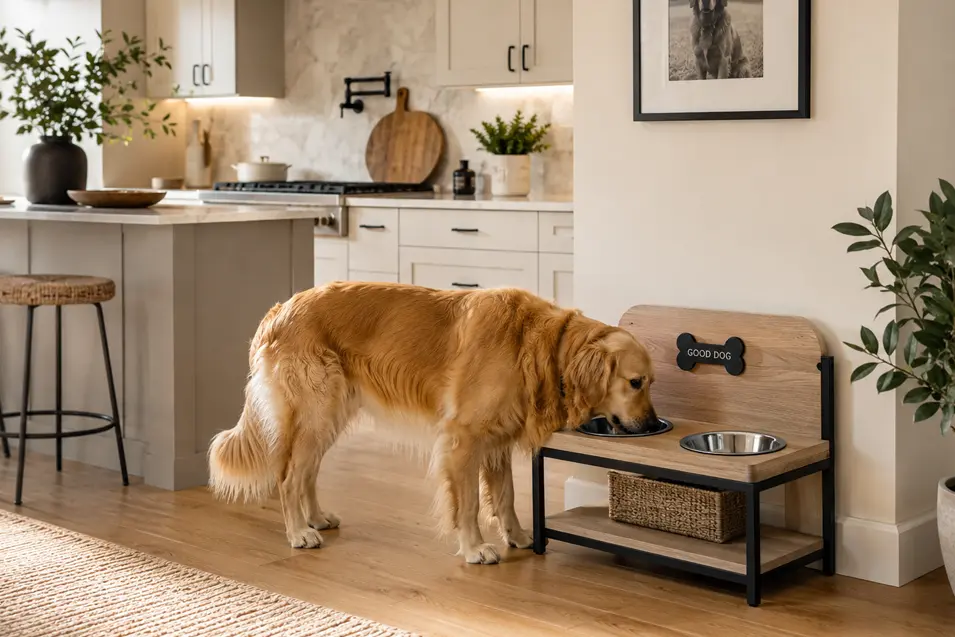
For many pet owners, feeding time is one of the most important daily routines. However, food bowls scattered across the floor, spilled water, and cluttered pet supplies can quickly create a messy and inefficient space. A well-designed pet feeding station not only keeps your home organized but also provides your furry companion with a comfortable, dedicated place to eat and drink.
Whether you’re renovating your kitchen, designing a mudroom, or simply looking to improve your pet’s dining experience, creating the perfect pet feeding station can make life easier for both you and your pet. Here’s everything you need to know to design a feeding area that combines functionality, cleanliness, and style.
Why a Dedicated Feeding Station Matters
Many pet owners place food and water bowls wherever there happens to be available floor space. While this may work temporarily, a designated feeding station offers several benefits.
A dedicated feeding area can:
- Reduce mess and spills
- Keep food supplies organized
- Create a consistent routine for pets
- Improve accessibility for older animals
- Blend seamlessly into your home’s design
- Help contain feeding-related clutter
Pets thrive on routine, and having a dedicated dining space can help them feel more comfortable and secure during mealtimes.
Choosing the Right Location
Location is one of the most important factors when designing a pet feeding station.
Ideally, the area should be:
- Quiet and low-traffic
- Easily accessible
- Away from litter boxes
- Protected from excessive foot traffic
- Convenient for refilling food and water
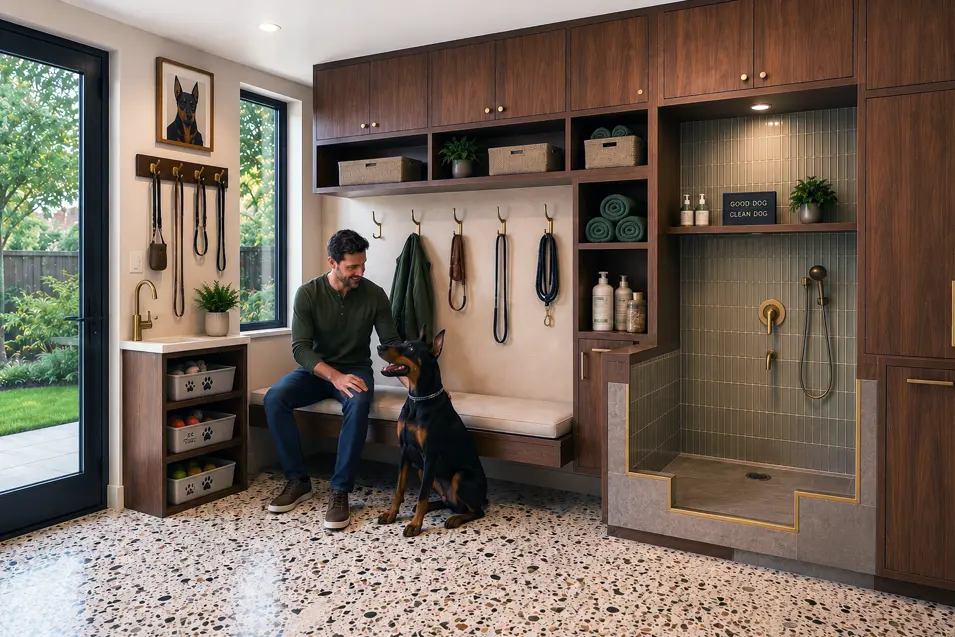
Many homeowners incorporate feeding stations into kitchens, mudrooms, laundry rooms, or pantry areas. The best location allows pets to eat comfortably without being disturbed while also fitting naturally into the home’s layout.
Built-In Feeding Stations
Built-in feeding stations have become increasingly popular in modern pet-friendly homes.
Common options include:
Cabinet Feeding Drawers
These pull-out drawers contain food and water bowls that can be hidden when not in use. They help maintain a clean appearance while reducing floor clutter.
Island Feeding Nooks
Kitchen islands often have unused space beneath overhangs. This area can be transformed into a cozy feeding station that remains out of the main traffic flow.
Under-Counter Feeding Areas
Custom cabinetry can include dedicated openings designed specifically for pet bowls, creating a streamlined and attractive solution.
Built-in designs are particularly appealing for homeowners who want their pet amenities to complement their interior décor.
Selecting the Right Food and Water Bowls
Not all bowls are created equal. Choosing quality feeding equipment can improve both convenience and pet comfort.
Popular bowl materials include:
Stainless Steel
- Durable
- Easy to clean
- Resistant to bacteria
- Long-lasting
Ceramic
- Attractive appearance
- Heavy enough to resist tipping
- Available in many styles
Elevated Feeding Bowls
Elevated feeders can benefit some larger dogs by reducing strain on the neck and joints. However, pet owners should consult their veterinarian regarding the best feeding height for their specific breed and health needs.
Avoid lightweight plastic bowls whenever possible, as they can become scratched and harbor bacteria over time.
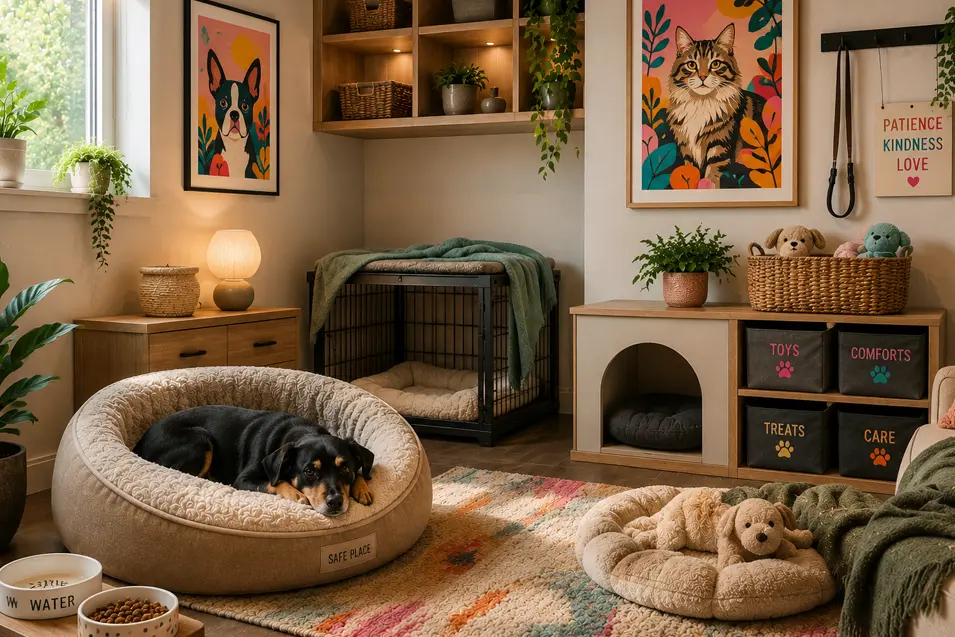
Create Storage for Pet Supplies
A feeding station becomes even more functional when paired with dedicated storage.
Consider including space for:
- Dry food containers
- Treats
- Supplements
- Feeding scoops
- Medications
- Food mats
- Cleaning supplies
Pull-out pantry bins and airtight storage containers help preserve freshness while making daily feeding routines more efficient.
Protect Your Floors
Even the neatest pets can create messes during mealtime.
Water splashes, food crumbs, and occasional spills can damage flooring if left unattended.
To protect your floors:
- Use waterproof feeding mats
- Choose easy-to-clean flooring materials
- Install feeding stations on tile or vinyl surfaces
- Clean spills promptly
Floor protection becomes especially important in homes with hardwood flooring.
Consider Multiple Pet Households
Homes with multiple pets often require additional planning.
Some solutions include:
- Separate feeding stations
- Individual feeding zones
- Elevated feeding areas for specific pets
- Designated spaces for different diets
Separate feeding areas can reduce competition, prevent food stealing, and make it easier to monitor each pet’s eating habits.
Incorporate Fresh Water Access
Hydration is just as important as nutrition.
Modern feeding stations often include features such as:
- Built-in water bowls
- Pet fountains
- Spill-resistant water systems
- Easy-access refill stations
Many pets are encouraged to drink more when clean, fresh water is consistently available.
Design for Senior Pets
As pets age, feeding can become more challenging.
Senior pets may benefit from:
- Elevated food bowls
- Non-slip feeding surfaces
- Easily accessible locations
- Larger feeding areas for mobility aids
Thoughtful design can make mealtime more comfortable while supporting long-term health and mobility.
Keep Cleanliness a Priority
A feeding station should be easy to maintain.
Regular cleaning helps prevent:
- Bacterial growth
- Mold development
- Food contamination
- Unpleasant odors
Choose materials that wipe clean easily and wash bowls daily to maintain a healthy feeding environment.
Blend Functionality with Style
One of the biggest trends in pet-friendly home design is integrating pet spaces into the overall aesthetic of the home.
Design ideas include:
- Matching cabinetry finishes
- Custom-built feeding drawers
- Decorative food storage containers
- Hidden feeding stations
- Coordinated feeding mats
Today’s pet feeding stations can be both highly functional and visually appealing.
Smart Feeding Technology
Technology is also making its way into pet feeding areas.
Popular smart features include:
- Automatic feeders
- Portion-controlled dispensers
- App-controlled feeding schedules
- Smart water fountains
- Feeding cameras
These tools can be particularly useful for busy pet owners or households with specialized feeding requirements.
Final Thoughts
Creating the perfect pet feeding station involves more than simply placing bowls on the floor. With thoughtful planning, proper storage, durable materials, and a convenient location, you can design a dedicated feeding area that enhances both your pet’s comfort and your home’s organization.
Whether you choose a simple feeding nook or a fully customized built-in station, investing in a well-designed pet feeding space can improve daily routines, reduce clutter, and create a cleaner, more enjoyable environment for every member of the family.