When a dog suffers an injury, undergoes surgery, or experiences a medical condition that requires limited activity, recovery becomes a critical part of the healing process. While veterinary treatment is essential, what happens at home often plays an equally important role in determining how quickly and successfully a dog recovers.
One of the best ways to support healing is by creating a dedicated recovery room. A safe, comfortable, and controlled environment can reduce stress, prevent reinjury, and help your dog rest properly while recovering. Whether your dog is recovering from orthopedic surgery, an illness, or a minor injury, here’s how to create the ideal recovery space.
Why a Recovery Room Matters
Dogs don’t always understand their physical limitations.
Even when injured, many dogs will attempt to:
- Run
- Jump
- Climb stairs
- Play
- Chase toys
Unfortunately, excessive activity can delay healing and sometimes lead to serious complications.
A dedicated recovery room helps:
- Restrict movement
- Reduce stress
- Prevent accidents
- Encourage rest
- Simplify monitoring
Providing a controlled environment allows your dog’s body to focus on healing.
Choose the Right Location
The ideal recovery room should be:
- Quiet
- Comfortable
- Easy to access
- Free from excessive household traffic
Good options often include:
- Spare bedrooms
- Home offices
- Finished basements
- Quiet family rooms
Avoid locations with:
- Stairs
- Slippery flooring
- Constant activity
- Loud noises
The goal is to create a calm space where your dog can rest without frequent disturbances.
Limit Physical Activity
One of the primary purposes of a recovery room is activity restriction.
Depending on your veterinarian’s recommendations, this may involve:
- Crate rest
- Exercise pens
- Baby gates
- Restricted room access
Many post-surgical recovery plans require several weeks of controlled movement.
Always follow your veterinarian’s instructions regarding activity levels.
Provide Comfortable Bedding
Comfort plays a major role in recovery.
The ideal bed should be:
- Supportive
- Easy to clean
- Large enough for comfortable positioning
- Thick enough to cushion pressure points
Orthopedic dog beds can be particularly helpful for:
- Senior dogs
- Joint injuries
- Orthopedic surgery recovery
Washable covers are useful for maintaining cleanliness throughout the healing process.
Ensure Easy Access to Food and Water
Dogs recovering from injuries should not need to travel far to access essentials.
Position food and water bowls:
- Close to resting areas
- On stable surfaces
- Away from obstacles
For dogs with mobility challenges, elevated bowls may improve comfort during meals.
Keeping necessities nearby reduces unnecessary movement.
Eliminate Slip Hazards
Slippery floors can significantly increase the risk of reinjury.
Common problem surfaces include:
- Hardwood flooring
- Tile
- Laminate
- Polished concrete
Improve traction by adding:
- Non-slip rugs
- Rubber-backed runners
- Foam flooring mats
Secure all floor coverings to prevent shifting.
Remove Potential Obstacles
Injured dogs often have reduced mobility and balance.
Remove hazards such as:
- Small furniture
- Electrical cords
- Loose rugs
- Decorative objects
- Pet toys not approved for recovery
A clear path helps minimize accidents and reduces frustration.
Maintain a Comfortable Temperature
Recovery rooms should remain comfortably climate-controlled.
Extreme temperatures can negatively affect healing and comfort.
Monitor:
- Room temperature
- Air circulation
- Drafts
- Direct sunlight exposure
Older dogs and those recovering from surgery may be particularly sensitive to temperature fluctuations.
Create a Calm Environment
Stress can interfere with recovery and healing.
To promote relaxation:
- Limit loud noises
- Reduce household interruptions
- Keep interactions calm
- Avoid overstimulation
Soft background noise such as calming music may help some dogs feel more comfortable.
A peaceful environment encourages rest and reduces anxiety.
Keep Medications Organized
Many recovering dogs require medications during the healing process.
Common treatments may include:
- Pain medications
- Anti-inflammatory drugs
- Antibiotics
- Supplements
Store medications:
- Safely out of reach
- In clearly labeled containers
- According to veterinary instructions
Creating a medication station within the recovery area can simplify daily care.
Prevent Access to Stairs
Stairs present a significant challenge for many recovering dogs.
Conditions commonly requiring stair restrictions include:
- ACL surgery
- Hip surgery
- Back injuries
- Neurological conditions
Use:
- Baby gates
- Closed doors
- Temporary barriers
to prevent unsupervised stair use.
Monitor Bathroom Breaks
Many injured dogs need assistance during bathroom trips.
Helpful tools may include:
- Support harnesses
- Mobility slings
- Short leashes
- Non-slip pathways
Keep outdoor trips brief and focused on necessary bathroom activities unless otherwise directed by your veterinarian.
Consider Recovery Crates and Exercise Pens
For some dogs, complete room confinement may not be enough.
Crates and exercise pens can help:
- Limit movement
- Prevent jumping
- Improve safety
- Encourage rest
The appropriate setup depends on your dog’s size, temperament, and medical condition.
Always ensure enough space for comfortable movement and position changes.
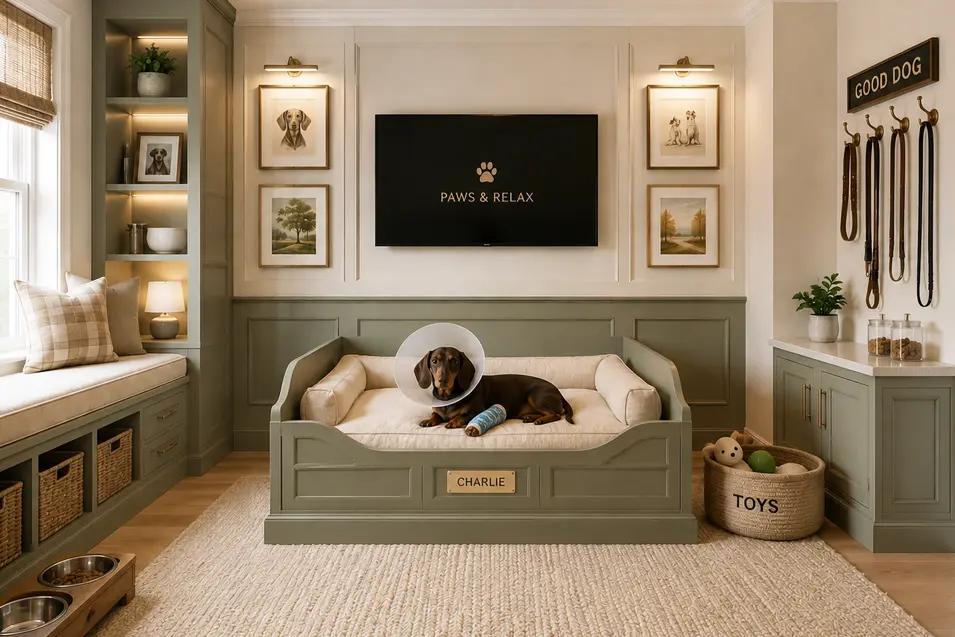
Prevent Licking and Chewing
Many dogs attempt to lick surgical sites or wounds.
This behavior can:
- Delay healing
- Introduce infection
- Damage sutures
Your veterinarian may recommend:
- Elizabethan collars (cones)
- Recovery suits
- Inflatable collars
Supervision remains important even when protective devices are used.
Provide Mental Stimulation
Recovery often involves boredom due to reduced activity.
Safe enrichment options may include:
- Food puzzles approved by your veterinarian
- Snuffle mats
- Gentle training exercises
- Interactive feeding toys
Mental stimulation helps reduce frustration while keeping activity levels appropriate.
Monitor for Changes
A recovery room makes it easier to observe your dog’s condition.
Watch for:
- Changes in appetite
- Increased pain
- Swelling
- Discharge
- Behavioral changes
- Difficulty standing or walking
Promptly report concerns to your veterinarian.
Early intervention can prevent complications.
Managing Recovery in Multi-Pet Households
Other pets can unintentionally disrupt the healing process.
Consider:
- Separate recovery spaces
- Supervised interactions
- Controlled introductions
This helps prevent rough play and accidental injuries during recovery.
Follow Veterinary Instructions
Every injury and surgery is different.
Your veterinarian’s recommendations should always take priority over general advice.
Recovery plans may include:
- Activity restrictions
- Physical therapy
- Medication schedules
- Follow-up appointments
Carefully following these instructions supports the best possible outcome.
Final Thoughts
Creating a safe recovery room is one of the most effective ways to support an injured dog’s healing process. By providing a calm, comfortable, and controlled environment, pet owners can help reduce stress, prevent setbacks, and encourage proper rest.
From supportive bedding and non-slip flooring to organized medication stations and activity management, every detail contributes to a safer recovery experience. While healing takes time, a thoughtfully designed recovery space can make the process more comfortable for both dogs and the people who care for them.