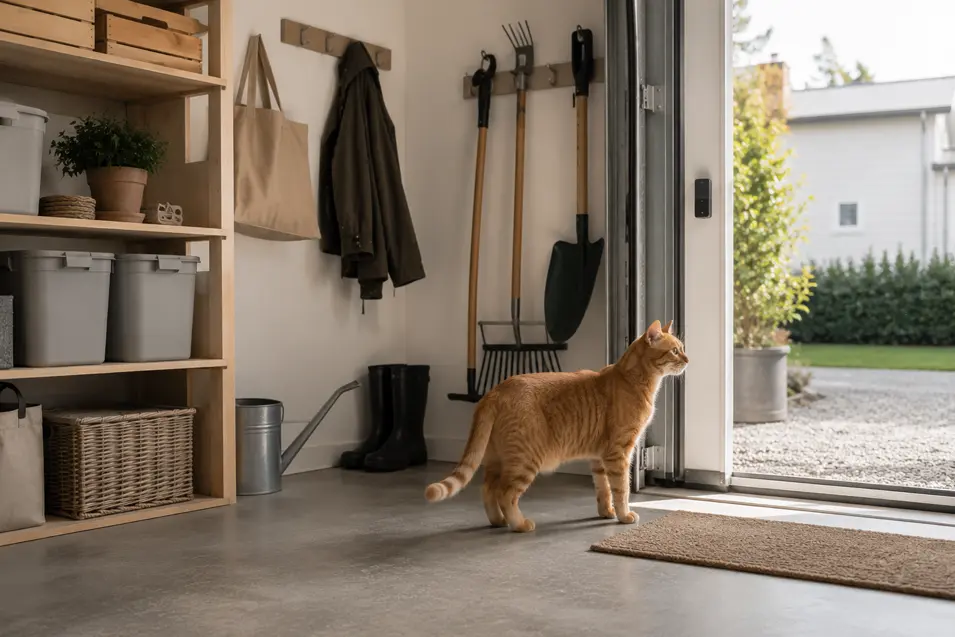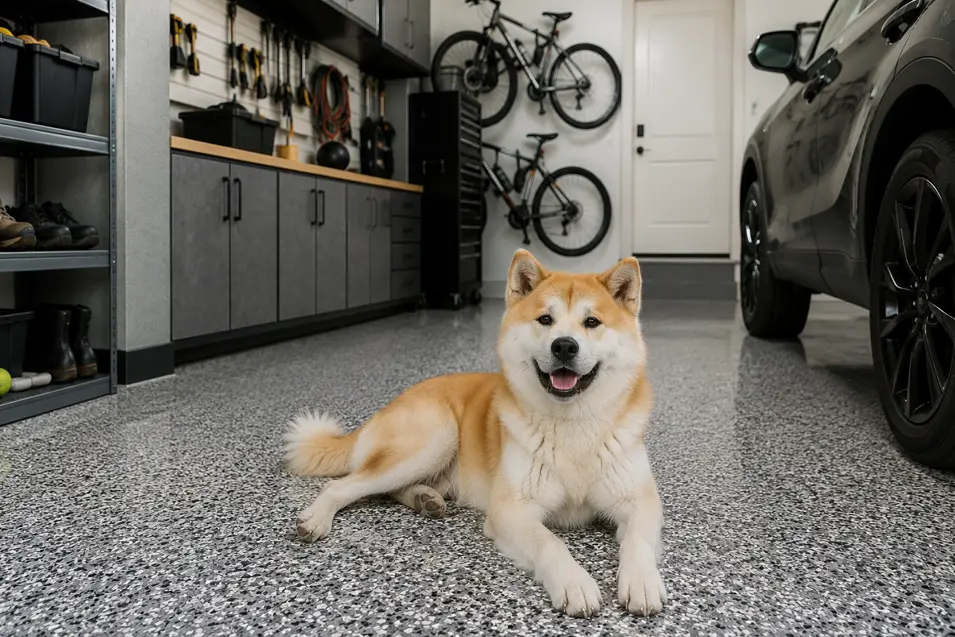
For many homeowners, the garage serves as much more than a place to park vehicles. It often functions as a workshop, storage area, gardening center, hobby space, and household command center. At the same time, many pets naturally gravitate toward garages because they offer access to the outdoors, interesting smells, and opportunities to spend time near their owners.
While garages can be useful spaces for pet owners, they also present unique challenges. Tools, chemicals, machinery, and clutter can create hazards for curious dogs and cats. Fortunately, with thoughtful planning and organization, it’s possible to create a garage workspace that remains productive for humans while being safer and more accommodating for pets.
A pet-friendly garage workspace isn’t about turning the garage into a pet room. Instead, it’s about designing a space that reduces risks, improves organization, and allows pets to be nearby without unnecessary exposure to hazards.
Why Pets Are Drawn to Garages
Many pets enjoy spending time wherever their owners are.
If you frequently work on projects, maintain equipment, or complete household tasks in the garage, your dog or cat may naturally want to accompany you. Garages also offer a variety of scents, sounds, and visual stimulation that many animals find interesting.
Common reasons pets are attracted to garages include:
- Access to outdoor areas
- New smells and textures
- Warm or cool resting spots
- Time spent with family members
- Curiosity about ongoing activities
Because pets often view the garage as an extension of their living environment, it makes sense to consider their safety when organizing the space.
Start With Safety First
Before creating a comfortable environment for pets, address potential hazards.
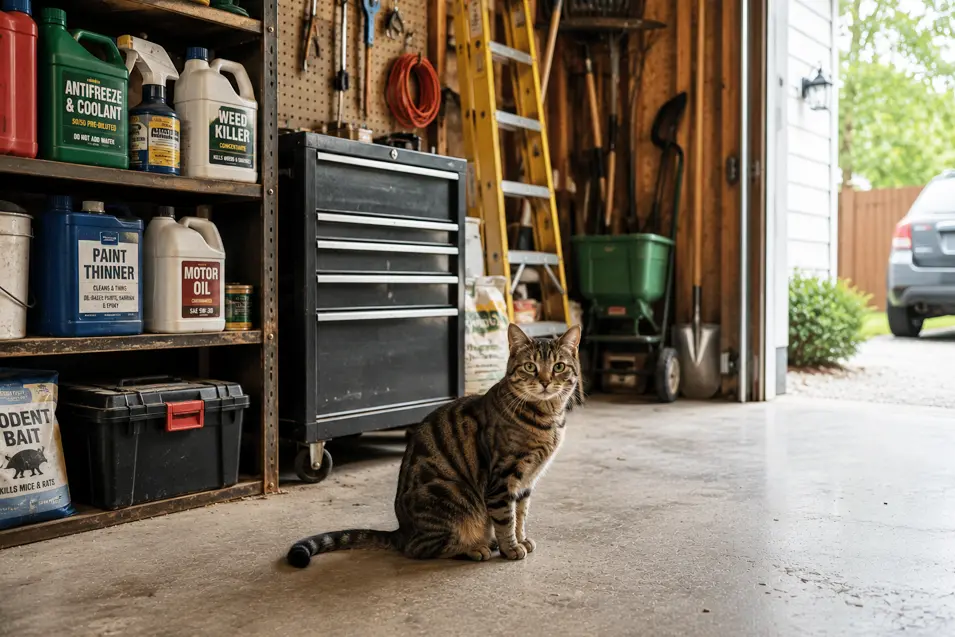
Garages frequently contain dangerous items such as:
- Automotive fluids
- Fertilizers and pesticides
- Paints and solvents
- Power tools
- Sharp hardware
- Electrical cords
All hazardous materials should be stored in secure cabinets or on elevated shelving where pets cannot access them.
The goal is to minimize opportunities for accidental exposure while maintaining convenient access for household use.
Create Clearly Defined Work Zones
One of the most effective ways to improve garage safety is through organization.
Designating specific zones helps separate work activities from pet areas and reduces clutter throughout the space.
Consider organizing the garage into sections such as:
Workshop Area
Tools, workbenches, and project materials should remain confined to a dedicated workspace.
Storage Area
Seasonal items, household supplies, and equipment can be organized using shelves and cabinets.
Pet Care Zone
Create a separate area specifically for pet-related activities and supplies.
Clearly defined zones improve safety and make the garage easier to use.
Design a Dedicated Pet Area
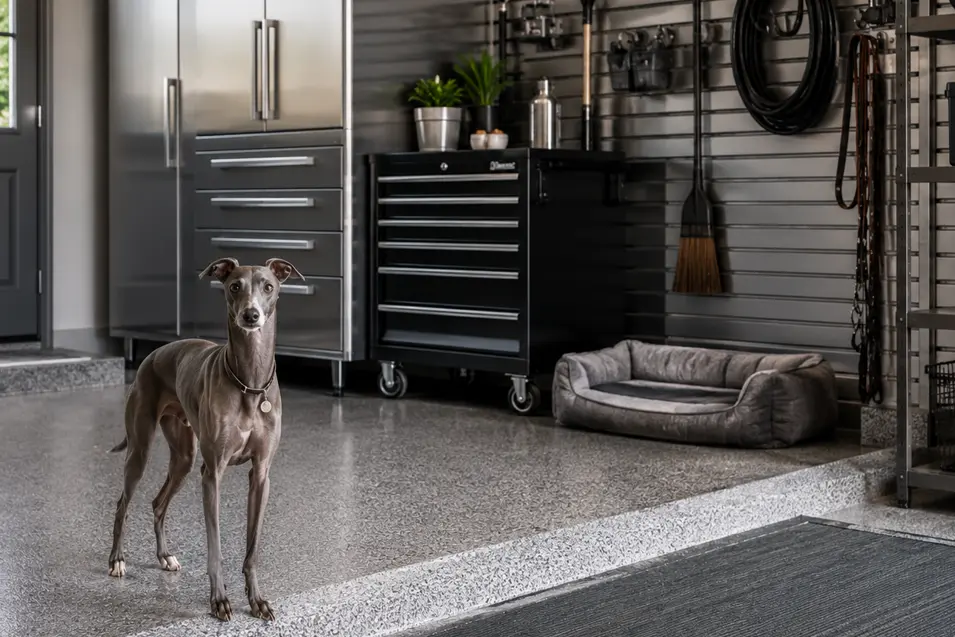
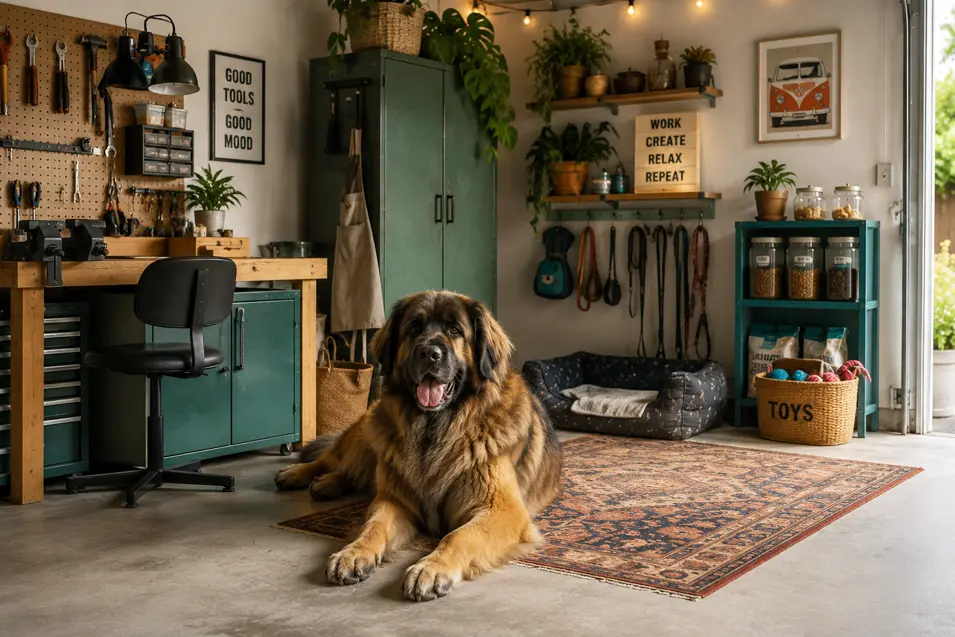
If your pets regularly accompany you to the garage, consider creating a designated space where they can rest comfortably.
This area doesn’t need to be elaborate.
Simple additions may include:
- A washable pet bed
- A durable floor mat
- Fresh water
- A few favorite toys
- Shade during warmer months
Providing an approved resting area encourages pets to remain away from potentially hazardous workspaces.
Position the area away from vehicle traffic, workbenches, and chemical storage locations.
Incorporate Pet Supply Storage
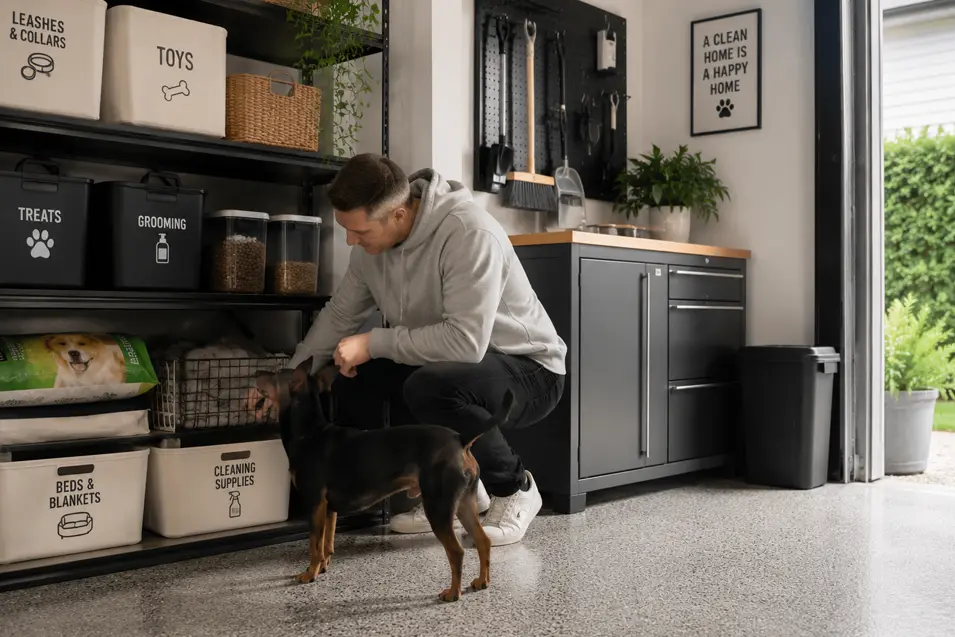
A garage workspace can double as a convenient storage center for pet supplies.
Many homeowners already use garage space to store:
- Pet food
- Outdoor toys
- Leashes
- Travel crates
- Exercise equipment
- Waste bags
- Grooming supplies
Dedicated cabinets or shelving help keep supplies organized while preventing clutter from spreading into other areas of the home.
Clearly labeled containers make it easier to locate items quickly.
Consider a Pet Washing Station
One of the most popular garage upgrades for pet owners is a pet washing station.
Dogs often return from walks, hikes, or backyard play sessions covered in dirt and mud. Having a designated washing area in the garage helps prevent messes from entering the home.
A pet washing station may include:
- A low-entry wash basin
- Handheld sprayer
- Non-slip surfaces
- Towel storage
- Grooming supply storage
Even a simple utility sink can make routine cleanup significantly easier.
Choose Durable Flooring
Garage floors experience heavy use, particularly in households with pets.
The ideal flooring should be:
- Easy to clean
- Resistant to stains
- Durable
- Slip resistant
- Moisture resistant
Popular options include:
- Sealed concrete
- Epoxy coatings
- Polyaspartic floor coatings
- Rubber flooring in designated pet areas
Adding washable mats can provide additional comfort and traction.
Manage Temperature and Ventilation
Garage temperatures can fluctuate dramatically throughout the year.
During summer, garages may become extremely hot, while winter conditions can make the space uncomfortable or unsafe.
If pets spend time in the garage, consider:
- Improving ventilation
- Adding fans
- Insulating garage doors
- Managing humidity levels
- Providing access to fresh water
Pets should never be left unattended in garages during extreme temperatures.
Secure Tools and Equipment
Tools and equipment should always be stored safely when not in use.
Pegboards, cabinets, wall racks, and lockable storage systems help reduce risks while improving organization.
Particular attention should be given to:
- Sharp tools
- Power tools
- Extension cords
- Fasteners and hardware
- Batteries
A tidy workspace is generally a safer workspace for both pets and people.
Keep Floors Clear
Garage floors often accumulate clutter over time.
Boxes, cords, tools, sports equipment, and project materials can create obstacles that increase the risk of accidents.
Maintaining clear walkways helps:
- Reduce tripping hazards
- Improve pet safety
- Simplify cleaning
- Enhance workspace efficiency
Regular organization sessions can prevent clutter from becoming overwhelming.
Create an Easy Cleanup Station
Many pet owners use the garage as a transition area between outdoor activities and the home.
An organized cleanup station can help manage dirt and debris before pets enter living spaces.
Useful items may include:
- Towels
- Paw-cleaning supplies
- Brushes
- Waste bags
- Pet-safe cleaning products
Having these supplies readily available makes cleanup faster and more convenient.
Plan for Future Needs
A pet-friendly garage workspace should be flexible enough to adapt over time.
Puppies grow, senior pets may require different accommodations, and storage needs often change. Modular storage systems and adjustable shelving can help the space evolve as your household’s needs change.
Planning for flexibility helps maximize long-term value and functionality.
The Bottom Line
Creating a pet-friendly garage workspace is about balancing safety, organization, and practicality. By securing hazardous materials, creating designated zones, improving storage, and providing a comfortable area for pets, homeowners can build a workspace that supports both productivity and pet safety.
Whether you use your garage for hobbies, maintenance projects, gardening, or household storage, a thoughtful design can help ensure that curious dogs and cats remain safe while still enjoying time near the people they love. With a few smart improvements, your garage can become one of the most functional and pet-friendly spaces in the home.