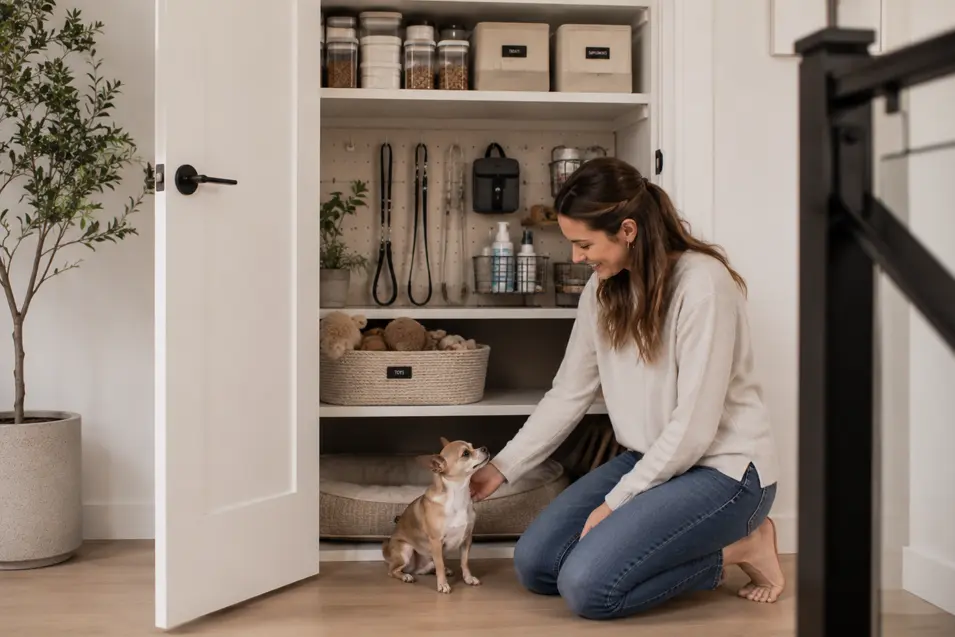
Pets bring a surprising amount of stuff into a home. Between food, treats, toys, grooming supplies, leashes, collars, medications, seasonal gear, travel accessories, and cleaning products, pet supplies can quickly spread throughout multiple rooms. Before long, closets, kitchen cabinets, laundry rooms, and entryways may all contain various pet-related items.
One of the best ways to reduce clutter and improve organization is to create a dedicated pet supply closet. Whether it’s a small hallway closet, a section of a mudroom cabinet, or a custom-built storage area, having a central location for pet essentials can simplify daily routines while making your home feel more organized.
A well-designed pet supply closet doesn’t have to be large. The key is creating a system that makes it easy to find what you need while keeping supplies safe, accessible, and neatly stored.
Why Create a Pet Supply Closet?
Many pet owners store supplies wherever space is available.
As a result, pet food ends up in the pantry, toys are scattered throughout the house, leashes hang by the door, and grooming supplies are tucked away in bathroom cabinets.
A dedicated pet supply closet offers several advantages:
- Reduced household clutter
- Easier organization
- Faster access to supplies
- Better inventory management
- Improved safety
- More efficient daily routines
Instead of searching multiple locations, everything is stored in one convenient place.
Choosing the Right Location
The ideal location depends on your home’s layout and your pet’s routine.
Popular options include:
- Hall closets
- Mudrooms
- Laundry rooms
- Utility rooms
- Pantry extensions
- Garage storage areas
Choose a location that is convenient but not disruptive to daily household activities.
For many families, a mudroom or laundry room provides the perfect balance of accessibility and storage space.
Start by Taking Inventory
Before organizing the closet, gather all pet-related items and sort them into categories.
Common categories include:
- Food and treats
- Toys
- Grooming supplies
- Leashes and harnesses
- Health products
- Cleaning supplies
- Travel gear
- Seasonal accessories
Taking inventory helps determine how much storage space you’ll need and may reveal items that are no longer used.
Store Pet Food Properly
Pet food often takes up the most space in a supply closet.
Proper storage is important for maintaining freshness and preventing pest problems.
Consider using:
- Airtight containers
- Food-safe bins
- Stackable storage containers
Benefits include:
- Better freshness
- Reduced odors
- Pest prevention
- Easier portion management
Label containers clearly if you have multiple pets with different diets.
Create Zones Within the Closet
The most organized pet supply closets use designated zones for different types of supplies.
Daily Essentials
Store frequently used items at eye level.
Examples include:
- Leashes
- Harnesses
- Waste bags
- Treats
Food and Feeding Supplies
Keep food, bowls, and feeding accessories together.
Grooming Supplies
Store brushes, shampoos, nail clippers, and grooming tools in a dedicated section.
Health and Wellness
Reserve a space for:
- Medications
- Supplements
- First-aid supplies
- Flea and tick products
Organization by category makes supplies easier to locate and return after use.
Use Clear Storage Bins
Clear bins are one of the easiest ways to improve closet organization.
Advantages include:
- Easy identification
- Protection from dust
- Better categorization
- Efficient use of shelf space
Labeling bins adds another layer of organization and makes it easier for family members to maintain the system.
Install Adjustable Shelving
Pet supply needs often change over time.
Adjustable shelving provides flexibility for:
- Growing pets
- New supplies
- Seasonal storage
- Bulk purchases
Customizable shelving allows the closet to evolve with your household’s needs.
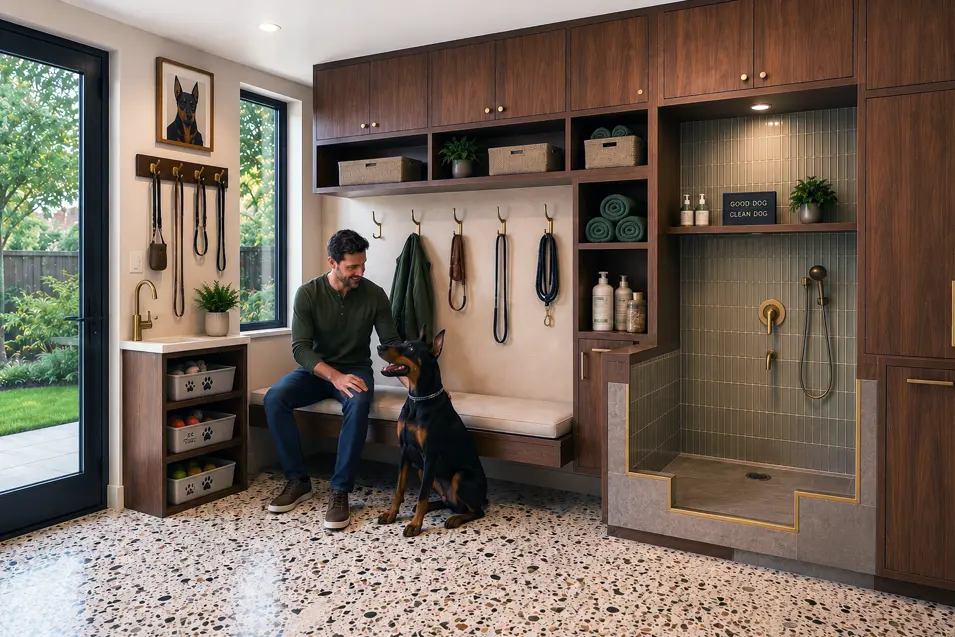
Add Hooks for Hanging Items
Hooks can dramatically improve functionality.
Use them for:
- Leashes
- Harnesses
- Jackets
- Travel accessories
- Waste bag dispensers
Wall-mounted hooks help keep frequently used items visible and easy to access.
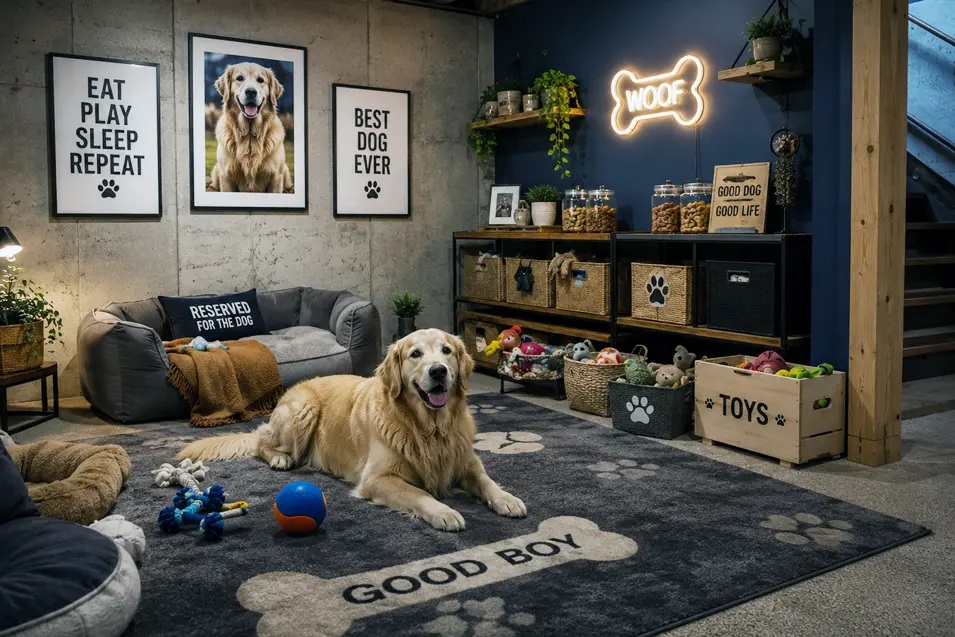
Organize Toys Effectively
Pet toys can quickly become overwhelming.
Instead of storing them in multiple locations, dedicate a shelf or bin to toy storage.
You may choose to organize toys by:
- Indoor use
- Outdoor use
- Training purposes
- Seasonal rotation
Rotating toys periodically can also help maintain your pet’s interest.
Include a Cleaning Supply Section
Pet ownership often involves occasional messes.
A dedicated cleaning section can include:
- Stain removers
- Pet-safe cleaners
- Paper towels
- Wipes
- Odor-control products
Having these supplies readily available allows for quick response when accidents occur.
Create a Travel and Adventure Shelf
Many pets have equipment used only occasionally.
Examples include:
- Travel bowls
- Crates
- Car restraints
- Hiking gear
- Life jackets
Storing these items together makes them easier to find when needed.
Plan for Seasonal Supplies
Different seasons often require different pet products.
Winter
- Coats
- Boots
- Paw balm
Spring
- Rain gear
- Extra towels
Summer
- Cooling mats
- Portable water systems
Fall
- Reflective gear
- Outdoor activity accessories
Seasonal bins help keep the closet organized year-round.
Keep Safety in Mind
Not every pet product should be easily accessible.
Store potentially hazardous items securely, including:
- Medications
- Flea treatments
- Cleaning products
- Grooming chemicals
If pets can access the closet, consider childproof latches or elevated storage areas.
Label Everything
Labels may seem unnecessary at first, but they make long-term organization much easier.
Labels help:
- Family members locate supplies
- Prevent clutter
- Encourage items to be returned properly
- Simplify inventory checks
Even simple labels can make a significant difference.
Review and Refresh Regularly
Pet supply closets benefit from occasional maintenance.
Every few months:
- Check expiration dates
- Discard damaged toys
- Reorganize shelves
- Restock essentials
- Donate unused items
Regular upkeep prevents clutter from accumulating again.
The Bottom Line
A dedicated pet supply closet is one of the simplest ways to bring order to a pet-friendly home. By creating a centralized location for food, toys, grooming supplies, health products, travel gear, and cleaning supplies, homeowners can reduce clutter while making daily pet care easier and more efficient.
Whether you dedicate an entire closet or simply organize a section of an existing storage space, a thoughtful system can save time, reduce stress, and help ensure that everything your pets need is always within easy reach.