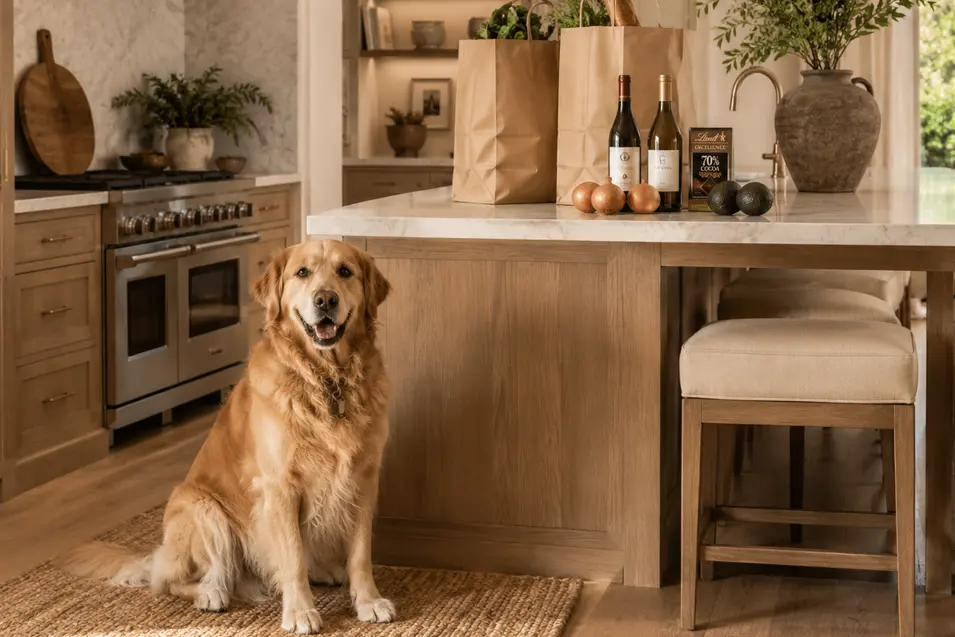
Most pet owners know that certain foods can be dangerous for dogs and cats, but many are surprised to learn just how often accidental poisonings occur. In many cases, pets don’t consume harmful foods because they are intentionally fed to them. Instead, they gain access to foods left unattended on countertops, tables, kitchen islands, or even inside shopping bags.
Dogs are particularly skilled at sniffing out tempting treats, while cats can be surprisingly resourceful when investigating food left within reach. Understanding which foods pose the greatest risks can help prevent emergencies and keep your pets safe.
Here are some of the most common foods that should never be left where curious pets can access them.
Chocolate
Chocolate is one of the most well-known toxic foods for pets, especially dogs.
Chocolate contains compounds called:
- Theobromine
- Caffeine
Pets metabolize these substances much more slowly than humans, making them highly susceptible to toxicity.
Symptoms may include:
- Vomiting
- Diarrhea
- Hyperactivity
- Tremors
- Seizures
- Heart problems
Dark chocolate and baking chocolate typically contain higher concentrations and pose the greatest risk.
Always store chocolate products securely and clean up spills immediately.
Grapes and Raisins
While they may seem harmless, grapes and raisins can cause serious kidney damage in some dogs.
Even small amounts have been linked to:
- Vomiting
- Lethargy
- Loss of appetite
- Kidney failure
Researchers still do not fully understand why certain dogs react so severely, making it best to avoid any exposure altogether.
Keep grapes, raisins, trail mixes, and baked goods containing raisins out of reach.
Onions
Onions contain compounds that can damage red blood cells in pets.
This includes:
- Raw onions
- Cooked onions
- Onion powder
- Dehydrated onions
Large exposures may result in anemia and weakness.
Because onion powder is often found in prepared foods, soups, sauces, and seasonings, pet owners should remain cautious about table scraps and leftovers.
Garlic
Garlic belongs to the same family as onions and can also be toxic to pets.
Many people mistakenly believe garlic is safe because it appears in some natural health discussions, but excessive exposure can damage red blood cells and cause digestive upset.
Garlic may be found in:
- Sauces
- Marinades
- Seasoned meats
- Prepared meals
Avoid allowing pets access to foods containing garlic or garlic powder.
Xylitol-Sweetened Products
Xylitol is an artificial sweetener commonly found in:
- Sugar-free gum
- Mints
- Candy
- Peanut butter
- Baked goods
- Toothpaste
In dogs, xylitol can trigger a rapid insulin release, causing dangerously low blood sugar levels.
Symptoms may include:
- Weakness
- Vomiting
- Collapse
- Seizures
Because many products now contain xylitol, always check ingredient labels before sharing food with pets.
Macadamia Nuts
Macadamia nuts are highly toxic to dogs and can cause symptoms within hours of ingestion.
Common signs include:
- Weakness
- Tremors
- Vomiting
- Difficulty walking
- Lethargy
The exact toxic mechanism remains unclear, but even small amounts can cause significant illness.
Keep nut mixes, cookies, and baked goods containing macadamia nuts stored securely.
Alcohol
Alcohol can have severe effects on pets, even in relatively small quantities.
Potential sources include:
- Beer
- Wine
- Cocktails
- Cooking extracts
- Fermented dough
Pets exposed to alcohol may experience:
- Vomiting
- Loss of coordination
- Breathing difficulties
- Coma
Never leave alcoholic beverages unattended where pets can investigate them.
Caffeine
Caffeine affects pets similarly to chocolate because it stimulates the nervous system.
Sources of caffeine include:
- Coffee
- Tea
- Energy drinks
- Soft drinks
- Caffeine supplements
A spilled coffee cup may seem insignificant, but even small amounts can cause serious problems in smaller pets.
Keep beverages out of reach and clean spills promptly.
Fatty Meat Trimmings
Many people are tempted to share leftover meat scraps with their pets.
However, fatty trimmings can contribute to:
- Digestive upset
- Vomiting
- Diarrhea
- Pancreatitis
Cooked fats and greasy leftovers should never be considered safe treats.
Stick to pet-approved snacks whenever possible.
Cooked Bones
Contrary to popular belief, cooked bones can be extremely dangerous.
Potential risks include:
- Choking
- Broken teeth
- Internal punctures
- Intestinal blockages
Cooked poultry bones are particularly prone to splintering.
Dispose of bones carefully and keep them out of accessible garbage containers.
Avocados
Avocados contain a compound called persin, which may be harmful to some animals.
While dogs and cats are generally less sensitive than certain bird species, avocados can still cause:
The large pit also presents a choking and obstruction hazard.
Avoid allowing pets access to avocado flesh, pits, or peels.
Raw Bread Dough
Raw yeast dough can be especially dangerous if consumed by pets.
As the dough rises in the stomach, it may:
- Expand
- Cause bloating
- Create discomfort
- Lead to dangerous gastric complications
Additionally, fermentation can produce alcohol, creating a second potential hazard.
Keep rising dough well out of reach during baking projects.
Dairy Products
Many adult pets have difficulty digesting lactose.
Foods that may cause digestive upset include:
- Milk
- Ice cream
- Cream sauces
- Soft cheeses
Symptoms often include diarrhea and stomach discomfort.
While small amounts may not affect every pet, dairy products should generally be offered with caution.
Foods High in Salt
Excessive salt consumption can create serious health concerns.
Foods that often contain large amounts of sodium include:
- Potato chips
- Pretzels
- Processed meats
- Salted snacks
Too much salt can lead to:
- Excessive thirst
- Vomiting
- Neurological issues
Keep snack foods secured and avoid sharing salty treats.
Why Countertops Aren’t Always Safe
Many pet owners assume food is safe when placed on a kitchen counter or table.
Unfortunately:
- Large dogs can easily reach countertops.
- Determined pets may climb furniture.
- Some cats can access nearly any surface.
Foods should be stored inside cabinets, refrigerators, or sealed containers whenever possible.
What to Do If Your Pet Eats a Dangerous Food
If you suspect your pet has consumed a potentially toxic food:
- Remove any remaining food.
- Determine what was eaten and how much.
- Contact your veterinarian immediately.
- Follow professional guidance without delay.
Prompt treatment often leads to better outcomes.
Final Thoughts
Many of the foods people enjoy every day can pose serious risks to pets. Chocolate, grapes, onions, garlic, xylitol, cooked bones, and other common foods should never be left within reach of curious dogs and cats.
The best way to prevent accidental poisoning is through awareness and proper storage. By understanding which foods are dangerous and keeping them securely out of reach, pet owners can create a safer environment and protect their beloved companions from avoidable emergencies.