
At first glance, Coastal and California Coastal design can appear almost identical. Both styles embrace natural light, relaxed living, comfortable furnishings, and a strong connection to the outdoors. Both draw inspiration from life near the water and create homes that feel bright, welcoming, and effortlessly comfortable.
Yet despite their similarities, there are some important differences between the two.
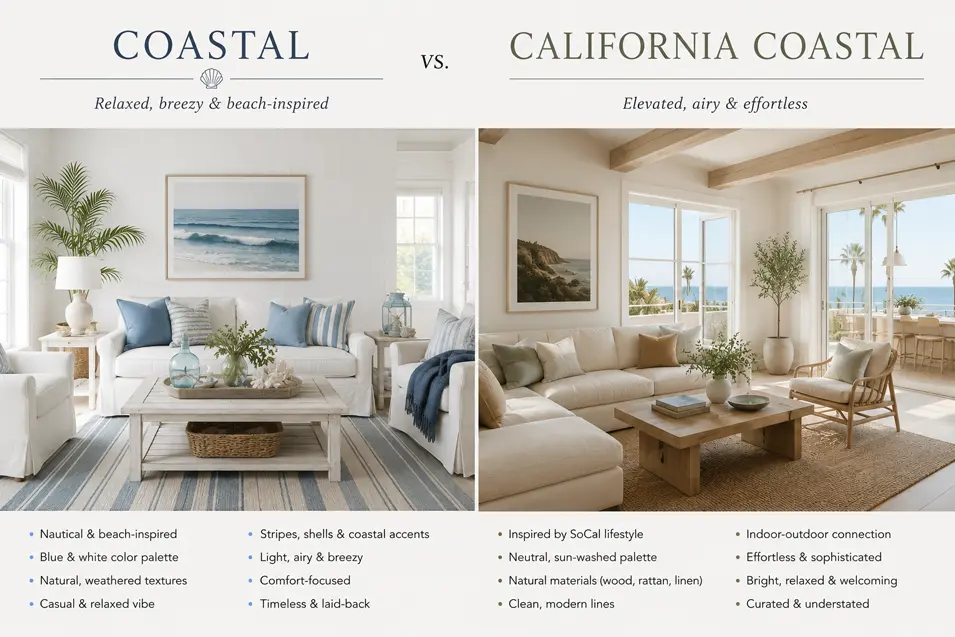
Traditional Coastal design is rooted in classic beach-house living, with timeless colors, natural textures, and a casual approach to decorating. California Coastal builds upon those foundations while introducing cleaner lines, contemporary influences, and a more refined sense of luxury.
Understanding these distinctions can help homeowners create a space that feels authentic to their personal style and lifestyle.
What Is Coastal Design?
Coastal design is inspired by traditional seaside homes and beach cottages. The style focuses on creating interiors that feel relaxed, airy, and connected to the natural beauty of the shoreline.
Common characteristics include:
- Soft blue and white color palettes
- Natural textures
- Comfortable furnishings
- Casual décor
- Bright, open spaces
- Beach-inspired accents
The overall goal is to create a home that feels welcoming and stress-free, much like a day spent by the ocean.
Coastal interiors often prioritize comfort above all else.
What Is California Coastal Design?
California Coastal evolved from traditional Coastal design but reflects the architecture, climate, and lifestyle commonly found along California’s coastline.
While it still embraces natural materials and indoor-outdoor living, California Coastal incorporates:
- Contemporary furniture
- Cleaner lines
- Larger open spaces
- Luxury finishes
- Organic modern influences
- Sophisticated simplicity
Rather than focusing on traditional beach-house charm, California Coastal often feels more curated and architectural.
The style combines relaxation with modern elegance.
Similarities Between Coastal and California Coastal Design
The reason these styles are frequently confused is that they share many core elements.
Both typically feature:
- Abundant natural light
- Neutral color palettes
- Comfortable furnishings
- Natural materials
- Open floor plans
- Indoor-outdoor living
- Relaxed atmospheres
Both styles also prioritize creating homes that feel calm, inviting, and connected to nature.
Neither embraces excessive ornamentation or overly formal decorating.
Key Differences Between Coastal and California Coastal Design
While the foundations are similar, the details create very different overall impressions.
Color Palettes
Traditional Coastal design often relies on colors directly inspired by the beach.
Common shades include:
- Ocean blue
- Seafoam green
- Sandy beige
- Soft white
- Weathered gray
California Coastal tends to use a more restrained palette.
Popular colors include:
- Crisp white
- Warm ivory
- Light taupe
- Natural wood tones
- Soft charcoal accents
Blue may still appear, but it is often used more sparingly.
Furniture Styles
Coastal furniture is typically casual and comfortable.
You might find:
- Slipcovered sofas
- Wicker chairs
- Weathered wood tables
- Relaxed seating arrangements
California Coastal furniture often feels more contemporary.
Common features include:
- Clean lines
- Modern silhouettes
- Organic shapes
- Upholstered statement pieces
- Minimal ornamentation
The furniture remains comfortable but often appears more refined.
Decorative Elements
Traditional Coastal interiors may include subtle nautical influences such as:
- Coastal artwork
- Driftwood accents
- Shell-inspired décor
- Beach photography
California Coastal generally avoids overt beach-themed accessories.
Instead, the style focuses on:
- Sculptural décor
- Organic materials
- Contemporary artwork
- Architectural details
- Layered textures
The coastal influence is present but less literal.
Overall Mood
Coastal interiors typically feel:
- Casual
- Relaxed
- Family-friendly
- Traditional
California Coastal spaces tend to feel:
- Modern
- Sophisticated
- Curated
- Luxurious
Both are welcoming, but California Coastal often feels more polished.
Coastal vs. California Coastal Furniture
Furniture selection is often the easiest way to distinguish between the two styles.
A Coastal living room might include:
- Slipcovered sofas
- Woven baskets
- Painted wood furniture
- Casual accent pieces
A California Coastal living room may feature:
- Large sectionals
- Modern coffee tables
- Natural stone accents
- Minimalist styling
The California version tends to blur the line between coastal comfort and contemporary luxury.
Which Style Is Better for Pet Owners?
Both styles work exceptionally well in pet-friendly homes.
Coastal interiors often feature durable fabrics, washable slipcovers, and relaxed furnishings that can handle everyday life with dogs and cats.
California Coastal homes can also accommodate pets beautifully, especially when durable performance fabrics and easy-to-clean materials are selected.
Because both styles prioritize comfort and livability, they are among the easiest design aesthetics to adapt for pet owners.
How to Choose Between Coastal and California Coastal Design
If you love traditional beach houses, soft blues, casual furnishings, and classic seaside charm, Coastal design may be the perfect fit.
If you prefer cleaner lines, contemporary architecture, neutral palettes, and a more elevated aesthetic, California Coastal may feel more natural.
Many homeowners ultimately blend elements of both styles, creating homes that combine the comfort of Coastal design with the sophistication of California Coastal interiors.
The two styles complement each other beautifully.
Final Thoughts
Coastal and California Coastal design share many similarities, but they create distinctly different moods. Coastal style embraces traditional beach-house comfort and timeless seaside charm, while California Coastal introduces modern influences, cleaner lines, and a more refined approach to coastal living.
Neither style is better than the other. The right choice depends on how you want your home to feel.
As Scout discovered while comparing a classic beach cottage with a sun-filled California retreat, both styles prove that some of the most inviting homes are the ones that bring the beauty of the coast indoors.
Still deciding? Compare the key elements of Coastal and California design, then visit our detailed Coastal Style Guide and California Style Guide for room-by-room inspiration.