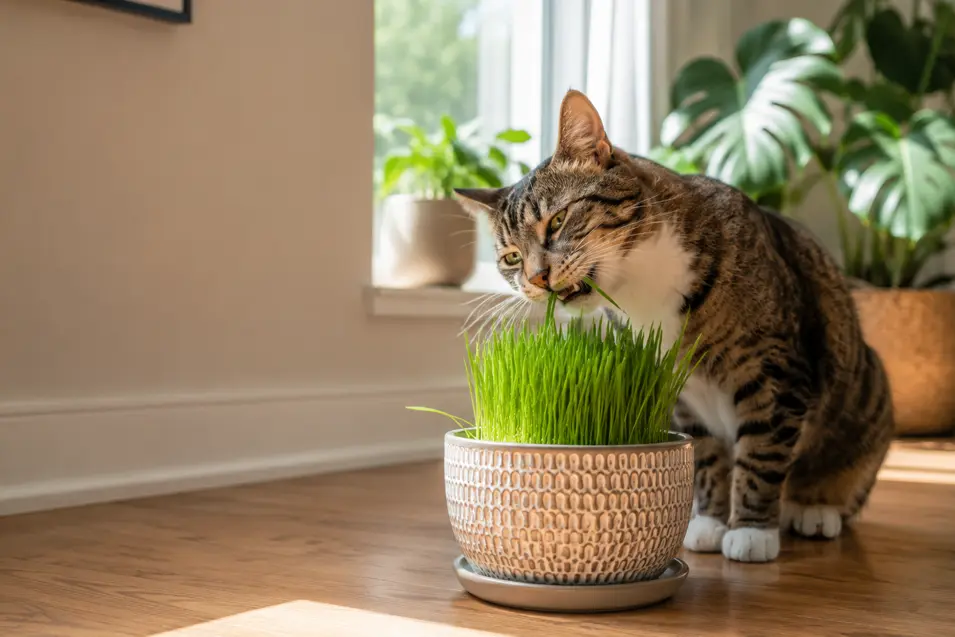
Many cat owners have experienced the surprise of finding their feline companion nibbling on a houseplant. While some plants can be dangerous for cats, cat grass offers a safe and pet-friendly alternative that many cats find irresistible.
Cat grass has become increasingly popular among indoor cat owners because it provides a simple way to add natural enrichment to a cat’s environment. Easy to grow and widely available, this safe indoor plant offers sensory stimulation, encourages exploration, and provides cats with an opportunity to engage in natural behaviors.
Whether you have a curious kitten or a relaxed senior cat, cat grass can be a valuable addition to a cat-friendly home.
What Is Cat Grass?
Cat grass is not a specific plant species.
Instead, the term typically refers to young grasses grown specifically for feline consumption.
Common varieties include:
- Wheat grass
- Oat grass
- Rye grass
- Barley grass
These grasses are generally grown indoors and are considered safe for cats when properly cultivated.
Why Do Cats Like Cat Grass?
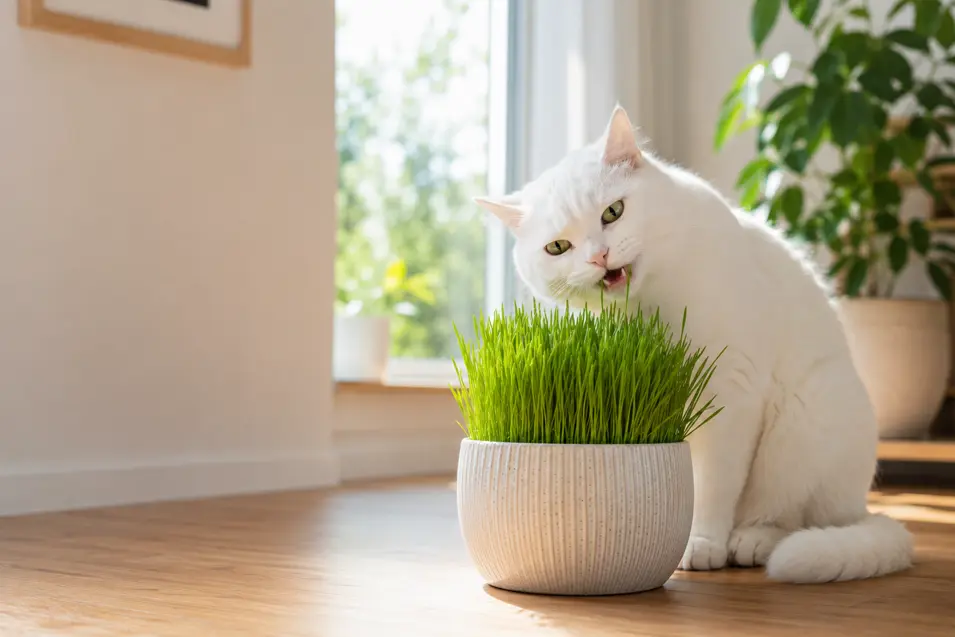
Researchers do not fully understand every reason cats are attracted to grass, but several theories exist.
Cats may enjoy cat grass because it:
- Provides interesting textures
- Introduces new scents
- Encourages exploration
- Satisfies natural chewing instincts
- Adds variety to the indoor environment
Many cats appear to enjoy the simple experience of chewing fresh greenery.
Benefit #1: Provides Environmental Enrichment
One of the greatest advantages of cat grass is its enrichment value.
Indoor cats often encounter fewer sensory experiences than outdoor cats.
Cat grass introduces:
- New smells
- Different textures
- Visual interest
- Opportunities for exploration
Even small changes in a cat’s environment can help reduce boredom and encourage curiosity.
Benefit #2: Encourages Natural Behaviors
Cats retain many of the instincts and behaviors of their wild ancestors.
Providing cat grass allows cats to engage in natural chewing and investigative behaviors in a safe way.
Many owners observe cats:
- Sniffing the grass
- Pawing at it
- Chewing blades
- Exploring the container
These activities contribute to a more stimulating environment.
Benefit #3: Offers a Safe Alternative to Houseplants
Many common houseplants are not safe for cats.
Examples of potentially harmful plants include:
- Lilies
- Pothos
- Philodendrons
- Dieffenbachia
Cat grass provides a safe plant that cats can interact with freely.
For some households, providing cat grass may help redirect interest away from decorative plants.
Benefit #4: Supports Indoor Cat Enrichment
Indoor cats depend on owners to provide opportunities for stimulation and activity.
Cat grass works particularly well when combined with:
- Window perches
- Cat-safe plants
- Puzzle feeders
- Interactive toys
- Climbing shelves
Together, these elements help create a richer indoor environment.
Benefit #5: Adds Variety to Daily Life
Cats can become accustomed to the same environment over time.
Introducing cat grass adds novelty and creates a changing feature that many cats enjoy investigating.
Even simple environmental changes can help maintain interest and engagement.
How to Grow Cat Grass
Cat grass is relatively easy to grow at home.
Basic steps include:
- Fill a shallow container with potting soil.
- Scatter cat grass seeds evenly.
- Cover lightly with soil.
- Water according to package instructions.
- Place in a bright location.
Most varieties sprout quickly and are ready for feline inspection within a short period of time.
Choosing a Location
Placement can influence how much your cat enjoys cat grass.
Popular locations include:
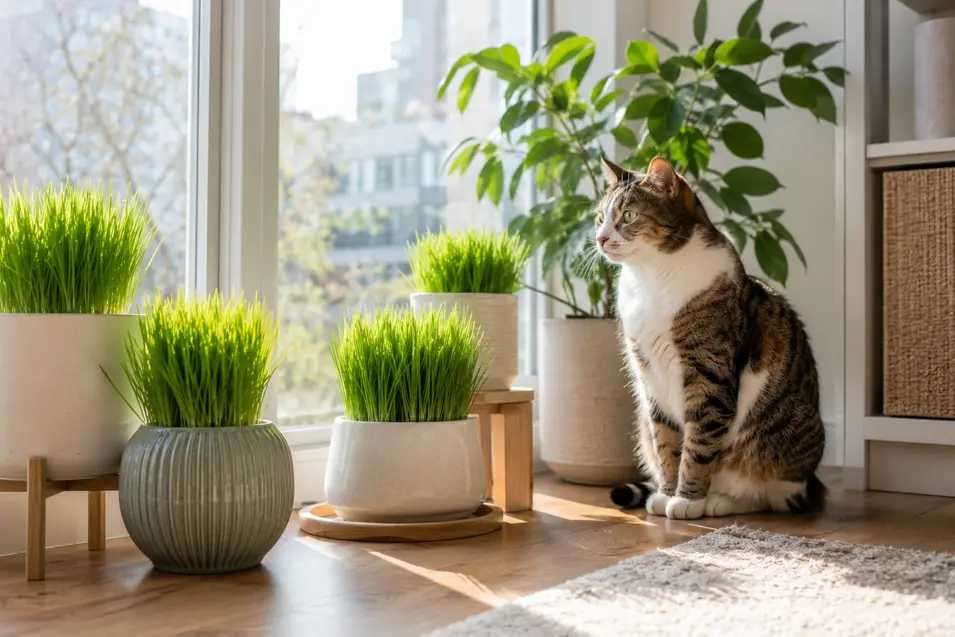
- Near windows
- Beside cat trees
- Adjacent to favorite resting spots
- Within enrichment stations
Combining cat grass with other enrichment opportunities often increases its appeal.
Cat Grass vs. Catnip
Cat grass and catnip are often confused, but they are very different.
Cat Grass
- Consists of edible grasses
- Encourages chewing and exploration
- Provides sensory enrichment
Catnip
- Belongs to the mint family
- Produces behavioral reactions in many cats
- Often stimulates playfulness and excitement
Many cat owners choose to provide both.
Safety Considerations
Although cat grass is generally considered safe, a few precautions are worth noting.
Avoid Chemicals
Only offer cat grass grown without pesticides or harmful chemicals.
Replace Worn Grass
Old or damaged grass may become less appealing and should be replaced when necessary.
Monitor Consumption
While most cats enjoy cat grass responsibly, excessive consumption should be discussed with a veterinarian.
Is Cat Grass Worth It?
For many cat owners, the answer is yes.
Cat grass is inexpensive, easy to grow, and provides valuable environmental enrichment. It offers a safe way for cats to explore, chew, and interact with a natural element that adds variety to their daily routine.
Although simple, cat grass can play a meaningful role in creating a more stimulating and rewarding indoor environment.
A Simple Way to Enrich Your Cat’s World
Enrichment doesn’t always require elaborate toys or expensive equipment. Sometimes a small container of fresh grass can provide curiosity, stimulation, and enjoyment for an indoor cat.
By incorporating cat grass into a broader enrichment plan that includes play, climbing opportunities, and interactive experiences, owners can help support a happier, healthier, and more engaged feline companion.
Related Reading
Looking for more ways to enrich your cat’s environment?
Explore these helpful guides:
- Indoor Cat Enrichment: Keeping Indoor Cats Happy, Healthy, and Active
- Cat-Safe Houseplants: Indoor Plants Safe for Cats
- DIY Indoor Cat Enrichment Ideas: Fun and Affordable Ways to Keep Cats Entertained
- Puzzle Feeders for Cats: Benefits and How They Keep Cats Mentally Stimulated
- Signs Your Indoor Cat Is Bored (and How to Help)
These resources can help you create a safer, more stimulating, and enriching environment for your indoor cat.