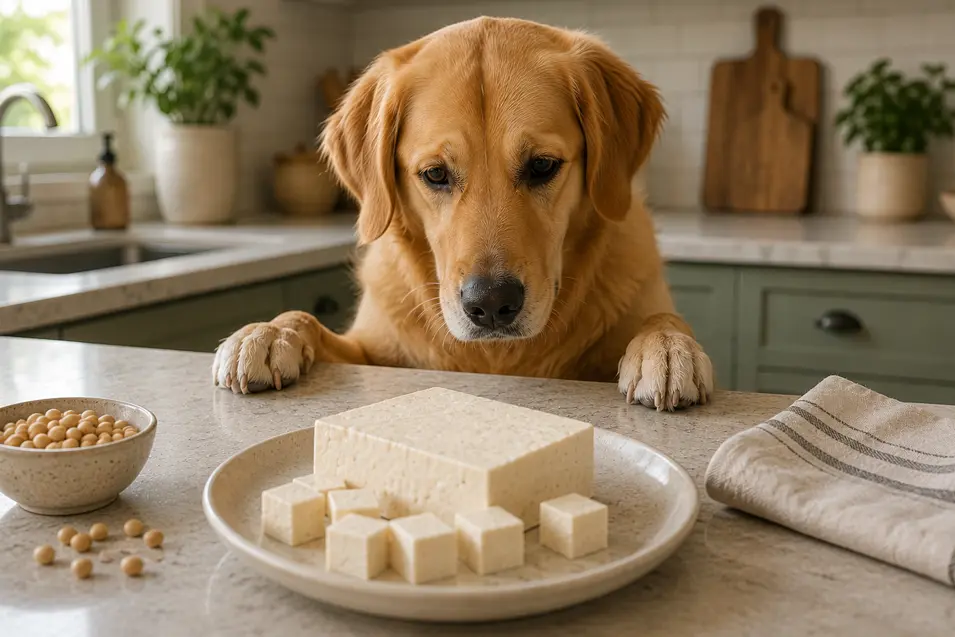
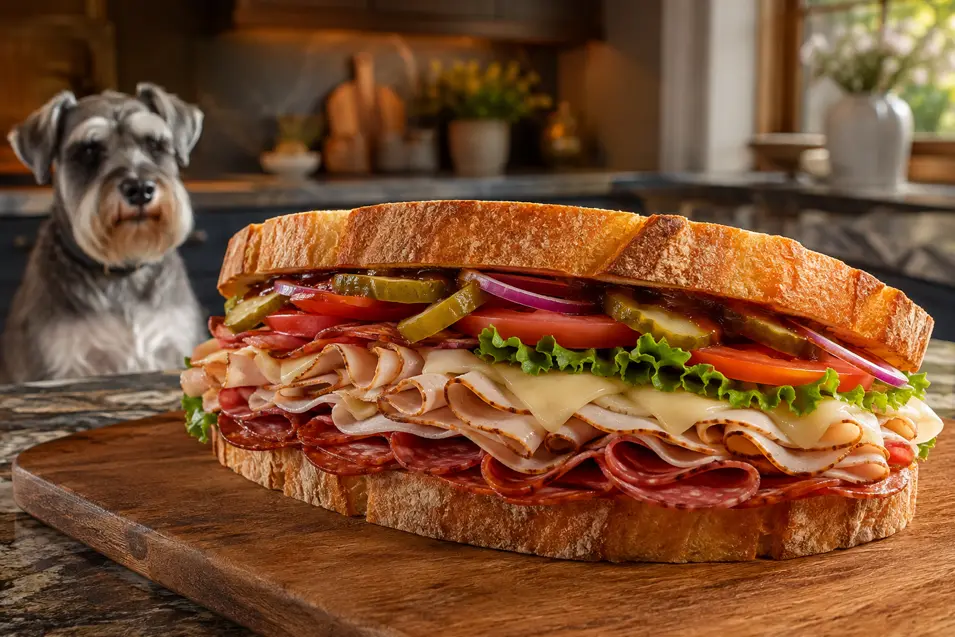
A sandwich can look like the perfect food to share with a dog.
It may contain bread, meat, cheese or peanut butter—ingredients dogs are often allowed to eat separately. When those ingredients are stacked together, however, an ordinary sandwich can become surprisingly high in fat, sodium, sugar and calories.
Some sandwiches also contain ingredients that are dangerous to dogs, including onions, garlic, raisins, chocolate or the sweetener xylitol.
A stolen corner of a plain turkey sandwich is unlikely to harm most healthy dogs. An entire loaded deli sandwich, rich chicken salad or sugar-free peanut butter and jam sandwich can be a very different situation.
The answer therefore depends on what is between the bread, how much the dog ate and whether they swallowed any packaging along with it.
Why Sandwiches Can Be a Problem for Dogs
Most sandwiches are designed for people, not dogs. Their ingredients are seasoned and portioned around human tastes and nutritional needs.
One sandwich may combine:
- Processed meat containing considerable sodium
- High-fat cheese
- Butter or mayonnaise
- Onion or garlic
- Sugary condiments
- Rich sauces
- Several slices of bread
- Pickles or other salty toppings
None of those ingredients needs to be present in an enormous amount to make the finished sandwich unnecessarily rich.
The sandwich may represent a small meal for a person but contain a substantial portion of a smaller dog’s daily calorie needs. If children slip the dog several pieces from their lunches, the calories can accumulate quickly.
Is Bread Safe for Dogs?
Small amounts of plain, fully baked bread are generally safe for most dogs, provided the bread does not contain harmful additions.
Bread is not particularly nutritious for dogs. It primarily adds carbohydrates and calories to a diet that should already be complete and balanced.
The greater concern is what may be baked into it.
Avoid bread containing:
- Raisins or currants
- Chocolate
- Macadamia nuts
- Large amounts of onion or garlic
- Xylitol or other unsafe sweeteners
- Unbaked yeast dough
Whole-grain, sourdough, rye and white breads are not automatically dangerous simply because of the type of flour used. However, a dog with allergies, digestive problems or a veterinary-prescribed diet may need to avoid certain ingredients.
A crust of plain bread is not the same as half of a loaded sandwich.
Deli Meat Is Often Too Salty
Turkey, chicken, ham, roast beef, salami and bologna may appear to be the most dog-friendly parts of a sandwich.
Plain, unseasoned cooked meat can be an appropriate occasional treat for many dogs. Deli meat is different because it is processed for flavour and preservation.
Depending on the product, it may contain:
- High levels of sodium
- Considerable fat
- Sugar
- Smoke flavouring
- Garlic or onion seasoning
- Pepper and other spices
- Preservatives
A tiny piece of plain deli turkey is unlikely to create a problem for most healthy dogs, but it should not become a regular treat. Ham, salami, pepperoni and bologna are usually even richer and saltier.
Dogs with heart disease, kidney disease, pancreatitis or other health conditions may require stricter dietary limits. Ask your veterinarian before offering human foods.
Cheese Adds Fat and Calories
Cheese is not poisonous to dogs, but that does not make a cheese-heavy sandwich a good choice.
Many cheeses are high in fat and calories. Some dogs also have difficulty digesting lactose and may develop gas, diarrhea or stomach discomfort.
Processed cheese slices can contain additional sodium. Blue cheeses may create other concerns and should not be shared casually.
A small piece of mild cheese may be tolerated by many dogs, but a grilled cheese sandwich combines bread, butter and a substantial amount of melted cheese. That makes it much richer than the individual bite suggests.
Butter, Mayonnaise and Rich Spreads
Butter and mayonnaise are not usually toxic in small quantities, but they are high in fat.
A dog that steals a heavily buttered sandwich or eats a container of mayonnaise may develop vomiting or diarrhea. Rich foods can also contribute to pancreatitis in susceptible dogs.
Pancreatitis is a painful inflammation of the pancreas that can cause vomiting, loss of appetite, lethargy, fever, diarrhea and abdominal pain. Severe cases can be life-threatening.
Cornell University’s College of Veterinary Medicine recommends being conservative with rich and fatty foods, particularly for dogs with sensitive digestive systems or a history of pancreatitis.
Onions, Garlic, Chives and Leeks
Onions and garlic appear in many sandwich fillings, sauces and seasonings.
They may be present in:
- Chicken salad
- Tuna salad
- Egg salad
- Meatballs
- Sausages
- Deli meats
- Flavoured cream cheese
- Seasoning blends
- Garlic mayonnaise
- Onion relish
- Prepared sauces
Onion, garlic, chives and leeks belong to the Allium family. Raw, cooked, dried and powdered forms can damage a dog’s red blood cells.
Concentrated onion and garlic powders are particularly easy to overlook because they may be included in a product’s seasoning rather than appearing as visible pieces.
Signs of poisoning can be delayed for several days and may include weakness, pale gums, rapid breathing, dark urine or collapse.
Contact your veterinarian if your dog eats a substantial amount of onion or garlic, a concentrated seasoning or a sandwich containing an unknown quantity.
Pickles, Olives and Salty Toppings
A plain cucumber slice is different from a pickle.
Pickles, olives, sauerkraut and other preserved toppings can contain considerable sodium. They may also be seasoned with garlic, onion, spices or hot peppers.
A small piece is unlikely to poison most healthy dogs, but these toppings provide no real benefit and can contribute to the overall salt content of an already salty sandwich.
Relish may contain sugar in addition to salt and seasonings.
Mustard, Ketchup and Barbecue Sauce
Common sandwich condiments can add more sugar, sodium and seasoning than owners realize.
Ketchup may contain sugar, salt, onion powder or garlic powder. Barbecue sauce can contain similar ingredients and may be quite sugary.
Some mustards can irritate a dog’s digestive system, while spicy sauces may cause stomach upset and considerable discomfort.
Sugar-free condiments deserve particular attention because some reduced-sugar products may contain xylitol. Always check the ingredient list before allowing a dog to eat any sugar-free human food.
Can Dogs Eat Peanut Butter Sandwiches?
A small amount of plain peanut butter can be safe for many dogs, but the ingredient label must be checked first.
Some peanut and nut butters contain xylitol, a sweetener that is highly dangerous to dogs. It may also be listed as birch sugar, wood sugar or birch bark extract.
Xylitol can cause a rapid drop in blood sugar and may result in weakness, vomiting, difficulty walking, collapse or seizures. It can also cause liver injury.
If your dog eats peanut butter containing xylitol, contact a veterinarian, emergency animal hospital or animal poison control service immediately. Do not wait for symptoms.
Even xylitol-free peanut butter is calorie-dense and often contains added sugar, salt or oils. It should be offered sparingly.
A bite of plain bread with a thin layer of dog-safe peanut butter is very different from an entire thickly filled sandwich.
What About Jam and Jelly?
Ordinary jam is not generally poisonous to dogs, but it contains a considerable amount of sugar.
Eating a little may cause no obvious problem, while a larger serving can contribute to stomach upset and unnecessary calories. Regularly sharing sugary foods may also contribute to weight gain.
Sugar-free or reduced-sugar jam requires closer inspection because it may contain xylitol or another sweetener.
Grape jelly creates understandable concern. Commercial grape jelly is not equivalent to a serving of whole grapes or raisins, and information about its toxicity to dogs is limited. However, its high sugar content makes it a poor treat regardless.
If a dog eats a large quantity of grape jelly or a product with an unclear ingredient list, contact your veterinarian for advice.
Jam made with whole raisins, currants or grapes should be treated more cautiously.
Peanut Butter and Jam Sandwiches
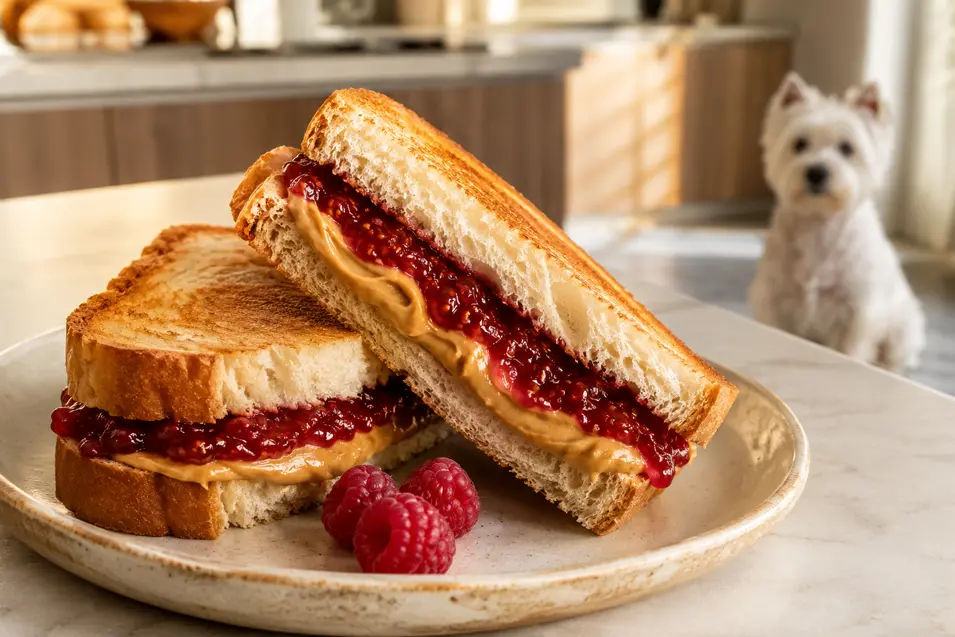
A traditional peanut butter and jam sandwich may combine several issues:
- Calorie-dense peanut butter
- Added oils, sugar or salt
- Sugary jam
- Several slices of bread
- Possible xylitol in a sugar-free product
- Possible raisins or currants in speciality bread
The safest approach is to avoid sharing the assembled sandwich.
If you want to give your dog peanut butter, use a very small amount of a xylitol-free product as an occasional treat.
Tuna Salad Sandwiches
Plain tuna packed in water can sometimes be offered to a dog in small amounts, but a tuna salad sandwich contains much more than tuna.
The filling may include:
- Mayonnaise
- Onion
- Garlic
- Pickles or relish
- Salt
- Pepper
- Mustard
- Cheese
Tuna should not become a major part of a dog’s diet, and the rich prepared filling may cause digestive upset.
A small stolen bite may not be an emergency unless it contains a dangerous ingredient. An entire sandwich warrants a closer look at the recipe and the amount eaten.
Chicken Salad Sandwiches
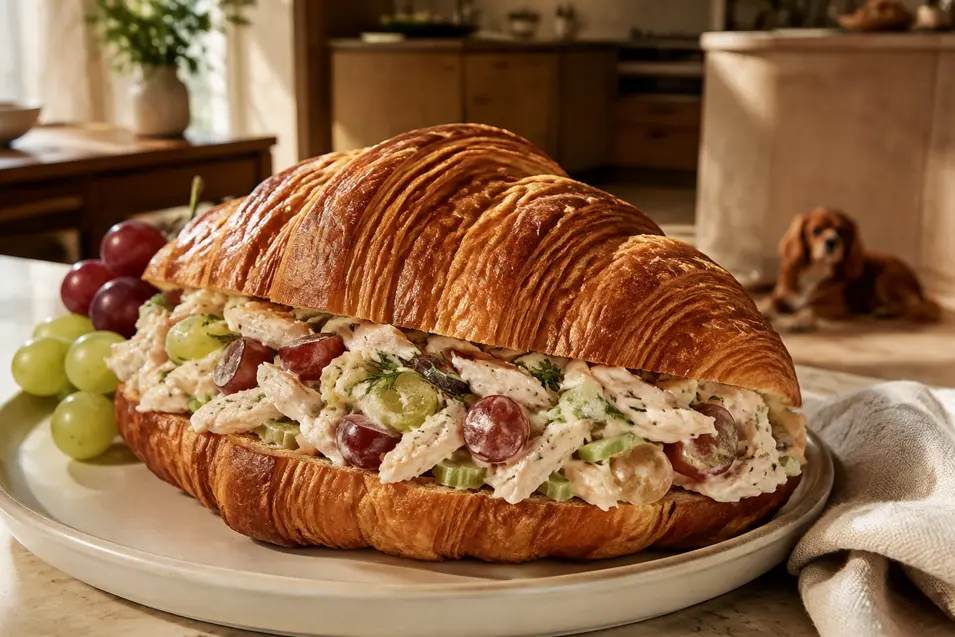
Chicken salad can look wholesome while hiding several ingredients dogs should avoid.
Recipes may include mayonnaise, onion, garlic, grapes, raisins, nuts, mustard and rich seasonings.
Grapes and raisins are particularly important because they can cause kidney injury in dogs, and the amount capable of causing poisoning is unpredictable.
If a chicken salad contains grapes or raisins and your dog eats any portion, contact a veterinarian or animal poison control service immediately.
Do not wait to see whether symptoms develop.
Egg Salad Sandwiches
Plain cooked egg can be safe for many dogs, but egg salad is generally prepared with mayonnaise, mustard, salt and seasonings.
Some recipes also contain onion, chives or relish.
The egg itself is rarely the main concern. It is the rich, seasoned mixture surrounding it.
A dog that eats a large amount may develop vomiting, diarrhea or abdominal discomfort, particularly if they are sensitive to fatty foods.
Grilled Cheese Sandwiches
A grilled cheese sandwich is essentially bread, cheese and butter or oil.
None of those ingredients is necessarily toxic in an ordinary recipe, but together they create a fatty, calorie-dense food with little nutritional value for a dog.
A small corner is unlikely to harm most healthy dogs. An entire grilled cheese could cause digestive upset, especially in a small dog or one with a history of pancreatitis.
Sandwiches made with onion bread, garlic butter or speciality cheese introduce additional concerns.
Ham and Cheese Sandwiches
Ham and cheese sandwiches combine two salty, fatty ingredients.
Ham may be cured, smoked or heavily seasoned. Cheese adds more sodium, fat and calories, while mayonnaise or butter makes the sandwich richer still.
A small bite is not usually an emergency for a healthy dog, but this should not become a regular shared lunch.
If a dog consumes a large quantity, watch for vomiting, diarrhea, excessive thirst, lethargy or abdominal discomfort and contact your veterinarian if concerns arise.
BLTs and Club Sandwiches
A BLT contains bacon, lettuce, tomato, bread and usually mayonnaise. A club sandwich may add turkey, chicken, cheese and another layer of bread.
Lettuce and ripe tomato flesh are not usually the problem. Bacon, mayonnaise, processed meat and the overall amount of fat and sodium are.
Club sandwiches may also be held together with wooden cocktail picks. These can puncture the mouth, throat, stomach or intestines if swallowed.
Always check whether toothpicks are missing when a dog steals a restaurant sandwich.
Breakfast Sandwiches
Breakfast sandwiches may contain bacon, sausage, ham, egg, cheese, butter and sauce.
The combination can be extremely rich. Sausages may also contain onion, garlic, pepper and other seasonings.
A dog that steals an entire breakfast sandwich may consume a significant amount of fat and sodium at once.
Breakfast sandwiches wrapped in foil or paper create an additional risk if the dog swallows the packaging.
Meatball and Sausage Sandwiches
Meatballs and sausages are often seasoned with onion and garlic. They may also contain substantial fat and sodium.
Tomato sauce can include additional garlic, onion, sugar and salt, while melted cheese makes the finished sandwich even richer.
Do not assume the meat is safe simply because it is cooked.
If your dog eats a meatball or sausage sandwich, check the ingredient list or recipe when possible. Contact your veterinarian if it contains considerable onion or garlic, or if the dog ate a large amount.
Avocado Sandwiches
The flesh of a ripe avocado is not considered as dangerous to dogs as the pits, leaves and other parts of the plant, but it is high in fat and may cause stomach upset.
The avocado pit is a serious choking and obstruction hazard if swallowed.
Avocado toast and sandwiches may also contain onion, garlic, spicy seasoning, cheese or rich sauces.
A small lick of plain avocado flesh may not cause a problem, but the complete sandwich is better kept to human diners.
Reuben and Deli-Style Sandwiches
A Reuben or heavily loaded deli sandwich may contain cured meat, cheese, butter, dressing, sauerkraut and several thick slices of bread.
The result is high in fat, sodium and calories. Dressings may contain onion, garlic, sugar or spices.
These sandwiches are also large enough to represent an enormous meal for a small or medium-sized dog.
Even when there is no single toxic ingredient, eating the entire sandwich could cause significant digestive upset.
Sandwiches Made With Raisin Bread
Raisin bread should never be used for a sandwich intended to be shared with a dog.
Raisins can cause kidney injury, and it is impossible to predict which dogs will be affected or how many raisins will create a problem.
If your dog eats raisin bread, contact a veterinarian or animal poison control service immediately.
This also applies to sandwiches made with breads containing currants or other dried grapes.
Chocolate and Dessert Sandwiches
Chocolate spreads, brownies, cookies and dessert-style sandwich fillings may contain theobromine and caffeine, which are toxic to dogs.
Dark chocolate, baking chocolate and cocoa powder generally contain higher concentrations than milk chocolate.
Some chocolate spreads may also contain macadamia nuts or xylitol.
If your dog eats a chocolate sandwich or dessert containing cocoa, save the package and contact your veterinarian with the dog’s weight, the product, the amount missing and the approximate time of ingestion.
The Wrapper May Be as Dangerous as the Sandwich
Dogs do not always remove food from its packaging before swallowing it.
Plastic wrap, foil, wax paper, sandwich bags and food-covered paper can create choking or intestinal obstruction risks. Wooden cocktail picks can puncture the digestive tract.
Signs of a possible obstruction include:
- Repeated vomiting
- Loss of appetite
- Abdominal pain
- Lethargy
- Diarrhea
- Straining to defecate
- Producing little or no stool
Contact a veterinarian promptly if your dog may have swallowed packaging or a toothpick. Do not pull on material protruding from the mouth or rectum.
Teen Bedrooms and Forgotten Sandwiches
A half-eaten sandwich may return from school inside a backpack and remain there overnight—or considerably longer.
Teen bedrooms can also contain snack wrappers, gum, chocolate, energy products, leftover takeout and bedroom garbage bins filled with food-covered packaging.
Dogs are remarkably skilled at opening backpacks and investigating wastebaskets.
Create a household rule that lunchboxes are emptied in the kitchen as soon as children arrive home. Backpacks should be stored on high hooks or behind a closed door rather than dropped on a bedroom floor.
Children should also be encouraged to report missing food or chewed packaging immediately without worrying about getting into trouble.
Is Any Sandwich Safe to Share?
A simple homemade sandwich may be safe in very small quantities if every ingredient has been checked.
For example, a small piece containing plain cooked chicken between plain bread, without butter, sauce, seasoning or dangerous additions, is unlikely to harm most healthy dogs.
However, there is rarely a reason to share the entire sandwich. Offering a small piece of the plain meat separately gives the dog the enjoyable part without the bread, condiments, cheese and unnecessary calories.
Treats and human foods should make up only a small portion of a dog’s diet.
Dogs with allergies, digestive disease, heart disease, kidney disease, pancreatitis or a prescription diet may need to avoid foods that another dog could tolerate.
What to Do if Your Dog Eats a Sandwich
First, determine exactly what was in it.
Check for:
- Xylitol
- Grapes, raisins or currants
- Chocolate or cocoa
- Onion, garlic, chives or leeks
- Macadamia nuts
- Large amounts of fatty meat or sauce
- Wooden toothpicks
- Missing plastic wrap, foil or sandwich bags
Save the package or recipe when possible. Estimate how much the dog ate and when it happened.
Contact your veterinarian, an emergency animal hospital or an animal poison control service immediately if a dangerous ingredient may be involved.
Do not attempt to make your dog vomit unless a veterinary professional specifically instructs you to do so. Vomiting can be unsafe when sharp objects, certain substances or some medical conditions are involved.
Seek emergency care if your dog is choking, collapsing, having seizures, struggling to breathe or showing severe weakness.
The Ingredients Matter More Than the Name
There is no single answer that applies to every sandwich.
A tiny piece of plain chicken on bread is unlikely to create the same risk as chicken salad containing grapes and onion. A simple cheese sandwich is different from a Reuben held together with toothpicks. Peanut butter may be safe—or potentially deadly—depending on whether it contains xylitol.
Most sandwiches are best left off the dog’s menu because they are too salty, fatty, sugary or heavily seasoned. Some contain ingredients that require immediate veterinary attention.
If you want to share lunch with your dog, skip the assembled sandwich. Set aside a small piece of plain, dog-safe meat or vegetable before the condiments and toppings are added.
Your dog will still believe they received the best part.