Christmas is the season of baking, sharing, and sneaking an extra cookie when nobody is looking. From gingerbread men and sugar cookies to shortbread and chocolate crinkles, holiday treats seem to appear on every kitchen counter and coffee table.
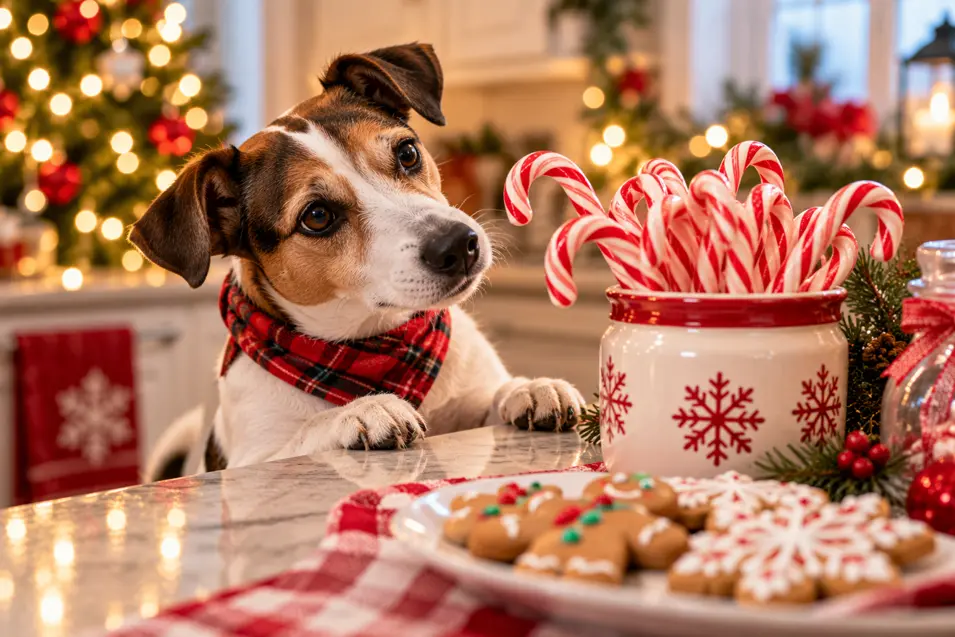
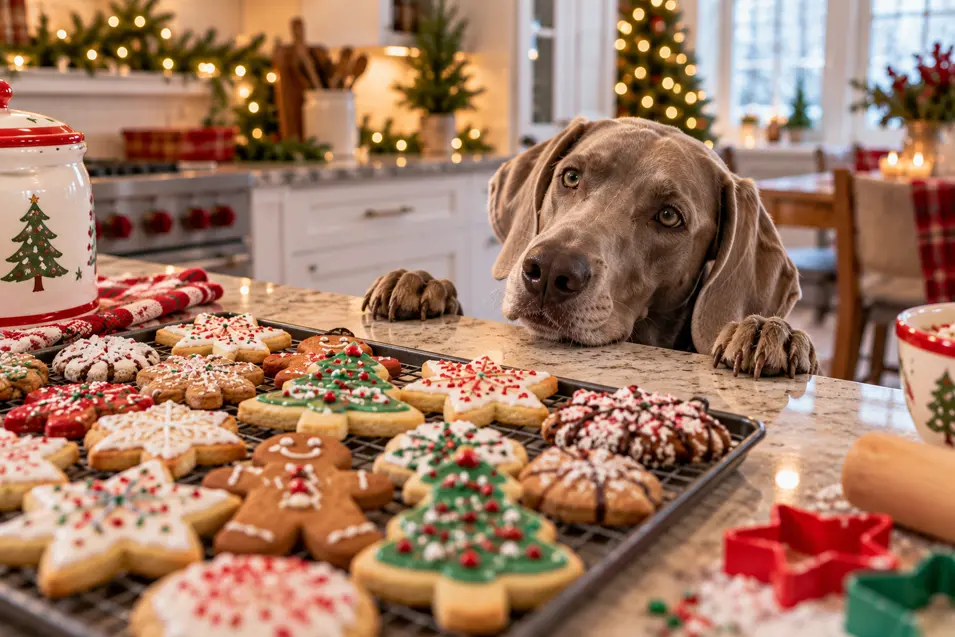
And if you have a dog, chances are you’ve noticed someone watching very closely whenever the cookie tin comes out.
But can dogs eat Christmas cookies?
The short answer is that most Christmas cookies are best kept away from dogs. While a tiny bite of a plain cookie may not cause problems for an otherwise healthy dog, many traditional holiday recipes contain ingredients that can be harmful or even toxic to pets.
Chocolate, raisins, macadamia nuts, xylitol, and certain spices are just a few of the potential dangers hiding in festive baked goods.
Before you share a holiday treat with your four-legged family member, here’s what you should know.
Why Christmas Cookies Can Be Dangerous for Dogs
Christmas cookies aren’t made with dogs in mind. They’re typically loaded with sugar, butter, flour, and other ingredients that offer little nutritional benefit to pets.
Some ingredients can cause an upset stomach, while others may lead to serious medical emergencies.
Common concerns include:
- Chocolate: Contains theobromine and caffeine, which are toxic to dogs.
- Raisins and currants: Can cause potentially fatal kidney damage, even in small amounts.
- Xylitol: Also called birch sugar, this sweetener can cause dangerously low blood sugar and liver damage.
- Macadamia nuts: Can cause weakness, vomiting, tremors, and difficulty walking.
- Nutmeg: Contains myristicin, which can be toxic in sufficiently large amounts.
- Excessive butter and fat: May trigger digestive upset or pancreatitis.
- Large amounts of sugar: Can contribute to gastrointestinal problems and unnecessary calorie intake.
The biggest concern is that you may not know exactly what’s inside a homemade cookie, especially when friends, relatives, and neighbours are exchanging holiday baking.
Which Christmas Cookies Are Safe or Unsafe for Dogs?
Not every Christmas cookie presents the same level of danger. Some are relatively low-risk if a dog accidentally eats a small piece, while others require immediate veterinary attention.
1. Sugar Cookies
Plain sugar cookies generally contain flour, sugar, butter, and eggs. These ingredients aren’t usually toxic to dogs when baked into a cookie.
However, sugar cookies are still not a healthy snack for pets.
Decorated Christmas cookies may contain chocolate, sugar-free sweeteners, or other potentially harmful ingredients.
Verdict: A tiny piece of a plain, fully baked sugar cookie is unlikely to harm most healthy dogs, but it’s better to offer a dog-friendly treat.
2. Gingerbread Cookies
Gingerbread men are a Christmas classic, but they aren’t ideal for dogs.
Although ginger itself isn’t generally harmful in small amounts, gingerbread cookies may contain nutmeg, cloves, molasses, sugar, and large quantities of butter.
Nutmeg is particularly concerning when consumed in substantial amounts.
Gingerbread houses can present additional risks because of chocolate decorations, candies, and potentially dangerous sweeteners.
Verdict: Avoid sharing gingerbread cookies with your dog.
3. Shortbread Cookies
Traditional shortbread is made primarily with butter, flour, and sugar.
A small piece of plain shortbread isn’t usually toxic, but its high fat content can upset your dog’s digestive system.
Dogs with a history of pancreatitis or sensitive stomachs may be particularly vulnerable.
Chocolate-dipped shortbread and cookies containing raisins or macadamia nuts are more concerning.
Verdict: Plain shortbread isn’t generally toxic, but it isn’t recommended for dogs.
4. Chocolate Christmas Cookies
Chocolate crinkles, chocolate chip cookies, brownies, and chocolate-covered biscuits should never be intentionally fed to dogs.
Chocolate contains theobromine and caffeine, both of which dogs metabolize much more slowly than humans.
Dark chocolate and baking chocolate are especially dangerous because they contain higher concentrations of these substances.
Signs of chocolate poisoning may include vomiting, diarrhea, restlessness, increased heart rate, tremors, and seizures.
Verdict: Unsafe. Contact your veterinarian promptly if your dog eats chocolate cookies.
5. Oatmeal Raisin Cookies
Oatmeal itself can be safe for dogs when properly prepared, but raisins are a completely different story.
Raisins and grapes can cause acute kidney injury in dogs, and the toxic amount is unpredictable.
Even a small number of raisins can be dangerous.
Verdict: Dangerous. Contact your veterinarian or an animal poison control service immediately if your dog eats an oatmeal raisin cookie.
6. Peanut Butter Cookies
Dogs often love peanut butter, and plain peanut butter can be an occasional treat when it contains no harmful additives.
However, peanut butter cookies are usually high in sugar and fat.
Some peanut butter products or sugar-free recipes may contain xylitol, which is extremely dangerous for dogs.
Verdict: A tiny amount of a plain peanut butter cookie made without xylitol, chocolate, or other dangerous ingredients is generally low-risk, but dog-specific peanut butter treats are a better choice.
7. Snickerdoodles and Cinnamon Cookies
Snickerdoodles typically contain flour, sugar, butter, and cinnamon.
Small amounts of cinnamon used in baking are not generally toxic to dogs, although larger quantities can cause irritation and digestive problems.
The sugar and butter make these cookies unsuitable as regular treats.
Verdict: A small accidental bite of a plain snickerdoodle is unlikely to be dangerous for most dogs, but don’t make a habit of sharing them.
8. Fruitcake Cookies
Fruitcake cookies may contain raisins, currants, dried fruit, nuts, and sometimes alcohol.
Raisins and currants are especially dangerous because of their potential to cause kidney damage.
Recipes containing macadamia nuts or chocolate introduce additional risks.
Verdict: Avoid completely. Seek veterinary advice immediately if the cookie contains raisins or currants.
9. Macadamia Nut Cookies
Macadamia nuts are toxic to dogs.
Symptoms can include vomiting, weakness, tremors, fever, and difficulty walking, particularly involving the hind legs.
Although many dogs recover with appropriate supportive care, poisoning can be distressing and may require veterinary treatment.
Verdict: Unsafe. Contact your veterinarian if your dog eats macadamia nut cookies.
10. Sugar-Free Christmas Cookies
Sugar-free doesn’t necessarily mean dog-safe.
Some sugar-free cookies contain xylitol, a sweetener that can cause a rapid, life-threatening drop in blood sugar in dogs.
Xylitol can also cause severe liver injury.
It may appear on ingredient labels as birch sugar.
Verdict: Potentially extremely dangerous. If a cookie contains xylitol, seek emergency veterinary care immediately.
Quick Christmas Cookie Safety Chart
| Christmas Cookie | Safe for Dogs? |
|---|---|
| Plain sugar cookies | Small accidental bite generally low-risk |
| Gingerbread cookies | Best avoided |
| Plain shortbread | Not toxic, but high in fat |
| Chocolate cookies | Toxic — avoid |
| Oatmeal raisin cookies | Dangerous — avoid |
| Plain peanut butter cookies | Only if free of harmful ingredients |
| Snickerdoodles | Small accidental bite generally low-risk |
| Fruitcake cookies with raisins | Dangerous — avoid |
| Macadamia nut cookies | Toxic — avoid |
| Cookies containing xylitol | Extremely dangerous |
Remember that the ingredients, amount eaten, and your dog’s size and health all matter.
What About Christmas Cookie Icing and Decorations?
Sometimes the cookie itself isn’t the biggest problem. It’s what’s on top.
Christmas cookies are often decorated with colourful icing, chocolate, candies, sprinkles, and edible decorations.
Ordinary sugar-based icing is generally not toxic in tiny quantities, but it can cause digestive upset.
Chocolate icing presents a more serious concern, while sugar-free frosting may contain xylitol.
Hard candies and large decorative pieces may also create choking hazards, especially for small dogs.
If you’re unsure what’s in the icing, don’t let your dog taste it.
What Should You Do If Your Dog Eats Christmas Cookies?
First, determine what kind of cookie your dog ate and approximately how much was consumed.
If possible, check the ingredient list or ask the person who baked the cookies.
If the cookies contain chocolate, raisins, currants, macadamia nuts, or xylitol, contact your veterinarian or an animal poison control service immediately. Don’t wait for symptoms to appear.
If your dog ate a small amount of a plain cookie without dangerous ingredients, serious poisoning is less likely. However, monitor for vomiting, diarrhea, abdominal discomfort, or unusual behaviour.
If your dog ate several cookies, swallowed packaging, has a medical condition, or begins showing symptoms, seek veterinary advice.
Do not induce vomiting or attempt home remedies unless a veterinary professional specifically instructs you to do so.
You can also contact the ASPCA Animal Poison Control Center at 888-426-4435 or Pet Poison Helpline at 855-764-7661. Consultation fees may apply.
Can You Make Christmas Cookies Specifically for Dogs?
Absolutely! One of the nicest ways to include your dog in holiday baking is to make a separate batch of dog-friendly Christmas treats.
Simple ingredients might include:
- Plain pumpkin purée, without added spices or sweeteners
- Plain cooked oats or oat flour
- Unsweetened applesauce without xylitol
- Dog-safe peanut butter
- Small amounts of plain mashed banana
You can even use Christmas cookie cutters to make little stars, trees, or gingerbread-shaped dog biscuits.
Just remember that homemade treats should be appropriately prepared, fully baked when the recipe requires it, and served in moderation.
Avoid chocolate, raisins, currants, macadamia nuts, xylitol, and excessive amounts of sugar or fat.
If your dog has food allergies, diabetes, pancreatitis, kidney disease, or another medical condition, check with your veterinarian before introducing new treats.
How to Keep Your Dog Away From Christmas Cookies
Christmas baking can create plenty of opportunities for curious dogs to get into trouble.
A plate of cookies left on the coffee table, a gift basket under the tree, or a tray cooling on the kitchen counter can quickly become an unexpected snack.
A few precautions can help:
- Store Christmas cookies in sealed containers out of reach.
- Avoid leaving cooling racks unattended where dogs can reach them.
- Remind children and holiday visitors not to share cookies with pets.
- Keep edible gifts and cookie tins off the floor and away from the Christmas tree.
- Dispose of baking scraps and wrappers in a secure garbage container.
- Offer your dog a safe treat of their own while everyone enjoys holiday baking.
Remember that dogs don’t understand which Christmas treats are safe and which ones are dangerous. They’re simply following their noses.
The Best Christmas Cookie Is One Made for Your Dog
Christmas is all about sharing special moments with the people and pets we love.
But sharing the holiday spirit doesn’t mean sharing every holiday food.
A small bite of a plain Christmas cookie may not cause any harm, but chocolate, raisins, macadamia nuts, and xylitol can turn an innocent-looking treat into a veterinary emergency.
The safest approach is to keep human Christmas cookies for the humans and give your dog something made specifically for them.
After all, your dog doesn’t care whether their Christmas treat came from an elaborate holiday recipe or a simple homemade biscuit.
They’re just happy to be included in the celebration.
More Christmas Reading for Dog Lovers
Can Dogs Eat Cookie Dough?
Before you start your holiday baking, discover why raw cookie dough can be dangerous for dogs and what to do if your pup sneaks a bite.
Can Dogs Have Eggnog?
Eggnog is another Christmas favourite, but is it safe to share with your dog? Learn about the ingredients that make this festive drink a poor choice for pets.
Dogs in Santa Hats
Need a little Christmas cheer? Enjoy an adorable collection of dogs dressed in Santa hats, guaranteed to bring a smile to your face.