Bohemian and Eclectic design are often confused because both styles embrace individuality, creativity, and a willingness to break traditional decorating rules. Neither style relies on matching furniture sets or strict design formulas. Instead, both encourage homeowners to create spaces that reflect their personalities and interests.
Yet despite these similarities, Bohemian and Eclectic interiors have distinctly different personalities.
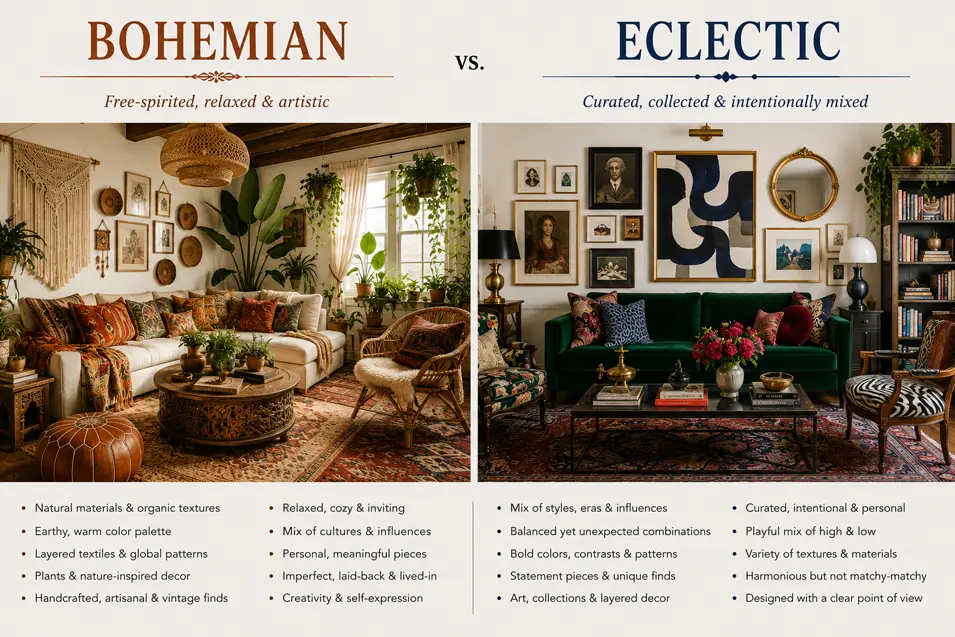
Bohemian design is rooted in artistic freedom, global influences, and a relaxed, free-spirited lifestyle. Eclectic design focuses on thoughtfully blending elements from different styles, eras, and influences into a cohesive and balanced interior.
Understanding the differences can help homeowners create a space that feels intentional rather than simply busy.
What Is Bohemian Design?
Bohemian, often called “Boho,” is a style inspired by artists, travelers, and creative individuals who favored personal expression over convention.
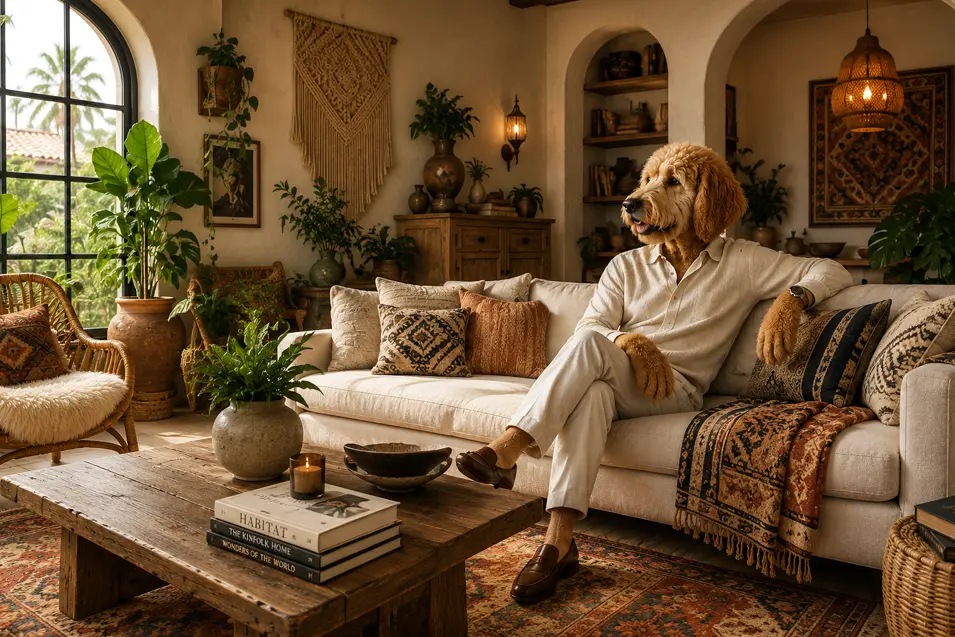
Bohemian interiors often feature:
- Layered textiles
- Global influences
- Natural materials
- Vintage furnishings
- Indoor plants
- Rich colors and patterns
The style embraces a relaxed, collected-over-time appearance that feels warm, welcoming, and highly personal.
Bohemian homes often look as though they’ve evolved naturally through years of travel, creativity, and self-expression.
What Is Eclectic Design?
Eclectic design is built around the idea of combining different styles in a thoughtful and balanced way.
Rather than following a single aesthetic, Eclectic interiors might blend:
- Traditional furniture
- Contemporary artwork
- Industrial lighting
- Mid-Century Modern accents
- Vintage décor
The goal is not randomness but harmony.
Successful Eclectic spaces create visual interest by carefully balancing contrasting elements while maintaining an overall sense of cohesion.
Similarities Between Bohemian and Eclectic Design
The reason these styles are frequently confused is that they share several important characteristics.
Both embrace:
- Personal expression
- Mixed materials
- Layered interiors
- Unique furnishings
- Collected décor
- Creativity
Neither style requires matching furniture or rigid decorating rules.
Both encourage homeowners to create spaces that feel unique and authentic.
Key Differences Between Bohemian and Eclectic Design
While the two styles overlap in many areas, their overall approach differs significantly.
Color Palettes
Bohemian interiors often embrace rich, earthy, and vibrant colors.
Common shades include:
- Terracotta
- Mustard yellow
- Rust
- Deep green
- Burgundy
- Jewel tones
Color is often layered freely throughout the space.
Eclectic interiors can be colorful, but they usually rely on a more controlled palette to unify diverse elements.
The emphasis is often on balance rather than abundance.
Furniture Styles
Bohemian homes frequently feature:
- Vintage pieces
- Worn furnishings
- Low seating
- Natural wood
- Handmade accents
Furniture tends to feel casual and relaxed.
Eclectic interiors may include furniture from multiple design periods and styles, such as:
- Traditional armchairs
- Contemporary sofas
- Mid-Century tables
- Industrial shelving
The focus is on creating contrast while maintaining harmony.
Decorative Approach
Bohemian design embraces abundance.
You’ll often find:
- Layered rugs
- Patterned pillows
- Macramé
- Plants
- Global textiles
- Handmade accessories
Eclectic design is generally more curated.
Decorative objects are selected carefully to create visual balance rather than a free-flowing atmosphere.
Overall Mood
Bohemian interiors typically feel:
- Relaxed
- Artistic
- Casual
- Free-spirited
Eclectic interiors tend to feel:
- Curated
- Sophisticated
- Creative
- Intentional
Both are expressive, but Eclectic spaces often appear more structured.
Bohemian vs. Eclectic Furniture
Furniture choices often reveal the difference between these styles.
A Bohemian living room may feature:
- Rattan chairs
- Vintage wood tables
- Floor cushions
- Layered textiles
- Handmade décor
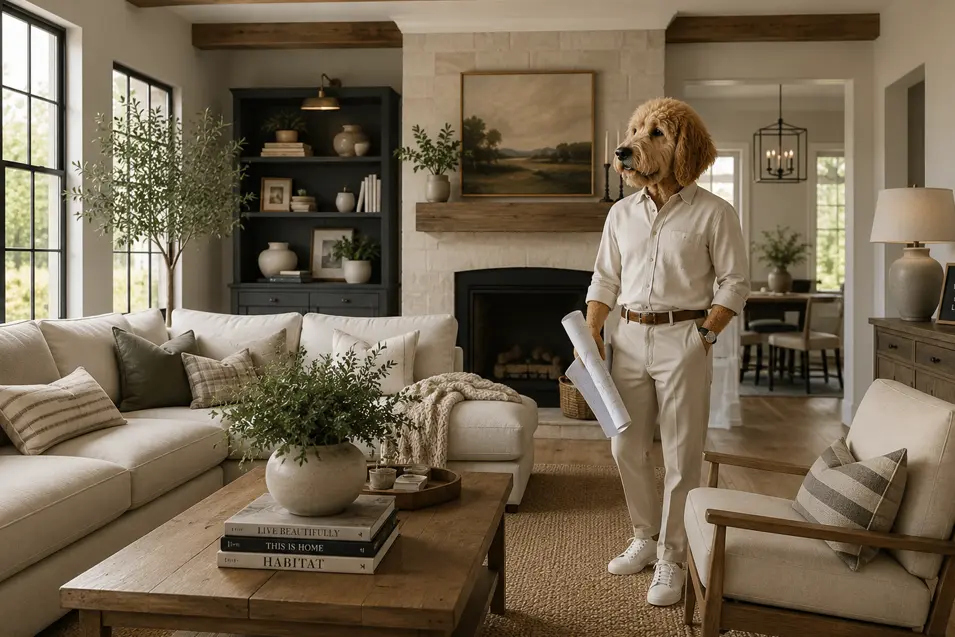
An Eclectic living room might include:
- Contemporary seating
- Antique furniture
- Modern artwork
- Industrial lighting
- Traditional accents
The Eclectic approach intentionally mixes styles that might not normally appear together.
Which Style Is Better for Pet Owners?
Both styles work surprisingly well in pet-friendly homes.
Bohemian interiors often incorporate washable textiles, natural materials, and relaxed furnishings that can easily accommodate dogs and cats. The casual nature of the style also makes everyday wear and tear less noticeable.
Eclectic interiors can be equally pet-friendly, though homeowners may need to be more selective when mixing valuable antiques or delicate decorative pieces with active pets.
Either style can create a welcoming environment for both people and animals.
How to Choose Between Bohemian and Eclectic Design
If you love travel-inspired décor, layered textiles, natural materials, and a relaxed atmosphere, Bohemian design may be the better fit.
If you enjoy combining different design styles, collecting unique furniture, and creating carefully balanced interiors, Eclectic design may feel more natural.
Many homeowners borrow elements from both styles, blending Bohemian warmth with Eclectic sophistication to create spaces that feel personal and distinctive.
The two styles complement each other exceptionally well.
Final Thoughts
Bohemian and Eclectic design both celebrate creativity and individuality, but they express those ideas in different ways. Bohemian interiors embrace free-spirited layering, global influences, and relaxed living, while Eclectic spaces focus on thoughtfully combining diverse styles into a cohesive whole.
Neither style is inherently better. The right choice depends on your personality, lifestyle, and how you want your home to feel.
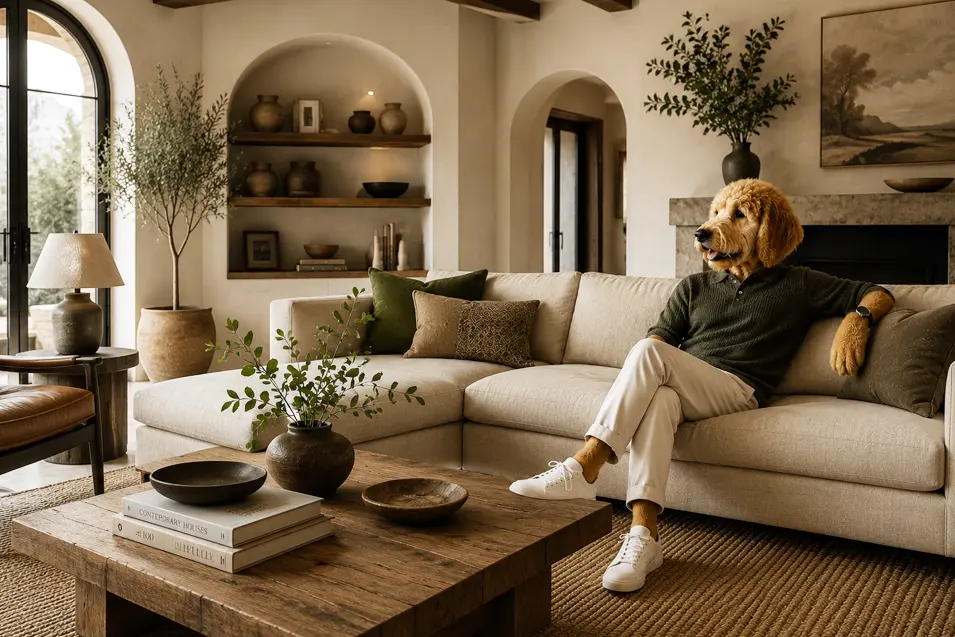
As Scout discovered while comparing a plant-filled Bohemian retreat with a carefully curated Eclectic living room, both styles prove that the most memorable homes are often the ones that reflect the people who live in them.
Still deciding? Compare the key elements of Bohemian and Eclectic design, then visit our detailed Bohemian Style Guide and Eclectic Style Guide for room-by-room inspiration.