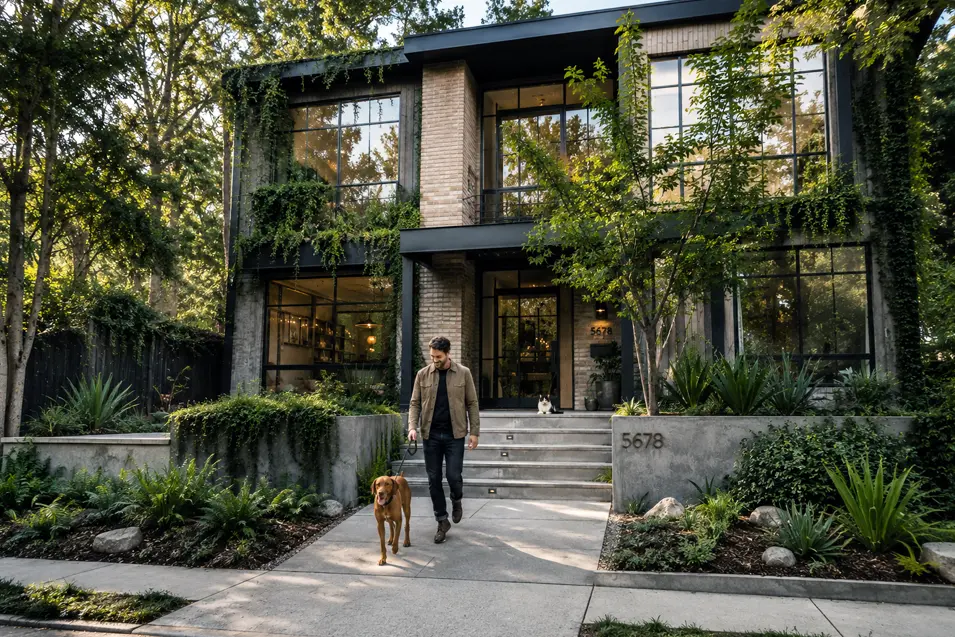
Biophilic design is more than a decorating trend—it’s a way of creating homes that strengthen our connection to nature. By incorporating natural materials, abundant daylight, living plants, water features, and organic forms, biophilic homes create environments that benefit both people and pets.
For dogs and cats, these spaces provide enriching sensory experiences, comfortable resting areas, and stronger connections to the natural world. The result is a healthier, calmer, and more engaging home for every member of the family.
Let’s explore a complete biophilic pet-friendly home, room by room.
The Exterior and Front Entry
The home’s exterior immediately establishes its connection to nature. Native grasses sway along stone pathways, while pollinator-friendly flowers attract butterflies and birds. Mature trees provide shade and help blend the home into its surroundings.
A covered entry features natural wood beams, stone accents, and large glass panels that allow sunlight to reach the foyer. Pet-safe landscaping ensures curious dogs and cats can safely explore outdoor spaces.
A rain garden near the entrance manages runoff naturally while adding seasonal color and habitat for beneficial insects.
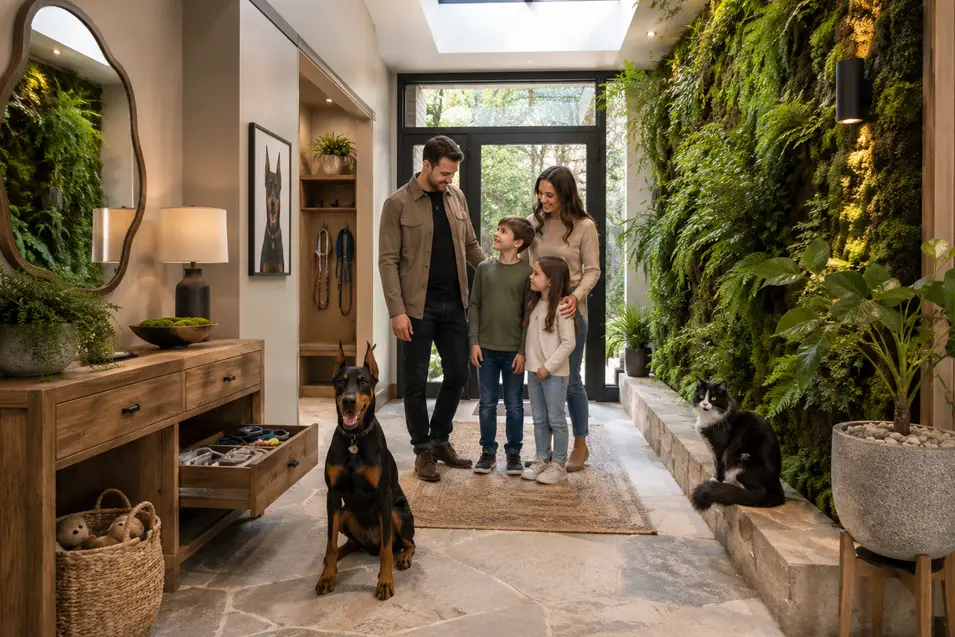
A biophilic foyer welcomes visitors with a dramatic living wall, natural stone flooring, abundant daylight, and pet-friendly design elements that strengthen the home’s connection to nature.
The Living Room
The living room fosters a deep connection to nature through abundant greenery, natural materials, and expansive outdoor views.
A combination of living plant walls, textured stone surfaces, warm wood millwork, and organic furnishings creates a calming, restorative environment. Floor-to-ceiling windows maximize daylight while visually extending the living space into the surrounding landscape.
Thoughtfully integrated pet amenities, including built-in resting areas and immersive ecosystem features such as a large built-in aquarium, support the well-being of both pets and their owners while maintaining a refined, spa-like aesthetic.
This image is a great example of moving biophilic design from “plants as décor” to “nature as architecture,” which is where the concept becomes truly memorable.
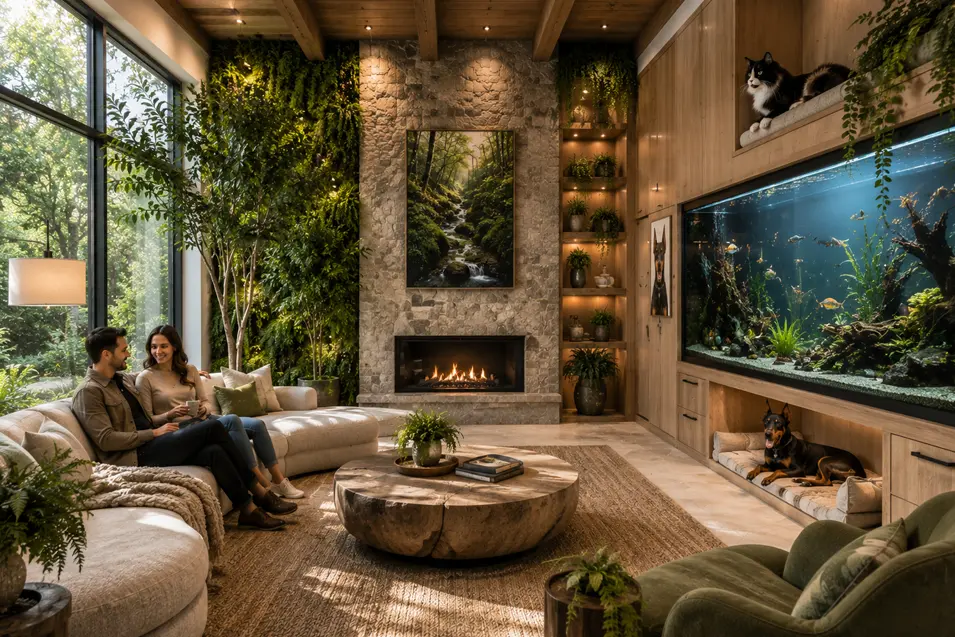
This image demonstrates how biophilic design can evolve beyond decorative plants, using living walls, natural materials, and ecosystem features to make nature an integral part of the architecture.
Biophilic Mudroom
The mudroom brings nature indoors through organic textures, living greenery, and abundant natural light.
Warm wood cabinetry, natural stone flooring, and a lush living plant wall create a grounded, restorative atmosphere while providing durable everyday functionality. Built-in storage keeps towels, leashes, grooming supplies, pet food, and outdoor essentials neatly organized.
A dedicated pet-washing station, woven baskets, and thoughtfully integrated greenery transform this hardworking space into a welcoming extension of the home’s biophilic design.
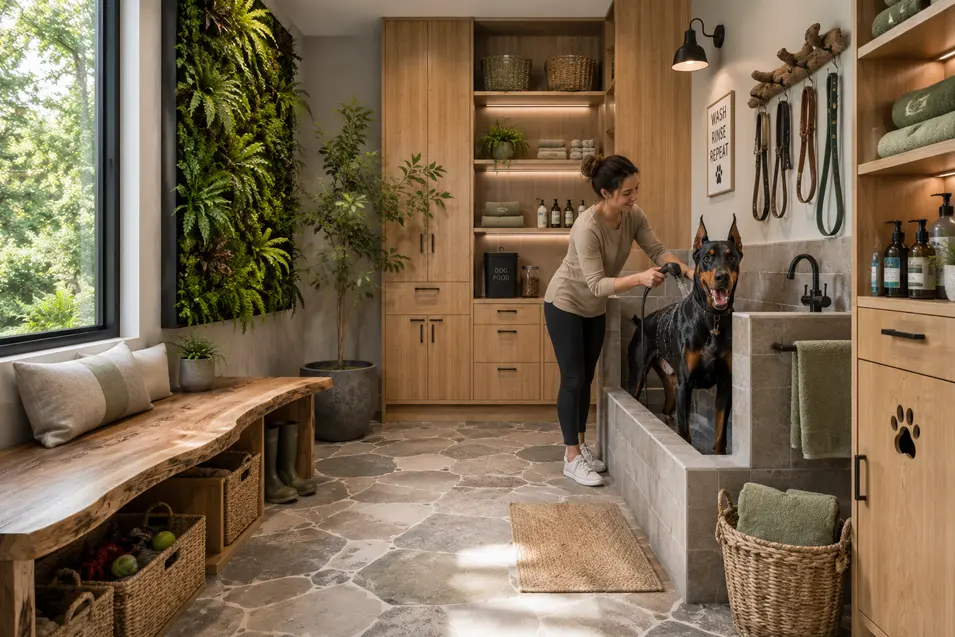
A living plant wall, natural stone flooring, and a dedicated pet-washing station transform this mudroom into a practical yet restorative space where everyday routines remain connected to nature.
The Kitchen
The kitchen combines functionality with natural beauty. Warm wood cabinetry, stone countertops, and open shelving create a welcoming space inspired by the outdoors.
Large windows and overhead skylights flood the room with natural light while providing views of surrounding greenery, allowing both homeowners and pets to remain connected to nature throughout the day.
A built-in feeding station and dedicated pet nook keep pet essentials organized while blending seamlessly into the cabinetry. Fresh herbs and indoor plants thrive along the sunny windows, bringing greenery, texture, and fragrance into the room.
Natural materials and durable finishes ensure the kitchen remains practical while maintaining its organic aesthetic.
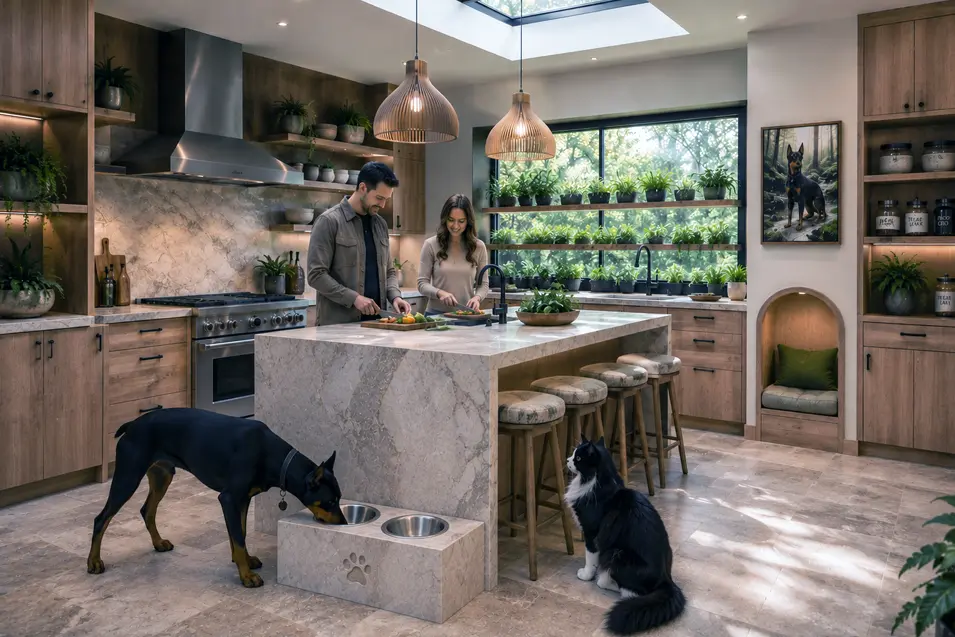
Natural stone, warm wood cabinetry, and abundant greenery create a biophilic kitchen where everyday routines remain connected to nature for both homeowners and their pets.
The Dining Room
The dining room emphasizes connection and gathering. A live-edge wood dining table anchors the space beneath a statement lighting installation accented with cascading greenery inspired by natural forms.
Large windows overlook gardens and outdoor living areas, creating a seamless visual connection between indoor and outdoor spaces.
Living plants, natural stone accents, and organic textures such as woven rugs and soft upholstery add warmth and comfort. Pets often gather nearby during family meals, making comfortable resting and observation areas an important part of the room’s design.
The overall atmosphere encourages slower, more mindful dining experiences while fostering a deeper connection to nature.
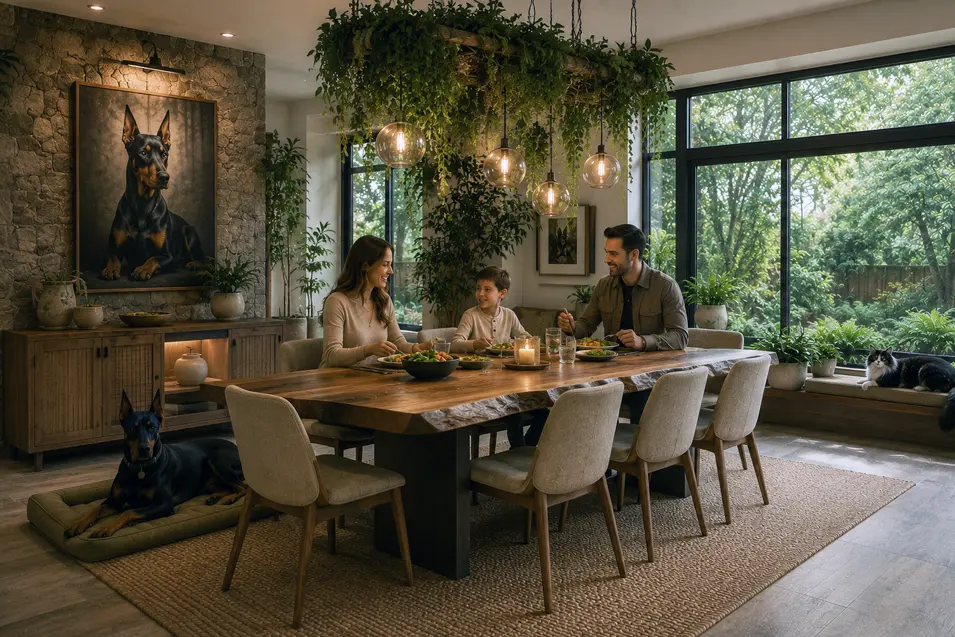
A live-edge wood table, cascading greenery, and expansive garden views create a dining space designed to foster connection, comfort, and a deeper appreciation for nature.
The Primary Bedroom
The primary bedroom serves as a peaceful retreat inspired by nature. Soft earth tones, natural textiles, and abundant daylight create a restorative environment.
Large windows frame views of trees, gardens, and surrounding landscapes. Blackout shades provide privacy while preserving the room’s connection to the outdoors during the day.
Thoughtfully integrated pet spaces, including a built-in dog sleeping nook and elevated cat observation shelf, allow pets to remain close while maintaining the room’s clean aesthetic.
Natural wood furnishings, organic bedding materials, living plants, and subtle botanical accents reinforce the calming atmosphere.
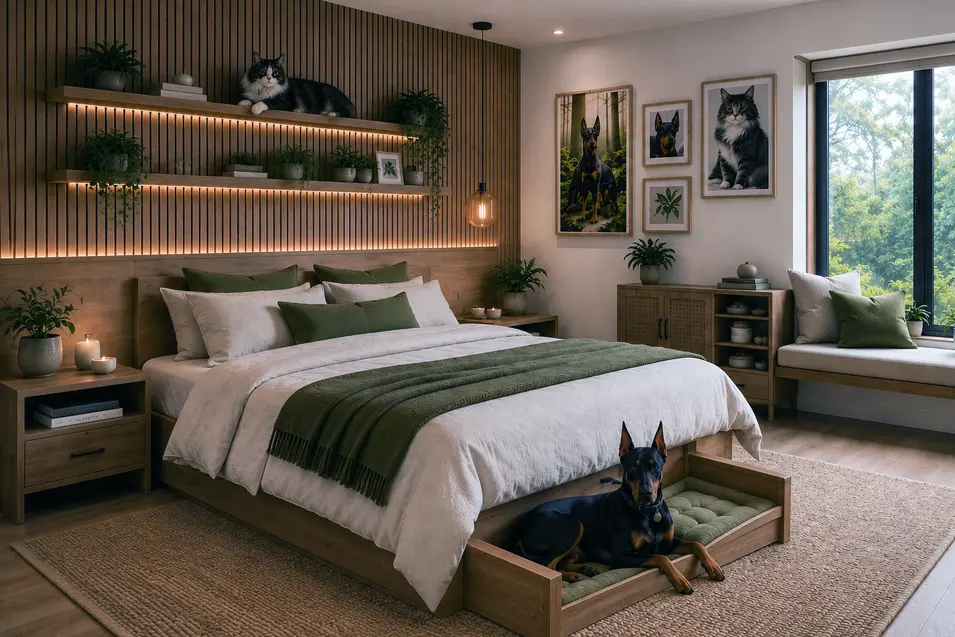
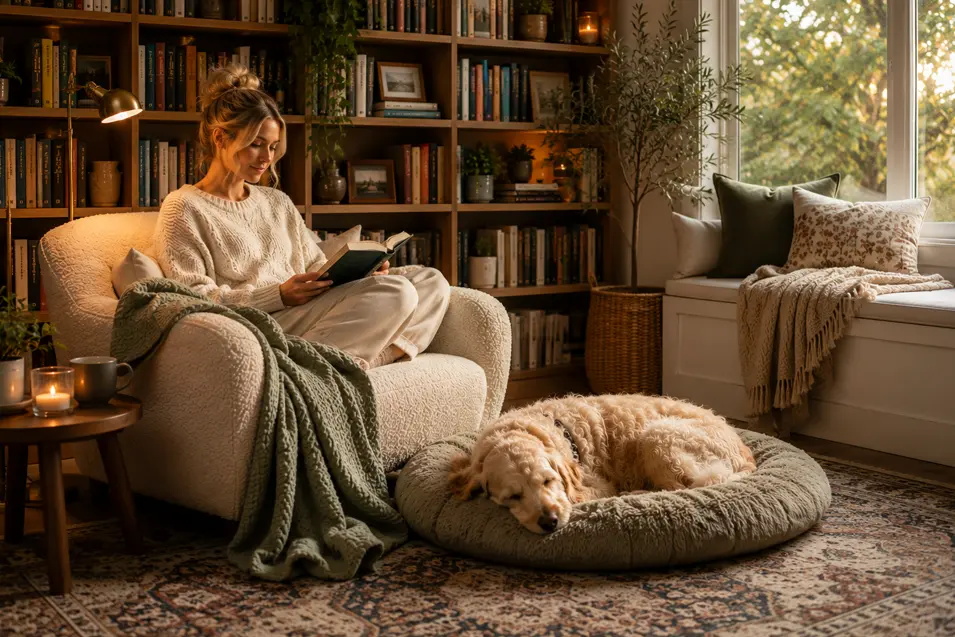
This biophilic primary bedroom demonstrates how natural materials, calming colors, and integrated pet amenities can transform a sleeping space into a restorative retreat.
Teen Girl Bedroom
A teen’s bedroom introduces biophilic principles in playful and meaningful ways. Nature-inspired artwork, botanical accents, and carefully selected pet-safe plants create opportunities for learning, creativity, and self-expression.
Reading corners and study areas positioned near large windows maximize natural light while maintaining a strong connection to the outdoors.
Built-in storage keeps books, toys, pet supplies, and personal belongings organized while preserving a calm and uncluttered environment.
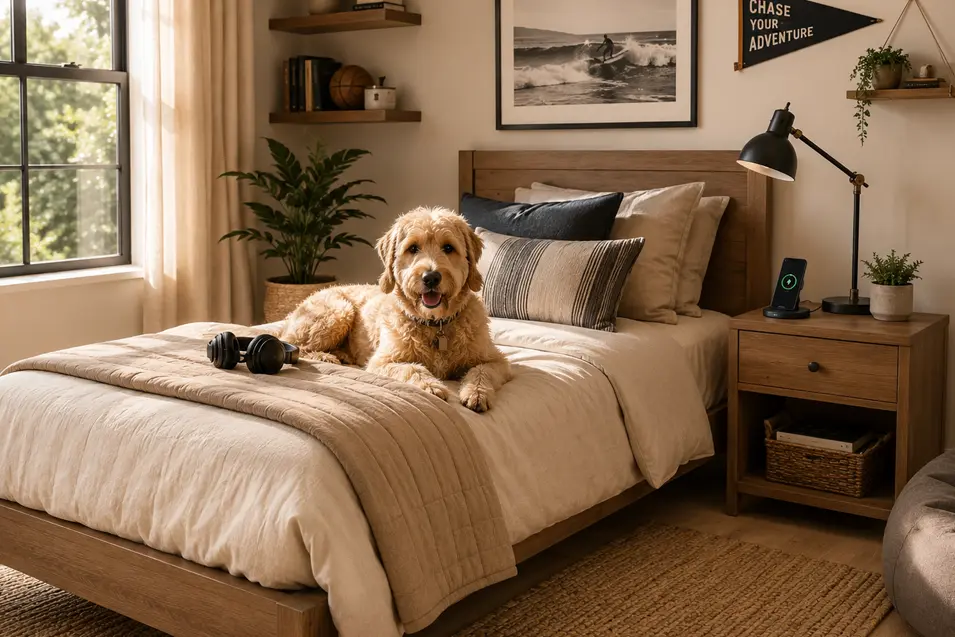
Pets often become important companions during adolescence, making thoughtfully integrated resting and observation spaces an essential part of the room’s design.
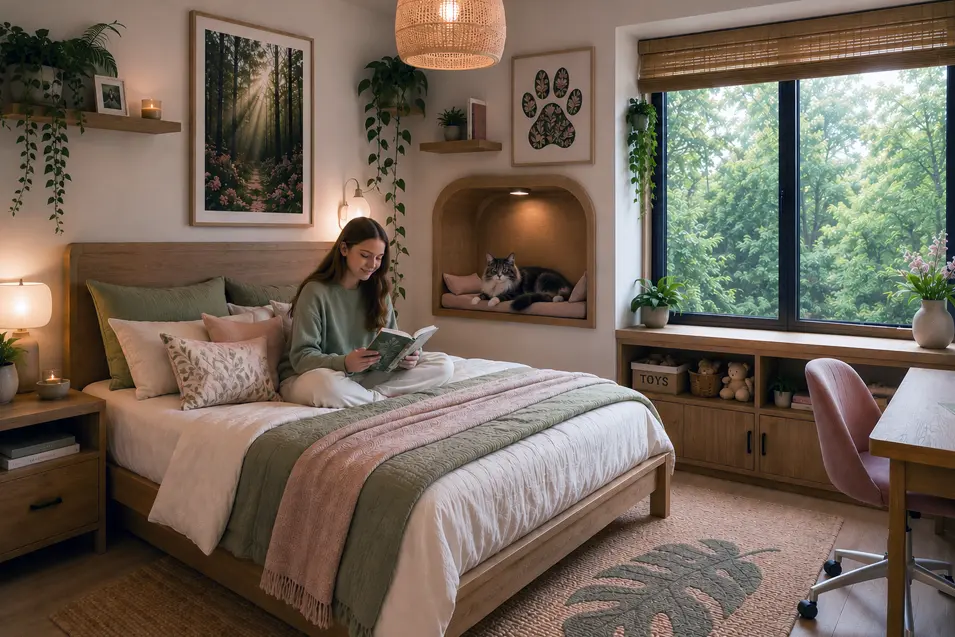
This biophilic bedroom demonstrates how nature-inspired design can foster creativity, well-being, and comfort while providing space for both personal growth and pet companionship.
The Home Office
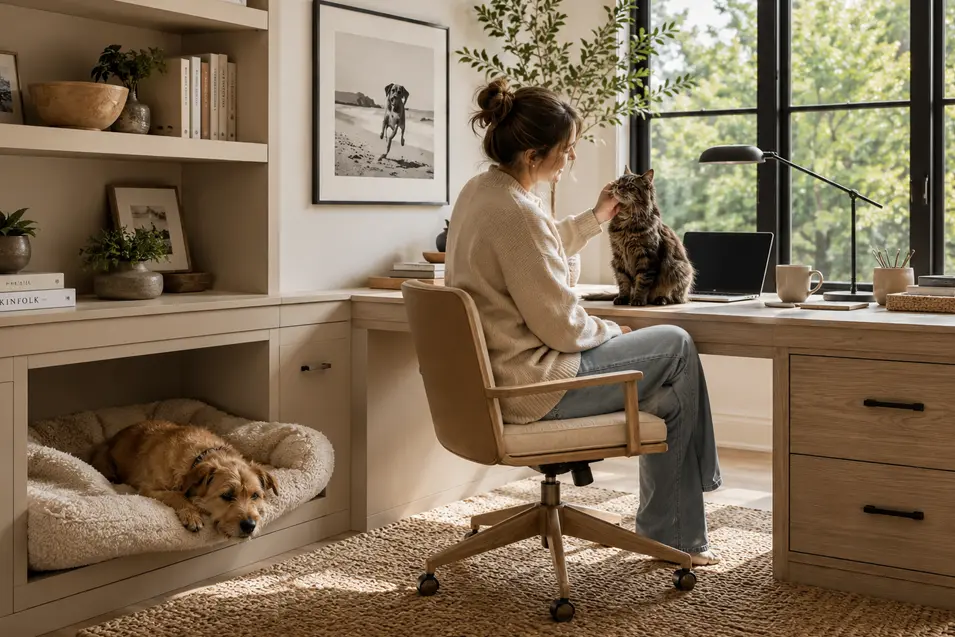
The home office demonstrates how biophilic design can improve productivity and well-being. A desk positioned near floor-to-ceiling windows provides abundant natural light and uninterrupted views of the surrounding landscape throughout the workday.
Living plant walls, indoor greenery, and natural materials such as wood and stone help reduce the sterile feel often associated with traditional workspaces.
Integrated pet spaces allow dogs and cats to remain close during working hours, providing companionship without distraction.
Good ventilation, access to daylight, and ecosystem features such as a built-in aquarium contribute to a healthier, more restorative work environment.
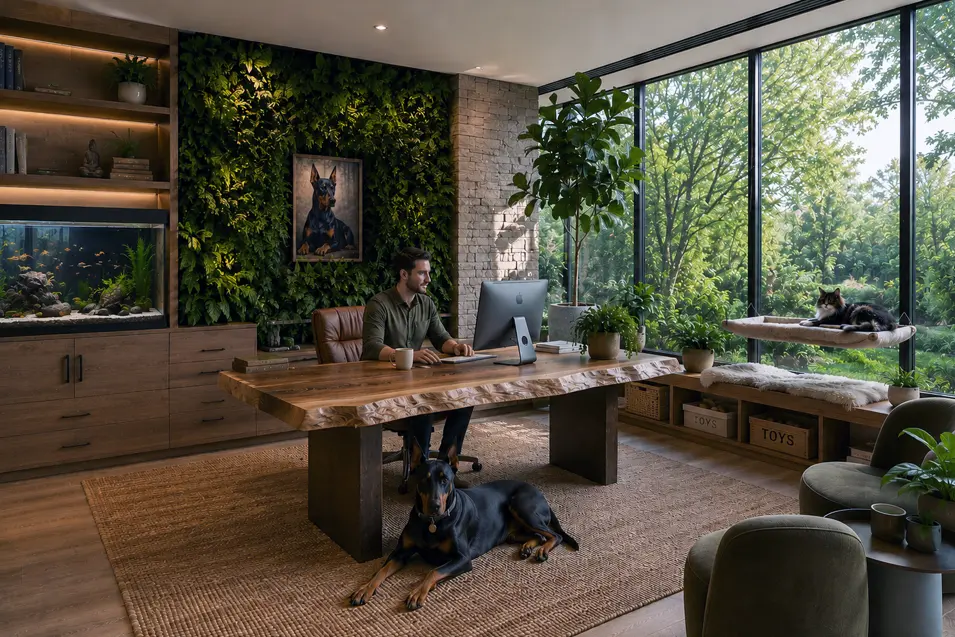
This biophilic workspace demonstrates how abundant daylight, living plant walls, and nature-inspired materials can transform a home office into a healthier and more restorative environment.
The Hallway Gallery
Rather than serving merely as a passageway, the hallway becomes a nature-inspired gallery that connects the home’s various spaces.
Family photography, pet portraits, botanical artwork, and natural textures line the walls, creating a personalized environment that reflects the people and animals who live there. Skylights and strategically placed windows bring sunlight into areas that might otherwise feel enclosed.
Living green walls, indoor planters, and built-in observation niches create moments of visual interest while encouraging movement throughout the home.
For cats especially, these transitional spaces often become favorite pathways, observation routes, and quiet places to rest.
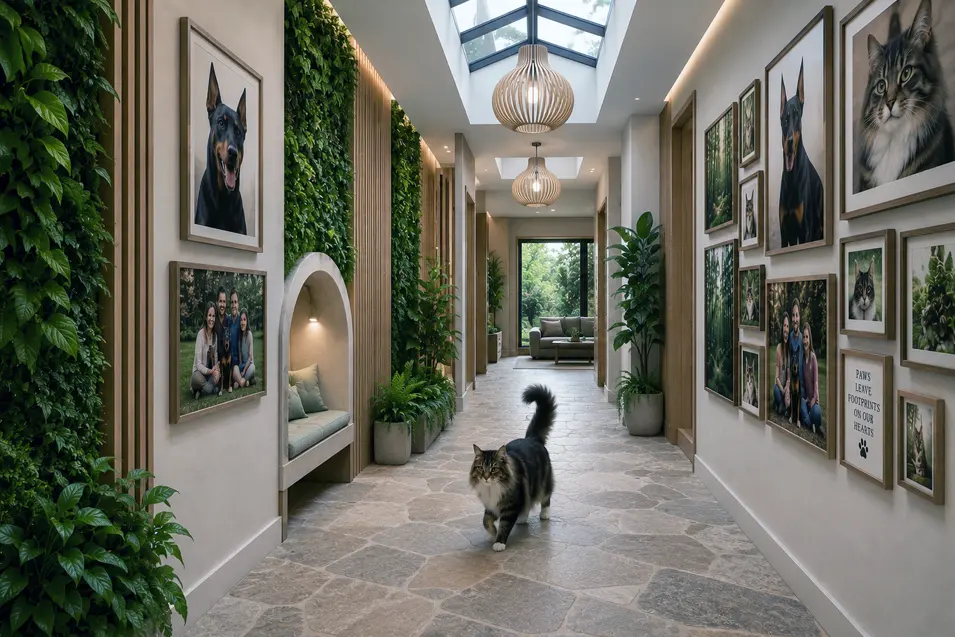
This biophilic corridor demonstrates how greenery, daylight, and meaningful artwork can elevate a hallway from a functional passageway into an engaging and restorative living space.
Signature Feature: The Indoor Garden Conservatory
Every memorable home benefits from a standout feature, and in this biophilic residence, that feature is the indoor garden conservatory.
This glass-enclosed retreat functions as a year-round indoor oasis filled with lush greenery, natural light, and comfortable seating areas. Pet-safe tropical plants create a vibrant environment that evolves and grows over time.
A natural water garden with a small fountain introduces gentle movement and soothing sounds, while comfortable seating encourages relaxation, reading, and reflection.
Cats enjoy climbing structures and observation perches integrated among the plants, while dogs appreciate the warm, sunlit environment and dedicated resting areas.
The conservatory becomes a destination within the home and serves as the ultimate expression of biophilic living.
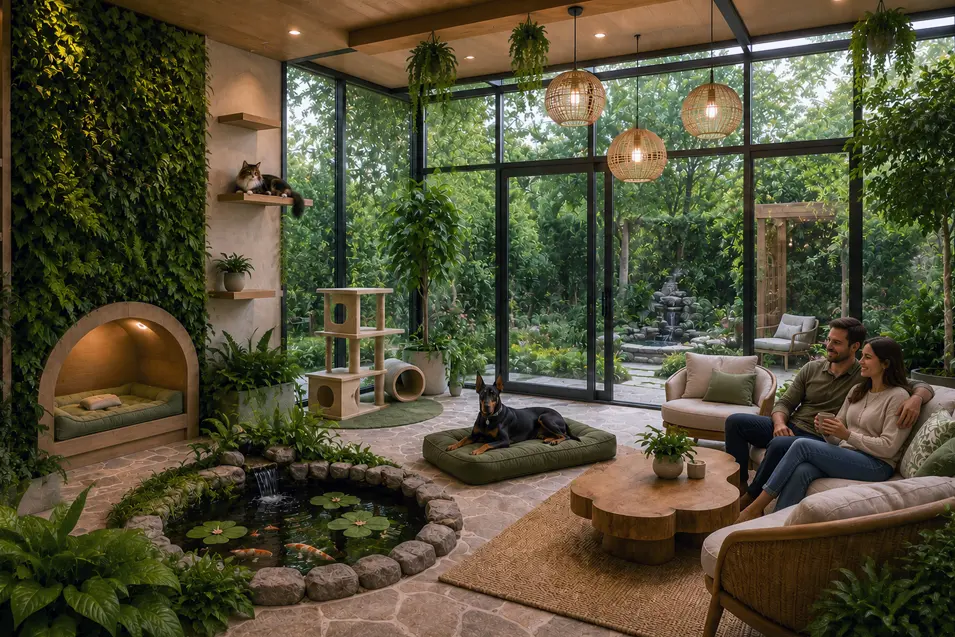
This indoor garden conservatory represents the ultimate expression of biophilic design, combining living ecosystems, natural light, and pet-friendly spaces into a destination within the home.
The Laundry and Pet Care Room
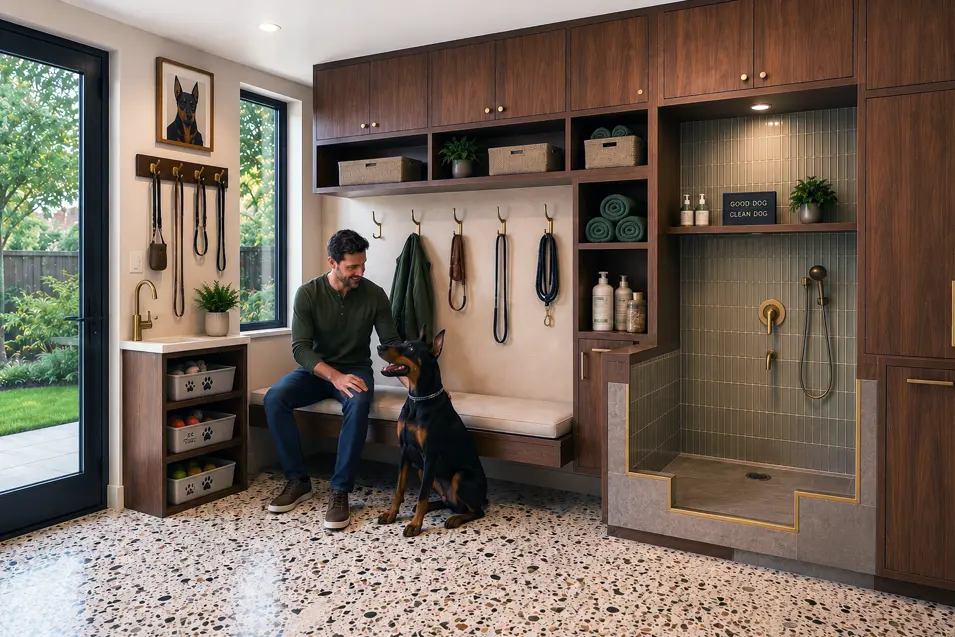
The laundry room doubles as a dedicated pet care space designed for convenience and durability.
Natural stone flooring resists moisture while remaining attractive. Built-in storage keeps grooming supplies, food, toys, towels, and cleaning products organized and easily accessible.
A dedicated pet washing station simplifies bathing and cleanup after outdoor adventures, while integrated feeding and storage areas help streamline daily routines.
Even highly functional spaces benefit from natural light, living greenery, and thoughtful material choices that maintain visual consistency throughout the home.
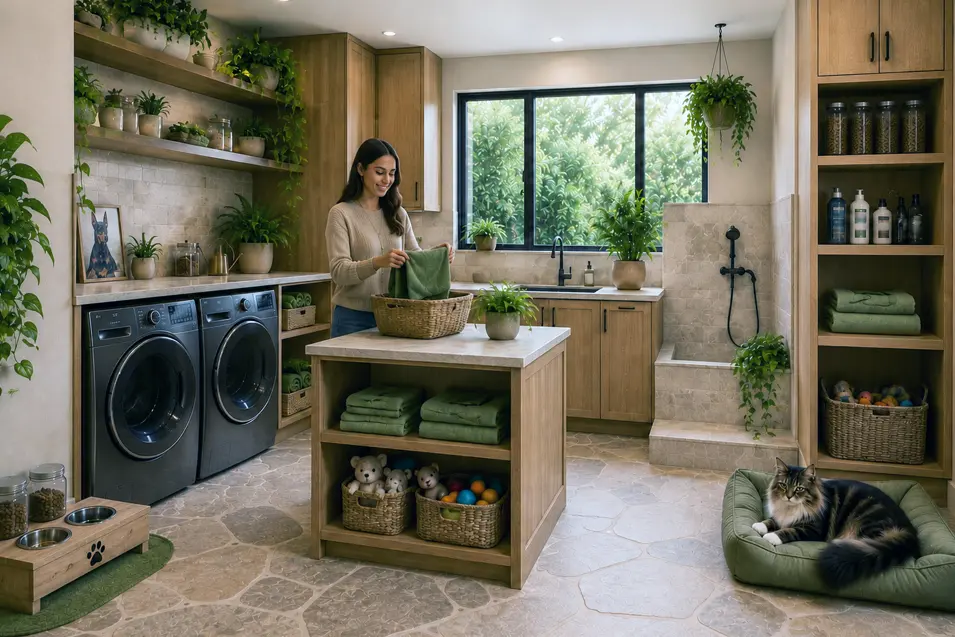
This thoughtfully designed laundry and pet care room demonstrates how biophilic principles can elevate even the most practical spaces through natural materials, greenery, and abundant daylight.
The Backyard Nature Sanctuary
The backyard completes the home’s connection to nature. Native plantings support local wildlife while creating a beautiful, biodiverse, and low-maintenance landscape.
Walking paths wind through gardens, water features, and outdoor gathering spaces, encouraging exploration for both people and pets. Mature shade trees provide cooling relief during warmer months.
Dedicated pet-friendly zones, including sheltered retreats, water stations, and open play areas, allow dogs and cats to safely enjoy the outdoors.
Cascading water features attract birds and beneficial wildlife while providing soothing sounds that enhance the outdoor experience.
The result is a backyard that feels like a natural extension of the home’s interior spaces and an immersive sanctuary for the entire family.
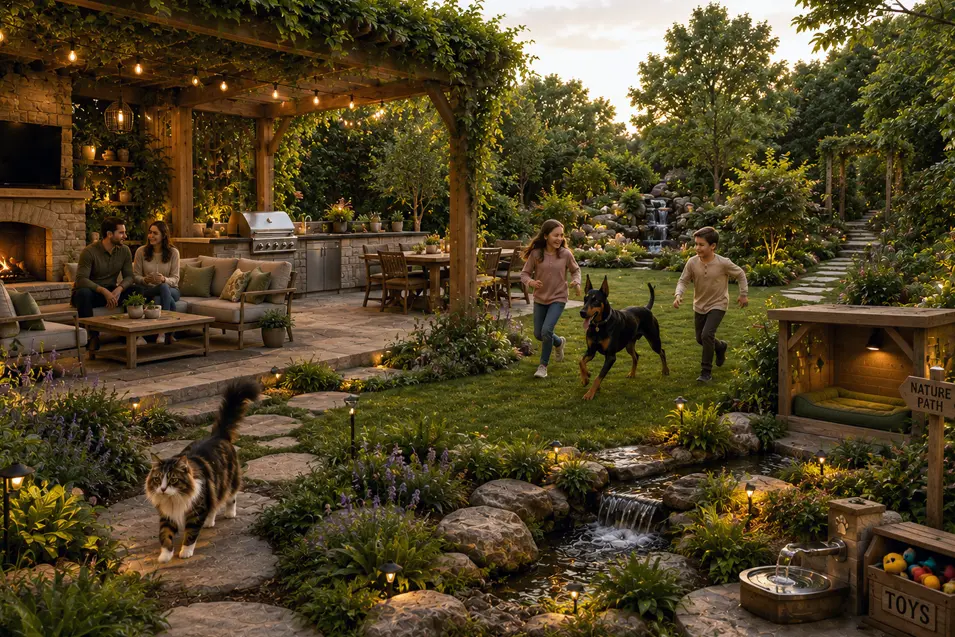
This thoughtfully designed landscape demonstrates how biophilic principles can transform a backyard into a living ecosystem that supports family life, pet enrichment, and local wildlife.
Key Elements of This Biophilic Pet-Friendly Home
Several defining characteristics unite every room in the home:
- Abundant natural light and garden views
- Strong indoor-outdoor connections
- Natural wood, stone, and organic materials
- Living walls and integrated greenery
- Pet-safe plants and natural ecosystems
- Organic shapes, textures, and nature-inspired forms
- Water features and soothing natural sounds
- Native landscaping that supports local wildlife
- Dedicated spaces for dogs and cats
- Healthy indoor air quality and wellness-focused design
- Flexible spaces that encourage relaxation, exploration, and connection
Final Thoughts
A biophilic pet-friendly home creates a stronger connection between people, animals, and the natural world. By incorporating natural materials, living plants, abundant daylight, water features, and thoughtfully integrated pet accommodations, homeowners can create environments that support both physical and emotional well-being.
Throughout this home, every space—from the welcoming foyer and nature-inspired living areas to the indoor garden conservatory and wildlife-friendly backyard—demonstrates how biophilic design can enrich daily life. Pets are not treated as an afterthought but are seamlessly integrated into the home’s architecture through dedicated resting areas, observation spaces, and enrichment features.
The result is a home that feels healthier, calmer, and more connected to the rhythms of nature. Rather than separating us from the outdoors, biophilic design invites nature inside, creating spaces where families, pets, and living ecosystems can thrive together.
Explore More Pet-Friendly Home Styles
Love the connection between nature and design found in biophilic homes? Explore our complete guide to the most popular pet-friendly home styles, including Modern, Scandinavian, Japandi, Coastal, Mediterranean, Mid-Century Modern, Rustic Mountain, Industrial, Mid-Century Modern, and many more.
Read: 10 Stunning Pet-Friendly Home Styles: A Complete Design Guide