Modern life often separates people from the natural environments that shaped human experience for thousands of years. Many people spend the majority of their time indoors, surrounded by screens, artificial lighting, and built environments that offer little connection to the natural world.
Biophilic design seeks to change that.
By incorporating natural elements into homes, workplaces, and public spaces, biophilic design aims to strengthen the relationship between people and nature. The result is often an environment that feels healthier, more calming, and more enjoyable to inhabit.
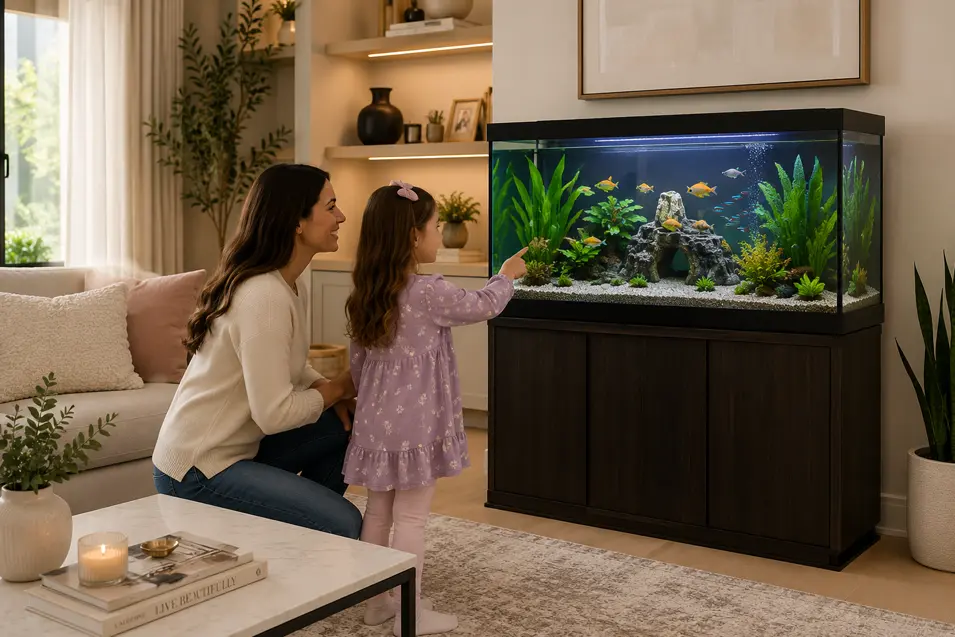
Among the many tools used in biophilic design, aquariums stand out as one of the most powerful. Unlike houseplants, natural materials, or landscape views, aquariums introduce living ecosystems, movement, water, and wildlife into indoor spaces. They create an immersive experience that engages multiple senses while bringing a dynamic piece of nature directly into the home.
For homeowners interested in creating more restorative and nature-connected environments, aquariums offer a unique and compelling design solution.
What Is Biophilic Design?
The term “biophilia” refers to the human tendency to seek connections with nature and other living systems.
Biophilic design applies this concept to architecture and interior design by incorporating features that help people feel more connected to the natural world.
Common biophilic design elements include:
- Natural light
- Indoor plants
- Water features
- Organic materials
- Nature-inspired patterns
- Outdoor views
- Living ecosystems
The goal is not simply decoration. Instead, biophilic design focuses on creating spaces that support well-being through meaningful interactions with nature.
Why Humans Crave Connections to Nature
Throughout history, humans evolved in natural environments.
For thousands of generations, people lived among:
- Forests
- Rivers
- Grasslands
- Lakes
- Coastal regions
Modern indoor environments often lack these natural experiences.
As a result, many people actively seek opportunities to reconnect with nature through:
- Gardening
- Hiking
- Houseplants
- Parks
- Water features
Aquariums satisfy this desire in a uniquely immersive way by bringing a functioning ecosystem indoors.
Why Aquariums Are Ideal Biophilic Design Features
Aquariums incorporate multiple elements that align with biophilic design principles.
They provide:
- Living animals
- Natural movement
- Water
- Organic shapes
- Dynamic ecosystems
- Ongoing change and growth
Few design features combine so many aspects of nature within a single installation.
Unlike static décor, aquariums constantly evolve as fish interact, plants grow, and aquatic environments mature.
This living quality makes them particularly effective biophilic elements.
The Importance of Water in Design
Water plays a central role in many biophilic environments.
People are naturally drawn to:
- Oceans
- Streams
- Waterfalls
- Lakes
- Fountains
Researchers and designers often refer to this attraction as a preference for “blue space” environments.
Aquariums introduce the visual presence of water into the home while providing many of the calming qualities people associate with natural aquatic environments.
Even silent aquariums create a visual sense of fluidity and movement that contributes to a peaceful atmosphere.
Living Movement and Visual Interest
One of the defining characteristics of biophilic design is dynamic natural movement.
Nature is rarely static.
Trees sway.
Water flows.
Animals move through their environments.
Aquariums replicate this experience indoors.
Fish glide through the water, aquatic plants respond to currents, and changing light patterns create an ever-evolving display.
This movement captures attention in a gentle, non-demanding way that many people find relaxing and restorative.
Aquariums and Stress Reduction
One reason biophilic design has gained popularity is its focus on creating environments that support well-being.
Many people report feeling calmer when surrounded by natural elements.
Aquariums often contribute to this effect because they encourage:
- Quiet observation
- Mindfulness
- Relaxation
- Connection with nature
The simple act of watching fish move through an aquatic landscape can create moments of calm within otherwise busy daily routines.
Aquariums as Living Art
Biophilic design is not solely about wellness—it is also about beauty.
Aquariums function as living works of art.
Unlike paintings or sculptures, they change continuously over time.
Aquascaping allows homeowners to create underwater landscapes using:
- Plants
- Stone
- Driftwood
- Sand
- Natural textures
The result is often a display that feels both artistic and organic.
This combination makes aquariums particularly appealing in modern interior design.
Combining Aquariums with Other Biophilic Elements
Aquariums become even more effective when integrated into a broader biophilic design strategy.
Popular combinations include:
Indoor Plants
Houseplants and aquariums complement one another naturally.
Together they create a richer indoor ecosystem and strengthen the connection to nature.
Natural Materials
Materials such as:
- Wood
- Stone
- Bamboo
- Cork
help reinforce the organic character of the space.
Natural Light
Whenever practical, biophilic spaces maximize access to daylight while protecting aquariums from direct sunlight.
Nature-Inspired Colors
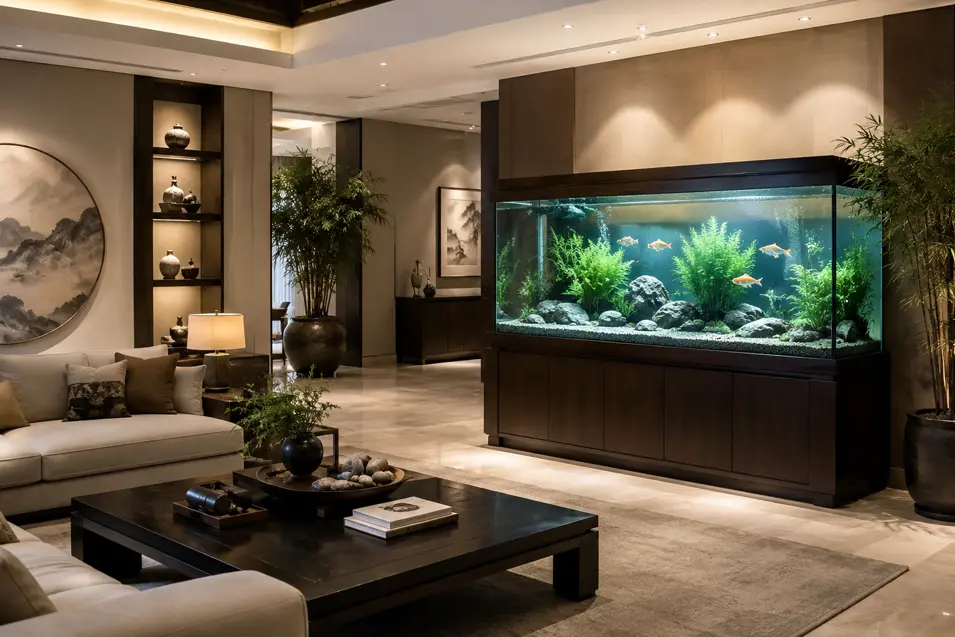
Earth tones, greens, blues, and organic textures often work beautifully alongside aquariums.
Aquariums in Different Biophilic Spaces
Aquariums can enhance many areas of the home.
Living Rooms
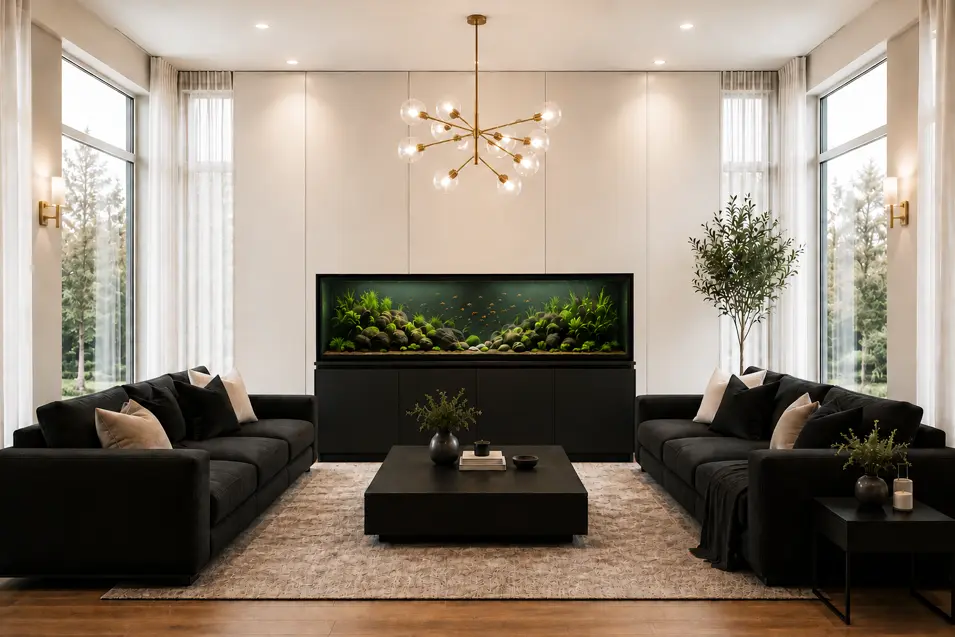
A living room aquarium often becomes a focal point that anchors the space while introducing movement and life.
Home Offices
Aquariums help bring nature into work environments where people may spend long hours indoors.
Wellness Rooms
Meditation rooms, yoga spaces, and relaxation areas often benefit from the calming presence of aquatic life.
Reading Nooks
A cozy chair beside an aquarium creates an inviting environment for quiet reflection and leisure.
Planted Aquariums and Nature Aquascapes
Certain aquarium styles align particularly well with biophilic principles.
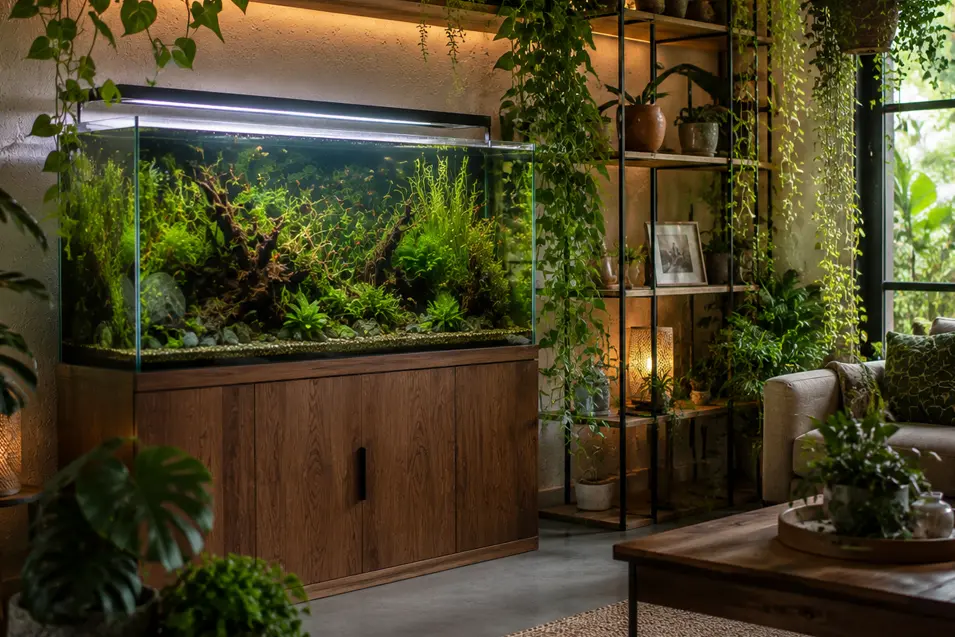
Planted Aquariums
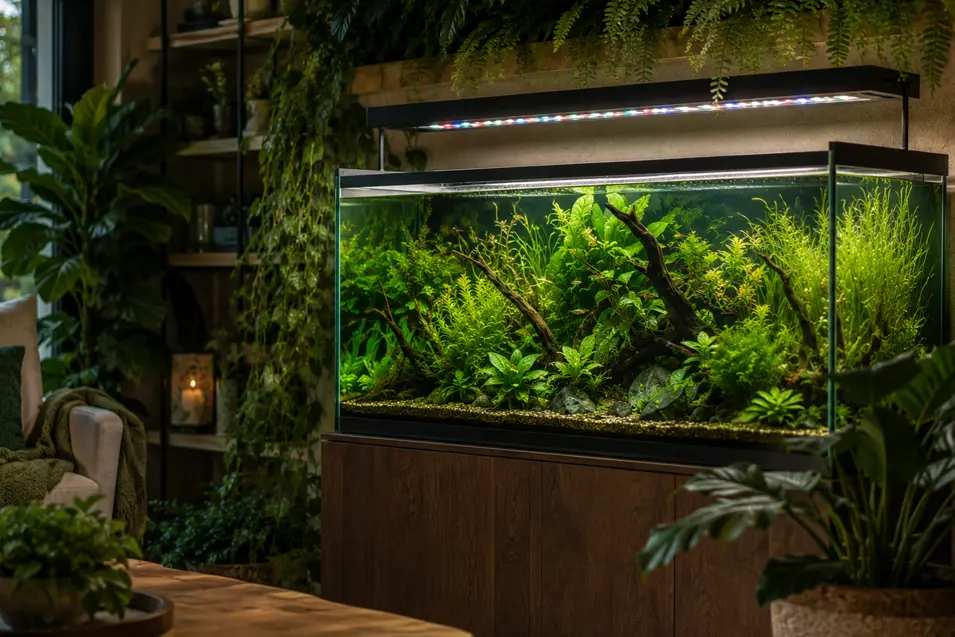
Live aquatic plants strengthen the natural character of the display while creating lush underwater environments.
Nature Aquariums
Inspired by landscapes found in nature, these aquascapes often resemble forests, valleys, riverbanks, and mountains.
Their emphasis on balance and natural composition makes them especially popular in biophilic interiors.
Open-Concept Homes and Biophilic Design
Open-concept homes often benefit from natural focal points that help define spaces.
Aquariums can serve this role while maintaining openness.
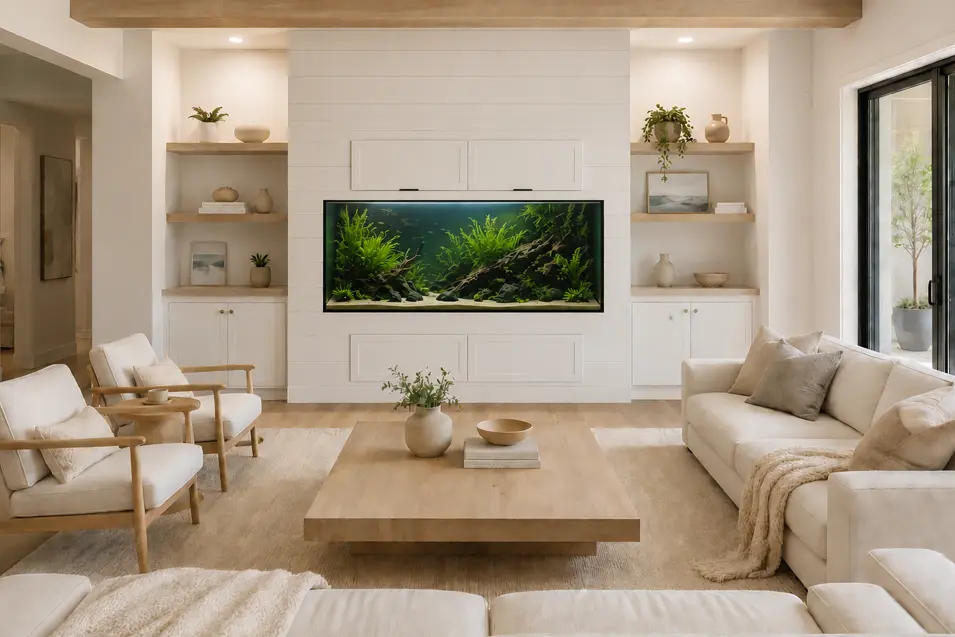
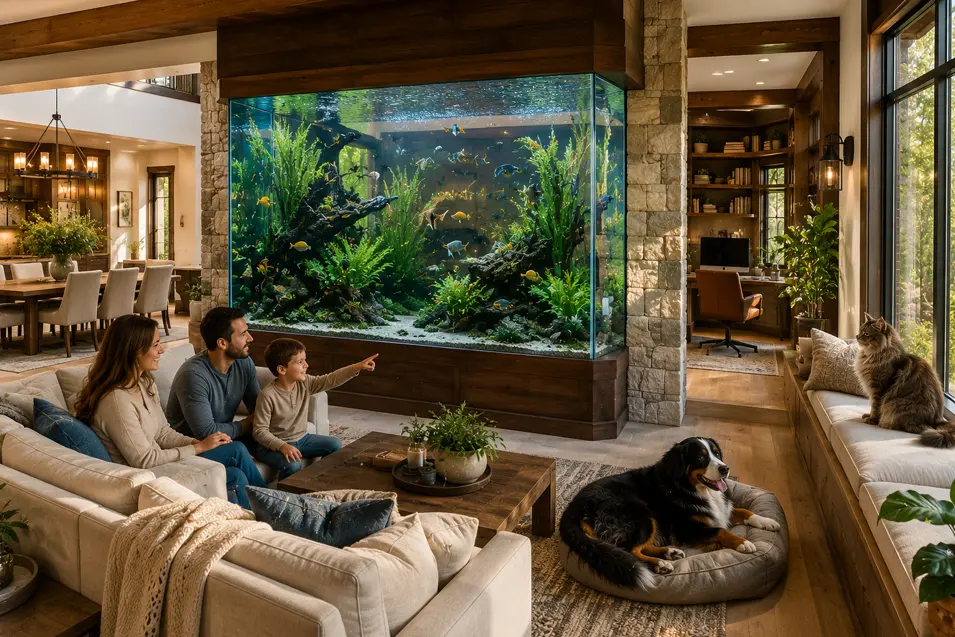
Room divider aquariums, peninsula aquariums, and built-in displays create visual connections between rooms while introducing nature into multiple areas simultaneously.
The result is a home that feels more cohesive and connected to the living world.
Designing a Home Around Nature
The most successful biophilic interiors often begin with a simple question:
“How can this space help people feel more connected to nature?”
Aquariums offer a powerful answer.
They provide:
- Living ecosystems
- Dynamic movement
- Natural beauty
- Water elements
- Wildlife observation
all within a single feature.
When thoughtfully integrated into the home, they help transform indoor spaces from purely functional environments into places that feel restorative and alive.
The Future of Biophilic Design
As people continue spending more time indoors, interest in biophilic design is likely to grow.
Homeowners increasingly prioritize:
- Wellness
- Sustainability
- Nature connection
- Mental well-being
- Meaningful living spaces
Aquariums fit naturally within these priorities.
They offer a rare combination of beauty, education, relaxation, and ecological awareness that aligns closely with the goals of biophilic living.
Conclusion
Biophilic design is about more than decorating with natural materials—it’s about creating meaningful connections with the living world. Aquariums embody this principle by bringing water, wildlife, movement, and living ecosystems into indoor environments.
Whether incorporated into a living room, home office, wellness space, or open-concept design, aquariums help transform ordinary interiors into places that feel calmer, healthier, and more engaging. Their dynamic nature provides a level of interaction and immersion that few other design features can match.
For homeowners seeking to bring nature indoors, an aquarium may be one of the most effective and rewarding biophilic design elements available.
Frequently Asked Questions
What is biophilic design?
Biophilic design is an approach to architecture and interior design that incorporates natural elements to strengthen people’s connection to nature.
How do aquariums support biophilic design?
Aquariums introduce living animals, water, natural movement, and evolving ecosystems into indoor environments, making them powerful biophilic features.
Are aquariums considered wellness-focused design elements?
Many people consider aquariums beneficial for creating calming, restorative spaces that support relaxation and connection with nature.
What type of aquarium works best in a biophilic home?
Planted aquariums and nature-inspired aquascapes are especially popular because they emphasize natural landscapes and living plant life.
Can aquariums be combined with other biophilic features?
Yes. Aquariums work exceptionally well alongside indoor plants, natural materials, daylight, and nature-inspired design elements.
Related Reading
- Aquariums and Mental Wellness: Creating Calm Spaces at Home
- Aquarium Wellness Rooms: Designing Spaces for Relaxation and Reflection
- Aquarium Meditation Spaces: Bringing Nature Into Mindfulness Practices
- Aquarium Reading Nooks: Creating Cozy Spaces Around Fish Tanks
- Aquariums as Statement Pieces in Home Design
- Luxury Home Aquariums: Inspiration and Planning Ideas