Back to School With Pets: Safety, Routines and Family Tips
Back-to-school season brings a major change to family life. Alarm clocks are set earlier, lunches need to be packed, afternoons fill with homework and activities, and the relaxed pace of summer quickly disappears.
Dogs and other pets notice these changes too.
Children who were home for much of the summer suddenly leave for hours each day. Walks and meals may happen at different times, the house becomes unusually quiet and pets may receive less attention as everyone settles into the new schedule.
Some dogs adjust easily. Others become bored, confused or anxious—particularly if they have grown accustomed to having the children nearby.
From preparing your dog for more time alone to keeping dangerous lunch foods out of reach, these guides will help the entire family begin the school year safely.
Helping Your Dog Adjust to the New Routine
The most important part of the transition is showing your dog what the new daily routine will look like.
Back to School and Your Dog: Helping Them Adjust to the New Routine explains how to gradually change walking and feeding times, practise spending time apart and create a predictable schedule before classes begin.
It also covers morning exercise, comfortable resting areas, calm departures and the warning signs that may indicate your dog is having difficulty coping with the change.
Why September Can Be Particularly Difficult
For dogs, September can feel like an entire household changed overnight.
Why September Can Be Hard on Dogs explores the combination of reduced companionship, shorter days, changing weather and disrupted routines that can make early fall challenging.
Understanding the reasons behind a change in behaviour can help families respond with patience rather than assuming the dog is being difficult or disobedient.
Does Your Dog Miss the Kids?
Many dogs develop close relationships with the children in their family. When those children suddenly disappear for most of the day, their absence can be genuinely confusing.
Does Your Dog Miss the Kids When They Go Back to School? looks at the ways dogs may react, from waiting near the door and becoming unusually clingy to losing interest in their normal activities.
It also offers simple ways for children to reconnect with their dog after school and maintain that relationship throughout the busier months ahead.
Keeping Your Dog Occupied While Everyone Is Away
A dog that enjoyed a lively summer may struggle with a suddenly empty house.
How to Keep Your Dog Busy While the Kids Are at School includes practical ideas for providing physical activity, mental stimulation and safe entertainment during the day.
Food puzzles, sniffing games, rotating toys, safe chews and morning exercise can all help. Dogs that spend longer periods alone may also benefit from a midday visit, dog walker or carefully chosen daycare program.
Back-to-School Safety for Pets
New routines bring new hazards into the home.
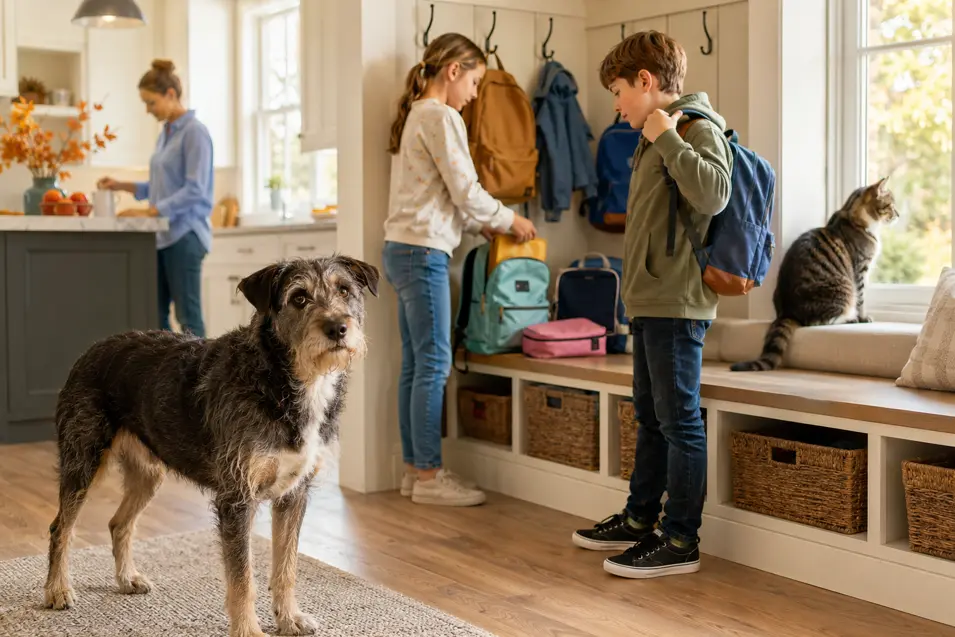
Backpacks may contain medications, art supplies, gum or leftover food. Lunch bags are dropped on the floor, doors are left open during the morning rush and school supplies appear on tables throughout the house.
Back-to-School Safety for Pets covers the common seasonal risks for both dogs and cats, including unsafe foods, small objects, adhesives, writing supplies and escape hazards.
A few household rules—such as hanging backpacks out of reach and immediately emptying lunch bags—can prevent a veterinary emergency.
Can Dogs Eat Sandwiches?
A sandwich may appear harmless, but whether it is safe for a dog depends entirely on what is inside it.
Can Dogs Eat Sandwiches? examines common breads, meats, cheeses, condiments and fillings. It also explains why ingredients such as onions, garlic, raisins, high-fat meats and certain artificial sweeteners can turn an ordinary lunch into a serious risk.
Even when the ingredients are not toxic, a complete sandwich is rarely a healthy treat for a dog.
School Lunch Foods Dogs Shouldn’t Eat
Lunch boxes can contain several foods that dogs should never have.
School Lunch Foods Dogs Shouldn’t Eat helps families identify dangerous or unhealthy items before the dog manages to investigate an unattended backpack.
Chocolate, grapes, raisins, foods containing xylitol and heavily seasoned leftovers are among the potential concerns. Wrappers, plastic bags, foil and food containers can also become choking or intestinal hazards.
Teaching children to keep lunch bags off the floor is a simple but valuable part of responsible pet care.
Should Your Child Walk the Dog to School?
Walking to school with the family dog can provide exercise and create a lovely morning ritual, but it is not the right arrangement for every child or every dog.
Should Your Child Walk the Dog to School? considers the child’s age and maturity, the dog’s size and behaviour, traffic, weather, busy sidewalks and encounters with unfamiliar dogs.
It also addresses the practical question of who brings the dog home after the child enters the school. The safest option may be for an adult to accompany them, particularly when the route or dog presents additional challenges.
Getting Children Involved in Pet Care
The beginning of the school year is a good time to establish age-appropriate responsibilities at home.
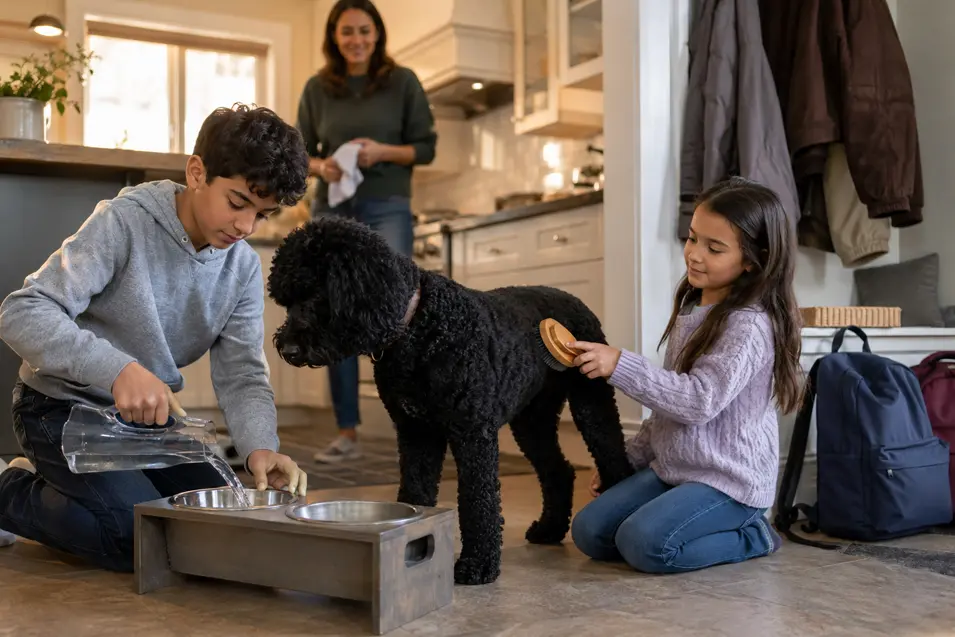
Getting Kids Involved in Pet Care During the School Year offers realistic ways children can help without placing the animal’s welfare entirely in their hands.
Children might refill the water bowl, help prepare an enrichment toy, join an afternoon walk, brush the dog or spend a few minutes practising basic training exercises.
Adults should still make sure every essential task is completed, especially during hectic mornings or weeks filled with homework and extracurricular activities.
Back to School With a New Puppy
Managing the school-year transition becomes more complicated when the family has recently brought home a puppy.
Back to School With a New Puppy covers housetraining, safe confinement, feeding schedules, socialization and the frequent bathroom breaks young puppies require.
A puppy cannot simply be left alone for the same length of time as a healthy adult dog. Families may need to arrange help from a relative, neighbour, pet sitter or dog walker while the children and adults are away.
Planning ahead can prevent setbacks while helping the puppy develop confidence and healthy habits.
A Lighter Look at the First Day of School
Back-to-school season is not all schedules, lunch-box hazards and separation concerns.
20 Dogs Who Are Going Back to School imagines what would happen if dogs boarded the bus and attempted to make it through an entire school day.
There is an overachiever, a class clown, a new student, a suspicious science experiment and at least one dog who insists the homework situation was a misunderstanding.
They may not be ready to graduate, but they certainly make school more entertaining.
A Back-to-School Checklist for Pet Owners
Before the new school year begins:
- Start adjusting walking and feeding times.
- Practise leaving your dog alone for manageable periods.
- Provide exercise before the household leaves.
- Prepare safe enrichment activities.
- Arrange a midday bathroom break when necessary.
- Store backpacks and lunch bags out of reach.
- Check the floor for dropped food, wrappers and school supplies.
- Make sure doors and gates are securely closed.
- Give children realistic, age-appropriate pet-care tasks.
- Plan time for walks, play and companionship after school.
- Watch for changes in appetite, behaviour or bathroom habits.
- Contact your veterinarian if your pet shows persistent or severe distress.
Helping Everyone Settle Into the School Year
Back-to-school season can be hectic, but the family pet should not become lost in the rush.
A predictable routine, safe environment and a little planning can make the transition easier for everyone. Give your dog time to understand the changes, provide appropriate activities while the house is quiet and preserve the daily moments that keep them connected to the family.
Summer may be ending, but walks, playtime and afternoons together can remain some of the best parts of the day.