
Back to School With a New Puppy: Is It a Good Time to Get One?
September can seem like an ideal time to bring home a puppy. Summer travel is over, the children are returning to a regular schedule and the household is beginning to feel more organized.
There may also be fewer vacations, visitors and unpredictable weekends to work around. Compared with the excitement of summer or the demands of the Christmas season, the beginning of fall can appear surprisingly sensible.
In some households, it is.
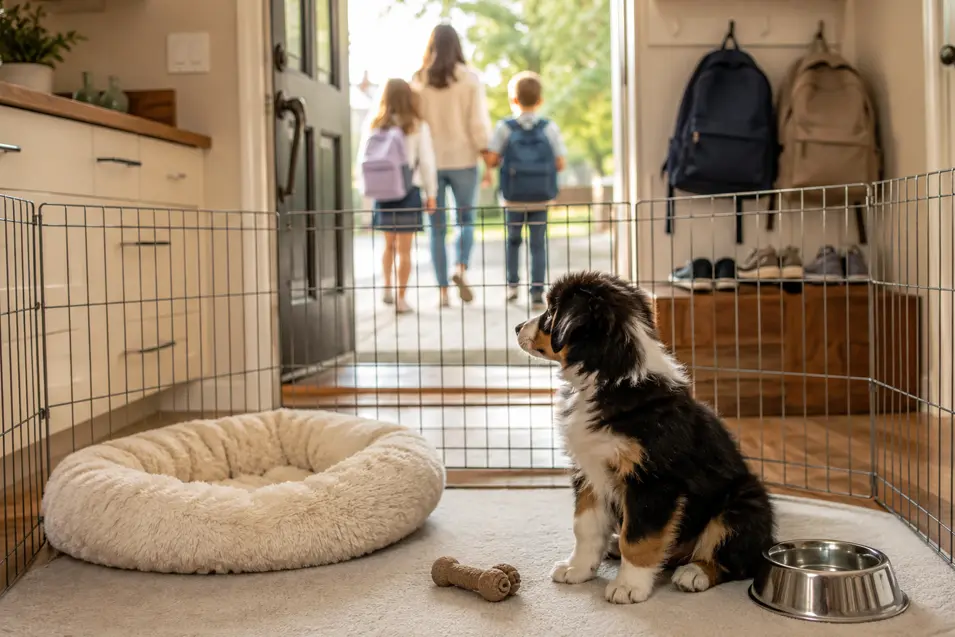
However, a quieter home is not automatically a puppy-friendly home. If everyone returns to school and work at the same time, a young puppy may suddenly be expected to spend hours alone before they have developed the bladder control, confidence or household skills to manage it.
Before adding a puppy to the family this September, it is important to look beyond the calendar and consider what the puppy’s days will actually be like.
Why September Can Seem Like the Perfect Time
Families often like the idea of getting a puppy when life returns to a routine. Predictable mornings, evenings and weekends can make it easier to establish regular meals, bathroom breaks, walks and bedtimes.
The weather can also be helpful. In many parts of Canada and the United States, September is cooler than midsummer but still comfortable enough for frequent trips outdoors. This can make housetraining less unpleasant than it might be during a snowstorm or an extended period of extreme heat.
Children may also be enthusiastic about coming home to a new puppy after school. Caring for the puppy can become part of the family’s routine, while walks and training sessions provide a welcome break from homework and screens.
These are genuine advantages—but only if an adult has enough time to meet the puppy’s needs throughout the day.
The Problem With an Suddenly Empty House
A puppy does not understand why the family who brought them home has disappeared.
If the puppy arrives during a busy weekend and everyone leaves for school and work on Monday morning, the transition can be overwhelming. The puppy is adjusting to unfamiliar people, smells, sounds and surroundings while also being separated from their mother, littermates or previous caregivers.
Expecting them to immediately feel comfortable alone for a full school or workday is unrealistic.
Young puppies need frequent bathroom breaks, several meals a day and considerable supervision. They explore with their mouths and can quickly find electrical cords, houseplants, shoes, garbage, children’s toys and other potentially dangerous objects.
They also need help learning how to settle, sleep, play appropriately and feel safe in their new environment. A quiet house may reduce distractions, but it does not replace human care.
How Long Can a Puppy Be Left Alone?
There is no single rule that applies to every puppy. Age, physical development, health, temperament and previous experiences all matter.
Very young puppies generally need bathroom breaks far more frequently than adult dogs. They may need to go outside after waking, eating, drinking, playing and training—not simply at convenient points in the family’s schedule.
A puppy who can sleep for several hours overnight may not be able to remain comfortable for the same length of time while awake and active during the day.
Rather than planning around the maximum amount of time a puppy might manage, build a schedule that gives them frequent opportunities to succeed. Repeatedly expecting a puppy to wait too long can lead to accidents, distress and setbacks in housetraining.
If the entire household is away for most of the day, someone will need to return home or visit the puppy.
Puppies Need More Than Bathroom Breaks
Arranging for a neighbour to open the back door at lunchtime may not be enough.
Puppies require social interaction, age-appropriate exercise, mental stimulation and gentle exposure to the world around them. They need opportunities to learn that people, household sounds, surfaces, car rides, handling and everyday environments are safe.
They also need plenty of sleep. An overtired puppy can become mouthy, frantic and difficult to settle, much like an exhausted young child.
Good puppy care is not about keeping the puppy entertained all day. It is about providing a healthy rhythm of bathroom trips, short training sessions, appropriate play, supervised exploration, meals and rest.
The First Few Weeks Matter
When possible, arrange for an adult to be home during the puppy’s initial adjustment period. This does not mean remaining beside the puppy every minute. In fact, gradually practising short periods apart can help prevent the puppy from becoming dependent on constant company.
The goal is to introduce alone time in manageable steps rather than beginning with an eight-hour absence.
During the first few weeks, you will also be learning the puppy’s signals. Some puppies circle or sniff before they need to go outside. Others suddenly stop playing, wander toward a doorway or become restless.
It is much easier to recognize those patterns when someone is present to observe them.
Back to School Is Already a Major Transition
September can be one of the busiest times of the year for families. Mornings start earlier, children have new teachers and classrooms, and extracurricular activities begin filling the calendar.
Parents may be managing school forms, transportation, lunches, homework and changing work schedules. Adding nighttime bathroom trips, veterinary appointments, housetraining and puppy supervision can make an already demanding month considerably more complicated.
Before getting a puppy, look honestly at the family’s schedule—not the schedule you hope to have once everything settles down.
If the next six weeks include sports tournaments, evening meetings, work travel or several days when nobody can visit the puppy, waiting may be the kinder decision.
Will the Children Really Be Responsible?
A new puppy and a child returning to school can be an appealing combination. Parents may imagine the child taking responsibility for feeding, walking and training their new companion.
Children can certainly participate in puppy care, but an adult must remain ultimately responsible.
Homework, friendships, sports and fatigue can quickly compete with the enthusiasm that was so strong during the puppy discussion. Younger children cannot be expected to recognize medical concerns, safely manage every interaction or provide care while everyone is away.
Before bringing the puppy home, assign realistic tasks based on each child’s age. A child might help measure food, refill the water bowl with supervision, practise a simple cue or join an adult for an evening walk.
The family should still have a reliable plan if the child forgets, becomes busy or simply loses interest.
Questions to Ask Before Getting a Puppy in September
The month itself is less important than the support available within the household. Before making a decision, ask:
- Who will be home with the puppy during the first several days?
- How many hours will the puppy regularly spend alone?
- Who will provide daytime bathroom breaks?
- Can someone manage several meals each day if required?
- Is there time for short, consistent training sessions?
- Who will care for the puppy during after-school activities?
- Can an adult take responsibility when the children are busy?
- Is the home prepared for chewing, accidents and interrupted sleep?
- Can the family afford veterinary care, food, training and supplies?
- What will happen if work or school schedules change?
- Is everyone prepared for the needs of an adolescent and adult dog—not only an adorable puppy?
If the answers depend on everything going perfectly, the plan may need more work.
Building a Realistic September Puppy Schedule
A workable weekday might include an early bathroom trip, breakfast, a short play or training session and another opportunity to go outside before the family leaves.
The puppy would then receive one or more daytime visits, depending on their age and needs. These visits should allow time for a bathroom break, interaction and a little supervised activity—not merely a rushed trip outdoors.
After school or work, the puppy will need attention, but may also require a nap rather than hours of excitement. Evening routines can include dinner, gentle training, play, several bathroom trips and quiet time before bed.
The exact schedule will vary, but it must be based on the puppy’s developmental needs rather than the convenience of the school timetable.
What About Crate Training?
A crate can be a useful place for a puppy to rest and may support housetraining when introduced properly. It should not be used to make an unsuitable schedule possible.
A crate does not allow a young puppy to comfortably remain alone for an entire school or workday. Puppies still need regular bathroom breaks, movement, interaction and access to water as appropriate.
Crate training should be gradual and positive. The puppy should learn that the crate is a safe place to relax—not a place where they are confined for longer than they can comfortably manage.
A puppy-safe pen or carefully prepared room may provide more space in some situations, but it does not eliminate the need for daytime care and supervision.
Help From Outside the Household
Families with busy weekday schedules may still be able to raise a puppy successfully if they arrange dependable help.
Possible options include:
- A family member who can visit during the day
- A trusted neighbour experienced with puppies
- A professional pet sitter
- A dog walker who offers puppy visits
- A veterinarian-approved puppy daycare at the appropriate age
- Flexible or alternating work schedules
- Taking vacation time during the puppy’s first days at home
Any caregiver should understand the puppy’s feeding, bathroom and training routine. Consistency is particularly important during housetraining.
Daycare may eventually be useful for some puppies, but it is not appropriate for every dog or every stage of development. Ask your veterinarian about vaccination requirements and when group environments may be suitable.
When Waiting Is the Better Choice
There is nothing wrong with deciding that September is too busy.
Waiting until someone can take time away from work, arranging dependable daytime care or choosing a quieter period can give the puppy a much easier beginning. It can also prevent the family from becoming overwhelmed during the first few weeks.
Another possibility is adopting an adult dog whose needs and temperament are better suited to the household’s schedule. Adult dogs still require companionship, exercise and an adjustment period, but they may not need the same frequency of meals, bathroom trips and constant supervision as a young puppy.
That does not mean every adult dog is comfortable being left alone. Ask the shelter, rescue organization or previous caregiver for honest information about the individual dog.
When September Can Work Well
September can be a good time to get a puppy when the family has planned for the realities of puppyhood.
It may work especially well if an adult works from home, family members have staggered schedules, someone can take time off or reliable daytime care is already arranged. A predictable fall routine can then help the puppy learn what to expect each day.
The important distinction is that the house is not simply quieter—it is supportive, structured and prepared.
Choose the Puppy’s Needs Over the Calendar
There is no universally perfect month to get a puppy. Every season brings its own opportunities and complications.
September’s cooler weather and predictable routines can be helpful, but school and work schedules can also leave a young puppy alone for far too long. A family should not bring home a puppy because the timing looks convenient on the calendar. They should do it because they have the time, patience and support to provide what that puppy needs.
If the plan includes frequent care, gradual alone-time training and an adult who accepts ultimate responsibility, September may be a wonderful beginning.
If the plan is for the puppy to wait quietly until everyone comes home, it is better to wait.