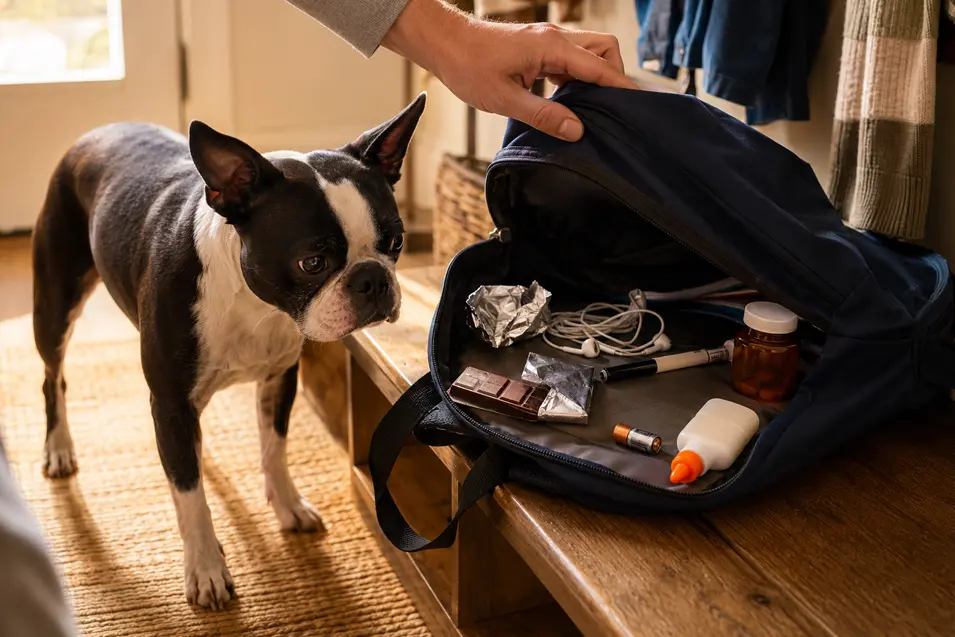
The return to school changes more than the household schedule. It also brings backpacks, lunchboxes, medications, art supplies, electronics and half-finished snacks back into the home.
Most of these items appear harmless when they are zipped inside a school bag. The problem begins when the backpack is dropped on the floor and the family dog or cat decides to investigate.
A dog can chew through a lunch bag, open a zipper or pull interesting objects from a side pocket. Cats may be attracted to dangling cords, elastic bands, yarn and small items that slide across the floor.
Some school supplies can cause stomach upset. Others may lead to poisoning, choking, burns or an intestinal blockage.
A simple back-to-school storage routine can prevent many of these emergencies.
Backpacks Should Not Be Left on the Floor
Children often arrive home and drop their backpacks beside the door, on the kitchen floor or in their bedrooms.
From a pet’s perspective, a school bag may contain an entire day’s worth of interesting smells. Even when the lunchbox appears empty, crumbs, wrappers and food residue can make the bag worth exploring.
A zipped backpack is not pet-proof. Dogs can pull zippers open with their teeth or chew directly through fabric. Cats may reach into partially open pockets and remove small objects.
Give every backpack a designated storage place that pets cannot reach, such as:
- A high wall hook
- A closed closet
- A tall shelf
- A mudroom behind a closed door
- A secure storage bench
Do not rely on the back of a dining chair. A determined dog may pull the backpack down, while an agile cat can easily reach it.
Sugar-Free Gum and Xylitol
Sugar-free gum is one of the most serious hazards commonly carried in a backpack, coat pocket or pencil case.
Some gum, mints, candies and other sugar-free products contain xylitol. This sweetener may also be listed as birch sugar, wood sugar or birch bark extract.
Xylitol can cause a rapid and severe drop in a dog’s blood sugar. It may also cause liver injury.
Possible signs include:
- Vomiting
- Weakness
- Difficulty walking
- Reduced activity
- Trembling
- Collapse
- Seizures
According to the U.S. Food and Drug Administration, signs can develop quickly. If a dog may have eaten a xylitol-containing product, contact a veterinarian, emergency animal hospital or animal poison control service immediately.
Do not wait for symptoms to appear.
Teach children to keep gum and mints in a secure location rather than loose in a backpack, desk drawer or bedroom.
Chocolate, Grapes and Other Lunchbox Foods
An unfinished school lunch may contain foods that are dangerous to dogs.
Common concerns include:
- Grapes and raisins
- Chocolate
- Foods containing xylitol
- Onions and garlic
- Macadamia nuts
- Caffeinated drinks or snacks
- Rich, fatty foods
- Cooked bones
- Fruit pits and corn cobs
Wrappers, sandwich bags, foil and food-covered paper can also create choking or intestinal obstruction hazards.
Lunchboxes should be emptied in the kitchen as soon as children come home. Leftovers should go into the refrigerator or a secure garbage container, and reusable bags should be checked for hidden snacks.
For a closer look at lunchbox hazards, see our guide to school lunch foods dogs shouldn’t eat.
Human Medications
Students may carry prescription medications, pain relievers, allergy tablets, cold medicines, inhalers or other health products during the school year.
Medication that is appropriate for a child can be dangerous to a pet.
Dogs may chew through plastic bottles, blister packs and zippered pouches. Cats may bat loose pills under furniture, where another pet finds them later.
Particular concerns can include:
- Pain medications
- Stimulant medications
- Antidepressants
- Cold and flu products
- Decongestants
- Sleep aids
- Chewable vitamins
- Cannabis products
- Nicotine products
- Albuterol inhalers
An inhaler may release a concentrated dose when punctured by a dog’s teeth.
All medications should remain in their original child-resistant containers and be stored according to school rules. Once home, they should be placed in a secure location pets cannot access.
Never transfer medication into an unmarked plastic bag or loose backpack pocket.
If a pet may have swallowed medication, contact a veterinarian or animal poison control service immediately. Save the package and provide the product name, strength, possible amount and time of exposure.
Chewable Vitamins and Supplements
Gummy vitamins may smell and taste like candy to a dog.
Depending on the product, they may contain iron, vitamin D, xylitol or other ingredients that can be harmful in excessive amounts. Sleep gummies and other supplements may contain additional active ingredients.
Children should not leave vitamins in lunch bags, bedside drawers or open containers.
If your dog eats a vitamin or supplement, check the label and contact a veterinarian for advice. The risk depends on the specific ingredients, concentration, dog’s weight and number consumed.
Batteries and Small Electronics
Calculators, lights, headphones, computer accessories and school projects may use alkaline, lithium or button batteries.
A chewed battery can cause severe burns to the mouth and digestive tract. A swallowed battery may also cause choking or an obstruction.
Button batteries are particularly concerning because they can become lodged in the esophagus and damage tissue.
The Merck Veterinary Manual recommends seeking veterinary care as soon as possible when battery ingestion is suspected.
Do not induce vomiting unless a veterinary professional specifically instructs you to do so. A damaged battery may leak corrosive material.
Keep spare batteries, calculators, small lights and electronic project components in closed containers outside a pet’s reach.
Charging Cords and Headphones
Backpacks frequently contain charging cables, wired headphones and computer accessories.
Puppies, rabbits and other pets may chew electrical cords. A plugged-in cord can cause electrical burns, shock or a household fire. Even an unplugged cable can create a choking or intestinal blockage risk if pieces are swallowed.
Store cables in a closed case and unplug chargers when they are not being used. Do not leave cords dangling from desks or counters where a pet can pull them down.
Check cords regularly for tooth marks or damaged insulation.
Pens, Pencils and Markers
Most ordinary pens and pencils are not highly toxic in small amounts, but that does not make them safe chew toys.
Broken plastic, wooden splinters and metal components can injure the mouth or become lodged in the digestive tract. Pen caps and mechanical pencil parts can cause choking or obstruction.
Markers and highlighters may leak ink into a pet’s mouth, causing irritation and a considerable mess. Permanent markers and speciality art products may contain different ingredients from washable school markers.
Store writing tools inside a closed pencil case rather than loose in a bag.
If a pet chews a pen or marker, remove the remaining pieces and identify the product. Call your veterinarian if any part appears to be missing or the pet develops drooling, vomiting, difficulty swallowing or unusual behaviour.
Erasers, Pencil Grips and Small Plastic Objects
Erasers, pen caps, pencil grips and novelty stationery can resemble toys.
A dog may swallow them whole, while a cat may chase them under furniture and chew them. These objects are not necessarily poisonous, but they can cause choking or intestinal obstruction.
The risk is greater for small pets and when the object is an awkward shape.
Keep pencil cases closed and pick up dropped supplies before pets enter the room.
Glue and Adhesives
Basic school glue may cause irritation or stomach upset if swallowed, but the type of adhesive matters.
Some expanding wood or construction glues can enlarge and harden inside the stomach, creating a serious obstruction that may require surgery. Super glue can stick to skin, fur or tissue.
The ASPCA Animal Poison Control Center advises storing all glues securely because products differ considerably in their ingredients and risks.
If a pet bites into a glue bottle:
- Remove access to the product
- Save the container and label
- Do not apply solvents to the pet
- Do not attempt to pull apart bonded tissue
- Contact a veterinarian or animal poison control service
If glue gets on the eyes or mouth, seek veterinary advice promptly.
Paints and Art Supplies
Many washable children’s paints, crayons and modelling products present a relatively low poisoning risk when only a small amount is consumed. However, “non-toxic” does not mean edible or incapable of causing problems.
Art supplies may cause vomiting, diarrhea or irritation. Larger pieces of crayon, chalk or modelling clay can also create a physical obstruction.
Speciality artist materials deserve additional caution. Some pigments, glazes, solvents and professional products may contain substances that are more hazardous than ordinary classroom supplies.
Keep the product label so its ingredients can be identified if an exposure occurs.
Homemade Playdough and Salt Dough
Homemade playdough can contain a large amount of salt.
Dogs may be attracted to it because it smells like food. Eating enough can result in dangerous sodium levels, leading to vomiting, excessive thirst, weakness, difficulty walking, tremors or seizures.
Salt-dough crafts and ornaments can present the same risk.
Store finished projects and leftover dough in closed containers well outside a pet’s reach. Do not leave drying crafts on low tables or floors.
If a pet eats homemade playdough or salt dough, contact a veterinarian immediately.
Science-Project Materials
School science projects can introduce unusual hazards into the home.
Depending on the project, supplies might include:
- Batteries
- Magnets
- Electrical wires
- Baking soda
- Hydrogen peroxide
- Boric acid
- Glues
- Small metal components
- Food colouring
- Plants or seeds
- Wooden sticks
- Plastic pieces
The familiar nature of an ingredient does not guarantee that a concentrated amount is safe.
Projects should be assembled on a surface pets cannot access and stored behind a closed door when unattended. Clean up dropped components before allowing pets back into the area.
Always keep the project instructions and product labels in case a veterinarian needs to identify what was used.
Magnets
Small magnets can be swallowed by dogs or cats.
A single magnet may create a choking or obstruction risk. Multiple magnets are especially dangerous because they can attract each other through separate sections of the intestine, trapping and damaging tissue between them.
Treat suspected magnet ingestion as an emergency. Contact a veterinarian immediately, even if the pet appears normal.
Do not wait for the magnets to pass on their own.
Scissors, Compasses and Sharp Objects
Scissors, geometry compasses, craft knives, pushpins, staples and broken pencils can cause puncture wounds or internal injury.
Cats may bat small metal objects off desks. Dogs may chew plastic-handled tools and swallow sharp components.
Count sharp supplies before and after a project, particularly if work is being done on the floor.
If a pet swallows a sharp object, do not induce vomiting. Contact a veterinarian immediately.
String, Yarn, Ribbon and Elastic Bands
Cats are often attracted to string-like school and craft supplies.
Yarn, thread, ribbon, elastic bands and the cords attached to some folders or tags can become dangerous when swallowed. Linear objects may anchor in one location while the intestines continue moving, causing the bowel to gather and become damaged.
Never pull string from a pet’s mouth or rectum. Doing so can cause severe internal injury.
Contact a veterinarian immediately if your pet may have swallowed string, thread, ribbon or yarn.
Hand Sanitizer and Cleaning Products
Small bottles of hand sanitizer may be carried in backpacks or clipped to the outside.
Many sanitizers contain alcohol and can cause problems if a pet consumes a meaningful amount. Containers may leak, and fragranced products can encourage investigation.
Cleaning wipes and concentrated cleaning products used for classroom supplies may also irritate the mouth, skin or digestive tract.
Keep bottles tightly closed and store them inside a secure compartment. Clean leaks promptly and keep pets away until the area is dry.
Disposable Hand Warmers
As temperatures drop, children may carry disposable hand warmers in backpacks, gloves or coat pockets.
These packets may contain iron and other materials. Dogs can chew through the packaging, particularly after the product has been used and left in a coat pocket.
Keep unused and spent hand warmers away from pets. Contact a veterinarian if a packet has been chewed or swallowed.
Vapes, Nicotine and Cannabis Products
Older students may bring home items they have obtained themselves or picked up from someone else. Vapes, nicotine pouches and cannabis products can be extremely dangerous to pets.
A dog may chew a vape cartridge or eat an edible because it smells appealing. Batteries inside electronic cigarettes add another hazard.
Parents should create an environment in which a child can report the exposure honestly and immediately. The priority is obtaining accurate information and veterinary help—not assigning blame while the pet becomes sicker.
Tell the veterinarian exactly what the pet may have eaten. Withholding information can delay appropriate treatment.
Dangling Backpack Straps
Not every backpack hazard involves poisoning.
Long straps can become tangled around a pet’s neck or legs. A frightened animal may panic and pull the entire bag down a staircase or through the house.
Cats may also chew straps, cords and decorative attachments.
Store backpacks securely and shorten or tuck away loose straps. Remove damaged clips, keychains and dangling accessories before pets swallow them.
Open Doors During the Morning Rush
Back-to-school mornings involve people moving quickly through exterior doors.
A dog may slip outside while children are loading the car or running toward the bus. Indoor cats can also escape through a door left open for only a few seconds.
Make sure pets are wearing current identification. Microchip information should be kept up to date.
During the busiest part of the morning, consider keeping pets behind a baby gate or in another comfortable room until everyone has left.
Children should never prop open an exterior door while searching for shoes, backpacks or homework.
Teach Children to Report Accidents Immediately
Children may hide an incident if they believe they will be punished for leaving a backpack open or dropping medication.
Make the rule clear: if the pet eats or chews anything, tell an adult immediately.
Useful information includes:
- What the pet may have eaten
- The product name
- How much is missing
- When it happened
- Whether packaging was swallowed
- Whether the pet is showing symptoms
Quick, honest information can make an enormous difference.
What to Do if Your Pet Gets Into a Backpack
If you discover a damaged backpack or scattered supplies:
- Move the pet away from the remaining items.
- Identify everything that may be missing.
- Save packages, labels and chewed containers.
- Estimate the amount and time of exposure.
- Contact your veterinarian, an emergency animal hospital or an animal poison control service.
Do not wait for symptoms when xylitol, medication, batteries, grapes, raisins, chocolate, nicotine, cannabis, magnets or sharp objects may be involved.
Do not attempt to make your pet vomit unless a veterinary professional specifically instructs you to do so. Vomiting can make some exposures more dangerous.
Cornell University’s College of Veterinary Medicine recommends providing the product name, ingredient list, amount, timing and pet’s approximate weight when contacting a veterinarian or poison service.
If your pet is collapsing, having seizures, struggling to breathe, choking or rapidly becoming ill, go to an emergency veterinary hospital immediately.
Create a Safer Back-to-School Drop Zone
The easiest solution is to prevent pets from accessing school bags at all.
Create a drop zone with:
- High backpack hooks
- A closed cupboard for lunchboxes
- A secure container for art supplies
- A locked or inaccessible medication area
- A charging station above pet level
- A lidded garbage container
- A place to empty pockets and inspect bags
Make unpacking part of the after-school routine. Lunchboxes go to the kitchen, medication returns to secure storage and loose supplies go into containers.
Backpacks may look harmless, but they can carry far more than books and homework. Keeping them off the floor protects pets from the gum, food, medicine and school supplies hiding inside.