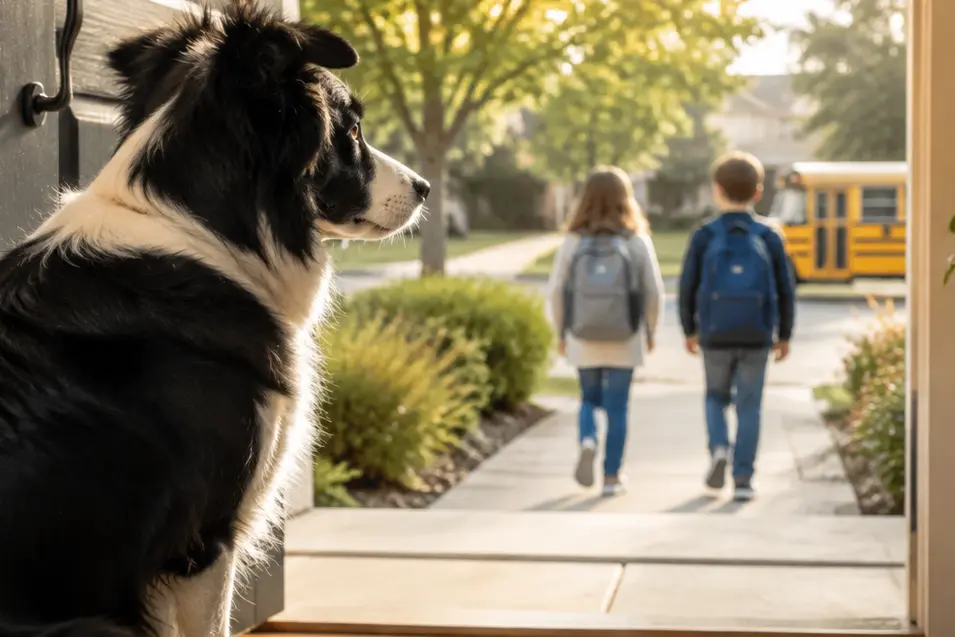
The beginning of a new school year changes more than the family calendar. After a summer filled with activity, later mornings and children coming and going throughout the day, many dogs suddenly find themselves in a much quieter home.
Walks may happen earlier, breakfast may be rushed and the children who provided hours of companionship have seemingly disappeared. Some dogs adapt without difficulty, but others become bored, unsettled or anxious when the household routine changes.
A little preparation can make the transition easier. By gradually introducing the new schedule and ensuring your dog still receives enough exercise, attention and mental stimulation, you can help them feel secure when everyone heads back to school.
Why Back-to-School Season Can Be Difficult for Dogs
Dogs are remarkably good at learning household patterns. They notice when people wake up, when meals are served, when walks usually happen and which family members are normally home.
During summer vacation, many dogs become accustomed to:
- Children being home for much of the day
- More frequent play and attention
- Later mornings and evenings
- Additional walks or outdoor activities
- Family trips and outings
- Less time spent alone
When school begins, all of those things may change almost overnight.
Your dog does not understand the school calendar. From their perspective, familiar companions have suddenly vanished and the daily rhythm they relied upon no longer applies.
Even dogs that previously handled time alone well may need a short adjustment period.
Start Changing the Routine Before School Begins
Whenever possible, begin introducing the school-year schedule one or two weeks before classes start.
Start waking up, feeding your dog and taking them outside at approximately the times you will follow once school begins. If summer walks have been happening in the middle of the morning, gradually move them to an earlier hour.
You can also encourage the children to spend short periods away from the house. This gives your dog an opportunity to become accustomed to quieter days without making the change feel quite so sudden.
The goal is not to recreate the school schedule perfectly. It is simply to make the first day feel like another step in a gradual transition rather than a dramatic disruption.
Practise Spending Time Apart
A dog that has spent most of the summer surrounded by people may need to relearn that being alone is safe.
Begin with brief, ordinary departures. Leave the house for a few minutes without making a production of it, then gradually increase the amount of time you are away.
Provide your dog with a comfortable place to relax and something safe to occupy them. A food puzzle, stuffed rubber toy or long-lasting chew can help create a positive association with time alone.
Try to return while your dog is still calm. Increasing the duration gradually is usually more effective than suddenly leaving them alone for an entire school or workday.
Give Your Dog Exercise Before Everyone Leaves
A morning walk is one of the most helpful things you can do during the transition.
Exercise gives your dog an opportunity to burn energy, explore the neighbourhood and spend time with you before the house becomes quiet. Sniffing is mentally tiring as well as enjoyable, so allow time for your dog to investigate rather than treating every walk as a race around the block.
The amount of activity your dog needs will depend on their age, health, breed and personality. A young, energetic dog may benefit from a brisk walk or play session, while an older dog may be perfectly content with a gentle neighbourhood stroll.
A dog whose physical and mental needs have been met is generally more likely to settle down and rest after the family leaves.
Keep Mealtimes and Bathroom Breaks Predictable
Dogs often feel more secure when the important parts of their day happen at consistent times.
Try to keep meals, walks and bathroom breaks as predictable as your schedule allows. Make sure your dog has an opportunity to go outside shortly before everyone leaves, particularly if they will be alone for several hours.
Puppies, senior dogs and dogs with certain medical conditions may not be able to comfortably wait through a full school or workday. They may require a family member, neighbour, dog walker or pet sitter to provide a midday break.
Predictability does not mean that every activity must happen at precisely the same minute. A reasonably consistent routine is usually enough to help your dog understand what to expect.
Leave Something Interesting to Do
A quiet house does not have to be a completely uneventful one.
Food puzzles, treat-dispensing toys and safe chew toys can keep your dog occupied after everyone leaves. You can also hide small portions of kibble around a safe room or use a snuffle mat to encourage natural foraging behaviour.
Rotate toys rather than leaving everything available all the time. An item that disappears for several days often feels interesting again when it returns.
Any toy or chew left with an unsupervised dog should be appropriate for their size, chewing habits and experience. Test new products while you are home before leaving your dog alone with them.
Create a Comfortable Place to Rest
Your dog should have access to a quiet, comfortable area where they already feel safe.
This might be a favourite bed in the living room, an open crate they have been positively trained to use or a dog-proofed room with water and familiar bedding. Avoid suddenly confining your dog in an unfamiliar space on the first day of school.
Some dogs relax more easily with soft background noise. A radio, television or white-noise machine can reduce the contrast between a lively summer home and complete silence.
Closing the curtains may help dogs that become agitated by pedestrians, delivery drivers or animals outside. Other dogs enjoy watching the neighbourhood, so consider your dog’s individual behaviour when arranging the space.
Keep Departures Calm
Long, emotional goodbyes can unintentionally signal that something unusual or worrying is happening.
Keep the morning departure friendly but matter-of-fact. Give your dog their activity toy, gather your things and leave without repeatedly returning for one more goodbye.
The same principle applies when everyone comes home. It is natural for the family to be excited to see the dog, but waiting for a moment of relative calm before offering attention can prevent arrivals from becoming overwhelmingly intense.
Calm departures and reunions help teach your dog that people leaving and returning are ordinary parts of the day.
Make Time for Them After School
Your dog may have spent much of the day waiting for the family to return, so try to include them in the after-school routine.
A walk, backyard game, short training session or relaxed time together can provide the connection they have been missing. Even helping with homework while the dog rests nearby allows them to feel included again.
Encourage children to greet the dog calmly and give them attention, but remember that the responsibility for meeting the dog’s needs still belongs to the adults. Homework, sports and new school activities can quickly fill the afternoon, and it is easy for the dog’s walk or playtime to be unintentionally overlooked.
Watch for Signs Your Dog Is Struggling
Some temporary changes are normal during an adjustment period. Your dog may appear more attentive when people are home, sleep near the door or seem especially enthusiastic when the children return.
More concerning signs can include:
- Persistent barking, whining or howling when alone
- Destructive chewing, particularly near doors or windows
- Indoor accidents despite being house-trained
- Pacing, trembling, panting or excessive drooling
- Refusing food when the family is away
- Repeated escape attempts
- Loss of appetite
- Significant changes in sleep or behaviour
- Excessive licking or other repetitive behaviours
A home camera can help you see what happens after everyone leaves. Some dogs settle within a few minutes, while others remain distressed for much of the day.
Never punish a dog for damage or accidents caused by anxiety. The behaviour is a sign that the dog is struggling, not an attempt to misbehave or get revenge.
Know When to Ask for Help
If your dog shows ongoing or severe distress, speak with your veterinarian. Sudden behaviour changes can sometimes have a medical cause, and your veterinarian can help determine whether anxiety may be involved.
A qualified trainer or veterinary behaviourist can also create a gradual plan tailored to your dog. Separation-related problems rarely improve through a “let them cry it out” approach and may become worse if the dog repeatedly experiences intense fear.
Dogs that simply need more activity may benefit from a dog walker, trusted neighbour, pet sitter or occasional dog daycare. The right solution will depend on your dog’s personality, comfort around other animals and the length of time they spend alone.
Help the Entire Family Maintain the New Routine
Back-to-school mornings can be hectic, so decide in advance who is responsible for each part of the dog’s care.
One person might handle breakfast while another takes the dog outside. Children can help refill the water bowl, prepare a puzzle toy the night before or join the dog’s afternoon walk.
A simple plan prevents the dog’s needs from being forgotten when lunches are being packed, shoes are missing and everyone is trying to leave at once.
A New Routine Can Still Be a Happy One
Your dog may miss the freedom and companionship of summer, but most dogs can learn to feel comfortable with the school-year routine.
Begin preparing early, make changes gradually and preserve the parts of the day your dog values most: exercise, food, companionship and time with the family.
The house may become quieter when the children return to school, but with a predictable routine and plenty of meaningful attention when everyone is home, your dog can learn that the end of summer does not mean being forgotten.