Christmas lights are one of the most beautiful parts of the holiday season. They transform ordinary living rooms into warm, festive spaces, illuminate Christmas trees, and bring a little magic to dark winter evenings.
But while those twinkling lights might look harmless, they can present some surprising dangers for dogs.
From electrical shocks and burns to broken bulbs and swallowed batteries, Christmas lights introduce several hazards that pet owners should understand. Fortunately, with a few sensible precautions, you can enjoy a beautifully decorated home without putting your dog at unnecessary risk.
Why Are Dogs Attracted to Christmas Lights?
Dogs are naturally curious, particularly when something new appears in their environment.
A Christmas tree covered in glowing lights, dangling ornaments, and unfamiliar decorations can be fascinating to a dog that has never encountered one before.
Puppies are especially likely to investigate Christmas lights because they explore their surroundings by chewing and mouthing objects.
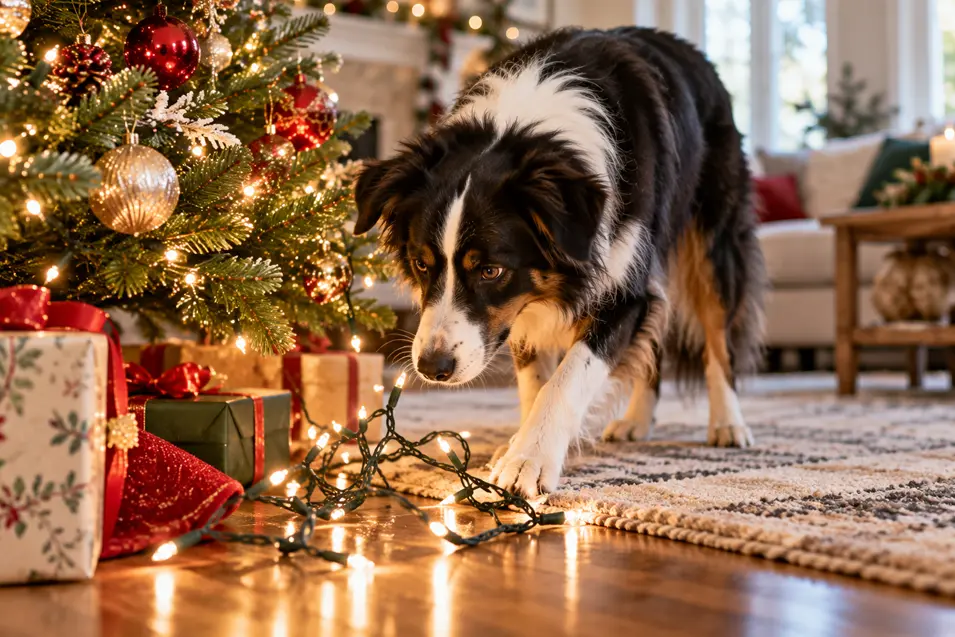
Some dogs may be attracted to the movement of loose electrical cords, while others discover that the plastic coating feels satisfying to chew.
Even adult dogs that normally ignore household electrical cords may become interested when the Christmas decorations appear.
Unfortunately, chewing a strand of Christmas lights can have serious consequences.
Can Christmas Lights Electrocute a Dog?
Yes. One of the most serious dangers associated with Christmas lights is electrical shock.
If a dog bites through the protective coating of a plugged-in electrical cord, its mouth can come into contact with live electrical wires.
Depending on the voltage, current, and circumstances, this can result in painful burns, muscle contractions, breathing difficulties, abnormal heart rhythms, or potentially fatal injuries.
Electrical injuries can also damage tissues beneath the surface, meaning the full extent of an injury may not be immediately visible.
Some dogs develop fluid accumulation in their lungs following an electrical injury, which can cause breathing difficulties.
If your dog chews a plugged-in Christmas light cord and you suspect electrical contact, seek emergency veterinary care immediately, even if your dog initially appears normal.
Never touch a dog that may still be in contact with a live electrical source. Disconnect the power first, provided you can do so safely.
Signs Your Dog Has Suffered an Electrical Shock
Electrical injuries are not always obvious, particularly if the incident happened while you were out of the room.
Possible warning signs include:
- Burns or unusual marks around the lips, tongue, or gums
- Excessive drooling
- Crying, yelping, or sudden distress
- Difficulty breathing or rapid breathing
- Coughing
- Weakness or collapse
- Tremors or muscle spasms
- Reluctance to eat because of mouth pain
- Unusual behaviour following contact with electrical decorations
Some complications can develop after the initial injury.
If you suspect an electrical shock, don’t wait for symptoms to worsen before seeking veterinary attention.
Can Christmas Light Bulbs Hurt Dogs?
Electrical cords aren’t the only concern. Christmas light bulbs can also cause injuries.
If a dog bites a glass bulb, the glass can shatter inside its mouth, potentially causing cuts to the tongue, gums, and surrounding tissues.
Swallowed fragments may also injure the digestive tract.
Although many modern LED Christmas lights use durable plastic housings rather than traditional glass bulbs, they are not completely risk-free.
A determined dog may still chew through plastic components or swallow small pieces.
Older Christmas light sets may contain fragile glass bulbs that are particularly vulnerable to breaking.
If your dog chews or swallows part of a Christmas light, contact your veterinarian for guidance. Do not attempt to induce vomiting, as sharp fragments could cause additional injuries.
Are LED Christmas Lights Safer for Dogs?
LED Christmas lights offer several advantages over traditional incandescent lights, but that doesn’t make them completely safe for pets.
LED lights generally operate at lower temperatures, reducing the risk of burns from touching the bulbs.
They also consume less electricity and are often manufactured with more durable materials.
However, the electrical safety of an LED light set depends on its design and power supply. Some LED decorations still connect directly to household electricity, while others use low-voltage adapters.
A dog chewing through an electrical cord can still be injured, regardless of whether the lights use LED technology.
For homes with dogs, low-voltage LED lights with appropriately protected cords can be a sensible choice.
But the most important precaution remains preventing your dog from chewing the lights in the first place.
Are Battery-Operated Christmas Lights Dangerous for Dogs?
Battery-operated Christmas lights may eliminate some of the risks associated with household electrical outlets, but they introduce another potential hazard.
Batteries can be extremely dangerous if swallowed.
Button batteries are especially concerning because they can cause severe chemical burns to tissues when lodged in the digestive tract.
Larger batteries can also cause injuries, chemical exposure, or intestinal obstructions if chewed or swallowed.
Even if the batteries remain inside their compartment, a curious dog may chew through the plastic casing to reach them.
If you use battery-operated Christmas lights, ensure the battery compartment is securely closed and completely inaccessible to your dog.
If you suspect your dog has swallowed a battery, seek emergency veterinary care immediately. Do not wait for symptoms to appear.
Can Christmas Lights Cause Burns Without an Electrical Shock?
Yes. Although modern LED lights generally produce relatively little heat, some older incandescent Christmas lights can become quite warm.
A dog that presses against a hot bulb or chews a heated light may experience burns.
Hot bulbs can also create hazards if they come into contact with flammable materials such as fabric, paper, or dried Christmas tree branches.
This is another reason to replace damaged or outdated Christmas light sets with modern, safety-certified alternatives.
Regardless of the type of lights you choose, they should be installed according to the manufacturer’s instructions and kept away from areas where your dog regularly sleeps or plays.
How to Dog-Proof Your Christmas Tree Lights
A beautifully decorated Christmas tree and a curious dog can coexist, but a little planning makes a big difference.
Here are several ways to reduce the risks.
Keep electrical cords out of reach.
Route cords behind furniture or use suitable protective cord covers. Avoid leaving loose cables across the floor where dogs can easily chew them.
Avoid lights on the lowest branches.
If your dog is particularly curious, consider leaving the bottom portion of the tree free of lights and other tempting decorations.
Secure loose wires.
Dangling light strands can attract playful dogs. Make sure decorations are firmly attached and cannot easily be pulled down.
Use pet barriers when necessary.
A decorative Christmas tree fence or pet gate can prevent unsupervised access to the tree.
Inspect lights regularly.
Check for frayed wires, exposed conductors, cracked bulbs, and damaged plugs. Replace damaged light sets rather than attempting unsafe repairs.
Turn off or unplug lights when appropriate.
Follow the manufacturer’s instructions and avoid leaving decorative lights operating unattended, particularly when your dog has access to them.
Provide appropriate chew toys.
Dogs that enjoy chewing need safe alternatives. Keeping familiar toys nearby may help redirect their attention away from holiday decorations.
The safest Christmas tree is one that your dog can enjoy looking at without being able to chew its decorations.
What About Outdoor Christmas Lights?
Outdoor Christmas decorations can create additional hazards, particularly for dogs that spend time in the yard.
Extension cords running across patios, lawns, or walkways may be tempting to chew.
Snow, rain, and moisture can also increase electrical hazards when lights, connectors, or extension cords are damaged or unsuitable for outdoor use.
When decorating outside, use lights and extension cords specifically rated for outdoor conditions.
Keep electrical connections protected from moisture and secure cords away from areas where your dog plays.
Avoid leaving loose wires near doghouses, outdoor beds, or favourite digging spots.
If your dog spends time outdoors without supervision, consider restricting access to illuminated decorations and their electrical connections.
What Should You Do If Your Dog Chews Christmas Lights?
If you discover your dog chewing Christmas lights, your first priority is safety.
1. Disconnect the electricity.
If the lights are plugged in, switch off the power or unplug them only when it is safe to do so. Do not touch your dog or damaged wiring while it may still be energized.
2. Check your dog for injuries once the power is off.
Look for signs of mouth injuries, burns, bleeding, breathing difficulties, or unusual behaviour.
3. Seek veterinary assistance.
If electrical contact may have occurred, seek emergency veterinary care. If your dog has swallowed pieces of bulbs, wires, plastic, or batteries, contact a veterinarian immediately.
4. Do not induce vomiting.
Sharp fragments, electrical components, and batteries can cause additional damage if brought back up.
5. Remove the damaged decorations.
Once your dog is safe, discard the damaged light set and inspect nearby decorations for similar hazards.
Even if your dog seems fine, a suspected electrical injury should never be dismissed without veterinary evaluation.
Other Christmas Tree Hazards Worth Remembering
Christmas lights are only one of several potential dangers associated with holiday decorating.
Tinsel, for example, can cause serious intestinal injuries if swallowed. Its long, thin strands can become trapped in the digestive system and lead to dangerous obstructions.
Glass ornaments, metal hooks, ribbons, and small decorations can also cause injuries or become choking hazards.
Some traditional holiday plants, including holly and mistletoe, can be toxic to dogs, depending on the species and amount consumed.
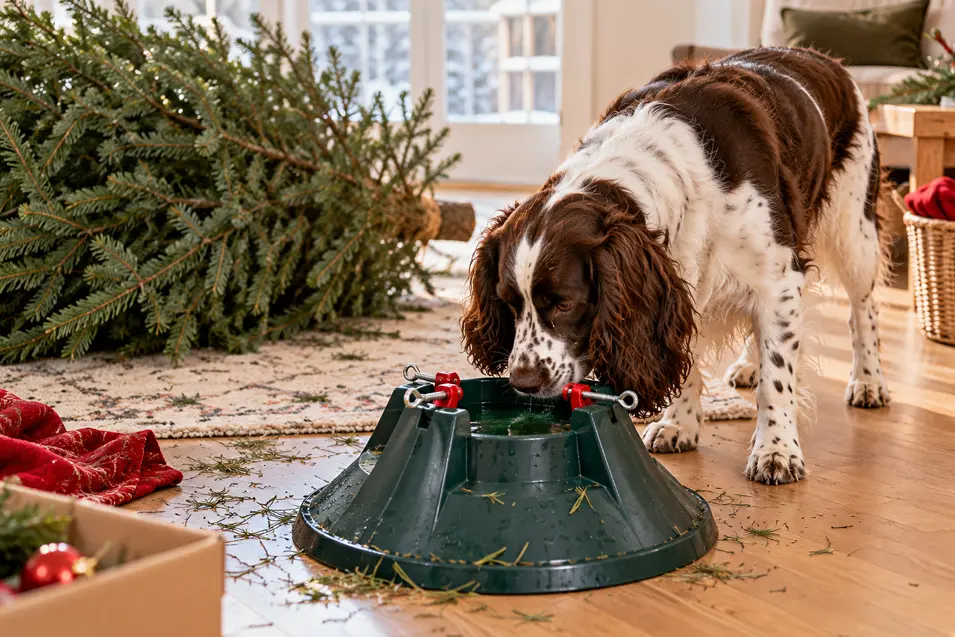
And while a real Christmas tree may look beautiful, fallen needles can irritate a dog’s mouth or digestive system if eaten.
Creating a dog-friendly Christmas environment means considering the entire tree, not just the lights.
Frequently Asked Questions About Christmas Lights and Dogs
Can a dog die from chewing Christmas lights?
Yes. Chewing a live electrical cord can cause severe electrical injuries, including potentially fatal heart or respiratory complications. Suspected electrical shock requires immediate veterinary attention.
Are LED Christmas lights safe around puppies?
LED lights generally produce less heat than traditional incandescent bulbs, but their cords and electrical components can stil
More Reading: Keeping Your Dog Safe During Christmas
Christmas lights are just one of the many holiday decorations that can pose unexpected risks to curious dogs. From festive plants to delicate ornaments, understanding potential hazards can help you create a beautiful Christmas home that’s also safe for your four-legged family members.
- Preparing Your Dog for Christmas: A Complete Guide – Discover practical ways to prepare your home and your dog for the holidays, including decorating safely, managing visitors, and avoiding common Christmas hazards.
- Are Poinsettias Harmful to Dogs? – These popular Christmas plants can cause irritation and stomach upset if eaten. Learn what makes poinsettias potentially troublesome for dogs and how to keep your pet safe around holiday greenery.
- Christmas Ornaments That Are Dangerous for Dogs – From fragile glass decorations to small ornaments that can be swallowed, discover which Christmas decorations deserve extra caution and how to decorate with your dog’s safety in mind.