Walk through any art gallery and you’ll find paintings, photographs, sculptures, and mixed-media installations carefully displayed under perfect lighting. Each piece is designed to capture attention, evoke emotion, and inspire conversation.
Now imagine replacing those works of art with aquariums.
At first, the idea might seem unusual. Yet when you stop and think about it, a beautifully designed aquarium possesses many of the same qualities that define great art. It combines composition, color, movement, lighting, texture, and creativity into a single display. Unlike a painting or sculpture, however, an aquarium is alive. It changes every day, evolves over time, and offers a viewing experience that is never exactly the same twice.
Perhaps it’s time we start thinking of aquariums differently.
More Than Just Fish Tanks
For decades, aquariums have largely been viewed as hobbies. People associate them with fish, filtration systems, water testing kits, and maintenance schedules. While those elements are certainly part of aquarium keeping, they tell only a fraction of the story.
The finest aquariums are carefully designed environments. Every rock, plant, coral, and piece of driftwood is intentionally placed to create balance and visual harmony. Aquarists spend countless hours refining layouts, adjusting lighting, and selecting species that complement one another.
The process isn’t all that different from what a painter, sculptor, or interior designer might do when creating a masterpiece.
Living Canvases
One of the defining characteristics of traditional art is its ability to hold our attention. Great artwork rewards observation. The longer you look, the more details you discover.
Aquariums operate in much the same way.
A reef aquarium might reveal dozens of fish species, intricate coral formations, and subtle interactions between its inhabitants. A planted freshwater aquarium can resemble a miniature underwater forest, complete with pathways, textures, and natural focal points.
The difference is that these displays are constantly changing.
Fish swim through the scene. Plants grow and spread. Corals develop new shapes and colors. The artwork literally evolves before your eyes.
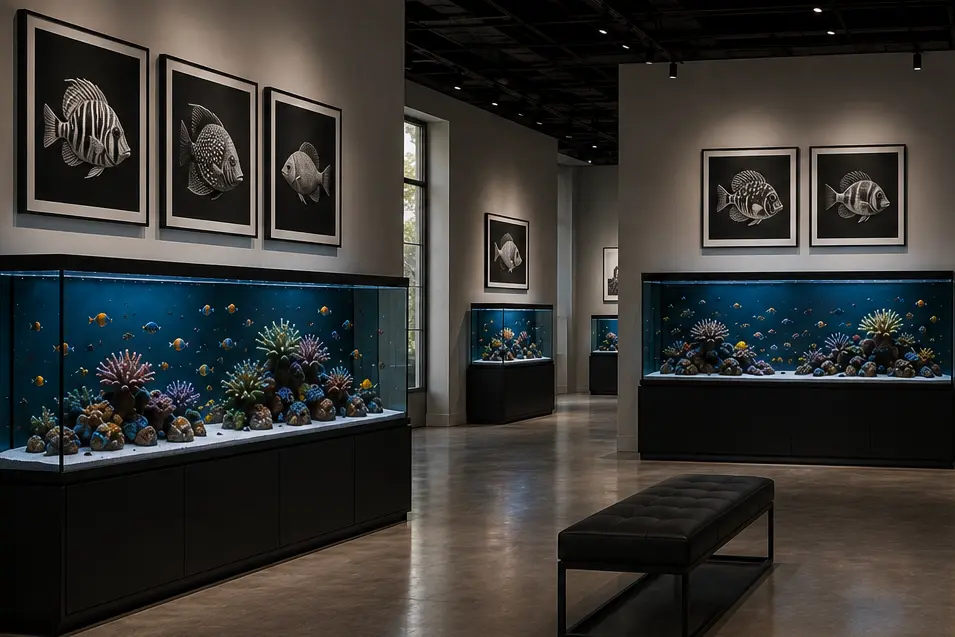
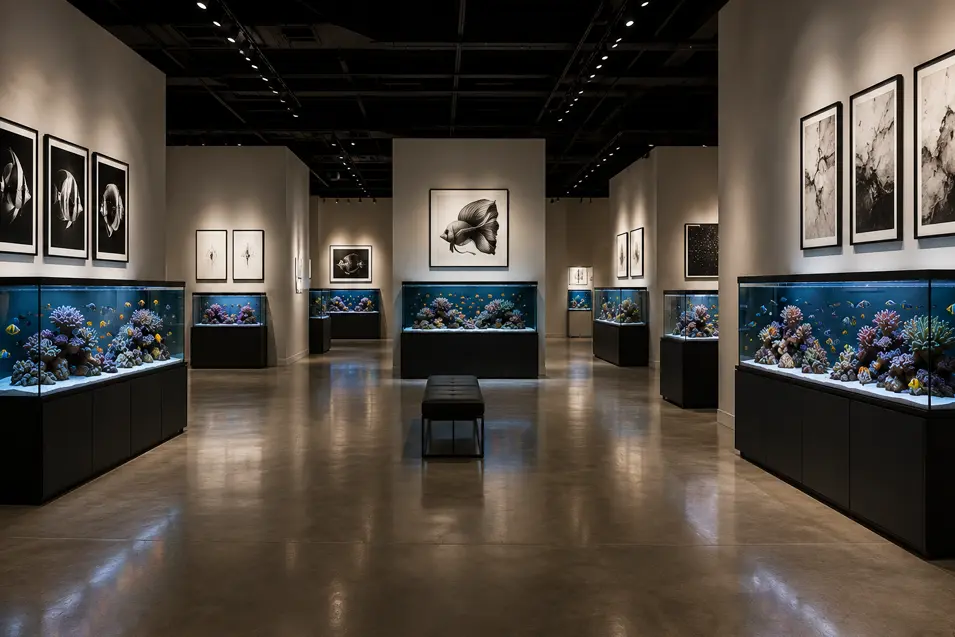
In a traditional gallery setting, reef aquariums begin to feel less like hobbies and more like curated exhibits.
The Power of Movement
Few forms of visual art incorporate movement as effectively as an aquarium.
Movement naturally attracts attention. It encourages viewers to pause and observe. A fish gliding through a reef, a school of tetras moving in unison, or a gentle current flowing through aquatic plants creates a dynamic experience that static artwork cannot replicate.
This constant motion is one reason people often find themselves staring at aquariums for extended periods of time.
They aren’t simply looking at a display—they’re witnessing an ongoing performance.
Light as an Artistic Medium
Lighting plays a crucial role in both art and aquarium design.
Artists use light to create mood, emphasize details, and guide the viewer’s attention. Aquarium designers do the same.
Modern lighting systems can dramatically transform an aquatic display throughout the day. Soft morning tones, vibrant midday illumination, and dramatic evening lighting create entirely different visual experiences.
An aquarium isn’t just viewed—it is staged.
Aquascaping: The Art Nobody Talks About
Ask an aquarium enthusiast about aquascaping and you’ll quickly discover how artistic the hobby can be.
Aquascaping is the practice of arranging aquatic elements to create visually compelling underwater landscapes. Some aquascapes mimic mountain ranges, forests, river valleys, or natural coastlines. Others embrace minimalist principles, relying on simplicity and negative space to create impact.
Many aquascapes are so visually stunning that photographs of them are often mistaken for digital artwork or elaborate sculptures.
Yet unlike traditional art, these creations are alive.
Aquariums as Interior Design
Interior designers understand the importance of focal points.
A dramatic fireplace, an oversized painting, or a grand staircase can define an entire room. Increasingly, aquariums are serving the same purpose.
Large built-in aquariums have become statement pieces in luxury homes, hotels, restaurants, and corporate offices. They create atmosphere, attract attention, and introduce an element of nature that few other design features can match.
A beautiful aquarium doesn’t simply decorate a room—it transforms it.
Why We Don’t Think of Them as Art
Perhaps the reason aquariums are rarely discussed as art is because they don’t fit neatly into traditional categories.
They’re part biology, part design, part engineering, and part sculpture.
They require creativity, technical skill, patience, and vision.
Most importantly, they challenge the idea that art must be static.
An aquarium reminds us that beauty doesn’t have to be frozen in time. Sometimes the most compelling works of art are those that continue to change, grow, and surprise us.
A New Way to Look at Aquariums
The next time you see a truly exceptional aquarium, try looking at it the same way you would a painting hanging in a gallery.
Notice the composition.
Observe the colors.
Study the lighting.
Watch how movement influences the scene.
Pay attention to the emotions it creates.
You may discover that you’re not looking at a fish tank at all.
You’re looking at one of the world’s most underrated art forms.
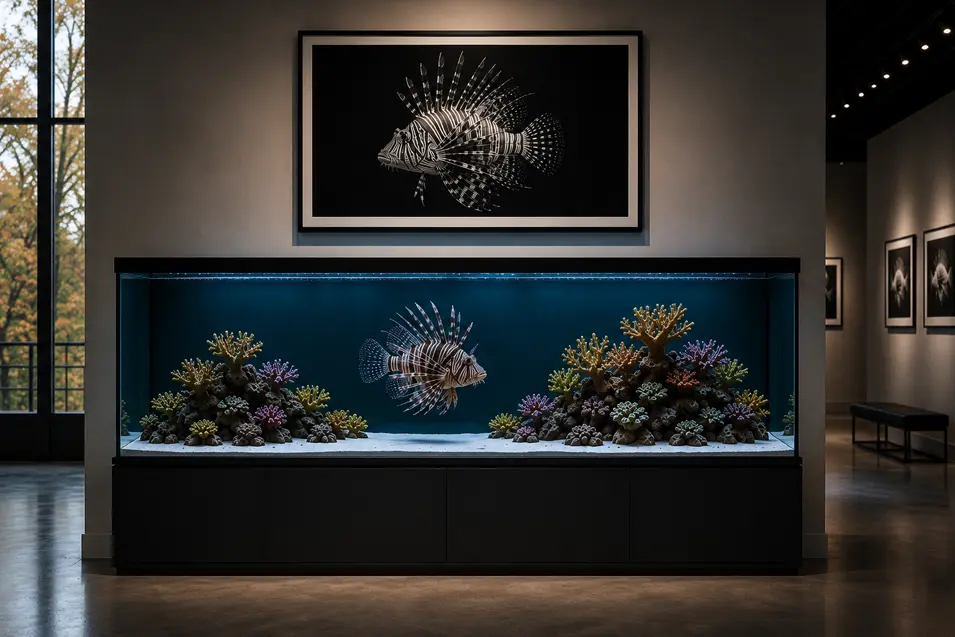
A lionfish aquarium displayed beneath a matching monochrome print raises an interesting question: where does art end and nature begin?
Final Thoughts
Art exists to inspire, provoke thought, and create emotional connections. A great aquarium accomplishes all three.
It combines nature and creativity in ways few other mediums can. It changes over time, rewards repeated observation, and transforms the spaces around it.
Perhaps that’s why aquarium enthusiasts often spend hours admiring their tanks. They aren’t simply caring for fish.
They’re curating living works of art.