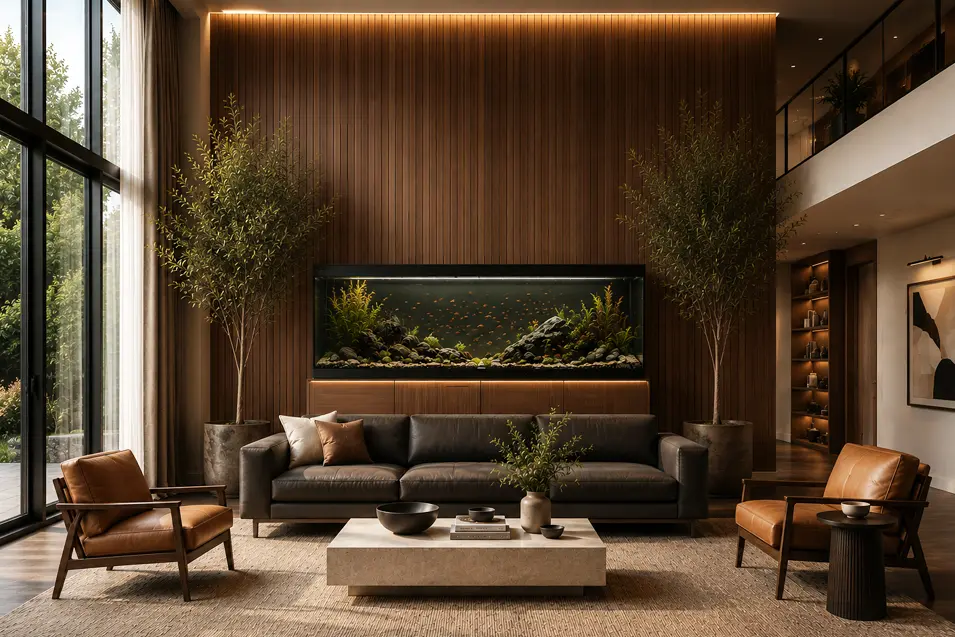
For many homeowners, the living room is the heart of the home. It’s where families gather, guests are entertained, and daily life unfolds. Because it serves as both a social space and a place to relax, the living room is often the ideal location for an aquarium.
A well-designed aquarium can transform an ordinary living room into a more inviting, dynamic, and visually interesting space. The movement of fish, the natural beauty of aquatic plants, and the calming presence of water create an atmosphere that few decorative elements can match.
However, simply placing a fish tank in the living room isn’t always enough. To maximize both the beauty of the aquarium and the comfort of the space, homeowners should consider placement, scale, lighting, furniture layout, and long-term maintenance needs before installation.
Why Living Rooms Are Ideal for Aquariums
Living rooms offer several advantages that make them one of the most popular locations for home aquariums.
Unlike bedrooms, garages, or utility areas, living rooms are designed to be enjoyed. People naturally spend time there, making it easier to appreciate the aquarium throughout the day.
Benefits of placing an aquarium in the living room include:
- High visibility
- Increased enjoyment
- Greater interaction with fish
- Enhanced interior design
- Relaxing atmosphere
- A natural conversation piece
Because the aquarium becomes part of daily life, it often receives more attention and care than tanks placed in less frequently used rooms.
Creating a Natural Focal Point
Every successful living room benefits from a focal point.
Traditionally, focal points might include:
- Fireplaces
- Large windows
- Entertainment centers
- Artwork
An aquarium can serve the same purpose while adding movement and life to the room.
The natural activity within an aquarium immediately draws attention. Unlike static décor, the display constantly changes as fish explore their environment and plants grow over time.
A thoughtfully placed aquarium can become the visual anchor that ties the entire room together.
Choosing the Right Aquarium Size
One of the most important decisions is selecting an aquarium that fits the scale of the room.
A tiny aquarium may disappear within a large living room, while an oversized aquarium can dominate a smaller space.
Consider:
- Room dimensions
- Ceiling height
- Furniture layout
- Viewing distance
- Traffic flow
In many homes, aquariums between 40 and 125 gallons provide an excellent balance between visual impact and practicality.
The goal is to create presence without overwhelming the space.
Best Locations Within the Living Room
Not every wall or corner is equally suitable for an aquarium.
Proper placement affects both the aquarium’s health and its visual appeal.
Against a Feature Wall
One of the most common approaches is placing the aquarium against a prominent wall.
This location allows the tank to function as a central design element while remaining easy to view from multiple seating areas.
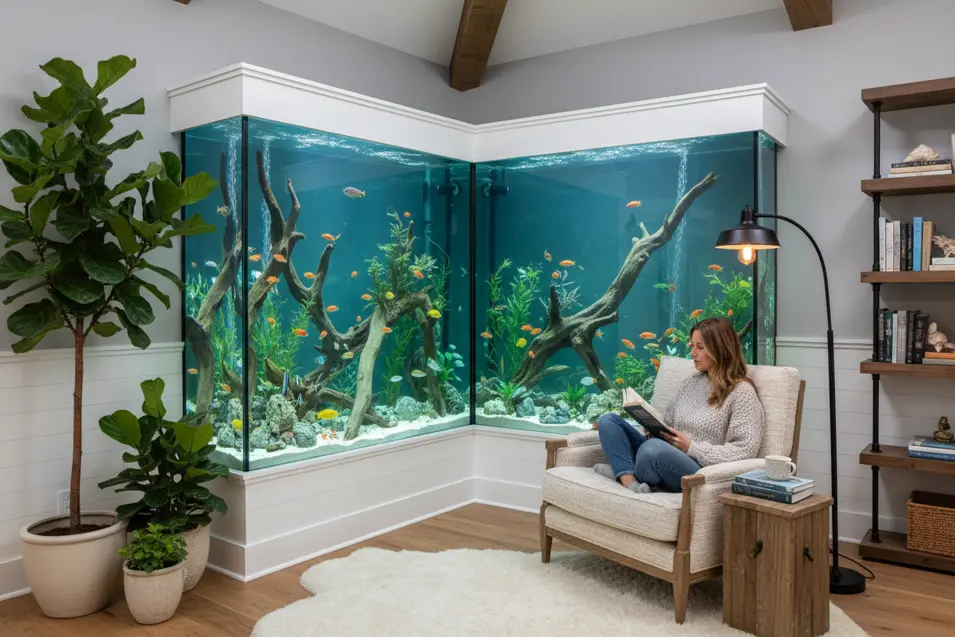
Adjacent to Seating Areas
Aquariums are most enjoyable when they can be comfortably observed.
Positioning the aquarium near:
- Sofas
- Reading chairs
- Sectionals
encourages interaction and relaxation.
Between Living Areas
In larger homes, an aquarium can help define separate zones while maintaining openness.
Examples include:
- Living room and dining room transitions
- Family room connections
- Open-concept layouts
This approach is particularly effective with room divider aquariums.
Places to Avoid
Living rooms often seem flexible, but certain locations create problems.
Avoid placing aquariums:
- In direct sunlight
- Beside heating vents
- Near fireplaces
- In narrow traffic paths
- Directly beside exterior doors
These locations may contribute to temperature fluctuations, excessive algae growth, maintenance challenges, or accidental damage.
Designing the Room Around the Aquarium
One of the biggest mistakes homeowners make is treating the aquarium as an afterthought.
The most successful installations are incorporated into the room’s design from the beginning.
Consider:
- Furniture placement
- Lighting design
- Sightlines
- Traffic patterns
- Decorative elements
The aquarium should feel integrated rather than simply added to an already crowded room.
Living Room Aquarium Styles
Different aquarium styles create different visual experiences.
Planted Freshwater Aquariums
Planted aquariums create a natural, peaceful appearance that works well in most living rooms.
Benefits include:
- Organic beauty
- Soft visual textures
- Natural colors
- Biophilic design appeal
Reef Aquariums
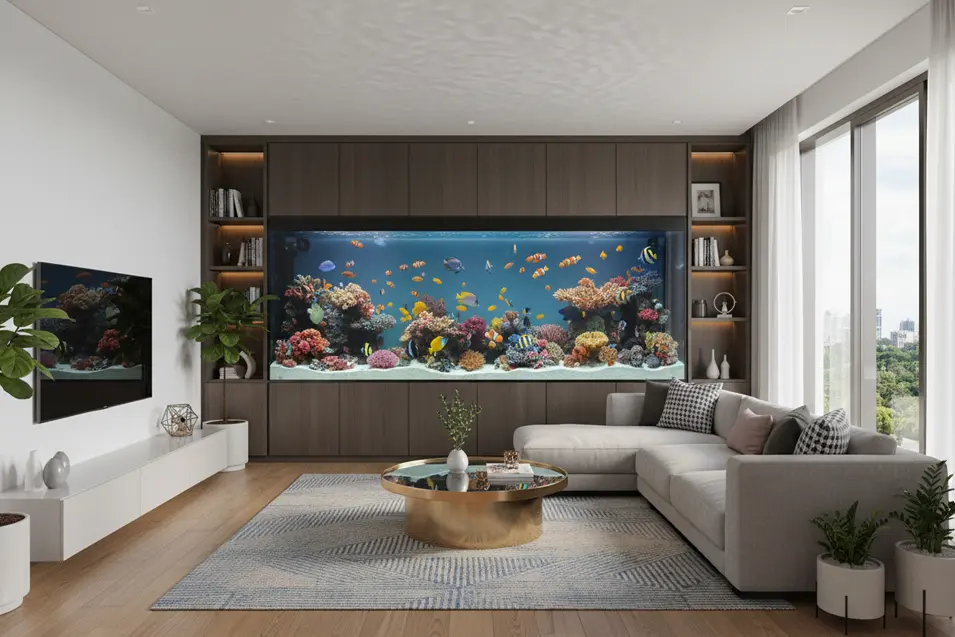
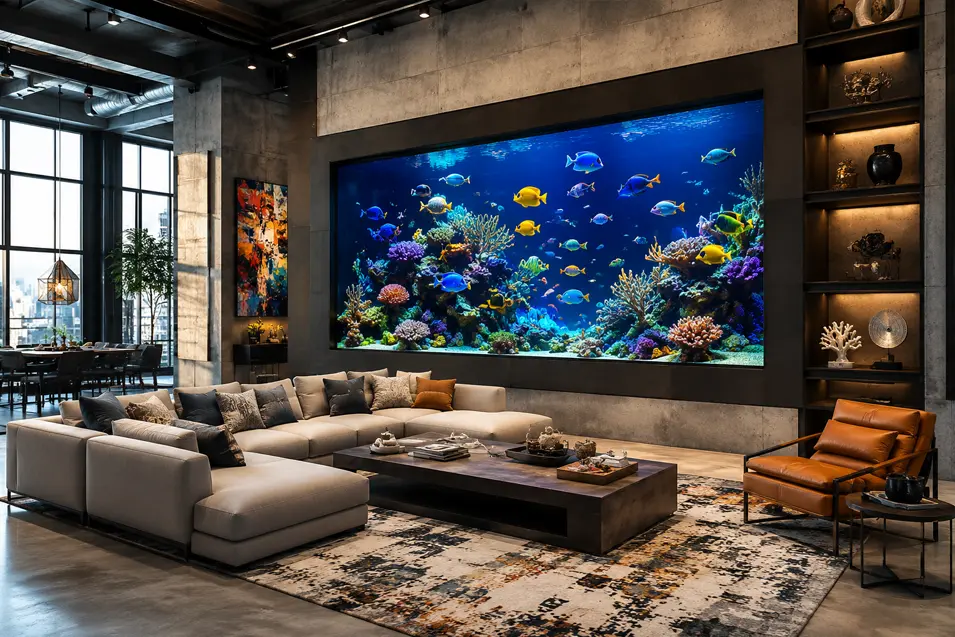
Saltwater reef aquariums often become dramatic centerpieces.
Their vibrant colors and diverse marine life create extraordinary visual impact.
Minimalist Aquascapes
Modern interiors often pair well with clean, minimalist aquarium designs.
These displays emphasize:
- Open space
- Simplicity
- Careful composition
The result is elegant and contemporary.
Large Statement Aquariums
For homeowners seeking maximum visual impact, a large aquarium can become the defining feature of the room.
These installations often include custom cabinetry and integrated lighting.
Built-In vs. Freestanding Living Room Aquariums
Both approaches can work beautifully.
Built-In Aquariums
Advantages include:
- Architectural integration
- Hidden equipment
- Clean appearance
- Strong visual impact
They are particularly popular in custom homes and major renovations.
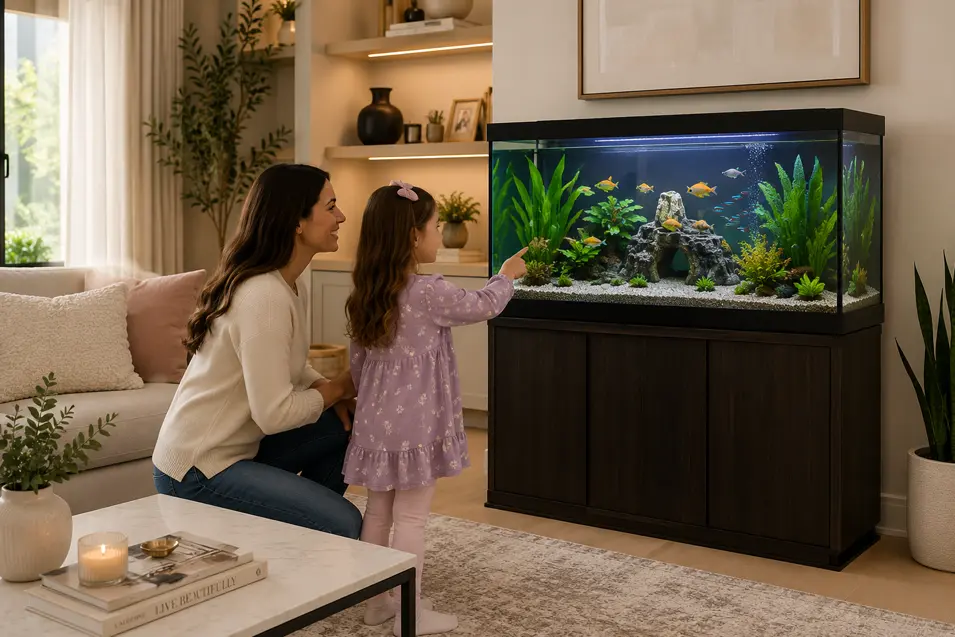
Freestanding Aquariums
Benefits include:
- Lower installation costs
- Greater flexibility
- Easier upgrades
- Simpler maintenance
Many homeowners find freestanding aquariums provide the best balance of beauty and practicality.
Lighting Considerations
Aquarium lighting affects both the tank and the room itself.
Modern LED systems can create stunning visual effects while supporting fish, plants, and corals.
Many homeowners find that aquariums become especially attractive in the evening when:
- Room lights are dimmed
- Aquarium lighting becomes more prominent
- Reflections create additional visual interest
The aquarium often becomes a living source of ambient light.
Noise Considerations
Most modern aquariums operate quietly, but equipment selection matters.
Choose quality:
- Filters
- Pumps
- Air systems
to minimize unwanted noise.
A living room aquarium should contribute to a peaceful atmosphere rather than become a source of distraction.
Maintenance Planning
A beautiful aquarium remains beautiful because it is maintained.
Before installation, ensure there is adequate access for:
- Water changes
- Equipment cleaning
- Glass maintenance
- Fish care
The easier maintenance becomes, the more enjoyable aquarium ownership will be.
Living Room Aquariums and Family Life
One reason living room aquariums are so popular is their ability to bring people together.
Family members often gather to:
- Watch fish
- Feed aquatic pets
- Discuss new additions
- Enjoy moments of relaxation
For households with children, an aquarium can also encourage learning about nature and animal care.
The aquarium becomes more than a decorative feature—it becomes part of the home’s daily experience.
Adding Warmth and Personality
Aquariums offer something many design elements cannot.
They bring life into a room.
The movement of fish, the natural beauty of plants, and the ever-changing character of the display help create a welcoming atmosphere that feels both elegant and personal.
This combination of beauty and interaction explains why aquariums remain one of the most beloved features in many living spaces.
Conclusion
A living room is often the perfect place for an aquarium. Its visibility, comfort, and role as the center of family life make it an ideal environment for showcasing aquatic displays.
Whether you choose a modest planted aquarium, a dramatic reef system, or a custom-built statement piece, thoughtful planning can ensure the aquarium enhances both the room and your daily enjoyment of it.
With the right placement, design, and maintenance strategy, a living room aquarium can become one of the most beautiful and rewarding features in your home.
Frequently Asked Questions
Is the living room a good place for an aquarium?
Yes. Living rooms are one of the most popular aquarium locations because they provide visibility, enjoyment, and opportunities for relaxation.
What size aquarium works best in a living room?
The ideal size depends on the room’s dimensions and layout. Many homeowners find that aquariums between 40 and 125 gallons provide an excellent balance of impact and practicality.
Can an aquarium replace a television as a focal point?
Absolutely. Many homeowners design living rooms around aquariums, using them as natural focal points instead of traditional entertainment centers.
Should an aquarium be near a window?
Generally, no. Direct sunlight can cause algae growth and temperature fluctuations that make aquarium maintenance more difficult.
Are built-in aquariums better for living rooms?
Built-in aquariums create a seamless appearance and strong visual impact, but freestanding aquariums offer greater flexibility and are easier to install and upgrade.
Related Reading
- Aquariums in the Home: Design, Placement, Planning, and Practical Living
- How to Design a Living Room Around a Large Aquarium
- Aquariums as Statement Pieces in Home Design
- Open Concept Homes and Aquarium Placement
- Built-In Aquariums vs. Freestanding Aquariums: Pros and Cons
- Luxury Home Aquariums: Inspiration and Planning Ideas