Aquariums have long been popular family features, bringing color, movement, and nature into the home. For families with young children, a fish tank can be much more than a decorative element—it can become a source of fascination, learning, and shared experiences.
Children are naturally curious about animals. Fish offer an opportunity to observe living creatures up close while learning about ecosystems, responsibility, and the natural world. Many parents discover that an aquarium becomes one of the most engaging and peaceful features in the home.
At the same time, young children and aquariums require thoughtful planning. Safety, supervision, aquarium placement, and realistic expectations all play important roles in creating a positive experience for both children and fish.
When approached properly, aquariums can become valuable additions to family life.
Why Children Are Fascinated by Aquariums
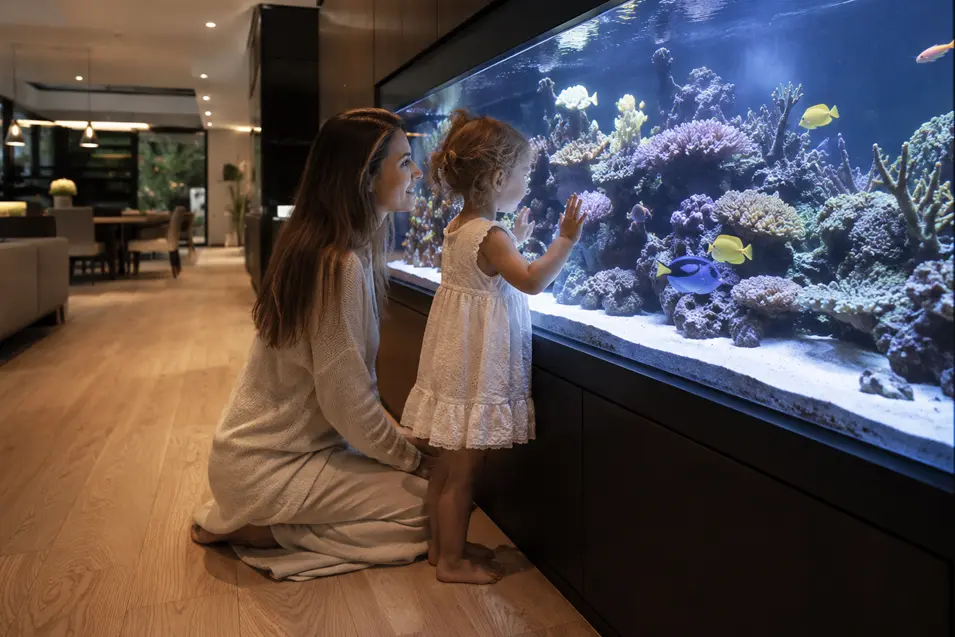
Young children are naturally drawn to movement, color, and animals.
Aquariums provide all three.
Fish swim continuously through changing environments, creating a living display that captures attention in ways many toys and screens cannot.
Children often enjoy:
- Watching fish swim
- Identifying different species
- Following favorite fish
- Observing feeding time
- Exploring aquarium decorations
The constantly changing nature of an aquarium keeps it interesting, even after years of ownership.
Aquariums as Educational Tools
One of the greatest benefits of an aquarium is its educational value.
Children can learn about:
- Animal care
- Habitats
- Water ecosystems
- Life cycles
- Responsibility
- Observation skills
Even simple conversations about fish behavior can spark curiosity and encourage learning.
Aquariums often inspire questions such as:
- Why do fish need clean water?
- What do fish eat?
- How do plants grow underwater?
- Why do some fish swim together?
These everyday learning opportunities can help children develop a greater appreciation for nature.
Encouraging Observation and Patience
Modern children are surrounded by fast-paced entertainment.
Aquariums offer something different.
Watching fish requires:
- Observation
- Patience
- Attention to detail
Children often begin noticing subtle behaviors and interactions within the tank.
This slower form of engagement can provide a welcome balance to more stimulating activities.
Many parents appreciate the way aquariums encourage quiet observation and curiosity.
Teaching Responsibility
Aquariums can also introduce children to age-appropriate responsibilities.
Depending on age and maturity, children may help with:
- Feeding fish
- Checking equipment
- Observing fish health
- Learning maintenance routines
It’s important to remember that adults remain responsible for the aquarium’s overall care.
However, involving children in daily routines can help teach accountability and respect for living animals.
Choosing a Child-Friendly Aquarium
Not every aquarium setup is equally suited for homes with young children.
Some designs are easier to manage and safer than others.
Consider Aquarium Size
Very small aquariums often seem appealing because they take up less space.
However, larger aquariums are usually more stable and forgiving.
For many families, aquariums between:
- 20 gallons
- 40 gallons
- 55 gallons
offer a good balance between visibility, stability, and ease of care.
Select Hardy Fish Species
Some fish tolerate beginner mistakes better than others.
Family-friendly species often include:
- Tetras
- Corydoras catfish
- Platies
- Mollies
- Rasboras
- Certain gouramis
Choosing suitable fish helps create a more successful and enjoyable experience.
Safety Comes First
Safety should always be the top priority when young children are present.
Use a Sturdy Stand
Aquariums are heavy.
The stand should be:
- Stable
- Properly rated
- Difficult to tip
- Positioned on a level surface
Never place an aquarium on furniture not designed to support its weight.
Secure the Aquarium Lid
Children are naturally curious.
A secure lid helps prevent:
- Objects being dropped into the tank
- Accidental splashing
- Fish escapes
- Curious hands entering the water
Manage Electrical Equipment
Aquariums require:
- Filters
- Heaters
- Lighting
Cords and outlets should be organized and protected.
Children should never have access to aquarium electrical equipment.
Choosing the Right Location
Placement matters in family homes.
The aquarium should be visible and enjoyable without creating safety concerns.
Good locations often include:
- Living rooms
- Family rooms
- Shared activity spaces
Avoid placing aquariums:
- In high-traffic hallways
- On unstable furniture
- Where children frequently run or play rough
A secure location helps protect both the aquarium and the family.
Establishing Family Rules
Simple household rules can prevent many common problems.
Examples include:
- No tapping on the glass
- No feeding fish without permission
- No climbing on the stand
- No placing objects in the aquarium
Children generally adapt well when expectations are explained clearly and consistently.
Managing Expectations
One common mistake is treating an aquarium as a short-term novelty.
Children’s interests naturally change over time.
While some children remain fascinated by fish for years, others may lose interest after the initial excitement fades.
Parents should view the aquarium as a family responsibility rather than solely a child’s pet.
This mindset helps ensure the fish continue receiving proper care regardless of changing interests.
Aquariums and Screen-Free Family Time
Many parents actively seek activities that encourage family interaction away from screens.
Aquariums provide a natural gathering point.
Families often enjoy:
- Feeding fish together
- Observing behavior
- Discussing new additions
- Learning about aquatic life
The aquarium becomes a shared experience rather than an individual activity.
Helping Children Develop Empathy
Caring for animals often helps children develop empathy and compassion.
Aquariums provide opportunities to discuss:
- Animal welfare
- Habitat needs
- Responsible pet ownership
- Respect for living creatures
These lessons can extend far beyond fishkeeping.
Children who learn to care about the needs of fish often develop greater sensitivity toward animals in general.
When Children Are Very Young
Families with toddlers may need additional precautions.
Very young children should always be supervised around aquariums.
Extra considerations include:
- Anchoring stands when appropriate
- Using secure lids
- Managing cords carefully
- Preventing climbing
As children grow, many of these concerns become less significant.
The Long-Term Family Benefits
Many aquarium owners report that fish tanks become lasting family features.
Children may grow up:
- Learning about ecosystems
- Appreciating nature
- Developing responsibility
- Enjoying quiet observation
Some eventually become aquarium hobbyists themselves.
The memories created around a family aquarium often last far longer than the aquarium itself.
Conclusion
Aquariums can be wonderful additions to homes with young children. They provide opportunities for learning, observation, responsibility, and family interaction while bringing beauty and nature into everyday life.
Success depends on thoughtful planning, proper safety measures, and realistic expectations. By choosing the right aquarium, selecting suitable fish, and establishing family-friendly routines, parents can create an environment that is both safe and rewarding.
For many families, an aquarium becomes far more than a fish tank—it becomes a source of curiosity, education, and shared experiences that enrich daily life for years to come.
Frequently Asked Questions
Are aquariums safe around young children?
Yes, when properly installed and supervised. Secure stands, lids, and electrical equipment are important safety considerations.
What is the best aquarium size for families with children?
Many families find aquariums between 20 and 55 gallons offer a good balance of visibility, stability, and ease of maintenance.
Can children help care for an aquarium?
Yes. Depending on age, children can assist with feeding, observation, and learning maintenance routines under adult supervision.
What fish are best for children?
Hardy community fish such as tetras, platies, mollies, rasboras, and Corydoras catfish are often good choices for family aquariums.
Do aquariums help children learn responsibility?
They can. Participating in aquarium care can teach children about routine, accountability, and the needs of living animals.
Related Reading
- Why Do Cats Love Watching Fish?
- Keeping Aquariums Safe Around Cats and Dogs
- Pet-Friendly Aquarium Homes: Balancing Fish, Cats, Dogs, and Family Life
- What to Do When a Pet Fish Dies
- Helping Children Cope with the Loss of a Pet Fish
- Aquariums in the Home: Design, Placement, Planning, and Practical Living