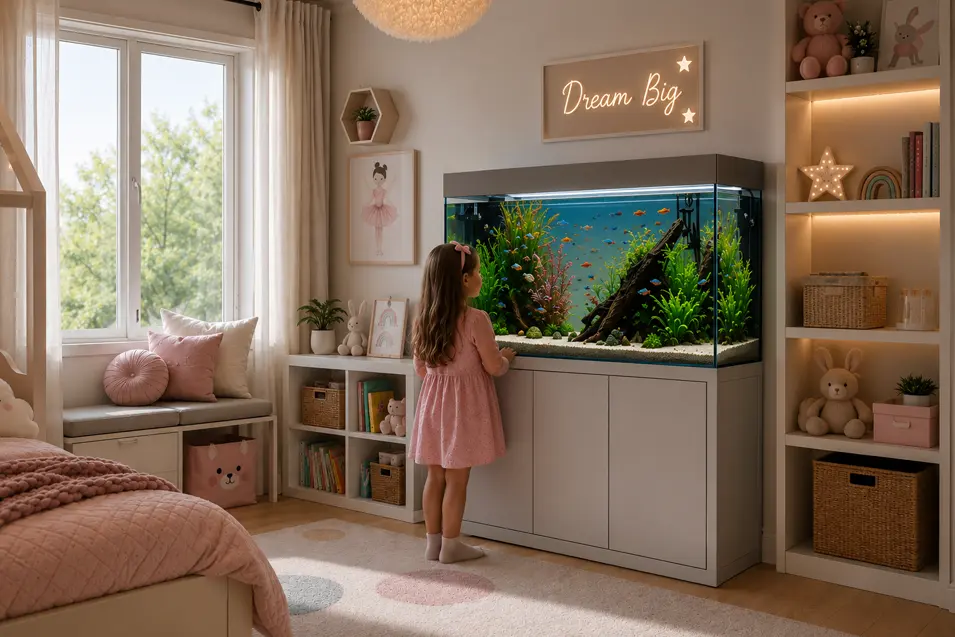
Many children are fascinated by fish.
The colorful colors, graceful swimming patterns, and constantly changing underwater environment make aquariums incredibly appealing to young minds. It’s no surprise that many children eventually ask the same question:
“Can I have a fish tank in my room?”
For parents, the answer isn’t always straightforward.
An aquarium can provide educational opportunities, encourage responsibility, and create a calming atmosphere. At the same time, fish tanks require ongoing care, regular maintenance, and a realistic understanding of what children can reasonably handle on their own.
The good news is that an aquarium can be a wonderful addition to a child’s bedroom when it is thoughtfully planned and age-appropriate expectations are established from the beginning.
Benefits of an Aquarium in a Child’s Bedroom
A bedroom aquarium offers more than simple decoration.
Many parents appreciate the opportunities aquariums provide for learning, observation, and personal growth.
Potential benefits include:
- Encouraging responsibility
- Teaching respect for animals
- Creating a calming environment
- Supporting interest in science and nature
- Reducing screen time
- Providing a unique bedroom feature
For many children, an aquarium becomes a source of fascination and pride.
Learning Responsibility
One of the most common reasons parents consider a bedroom aquarium is the opportunity to teach responsibility.
Children can participate in tasks such as:
- Feeding fish
- Observing fish health
- Monitoring equipment
- Recording maintenance schedules
However, it is important to remember that responsibility is learned gradually.
Most children require guidance and supervision rather than complete ownership of aquarium care.
An aquarium should be viewed as a family responsibility that children help manage rather than a pet they are solely responsible for maintaining.
Encouraging Curiosity and Learning
Aquariums naturally spark curiosity.
Children often become interested in:
- Fish species
- Aquatic plants
- Water chemistry
- Animal behavior
- Ecosystems
This curiosity can lead to broader interests in:
- Biology
- Environmental science
- Conservation
- Nature
Many parents find that aquariums provide ongoing educational opportunities that evolve as children grow older.
Creating a Calming Environment
Many people find aquariums relaxing to watch.
The gentle movement of fish and the peaceful nature of aquatic environments can help create a soothing atmosphere within a bedroom.
Children who enjoy quiet activities such as:
- Reading
- Drawing
- Building models
- Studying
may particularly appreciate an aquarium’s calming presence.
A well-maintained aquarium can become a favorite feature of the room.
What Age Is Appropriate?
There is no universal age at which a child becomes ready for an aquarium.
Readiness depends on factors such as:
- Maturity
- Interest level
- Attention span
- Family involvement
In general:
Ages 4–7
Children can enjoy observing fish and helping with simple tasks under close supervision.
Parents should handle most maintenance responsibilities.
Ages 8–12
Many children can begin taking a more active role in feeding, observation, and routine care.
Parental oversight remains important.
Teenagers
Older children may be capable of managing many aspects of aquarium care independently, although support is often still beneficial.
Interest level is often more important than age alone.
Choosing the Right Aquarium Size
One of the biggest mistakes parents make is purchasing an extremely small aquarium.
Small tanks may appear easier, but they are often less stable and require more careful management.
For children’s bedrooms, a moderate-sized aquarium is usually the better choice.
Recommended sizes include:
- 10 gallons
- 20 gallons
- 29 gallons
These aquariums provide:
- Better water stability
- More fish options
- Easier long-term maintenance
Very small aquariums can be surprisingly challenging for beginners.
Best Fish for Children’s Bedrooms
Fish selection should emphasize hardiness and ease of care.
Good beginner options include:
- Platies
- Zebra danios
- Harlequin rasboras
- White cloud mountain minnows
- Corydoras catfish
These species are generally:
- Peaceful
- Active
- Hardy
- Beginner-friendly
Avoid species with highly specialized care requirements until more experience has been gained.
Freshwater vs. Saltwater
For most families, freshwater aquariums are the best choice for children’s bedrooms.
Advantages include:
- Lower costs
- Simpler maintenance
- Easier setup
- Greater beginner friendliness
Saltwater aquariums can be beautiful but typically require more equipment, maintenance, and expertise.
Freshwater systems provide an easier introduction to fishkeeping.
Safety Considerations
Safety should always be a top priority.
Important considerations include:
Secure Stands
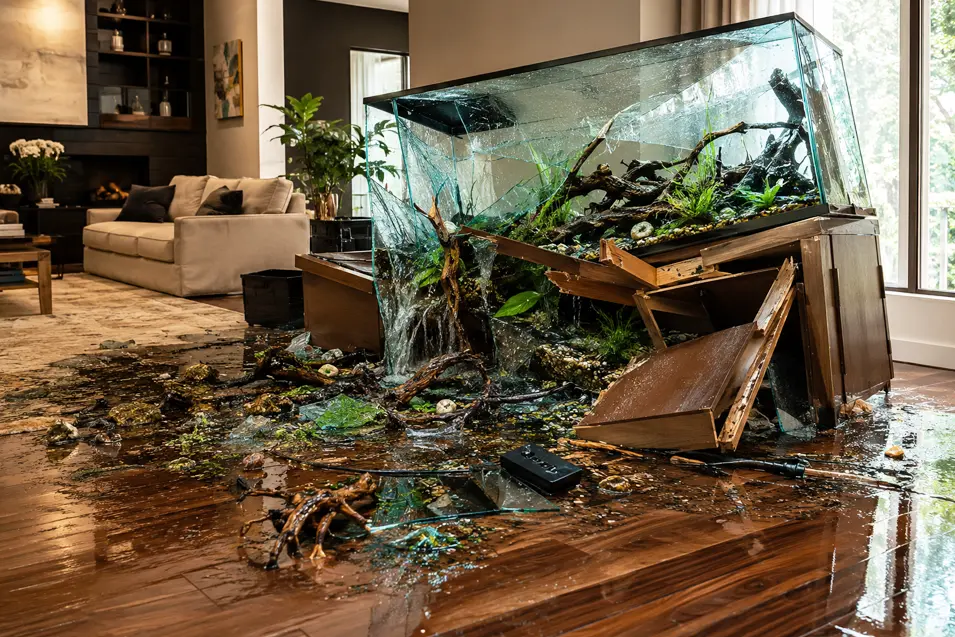
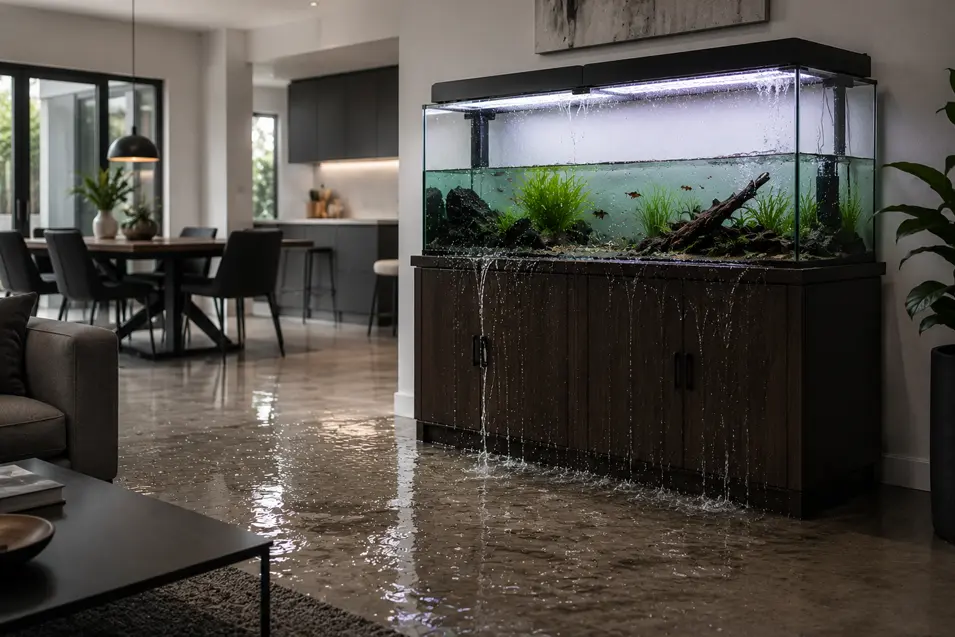
Aquariums must be placed on furniture designed to support their weight.
Stable Placement
The aquarium should not be positioned where it can be bumped or tipped.
Electrical Safety
All equipment should be properly installed with:
- Drip loops
- GFCI protection
- Organized cords
Water Management
Children should understand that aquariums contain electrical equipment and should not be treated like toys.
Proper supervision remains important.
Will the Aquarium Affect Sleep?
This is one of the most common parental concerns.
In most cases, aquariums do not significantly interfere with sleep.
However, several factors should be considered.
Lighting
Aquarium lights should be turned off at night.
Fish need darkness for healthy biological rhythms, and bright lights can disrupt sleep.
Timers make this easy to manage.
Equipment Noise
Most modern aquarium equipment is relatively quiet.
However:
- Air pumps
- Waterfalls
- Vibrating filters
may produce sounds that some children find distracting.
Testing equipment noise before installation can help avoid problems.
Setting Realistic Expectations
One of the most important steps is discussing expectations before purchasing the aquarium.
Children should understand that:
- Fish are living animals
- Aquariums require regular care
- Maintenance is part of ownership
- Fish may become sick
- Fish eventually die
Honest conversations help prevent disappointment and encourage responsible attitudes toward animal care.
Common Mistakes Parents Make
Several mistakes occur frequently when setting up children’s aquariums.
Assuming Children Will Handle Everything
Even highly motivated children often need ongoing support.
Choosing Tiny Aquariums
Small tanks are often harder, not easier.
Buying Fish Impulsively
Research is essential before purchasing livestock.
Ignoring Long-Term Maintenance
Fishkeeping is an ongoing commitment.
Planning for the future improves long-term success.
Making It a Family Hobby
Many families discover that aquariums work best as shared activities.
Parents and children can enjoy:
- Feeding fish
- Decorating aquariums
- Learning about species
- Observing behavior
- Performing maintenance together
This collaborative approach often creates better outcomes than expecting children to manage everything alone.
When a Bedroom Aquarium May Not Be the Best Choice
A bedroom aquarium may not be ideal if:
- The child shows little long-term interest
- Space is limited
- Maintenance access is difficult
- Equipment noise may be disruptive
- Parents are unwilling to assist with care
In some cases, placing the aquarium in a family living area may be a better option.
The fish remain visible while adults can more easily supervise care.
Conclusion
An aquarium can be a wonderful addition to a child’s bedroom when approached thoughtfully and realistically. Fish tanks provide opportunities for learning, responsibility, observation, and relaxation while introducing children to the rewards of caring for living animals.
The most successful bedroom aquariums are those supported by both children and parents. Choosing an appropriate tank size, selecting beginner-friendly fish, prioritizing safety, and establishing realistic expectations all contribute to a positive experience.
Ultimately, an aquarium is not just a decoration—it’s a living ecosystem. When families embrace that responsibility together, a child’s bedroom aquarium can become a source of enjoyment, education, and lasting memories.
Frequently Asked Questions
Is it okay to put an aquarium in a child’s bedroom?
Yes. Many children enjoy having aquariums in their bedrooms, provided the tank is properly maintained and appropriate safety precautions are followed.
What size aquarium is best for a child’s room?
Aquariums between 10 and 29 gallons are often ideal because they provide better stability than very small tanks while remaining manageable.
Are children responsible enough to care for fish?
Many children can participate in fish care, but most require parental guidance and support, especially with maintenance and water quality management.
Can an aquarium help children learn responsibility?
Yes. Aquariums can teach responsibility, routine, observation skills, and respect for living animals when expectations are realistic.
Will an aquarium keep my child awake at night?
Most aquariums are quiet enough for bedrooms, but lighting should be turned off at night and noisy equipment should be avoided.
Related Reading
- Aquariums in Homes with Young Children
- Are Fish Good Pets for Children? What Parents Should Know
- Teaching Children Responsibility Through Aquarium Care
- Helping Children Cope with the Loss of a Pet Fish
- Low-Maintenance Aquarium Setups for Busy Families
- Aquariums in the Home: Design, Placement, Planning, and Practical Living