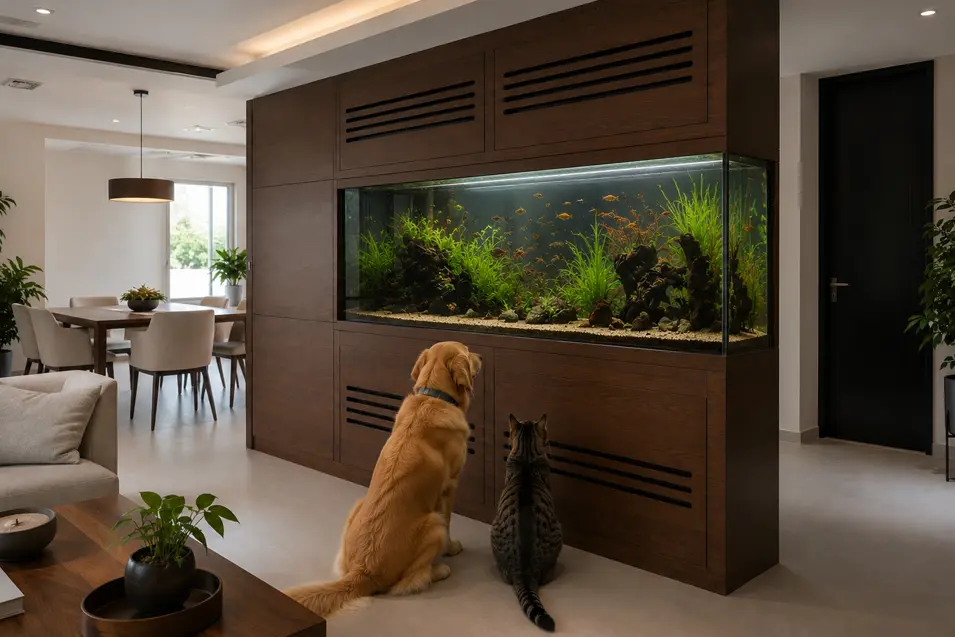
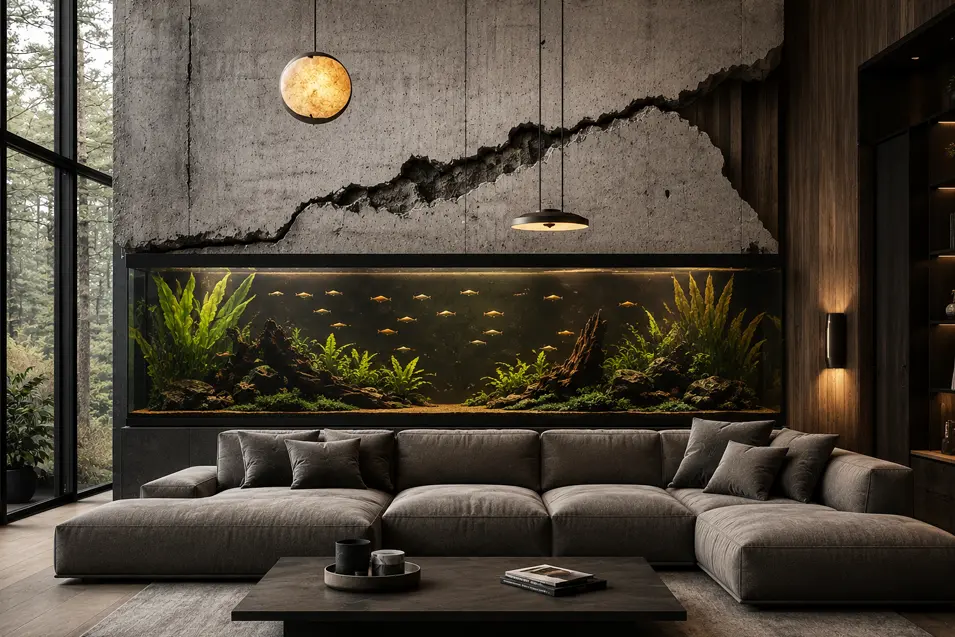
Every well-designed room has a focal point—a feature that naturally draws attention and anchors the space. In some homes, that focal point may be a fireplace, a dramatic window, a piece of artwork, or a custom architectural feature. Increasingly, homeowners and designers are turning to aquariums as living statement pieces that combine beauty, movement, color, and nature in a way few other design elements can match.
Unlike traditional décor, aquariums are constantly changing. Fish move through the landscape, plants grow and evolve, and lighting transforms the display throughout the day. This dynamic quality makes aquariums uniquely capable of becoming the centerpiece of a room while providing relaxation and visual interest for years to come.
Whether you’re designing a modern luxury home, refreshing a family living space, or creating a peaceful retreat, a thoughtfully planned aquarium can become one of the most memorable features in your home.
What Makes a Statement Piece?
A statement piece is an element that immediately captures attention and helps define the personality of a space.
Effective statement pieces often share several characteristics:
- Strong visual presence
- Unique design
- Emotional appeal
- Memorable impact
- Harmony with the surrounding environment
Aquariums naturally possess all of these qualities.
They introduce movement, color, texture, and life into a room while creating a visual experience that few other decorative features can replicate.
Why Aquariums Work So Well as Focal Points
Most home décor remains static.
A painting stays the same. Furniture remains in place. Decorative accessories rarely change.
An aquarium, however, is alive.
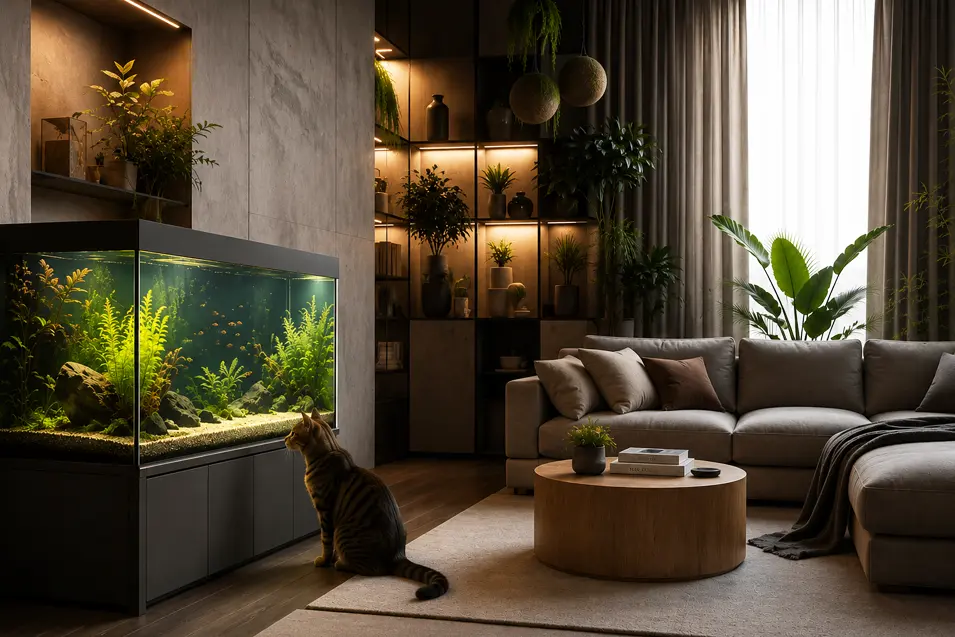
Fish explore their environment, plants sway in the current, and lighting creates constantly shifting patterns. This movement naturally attracts attention and encourages people to pause and observe.
In many homes, visitors are immediately drawn toward a well-designed aquarium because it offers an experience rather than simply an object.
The result is a focal point that feels both decorative and interactive.
The Emotional Impact of Living Design
One reason aquariums stand out in interior design is their emotional effect.
Research and everyday experience suggest that watching fish can be calming and restorative. The gentle movement of aquatic life creates a sense of tranquility that contrasts with the fast pace of modern living.
As a result, aquariums often become gathering points where family members and guests naturally spend time.
A beautiful aquarium can:
- Encourage relaxation
- Reduce visual clutter
- Create a connection to nature
- Promote conversation
- Add a sense of calm to busy households
This emotional value makes aquariums more meaningful than many traditional decorative features.
Choosing the Right Aquarium Size
When creating a statement piece, scale matters.
An aquarium that is too small may get lost within a large room, while one that is too large can overwhelm the space.
The goal is balance.
Consider:
- Ceiling height
- Room dimensions
- Furniture placement
- Viewing distance
- Traffic flow
In many homes, medium to large aquariums create the strongest visual impact without dominating the room.
The aquarium should feel intentional rather than oversized.
Popular Statement Aquarium Styles
Different aquarium styles create different design experiences.
Built-In Aquariums
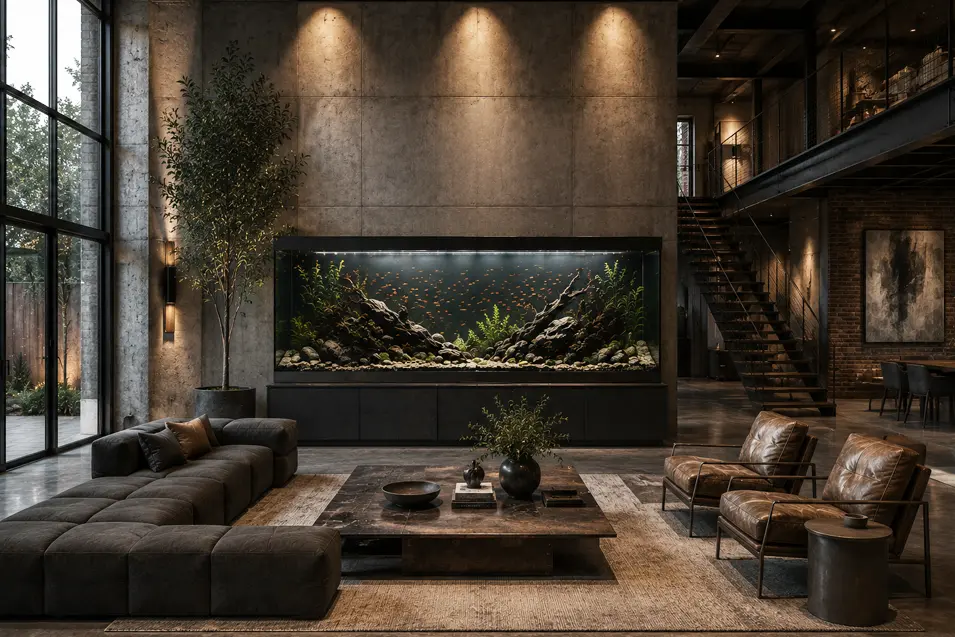
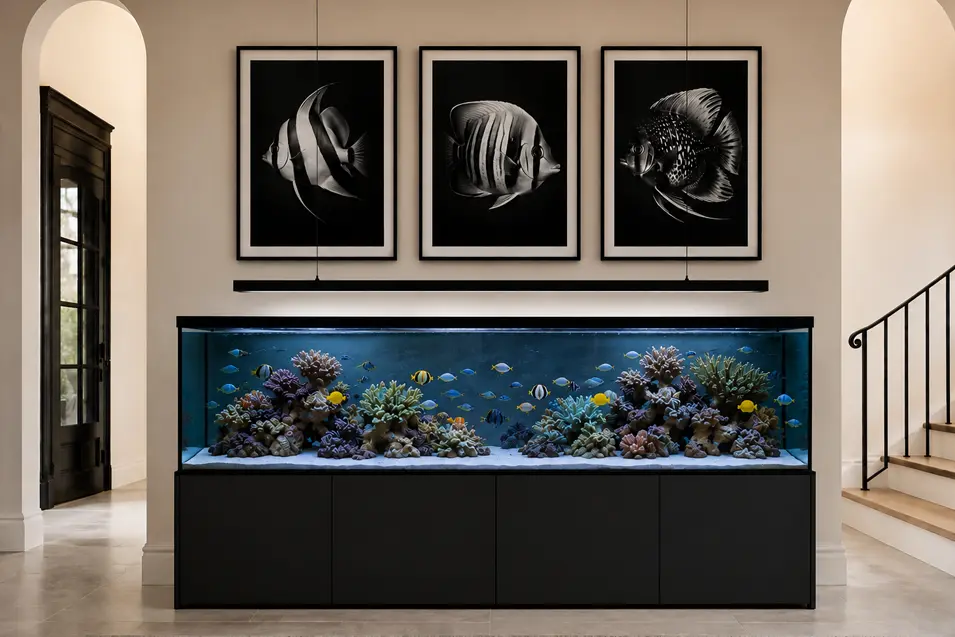
Built-in aquariums offer one of the most sophisticated approaches to aquarium design.
Integrated into walls, cabinetry, or architectural features, these systems often appear as though they were part of the home’s original design.
Built-in aquariums work especially well in:
- Living rooms
- Dining rooms
- Entryways
- Luxury homes
Their seamless appearance often creates a gallery-like presentation.
Freestanding Display Aquariums
A freestanding aquarium can become a statement piece when paired with high-quality cabinetry and thoughtful placement.
These installations provide flexibility while still delivering significant visual impact.
Modern aquarium furniture allows freestanding tanks to complement a wide range of interior styles.
Peninsula Aquariums
Peninsula aquariums extend outward into a room and can be viewed from three sides.
Because they occupy a central position, they naturally attract attention and help define living spaces.
These designs are especially effective in open-concept homes.
Room Divider Aquariums
Room divider aquariums serve as both functional partitions and visual centerpieces.
They create separation while maintaining openness, making them ideal for contemporary floor plans.
Designing Around the Aquarium
One common mistake is treating the aquarium as an afterthought.
When an aquarium is intended to be a statement piece, the room should be designed around it.
This doesn’t mean everything must revolve around the tank, but the aquarium should influence key design decisions.
Consider:
- Seating arrangements
- Lighting
- Sightlines
- Traffic patterns
- Furniture placement
The best designs make it easy for people to enjoy the aquarium from multiple vantage points.
Lighting and Visual Impact
Lighting plays a critical role in transforming an aquarium into a centerpiece.
Modern LED systems provide exceptional control over:
- Brightness
- Color temperature
- Day-night cycles
- Accent effects
The aquarium often becomes particularly striking in the evening when surrounding room lighting is reduced.
Many homeowners use subtle ambient lighting around the aquarium to enhance its visual presence while maintaining a comfortable atmosphere.
Proper lighting turns the aquarium into a living display that commands attention without feeling overwhelming.
Matching Aquarium Design to Interior Style
An aquarium should complement the home’s overall design aesthetic.
Modern Interiors
Modern homes often benefit from:
- Clean lines
- Minimalist aquascapes
- Frameless aquariums
- Contemporary cabinetry
Simple designs help maintain a sophisticated appearance.
Traditional Interiors
Traditional spaces may incorporate:
- Decorative woodwork
- Rich cabinetry
- Natural stone accents
- Classic fish species and layouts
These details help the aquarium feel integrated into the home’s character.
Natural and Biophilic Designs
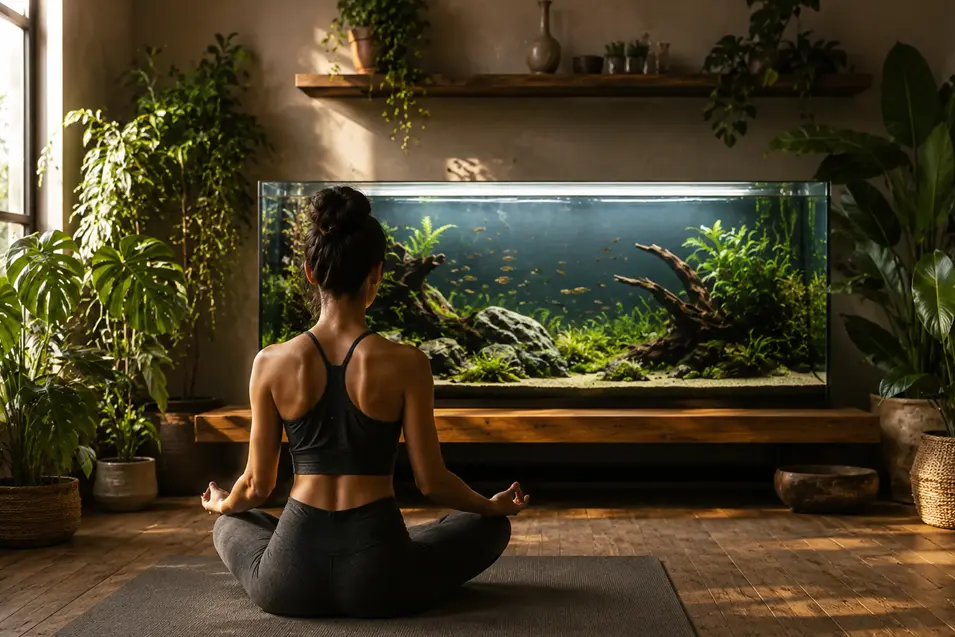
Aquariums pair beautifully with biophilic design principles, which emphasize a connection to nature.
Combining aquariums with:
- Indoor plants
- Natural materials
- Organic textures
- Natural light
creates spaces that feel calming and restorative.
Avoiding Common Design Mistakes
While aquariums can be stunning focal points, poor planning can reduce their impact.
Oversized Equipment Visibility
Visible cords, filters, tubing, and accessories can detract from the display.
Whenever possible:
- Hide equipment
- Conceal wiring
- Use cabinetry for storage
- Plan electrical access in advance
Poor Placement
An aquarium should occupy a prominent but practical location.
Avoid placing statement aquariums:
- In dark corners
- Behind furniture
- Near direct sunlight
- In areas with excessive traffic
Ignoring Maintenance Needs
A beautiful aquarium only remains beautiful if it is maintained properly.
Easy access for cleaning and equipment servicing should always be part of the design process.
Statement Aquariums in Different Rooms
Aquariums can serve as focal points throughout the home.
Living Rooms
The most popular location for statement aquariums due to visibility and family interaction.
Entryways
Create an unforgettable first impression for visitors.
Home Offices
Introduce calm and visual interest while working.
Dining Rooms
Provide an elegant backdrop for entertaining and family gatherings.
Wellness Spaces
Enhance relaxation and mindfulness through natural movement and sound.
The Long-Term Value of Aquarium Design
A well-designed aquarium often becomes one of the most beloved features in a home.
Unlike many design trends that come and go, aquariums offer lasting appeal because they combine aesthetics with experience. They create opportunities for relaxation, conversation, learning, and connection with nature.
For homeowners seeking something truly unique, few design elements offer the same combination of beauty, functionality, and emotional impact.
Conclusion
Aquariums are far more than decorative accessories. When thoughtfully planned and integrated into a room’s design, they become living statement pieces that transform the atmosphere of a home.
From elegant built-in installations to dramatic room dividers and contemporary freestanding displays, aquariums provide a focal point unlike any other. Their movement, color, and connection to nature create visual interest while enhancing the overall experience of a space.
Whether your style is modern, traditional, or somewhere in between, a well-designed aquarium can become the feature that defines a room and leaves a lasting impression on everyone who sees it.
Frequently Asked Questions
Why do aquariums make good statement pieces?
Aquariums combine movement, color, texture, and living elements, creating visual interest that naturally attracts attention and serves as a focal point.
What size aquarium works best as a focal point?
The ideal size depends on the room. Medium to large aquariums generally create the strongest visual impact while remaining proportional to the space.
Are built-in aquariums better than freestanding aquariums for design?
Both can work well. Built-in aquariums offer a seamless architectural appearance, while freestanding aquariums provide flexibility and easier installation.
Can aquariums fit modern interior design styles?
Absolutely. Modern aquariums often feature clean lines, minimalist aquascaping, frameless glass, and integrated lighting that complement contemporary interiors.
What room is best for a statement aquarium?
Living rooms, entryways, dining rooms, and open-concept spaces are among the most popular locations because they maximize visibility and enjoyment.
Related Reading
- Aquariums in the Home: Design, Placement, Planning, and Practical Living
- Designing a Built-In Aquarium Wall
- Room Divider Aquariums: Beautiful Living Spaces with Fish
- Open Concept Homes and Aquarium Placement
- How to Design a Living Room Around a Large Aquarium
- Luxury Home Aquariums: Inspiration and Planning Ideas
- Aquariums as Living Art