When people first start creating AI images, they usually focus on the subject.
Then they learn about lighting.
Later they discover lenses, camera angles, and artistic styles.
But professional photographers often begin somewhere else entirely.
Composition.
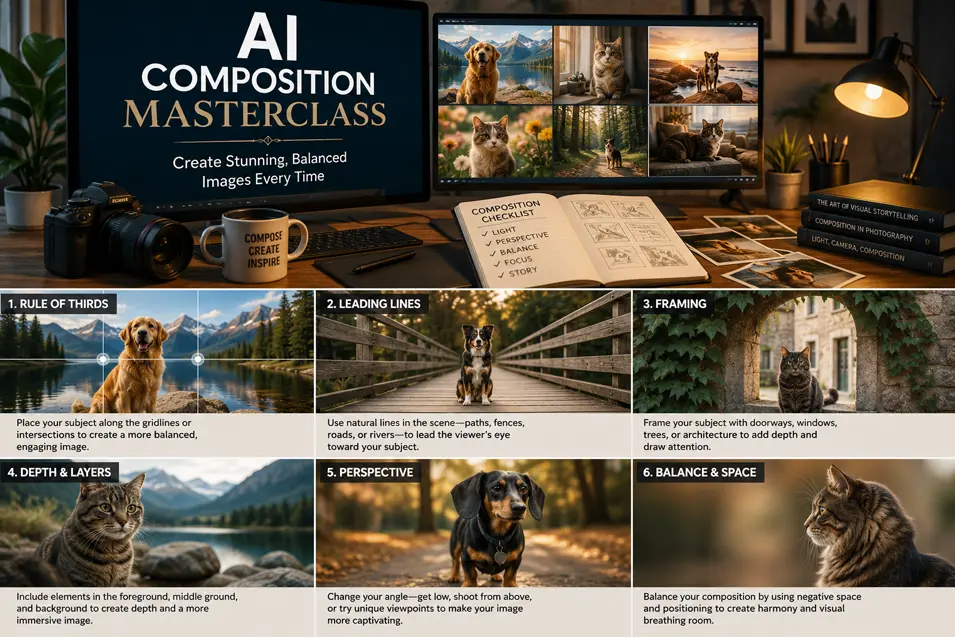
Composition determines how the viewer’s eye moves through an image. It creates balance, emotion, storytelling, and visual impact.
The same subject can feel ordinary or extraordinary depending on how it’s composed.
Fortunately, composition is something you can guide directly in your AI prompts.
Let’s look at the techniques professional photographers use every day.
Why Composition Matters
Good composition helps:
- Direct the viewer’s eye
- Create balance
- Tell a story
- Add depth
- Highlight the subject
- Eliminate distractions
- Produce more professional-looking images
Often, changing the composition creates a bigger improvement than changing the subject itself.
1. Rule of Thirds
Prompt Addition
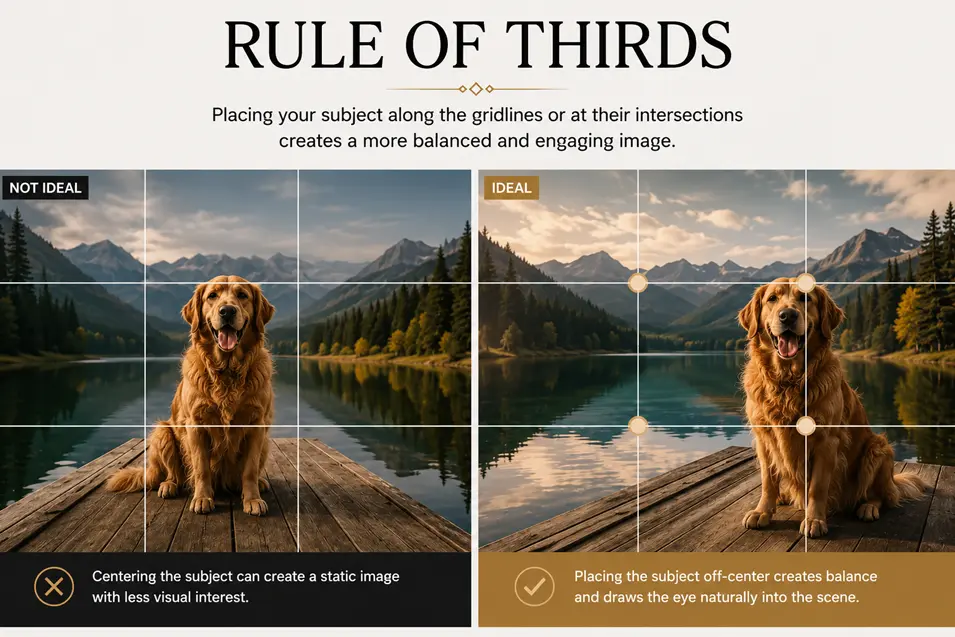
composed using the Rule of Thirds
Imagine dividing your image into nine equal rectangles.
Instead of placing the subject in the exact center, position it where those lines intersect.
The result usually feels more natural and dynamic.
Best For
- Portraits
- Wildlife
- Landscapes
- Lifestyle photography
2. Centered Composition
Prompt Addition
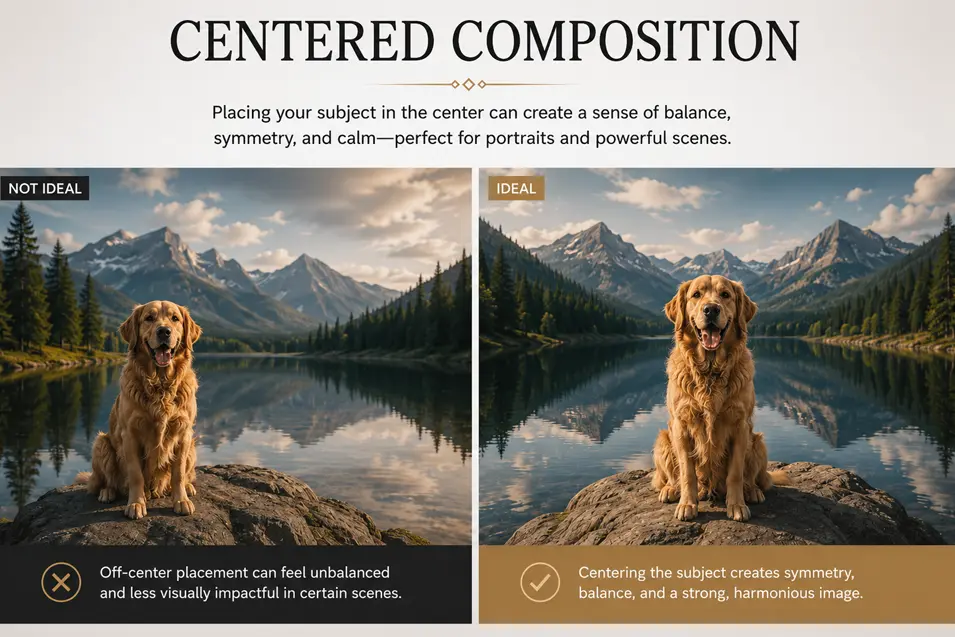
perfectly centered composition
Sometimes symmetry is exactly what you want.
Centering creates strong, formal images that immediately draw attention to the subject.
Best For
- Portraits
- Magazine covers
- Product photography
- Museum-style artwork
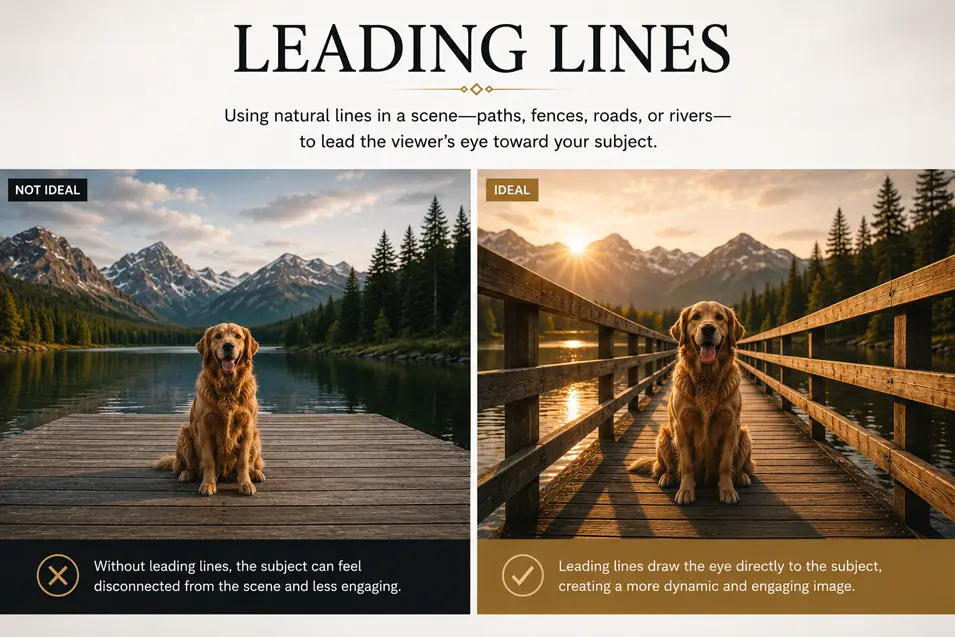
3. Leading Lines
Prompt Addition
strong leading lines directing the eye toward the subject
Roads.
Hallways.
Fences.
Paths.
Furniture.
Architecture.
Anything that naturally guides the viewer toward the main subject.
Best For
- Architecture
- Interior design
- Storytelling
- Editorial photography
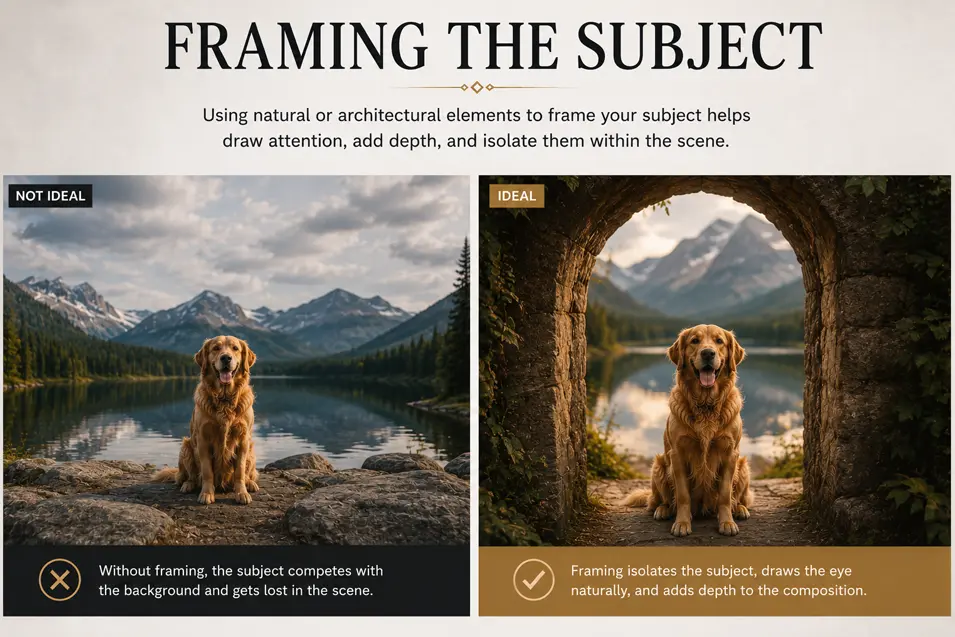
4. Framing the Subject
Prompt Addition
naturally framed by surrounding architecture and trees
Use windows.
Doorways.
Branches.
Arches.
Furniture.
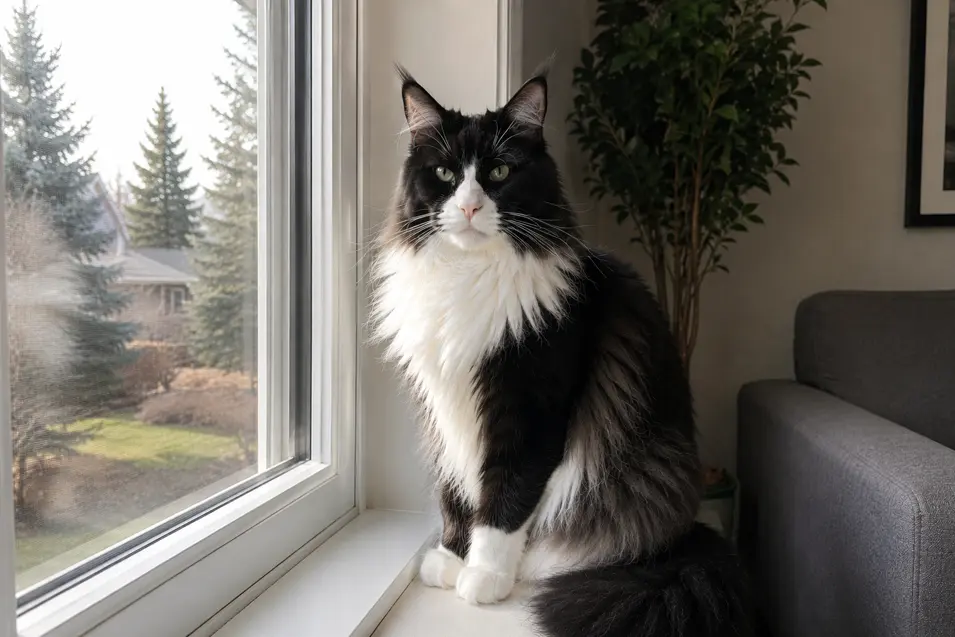
Natural framing isolates the subject and creates depth.
Best For
- Wildlife
- Interiors
- Portraits
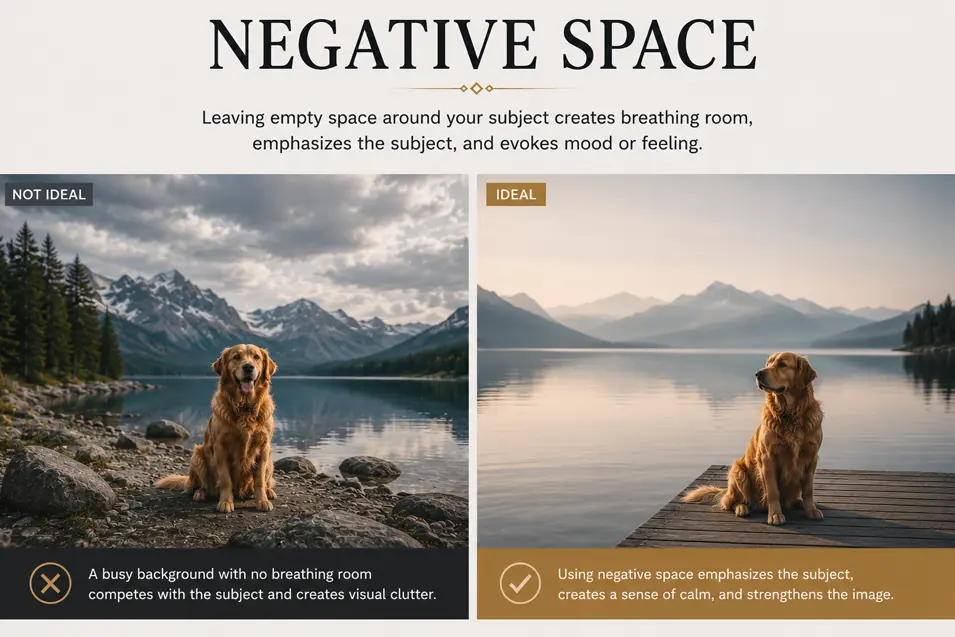
5. Negative Space
Prompt Addition
generous negative space surrounding the subject
Less is often more.
Leaving empty space around your subject creates elegant, minimalist compositions.
Best For
- Modern design
- Editorial photography
- Websites
- Advertisements
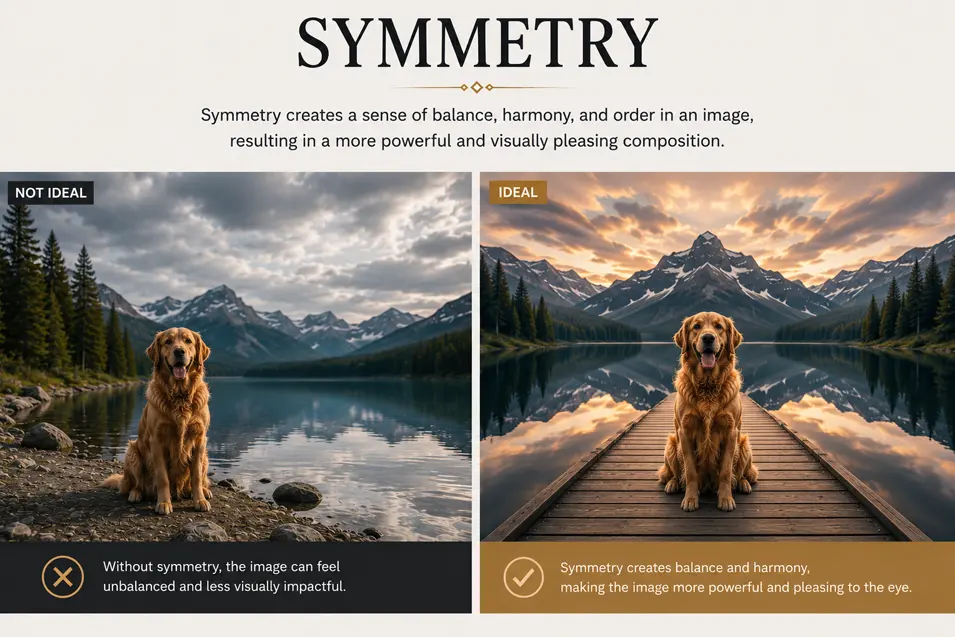
6. Symmetry
Prompt Addition
perfectly symmetrical composition
Symmetry naturally attracts attention.
It creates calm, order, and balance.
Best For
- Museums
- Hallways
- Architecture
- Reflections
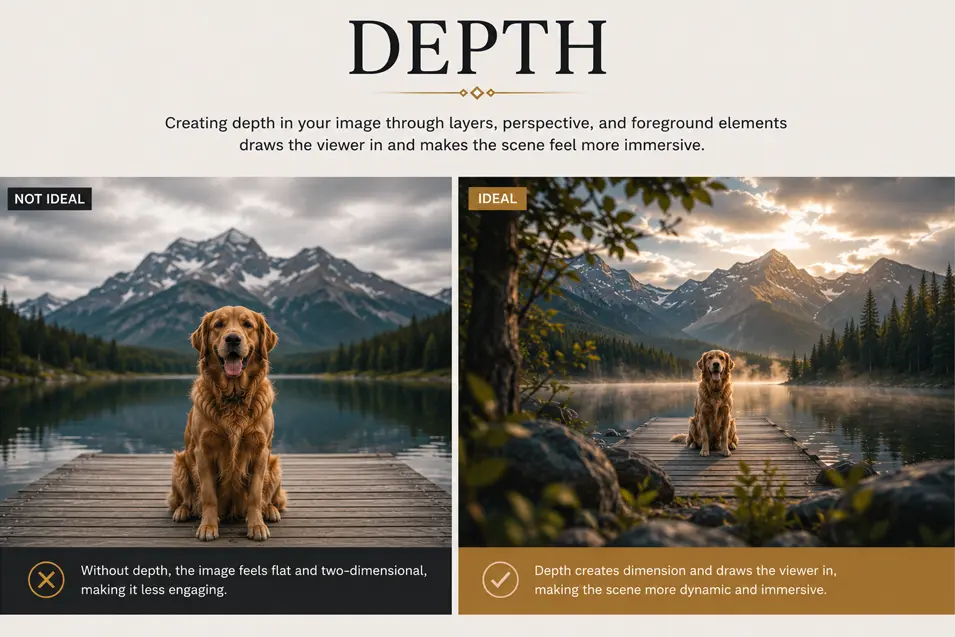
7. Depth
Prompt Addition
layered foreground, midground, and background
Professional photographs rarely feel flat.
Creating layers makes images more immersive.
Best For
- Landscapes
- Interior design
- Wildlife
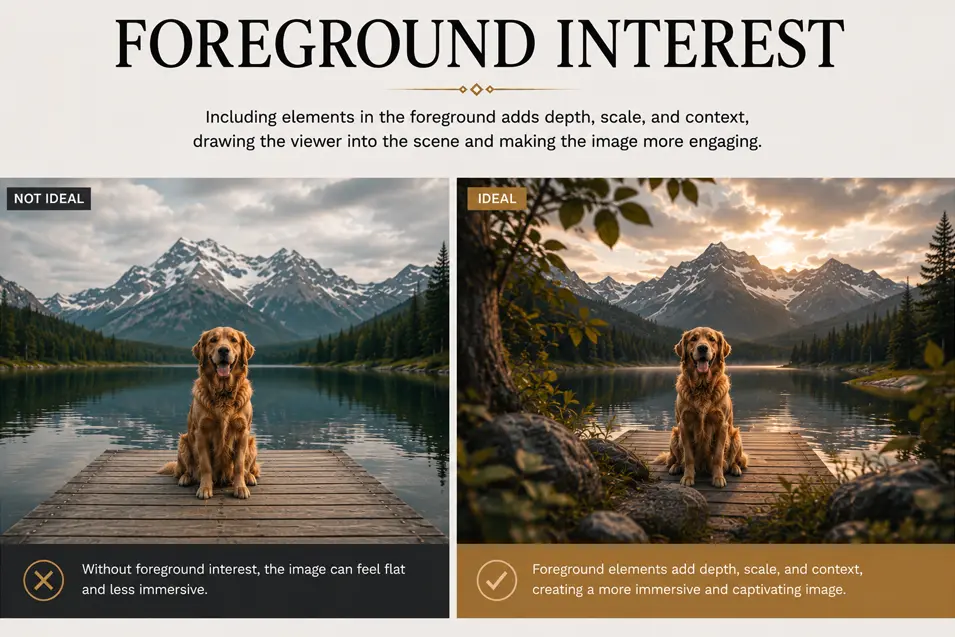
8. Foreground Interest
Prompt Addition
interesting foreground elements adding depth
Small details near the camera make scenes feel more realistic.
Examples
- Flowers
- Furniture
- Leaves
- Rocks
- Decorative objects
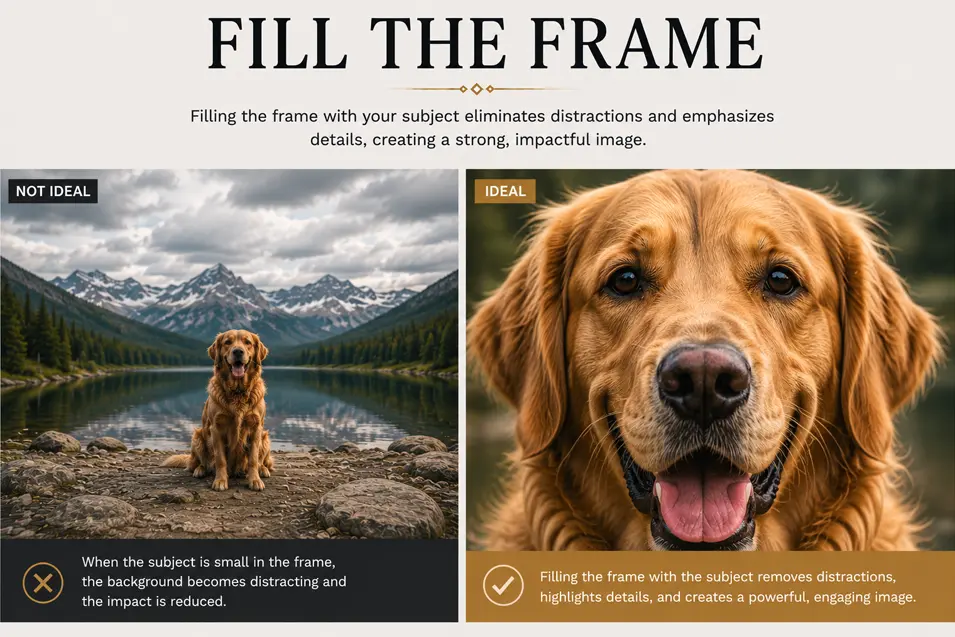
9. Fill the Frame
Prompt Addition
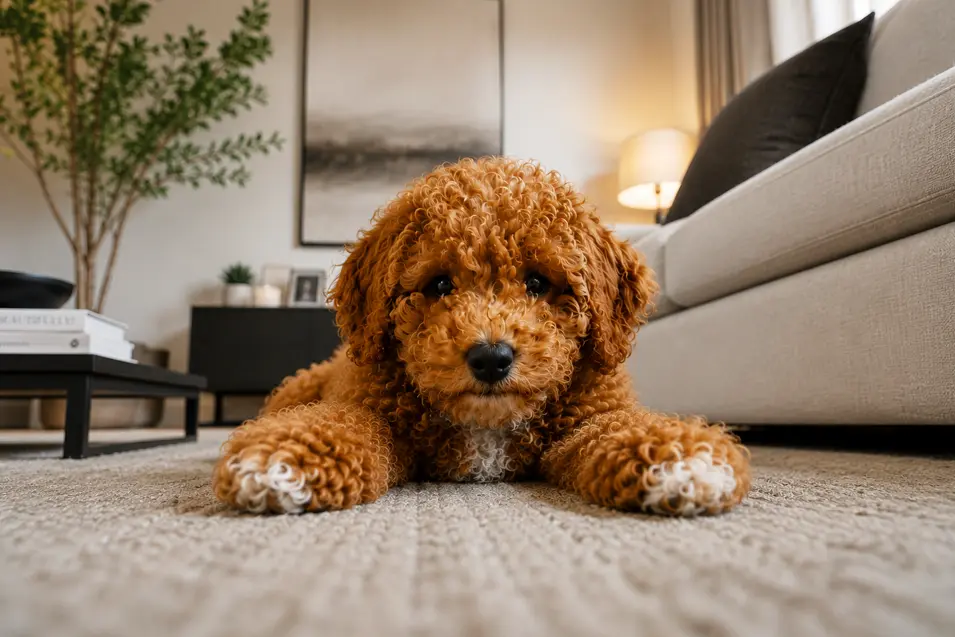
fill the frame with the subject
Sometimes the background isn’t important.
Move in closer.
Allow the subject to dominate the composition.
Best For
- Pet portraits
- Fine art
- Emotional photography
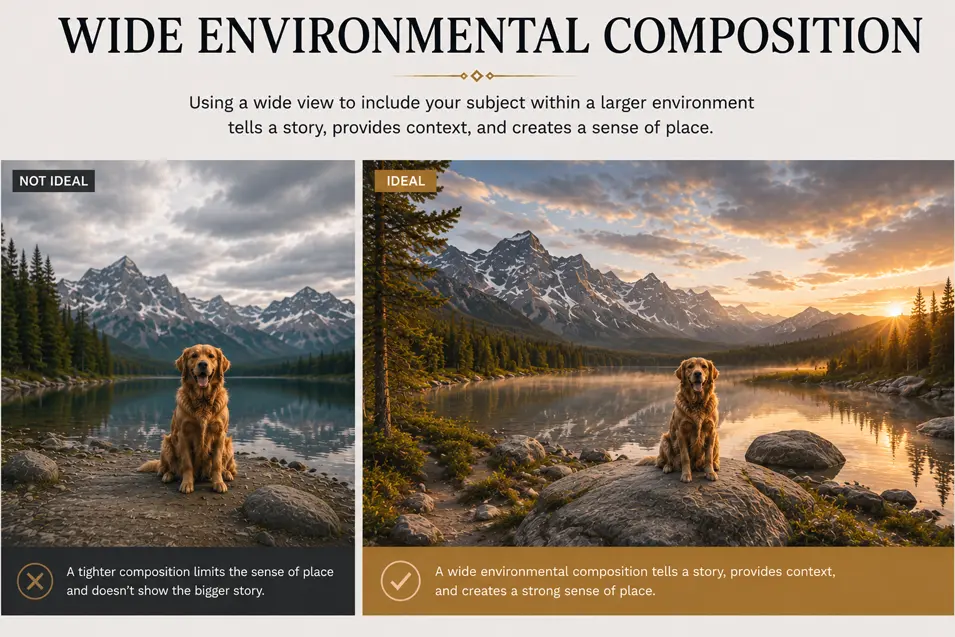
10. Wide Environmental Composition
Prompt Addition
wide environmental composition
Instead of showing only the subject, include the surrounding environment.
The setting becomes part of the story.
Best For
- Adventure
- Homes
- Landscapes
- Wildlife
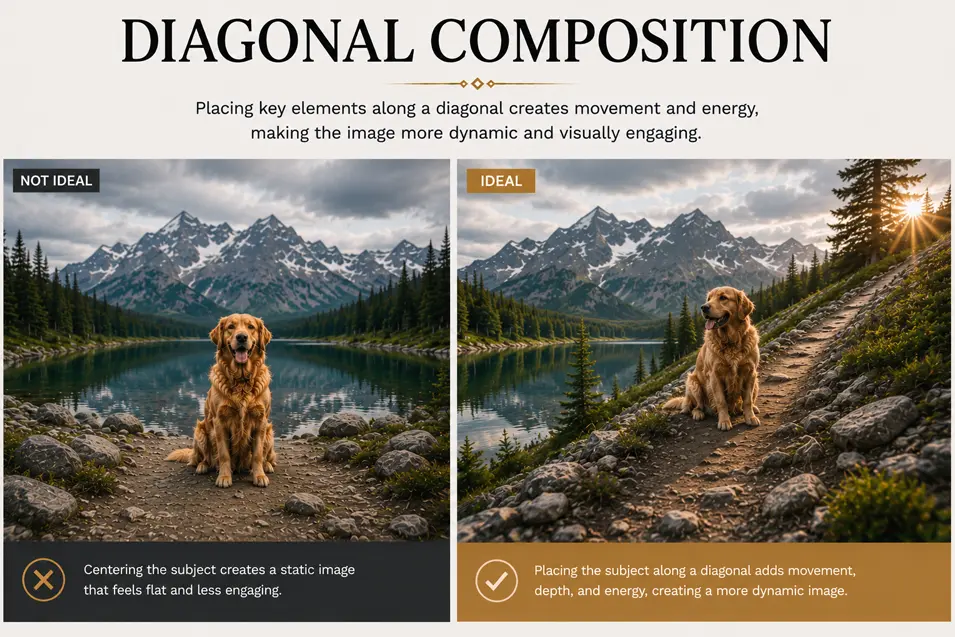
11. Diagonal Composition
Prompt Addition
dynamic diagonal composition
Diagonal lines naturally create movement and energy.
Best For
- Sports
- Wildlife
- Action scenes
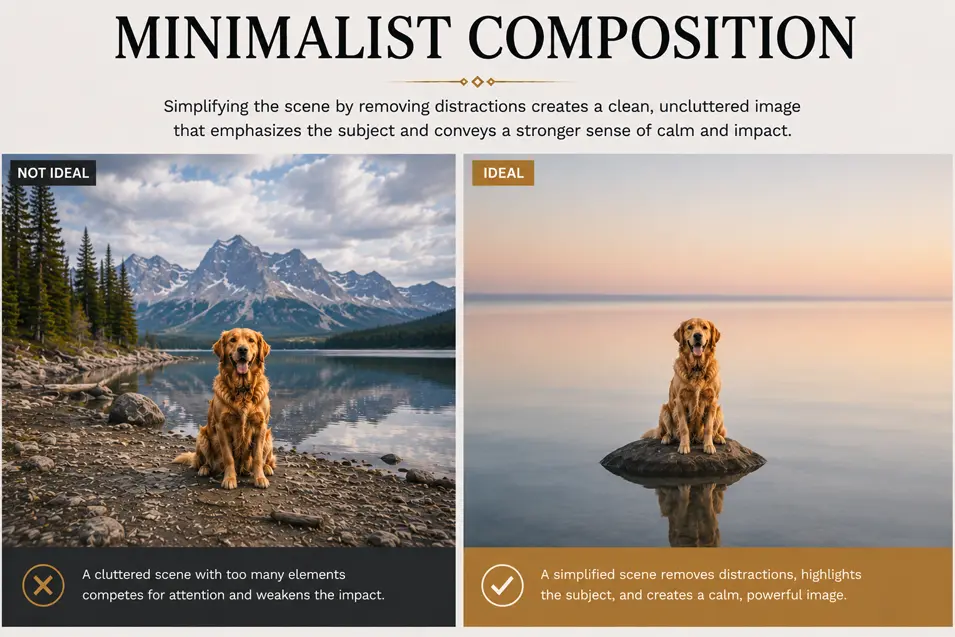
12. Minimalist Composition
Prompt Addition
minimalist composition with clean visual balance
Remove unnecessary distractions.
Keep only what strengthens the image.
Best For
- Luxury interiors
- Editorial work
- Fine art
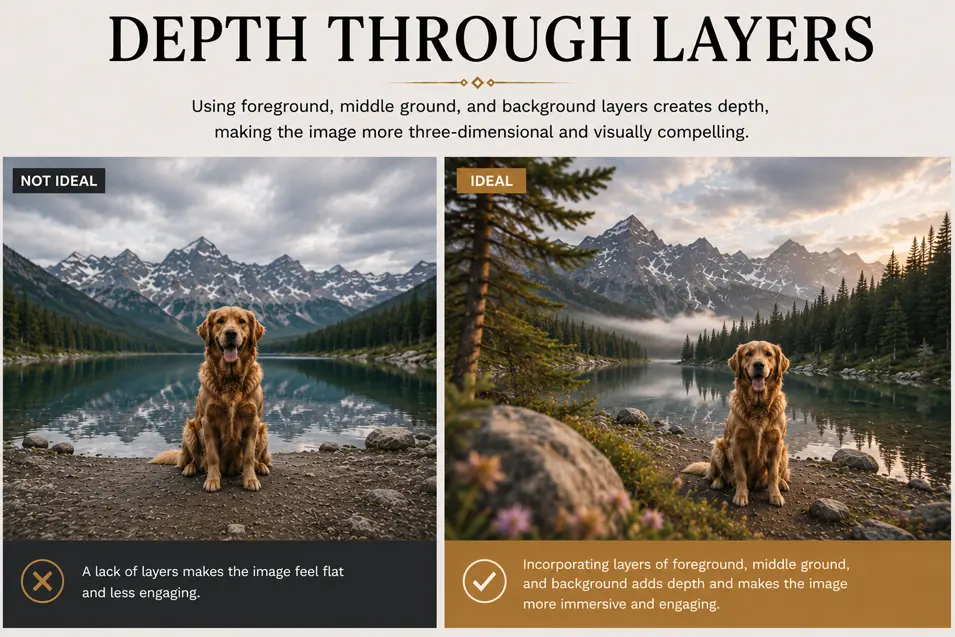
13. Depth Through Layers
Prompt Addition
layered composition with foreground blur
Professional photographers often shoot through objects.
Foreground blur creates incredible depth.
Best For
- Nature
- Portraits
- Cinematic photography
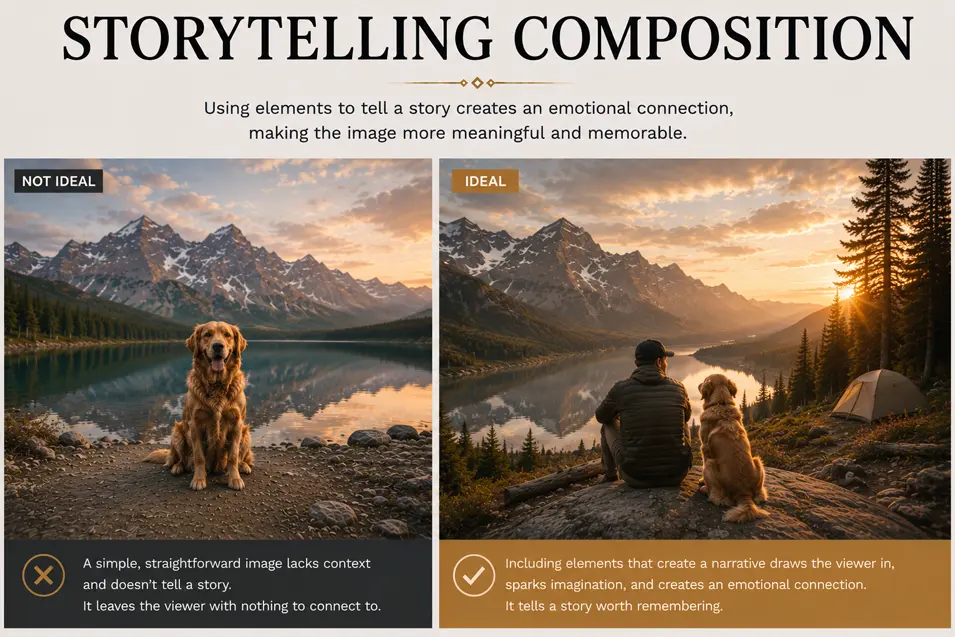
14. Storytelling Composition
Prompt Addition
cinematic storytelling composition
Instead of simply showing the subject, suggest what happened before and what might happen next.
Best For
- Adventure
- Fantasy
- Editorial work
Composition Comparison
| Composition | Best Use |
| Rule of Thirds | Everyday photography |
| Centered | Portraits |
| Leading Lines | Architecture |
| Framing | Wildlife |
| Negative Space | Minimalism |
| Symmetry | Museums |
| Depth | Interiors |
| Foreground Interest | Landscapes |
| Fill the Frame | Close-up portraits |
| Environmental | Storytelling |
| Diagonal | Action |
| Minimalist | Luxury photography |
Combining Composition Techniques
Composition works best when techniques are layered together.
For example:
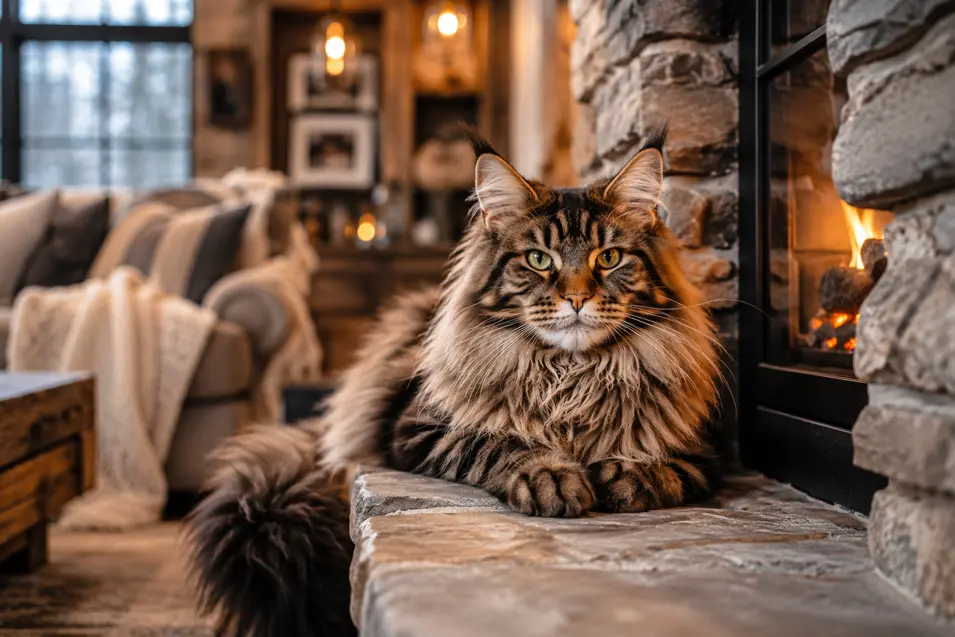
Maine Coon cat sitting beside a fireplace, Rule of Thirds composition, strong leading lines, warm afternoon sunlight, 85mm portrait lens, shallow depth of field.
Or:
Modern living room featuring an aquarium, symmetrical composition, minimalist styling, layered foreground, diffused natural light.
Rather than relying on one technique, combine several to create images with greater depth and visual interest.
My Favorite Composition Prompts
- composed using the Rule of Thirds
- strong leading lines
- perfectly centered composition
- generous negative space
- layered foreground, midground and background
- natural framing
- wide environmental composition
- cinematic storytelling composition
- dynamic diagonal composition
- minimalist composition
- symmetrical composition
- fill the frame
- foreground blur
- editorial composition
Composition Cheat Sheet
Want this look? Try this composition:
📷 Everyday Photography → Rule of Thirds
📰 Magazine Cover → Centered Composition
🏛️ Architecture → Leading Lines
🌲 Nature → Natural Framing
✨ Luxury → Minimalist Composition
🏡 Interior Design → Symmetry + Leading Lines
🎬 Cinematic → Storytelling + Layers
🐾 Pet Portrait → Fill the Frame
🌄 Landscapes → Foreground + Midground + Background
🖼️ Fine Art → Negative Space
Common Composition Mistakes
Many AI-generated images look unnatural because the composition hasn’t been considered.
Avoid:
- Centering every subject.
- Busy backgrounds that compete for attention.
- No foreground or background separation.
- Cropping ears, tails, or important features.
- Placing the horizon through the middle of the frame.
- Too many unrelated objects fighting for attention.
- Ignoring visual balance.
A cleaner composition often creates a stronger image than adding more descriptive words.
Final Thoughts
Great AI images don’t happen because of longer prompts.
They happen because every part of the image works together.
Composition gives your subject room to breathe, guides the viewer’s eye, and transforms ordinary scenes into photographs that feel intentional and professional.
Master composition, and you’ll discover that even simple prompts can produce extraordinary results.
When planning your next AI image, don’t begin by asking:
“What should I create?”
Instead ask:
“How should I compose it?”
That one question may do more to improve your AI artwork than adding another fifty descriptive words.