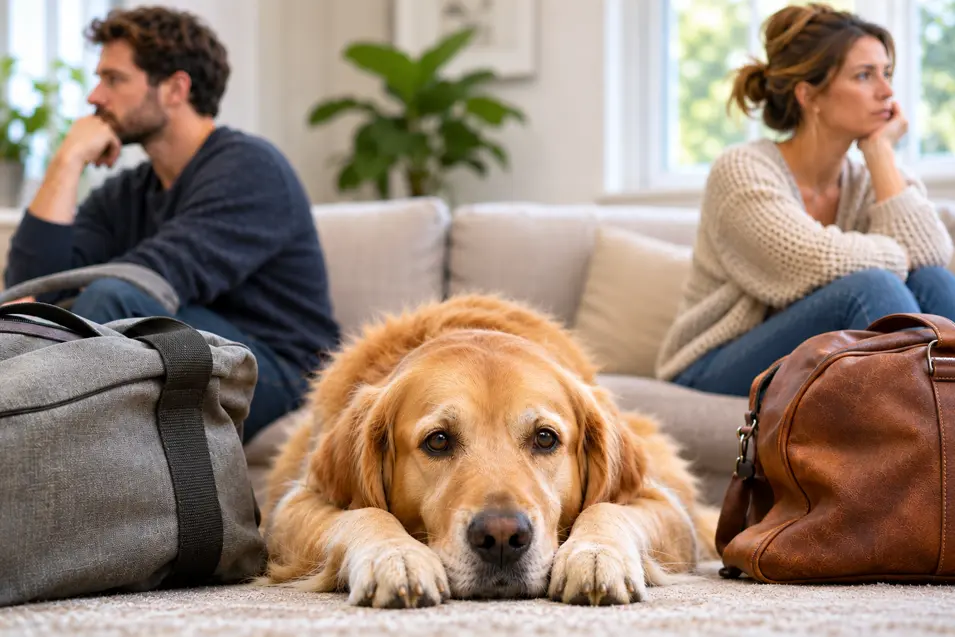
When a marriage or long-term relationship ends, there are countless decisions to make. Who stays in the house? How will finances be divided? What happens to the children, if there are any?
And then there’s the dog.
The dog who slept at the foot of the bed, accompanied family vacations, greeted both people at the door, and became part of everyday life.
Unlike a sofa or television, a dog has formed relationships with the people in the household. Both may love the animal deeply, and neither may be willing to say goodbye.
Sharing custody can seem like the obvious solution. Perhaps the dog spends alternating weeks with each person, or one person takes weekdays while the other gets weekends.
Everyone gets to maintain a relationship with the dog. Nobody has to give up their beloved companion.
But is it really that simple?
What happens when someone moves away, remarries, has children, loses their job, or can no longer afford veterinary care? What if the dog becomes anxious moving between homes? And who makes the decision when the dog becomes seriously ill and euthanasia may be the kindest option?
Sharing custody of a dog isn’t simply about dividing time. It’s about agreeing to share responsibility for a living animal, potentially for the rest of its life.
Before making that commitment, couples need to consider much more than who gets the dog on Christmas.
Can Divorced Couples Legally Share Custody of a Dog?
The answer depends largely on where you live.
Although many people consider dogs members of their family, the legal system has traditionally treated them as personal property.
That means disputes over pets have often been handled more like disagreements over furniture, vehicles, or other possessions than disputes involving children.
However, laws are beginning to change in parts of Canada and the United States.
Pet Custody Laws in Canada
In Canada, the treatment of pets following separation varies by province.
In Alberta, for example, dogs are generally considered property. Courts do not make parenting or custody orders for dogs in the same way they do for children.
A judge may consider evidence about ownership, including who acquired the dog, who paid for it, and who provided care. But that does not create a legal parenting arrangement comparable to child custody.
British Columbia has taken a different approach.
Changes to British Columbia’s Family Law Act that took effect in January 2024 require courts deciding certain disputes over companion animals to consider factors such as:
- How the animal was acquired.
- How much each spouse participated in its care.
- Each person’s ability to meet the animal’s needs.
- The relationship between the animal and any children.
- Any history or risk of family violence.
- Threats of cruelty or actual cruelty toward the animal.
Interestingly, while separating spouses can voluntarily agree to share possession of a dog, British Columbia courts cannot order them to share possession or declare joint ownership under these provisions.
The distinction matters: a couple may be free to create an arrangement that a judge cannot impose.
Pet Custody Laws in the United States
The situation is similarly complicated in the United States, where divorce and property laws differ by state.
Several states, including California, Alaska, Illinois, and New York, have introduced provisions requiring or permitting consideration of an animal’s care or welfare in certain divorce proceedings.
California, for example, allows a court to assign sole or joint ownership of a qualifying pet animal while considering the care the animal receives.
Elsewhere, traditional property principles may still dominate.
Couples should not assume that calling an arrangement “shared custody” automatically gives both people legally enforceable visitation rights.
Ownership, possession, veterinary decision-making authority, and the enforceability of private agreements may be different legal questions.
The important lesson: Before agreeing to share a dog, understand what the law actually recognizes where you live. A family lawyer can help clarify ownership rights and whether a proposed agreement is enforceable.
And remember, the person with the strongest legal claim isn’t necessarily the person whose home is best suited to the dog.
Is Shared Custody Actually Good for Dogs?
This is arguably the most important question in the entire discussion.
A dog doesn’t understand divorce, separation agreements, or why two people who once lived together now occupy different homes.
The dog experiences changes in familiar people, smells, environments, schedules, and routines.
Some dogs adapt remarkably well to these changes. Others may struggle.
Dogs Form Attachments to People and Places
Dogs can develop meaningful relationships with multiple people. They may enjoy spending time with both former partners and feel comfortable in two familiar homes.
For a confident, adaptable dog, alternating between households may be manageable.
But other dogs are sensitive to disruptions in routine or separation from familiar caregivers.
The American Society for the Prevention of Cruelty to Animals identifies changes in residence, household membership, and daily schedules as possible triggers for separation-related anxiety.
That doesn’t mean shared custody automatically causes anxiety. Nor does it prove that every dog is better off in one permanent home.
Research specifically comparing long-term shared-custody arrangements for dogs is limited. It would be misleading to claim that science has established one arrangement as universally superior.
Instead, couples should evaluate the individual dog.
Signs Your Dog May Be Struggling
Changes worth watching for include:
- Excessive barking or whining.
- Pacing, trembling, or unusual restlessness.
- Changes in appetite.
- Destructive chewing or scratching.
- Hiding or avoiding interaction.
- Uncharacteristic aggression or reactivity.
- House-training accidents.
- Difficulty settling or sleeping.
- Distress before or after household transitions.
These behaviours can have many causes, including medical conditions, and should not automatically be blamed on shared custody.
A veterinarian can help rule out health problems and recommend behavioural support when needed.
It can also help to keep a shared record of the dog’s behaviour, appetite, sleep, and general wellbeing in both households.
The goal is not to determine which person the dog loves more.
The goal is to determine whether the arrangement allows the dog to live comfortably, safely, and without persistent distress.
When Shared Custody Can Work
There are circumstances where sharing a dog may be a reasonable arrangement.
It may be easier when:
- Both people live relatively close together.
- The dog already knows and enjoys both homes.
- Both caregivers have an established relationship with the dog.
- Feeding, exercise, medication, and training routines are consistent.
- Both people communicate respectfully.
- The dog travels comfortably.
- Financial responsibilities are clearly defined.
- Both people are willing to change the arrangement if the dog’s needs change.
Consider a fictional couple, Daniel and Rebecca.
They separate after eight years together and agree to share their six-year-old Labrador.
They live ten minutes apart. The dog has spent considerable time with both people, enjoys car rides, and settles comfortably in either home.
Both maintain similar feeding schedules, use the same veterinarian, and communicate about appointments and medication.
Their arrangement may work well, provided the dog continues to show signs of being comfortable.
But that success should never be taken as a guarantee that the same arrangement will work forever.
When Shared Custody Stops Working
Now consider another fictional couple, Mark and Jennifer.
They adopted a dog before having children and initially agreed to share the animal after separating.
For the first year, things went reasonably well.
Then Jennifer had a baby with her new partner. Her schedule changed, and she found it increasingly difficult to manage the dog’s exercise and care.
Mark began keeping the dog for longer periods.
Eventually, what started as equal custody became an arrangement where Mark provided nearly all the daily care.
Jennifer still loved the dog, but the original agreement no longer reflected reality.
This kind of situation illustrates an important point.
An arrangement can begin with good intentions and become impractical without either person being a bad owner.
People’s lives change. A workable agreement needs to recognize that possibility.
Rather than insisting on a schedule simply because it was agreed upon years earlier, both people should be willing to reconsider what works best for the dog.
What Happens If One Person Moves Away?
Moving is one of the most obvious potential complications.
Sharing a dog between two homes fifteen minutes apart is very different from sharing one between two cities.
Imagine a couple who have successfully alternated weeks with their dog for three years.
Then one person receives a job offer 500 miles away.
Does the dog continue travelling between homes?
Does the schedule change to several months at a time?
Who pays transportation expenses?
And what happens if the dog hates long car journeys?
International moves create additional complications involving vaccination requirements, travel documents, airline policies, and potentially quarantine regulations.
Even a dog that travels comfortably today may struggle with lengthy journeys when older.
Couples should discuss relocation before it happens, including whether a move beyond an agreed distance triggers a review of the arrangement.
They should also decide how transportation costs will be handled and whether either person has authority to relocate permanently with the dog.
The decision shouldn’t be based solely on who received the better job opportunity.
It should also consider the animal’s health, established routines, and ability to cope with travel.
What If Children Are Involved?
Dogs often form close relationships with children, which can make separation arrangements more complicated.
Suppose a family has two children and a dog that has grown up alongside them.
The children move between their parents’ homes every week.
Should the dog follow the children?
In some circumstances, that may preserve an important relationship and provide familiarity during a difficult family transition.
But it may also mean the dog experiences frequent household changes.
Another option is for the dog to remain primarily in one home while the children continue visiting both parents.
There is no universal answer.
The child’s attachment to the dog matters, but so do the dog’s temperament, health, routine, and relationship with each caregiver.
Children should also not be made responsible for resolving disagreements between adults about the pet.
What Happens When Children Grow Up?
A dog may originally have been acquired because a child wanted a companion.
Over the years, however, one parent may become responsible for most of the feeding, exercise, veterinary visits, and everyday care.
Eventually, the child leaves home for college, work, or travel.
Should the dog automatically follow the child? Should the parent who originally agreed to get the dog take ownership? Or should the animal remain with the person who has provided its daily care for years?
These situations demonstrate why the circumstances surrounding a dog’s original adoption don’t always reflect its current needs.
The relationship a dog has developed over time may matter more to its wellbeing than the original reason the family acquired it.
New Partners, New Babies, and New Pets
A shared-custody agreement involves two people, but those people may eventually form entirely new households.
A new partner might love dogs.
Or they might have allergies, dislike animals, or own a dog that doesn’t get along with the shared pet.
A new baby may change schedules, finances, and the amount of attention available for the dog.
A household may move into an apartment that prohibits pets.
One person may adopt another dog, introducing the possibility of friendship, conflict, or competition for resources.
These changes don’t necessarily mean shared custody must end.
But they do mean the arrangement should be reviewed.
Both households must remain suitable environments for the dog, regardless of how the adults’ personal lives evolve.
Who Pays for a Dog After Divorce?
Sharing a dog means sharing responsibilities, and those responsibilities cost money.
Food and treats may seem straightforward, but expenses accumulate over time.
Regular costs can include:
- Food and nutritional supplements.
- Grooming.
- Vaccinations and routine veterinary examinations.
- Flea, tick, and parasite prevention.
- Dental care.
- Medication.
- Training and behavioural consultations.
- Boarding, daycare, and pet sitting.
- Licensing and identification.
- Pet insurance.
Then there are unexpected expenses.
A torn ligament, swallowed object, serious illness, or emergency surgery can result in veterinary bills reaching thousands of dollars.
What happens when one person agrees to treatment but the other refuses to contribute?
Should Expenses Be Split 50/50?
An equal split may seem fair, but it isn’t the only possible arrangement.
One person may earn considerably more than the other.
One household may keep the dog for most of the year.
One person may provide the majority of transportation, grooming, and veterinary care.
Couples can choose an arrangement that reflects their circumstances, but they should make it explicit.
For example, they might agree to split routine veterinary expenses equally while each pays for food and supplies during their own time with the dog.
They might also establish a shared emergency fund.
Whatever they choose, both should understand what happens if someone cannot or will not pay.
What If One Person Stops Contributing?
Suppose one person repeatedly fails to pay their agreed share of veterinary expenses.
Does the other person continue covering everything?
Can the arrangement be renegotiated?
Does failure to contribute affect ownership or access?
These questions can become emotionally charged, especially when one person feels they are doing all the work while the other continues demanding equal time.
A written agreement can clarify financial expectations, but its legal enforceability depends on the applicable law.
Should You Keep Pet Insurance After Separating?
Pet insurance deserves special attention because cancelling an existing policy can have consequences that are difficult to reverse.
Many policies exclude pre-existing conditions, impose waiting periods, or restrict coverage based on the animal’s age or medical history.
A dog that has been continuously insured for years may lose valuable protection if its policy is cancelled and a replacement policy excludes an existing illness.
Before making changes, both people should contact the insurer.
Important questions include:
- Who is the policyholder?
- Can the policy be transferred to the other person?
- Will coverage continue if the dog changes its primary residence?
- Can both caregivers submit claims?
- Who receives reimbursement?
- Who pays the premiums?
- How are deductibles and uncovered expenses divided?
- What happens if one person stops paying?
- Will a replacement policy exclude conditions previously covered?
Consider a dog diagnosed with diabetes.
If its existing insurance covers ongoing treatment, cancelling the policy without understanding the consequences could leave the owners paying substantially more.
The safest approach is to confirm coverage terms directly with the insurer before changing ownership details or cancelling anything.
And if the couple decides against insurance, they should discuss how they will fund major veterinary expenses instead.
Not having insurance doesn’t eliminate the financial responsibility of caring for the dog.
Who Makes Veterinary Decisions?
Routine appointments are relatively simple.
But serious medical decisions can become complicated when two people share responsibility.
Suppose a dog develops a condition requiring expensive surgery.
One person wants to proceed immediately.
The other believes the cost is unreasonable or wants a second opinion.
Who decides?
What if the dog needs emergency treatment while staying with one person and the other cannot be reached?
A shared-custody agreement should identify who has authority to authorize routine and emergency care, how the other person will be notified, and how expenses will be handled.
Both caregivers should know the dog’s medical history, medications, allergies, and regular veterinarian.
They should also understand that veterinary clinics may require consent from a legally authorized owner or representative. A private agreement between former partners does not necessarily determine what a veterinarian is legally permitted to do.
When possible, both people should discuss major medical decisions with the treating veterinarian rather than relying on assumptions or secondhand information.
Who Decides When It’s Time to Euthanize the Dog?
This may be the most difficult issue a couple will ever face.
And it is one that many people avoid discussing when they first agree to shared custody.
Imagine a couple who have successfully shared their dog for eight years.
The dog is now thirteen and has been diagnosed with advanced cancer.
One person believes treatment should continue for as long as possible.
The other believes the dog is suffering and that euthanasia would be the kinder choice.
Both love the animal.
Both believe they are acting in its best interests.
But they disagree about what those interests require.
When Love Leads to Different Decisions
End-of-life decisions are emotionally difficult even when a dog has one owner.
With two people involved, disagreements may arise over treatment, prognosis, pain management, quality of life, and the financial cost of continued care.
One person may struggle with the idea of losing the dog.
The other may be more concerned about prolonging suffering.
Neither person’s emotional readiness should be treated as the sole measure of what the dog needs.
Veterinary guidance is essential.
A veterinarian can explain the diagnosis, likely prognosis, available treatment options, pain management, and signs that the animal’s quality of life is deteriorating.
Quality-of-life assessments can help owners evaluate factors such as comfort, mobility, appetite, enjoyment of normal activities, and the balance between good and bad days.
What If One Person Cannot Be Reached?
An emergency can occur at any time.
A dog may suffer a catastrophic injury or experience a sudden medical crisis while staying with one caregiver.
There may be no opportunity for lengthy discussions.
Couples should establish in advance who can authorize urgent treatment, what attempts must be made to contact the other person, and who has legal authority to consent to euthanasia if it becomes necessary.
The agreement should also acknowledge that veterinarians must follow applicable laws and professional obligations.
Should Both People Be Present for the Final Goodbye?
When circumstances allow, both people may want the opportunity to say goodbye.
But there may be situations where waiting would prolong the dog’s suffering or where contact between former partners is unsafe.
The dog’s welfare must remain the priority.
Couples may also wish to discuss cremation, burial, ashes, memorial arrangements, and related expenses.
These conversations are uncomfortable.
But they are far easier to approach thoughtfully before a medical crisis than during one.
A shared commitment to a dog should include a shared understanding of how to protect that animal’s dignity and comfort at the end of its life.
What Happens If the Dog Bites Someone?
A dog bite or other serious incident can create legal, financial, and emotional complications.
Suppose a dog bites a visitor while staying with one former partner.
Who is responsible for the resulting medical expenses or legal claim?
Does the other owner share liability?
Will homeowners’ or renters’ insurance respond?
Does the incident change whether the dog should continue moving between households?
The answers depend on the circumstances and applicable laws.
Couples should ensure that both households have appropriate insurance and understand any exclusions involving dogs.
They should also agree to disclose incidents involving aggression, bites, escapes, or other significant safety concerns immediately.
If the dog develops behavioural problems, both caregivers should cooperate with a veterinarian or qualified behaviour professional.
A serious safety issue should never be concealed because someone fears losing access to the dog.
What If One Person Dies or Becomes Seriously Ill?
Shared custody can continue for many years.
During that time, either person could become seriously ill, disabled, or die.
What happens to the dog?
Does the other former partner automatically become the permanent owner?
Not necessarily.
Depending on ownership arrangements and local law, the animal could become part of a deceased person’s estate.
Family members may believe they have a claim to the dog.
A new spouse or partner may also be involved.
Couples should consider what happens if either person becomes unable to care for the animal.
That may include discussing the dog in estate-planning documents and ensuring any arrangements are consistent with applicable law.
What If One Person Wants to Rehome the Dog?
Another difficult possibility is that one person eventually decides they no longer want the responsibility of owning the dog.
Perhaps their housing situation changes.
Perhaps they develop health problems.
Perhaps they simply realize that caring for the dog no longer fits their lifestyle.
Should they be permitted to give the animal to someone else?
A sensible agreement should address whether the other caregiver must be offered the opportunity to take permanent responsibility before the dog is rehomed.
It should also clarify who has legal authority to make that decision.
The same principle applies if one person wants to surrender the dog to a shelter or rescue organization.
These decisions should not come as a surprise to someone who has maintained a long-standing relationship with the animal.
What If Someone Stops Following the Agreement?
Not every shared-custody arrangement ends because of a dramatic disagreement.
Sometimes it gradually falls apart.
One person begins cancelling weekends.
Then they miss an entire month.
Eventually, the other person is providing nearly all the care.
But six months later, the absent caregiver wants to resume the original schedule.
Should they automatically be entitled to do so?
The answer may depend on legal ownership and the agreement’s terms, but from a welfare perspective, the dog’s current routine and needs deserve careful consideration.
Couples should establish how missed visits, prolonged absences, and changes in caregiving responsibilities will be handled.
They should also decide when an arrangement needs formal review rather than allowing resentment to build.
When Shared Custody Becomes a Means of Control
There is a more serious issue that deserves attention.
In some relationships, pets can become tools of intimidation, manipulation, or coercive control.
A former partner might threaten to withhold the dog, harm the animal, refuse to return it, or use scheduled exchanges as an excuse to maintain unwanted contact.
This is fundamentally different from two people disagreeing in good faith about what is best for their pet.
Where abuse, threats, stalking, or coercive control are involved, personal safety must take priority.
Shared custody may be inappropriate, and informal negotiation may be unsafe.
Anyone experiencing these circumstances should consider seeking advice from a qualified lawyer or domestic violence support service.
A dog’s welfare matters enormously, but nobody should be expected to endanger themselves to maintain a pet-sharing arrangement.
Should You Put a Dog Custody Agreement in Writing?
Yes, a written agreement is worth considering whenever two people intend to share responsibility for a dog.
It doesn’t have to begin as an elaborate document.
At minimum, it should address:
- Legal ownership and primary residence.
- The regular schedule and exchange arrangements.
- Holidays, vacations, and temporary changes.
- Transportation responsibilities.
- Food, grooming, and routine expenses.
- Veterinary care and emergency authority.
- Pet insurance.
- Behavioural and training expectations.
- Relocation.
- New household members and other pets.
- What happens if one person stops participating.
- Rehoming and permanent ownership changes.
- Serious illness and end-of-life decisions.
- How disagreements will be resolved.
- When the agreement will be reviewed.
A family lawyer can advise whether and how such an agreement can be made legally effective in the relevant jurisdiction.
The purpose isn’t to turn the dog into a legal project.
It’s to prevent avoidable misunderstandings from harming the animal or creating unnecessary conflict.
Consider a Trial Period
Couples might also agree to test the arrangement for a defined period, such as two or three months.
During that time, they can observe how the dog responds, whether the schedule is practical, and whether both people can maintain their responsibilities.
At the end of the trial, they should discuss what is working and what isn’t.
A trial period should not become an excuse to continue an arrangement that is clearly causing significant distress.
If the dog is struggling, seek veterinary or qualified behavioural advice rather than waiting for an arbitrary review date.
20 Questions to Ask Before Sharing Custody of Your Dog
Before agreeing to shared custody, both people should answer these questions separately and then compare their answers.
The goal isn’t necessarily to agree on everything immediately.
It’s to discover where expectations differ before those differences become serious problems.
Living Arrangements and Daily Care
1. Where will the dog primarily live, and what will the regular custody schedule look like?
Will the dog alternate weeks, spend weekends with one person, or have another arrangement? How often will transitions occur?
2. How will we know whether the dog is happy and coping with two homes?
What behavioural changes will we monitor, and when will we seek professional advice?
3. Will both households follow consistent rules for feeding, exercise, training, and medication?
What happens when one person disagrees with the other’s approach?
4. Who is responsible for transporting the dog between homes?
Where will exchanges happen, and what happens when someone is late or unavailable?
5. What happens if one of us moves to another city, state, province, or country?
Will the arrangement end, change, or continue with longer visits? Who pays for travel?
Family and Lifestyle Changes
6. What happens if one of us remarries or begins living with a new partner who doesn’t want the dog?
Would that trigger a change in the arrangement?
7. What happens if one of us has children or our existing children’s needs change?
How will we balance the children’s relationships with the dog against the animal’s need for stability?
8. What happens if one household adopts another pet?
Who decides whether the animals can safely live together?
9. What happens if one of us changes jobs, travels frequently, or can no longer provide adequate daily care?
Will the other person automatically take over temporarily?
10. What happens if one of us becomes seriously ill, dies, or is otherwise unable to care for the dog?
Who takes responsibility, and how will that be documented?
Money and Medical Care
11. How will we divide everyday expenses such as food, grooming, licensing, and routine veterinary care?
Will costs be split equally or according to another arrangement?
12. Will we maintain pet insurance, who will pay for it, and whose name will be on the policy?
Who receives reimbursements, and what happens if coverage is cancelled?
13. How will we pay for major veterinary expenses or emergency surgery?
Is there an agreed spending limit, emergency fund, or process for approving treatment?
14. Who has authority to make medical decisions if the other person cannot be reached?
Will both people have access to veterinary records and emergency contact information?
15. Who makes the final decision about euthanasia if the dog becomes seriously ill and we disagree?
How will veterinary advice, quality of life, legal authority, and the dog’s suffering be considered?
Disagreements and the Future
16. What happens if the dog develops serious behavioural problems, bites someone, or becomes unsafe in one household?
Who arranges professional help, pays for treatment, and handles potential liability?
17. What happens if one person repeatedly misses their scheduled time or stops contributing financially?
At what point should the agreement be reviewed or changed?
18. Can either person rehome, surrender, or permanently transfer ownership of the dog without the other’s consent?
Should the other person always have the first opportunity to take permanent responsibility?
19. How will we resolve disagreements without putting the dog in the middle?
Would we consider mediation, legal advice, or veterinary guidance? What happens if direct communication becomes unsafe?
20. If shared custody stops working, how will we decide where the dog should live permanently?
What factors will matter most, and are we both genuinely prepared to accept a decision that may be emotionally difficult?
These questions aren’t designed to discourage shared custody.
They’re designed to help couples understand the commitment they’re making.
If both people can discuss the difficult possibilities respectfully and develop workable answers, they may be better prepared to share responsibility for their dog.
If they cannot agree on fundamental issues, that is worth recognizing before the arrangement begins.
When One Permanent Home May Be the Better Choice
Sometimes the most compassionate decision is also the hardest.
One person may have to accept that the dog will live permanently with their former partner.
That doesn’t necessarily mean they loved the dog less.
It may simply mean the other household offers greater stability, more consistent care, or a better fit for the animal’s needs.
A permanent home may be particularly worth considering when:
- The dog experiences persistent distress during transitions.
- One caregiver has become responsible for nearly all daily care.
- The households are too far apart for practical exchanges.
- The dog has medical or mobility problems that make travel difficult.
- Serious conflict between the adults affects the animal’s wellbeing.
- One household can no longer meet the dog’s needs.
- Safety concerns make continued exchanges inappropriate.
Depending on the circumstances, former partners may agree to occasional visits or updates.
But those arrangements should also be evaluated according to the dog’s response, the adults’ ability to cooperate, and any legal or safety considerations.
There is no requirement that maintaining a relationship with a former pet must involve an equal division of time.
The Dog Didn’t Choose the Divorce
When relationships end, people experience grief, anger, uncertainty, and enormous changes in their everyday lives.
Dogs experience changes too, although they cannot understand or negotiate the arrangements being made around them.
They don’t know whose name appears on an adoption certificate.
They don’t understand why one person suddenly lives somewhere else.
And they cannot explain whether alternating households makes them feel comfortable or unsettled.
What they can do is show us, through their behaviour and wellbeing, how they are coping.
For some dogs, maintaining close relationships with two familiar caregivers may work very well.
For others, one consistent home may be the kinder choice.
Neither arrangement should be selected simply because it feels fairest to the humans.
The real question isn’t whether both people deserve to keep the dog. It’s whether the arrangement gives the dog the life it deserves.
Before agreeing to shared custody, take the time to discuss the uncomfortable possibilities.
Think about what happens when someone moves, when finances change, when new families form, when the dog grows old, and when difficult medical decisions eventually arise.
Because loving a dog sometimes means making a decision that hurts us.
And sometimes the greatest responsibility we have as pet owners is recognizing that our own wishes and our dog’s needs aren’t always the same.
Related Reading
Divorce raises difficult questions about who owns a dog, who provides the best home, and which relationships matter most to the animal. These articles explore the emotional bonds between pets and the people who love them.
Are Pets Possessions, Friends, or Family?
The law may consider pets property, but most owners see them as family. Explore why our relationships with animals are so much more complicated than legal ownership.
Do Dogs Like Men or Women More?
When a couple separates, does a dog naturally prefer one person over the other? Discover how familiarity, personality, and past experiences influence a dog’s relationships.
Do Dogs Have a Favorite Person? (And What If It’s Not You?)
Dogs can love several people while forming an especially close attachment to one. Understanding those bonds may help couples make better decisions about their dog’s future.