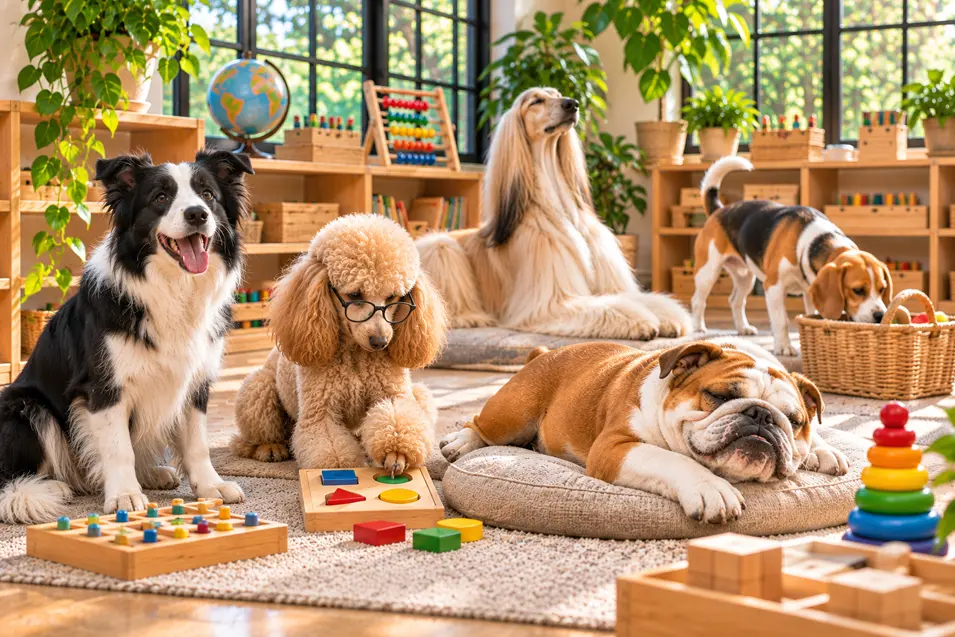
Ten dog breeds. One classroom. The same education. And ten very different ideas about what it means to be smart.
Imagine opening a Montessori school for dogs.
Not an obedience school. No whistles, no marching in circles, and no instructors shouting “Sit!” every thirty seconds.
We’re talking about a beautiful classroom with wooden puzzles, colourful learning materials, problem-solving activities, and plenty of opportunities for independent discovery.
Now imagine enrolling ten very different dog breeds.
Some arrive ready to learn. Some arrive ready to play. A few are more interested in their classmates than the curriculum.
And at least one is wondering why the classroom doesn’t have a red carpet.
By the end of the first day, we’d probably learn something interesting about dogs.
We might even learn something about ourselves.
Because being the smartest isn’t always the same as being the best at everything.
1. Border Collie — The Student Who Already Knows the Answers
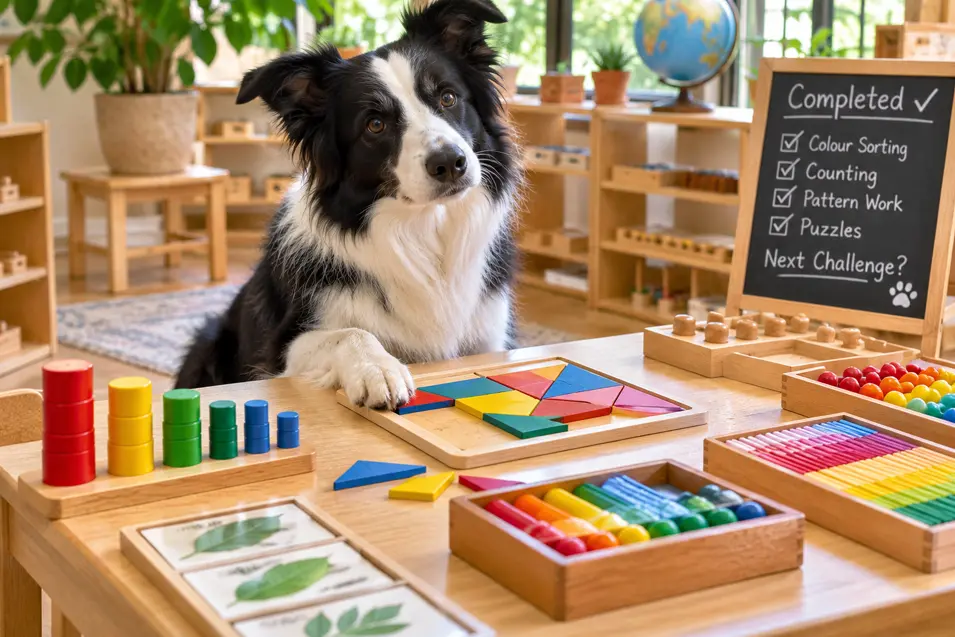
The Border Collie arrives five minutes early, studies the classroom, and immediately understands how everything works.
By morning break, every wooden puzzle has been completed, the sorting activities are finished, and the teacher is desperately searching for something more challenging.
By lunch, the Border Collie has started helping the other students.
Nobody is surprised.
Border Collies are famous for their extraordinary working intelligence, concentration, and ability to learn commands.
But here’s the question: if you’re naturally brilliant at the things school measures, does that make school easier?
Absolutely.
Does it mean you’re better at everything?
Not necessarily.
2. Poodle — The Student Who Wants to Know Why
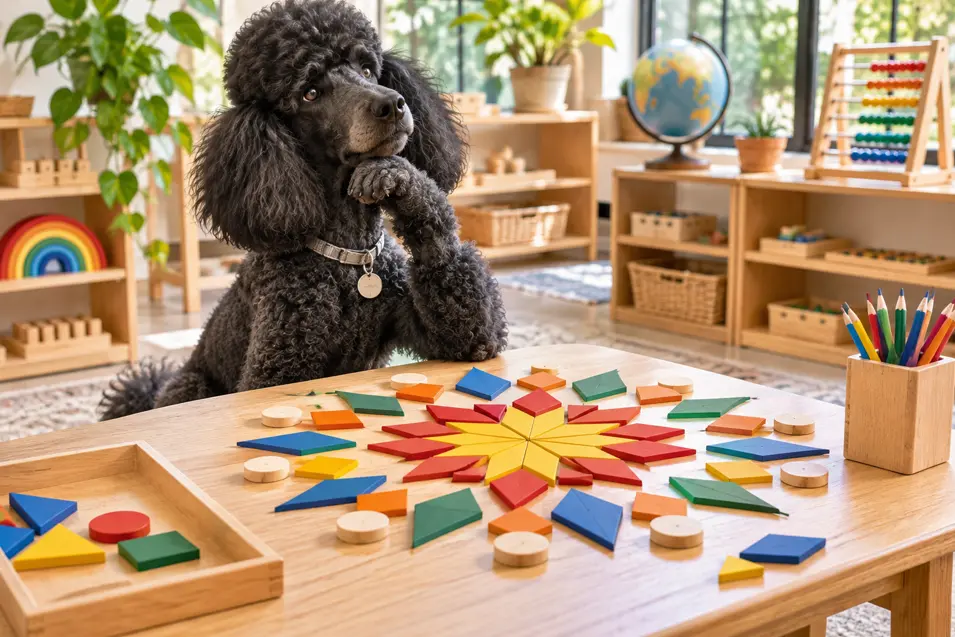
The Poodle finishes the assignment, checks the answer, and then examines whether there might be a better way to do it.
Why sort the blocks by colour when we could sort them by shape?
Why use three steps when two would work?
And why, exactly, are we putting these blocks back in the box when we’re just going to take them out again tomorrow?
The teacher appreciates the enthusiasm.
Mostly.
Poodles are highly trainable, quick learners, and remarkably adaptable.
But our Montessori Poodle isn’t content to memorize the answer.
It wants to understand the question.
3. German Shepherd — The Student Who Takes Everything Seriously
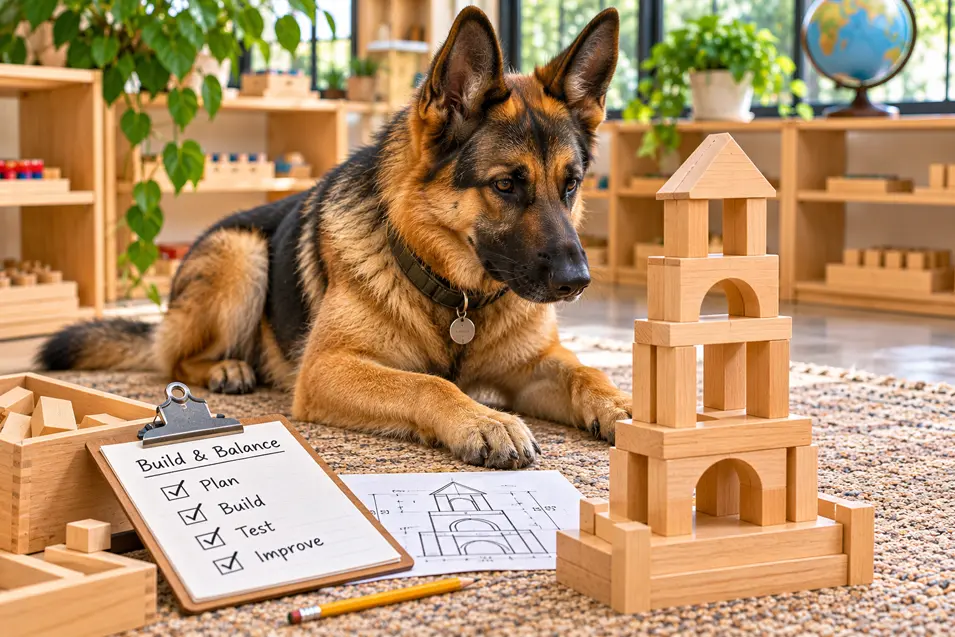
The German Shepherd arrives prepared.
It has inspected the classroom, checked the exits, and decided where everyone should sit.
When the teacher introduces a new activity, the German Shepherd listens carefully and completes it with impressive concentration.
When another student knocks over a basket of wooden blocks, the German Shepherd immediately investigates.
Nobody asked it to supervise the classroom.
That hasn’t stopped it.
This is a dog that thrives when it has a purpose. Give it a meaningful challenge, and it will put its whole heart into the job.
Although somebody should probably explain that recess isn’t a security assignment.
4. Doberman Pinscher — The Student Who Finishes Before You Explain
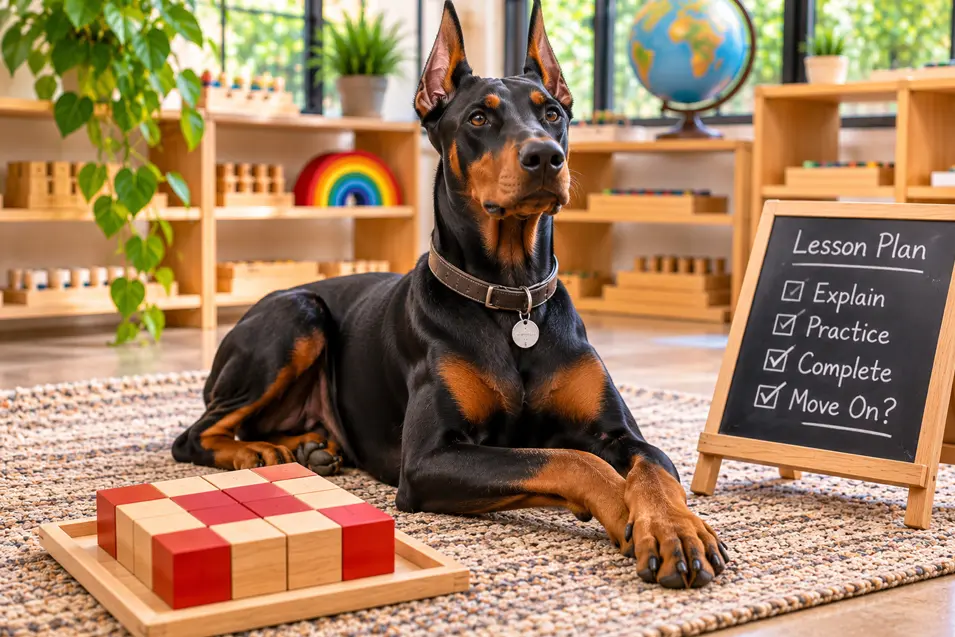
The teacher begins demonstrating a new puzzle.
The Doberman watches for approximately three seconds.
Then it completes the activity.
The teacher pauses.
The Doberman waits for the next challenge.
This could become a very long afternoon.
Dobermans combine intelligence, athleticism, and a strong willingness to engage with their people.
Our Montessori Doberman doesn’t necessarily want more homework.
It wants something worth doing.
Preferably something a little more exciting than arranging wooden circles.
5. Shetland Sheepdog — The Student Who Wants Everyone to Succeed
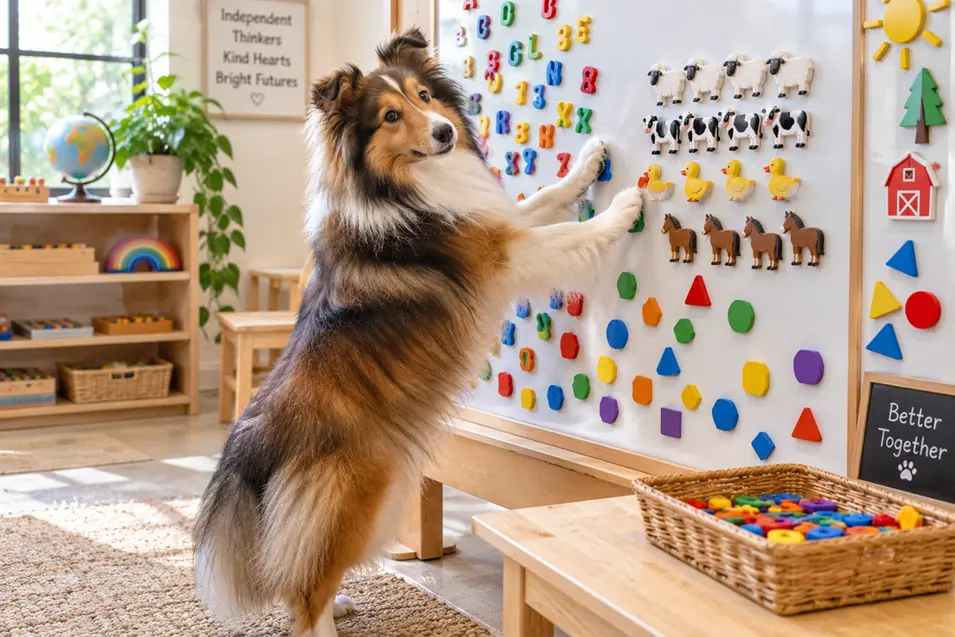
The Sheltie understands the lesson, completes the assignment, and notices that another student is struggling.
Naturally, it offers assistance.
Then it checks on the next student.
Then the next.
Soon, the Sheltie is helping organize the entire classroom.
Unfortunately, every time someone drops a block, the Sheltie announces it to everyone.
Loudly.
Shetland Sheepdogs are bright, responsive, and often wonderfully attentive to their surroundings.
Our Sheltie might not be the loudest personality in the classroom.
But it certainly knows what’s happening.
And it would appreciate it if everyone could please put their toys away properly.
6. Afghan Hound — The Student Who Has Other Priorities
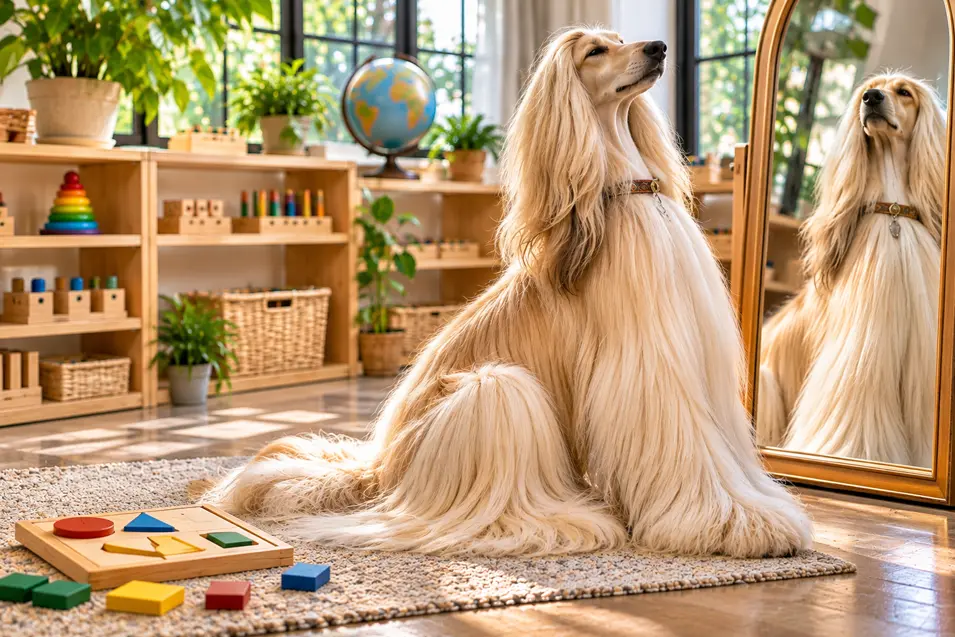
The Afghan Hound arrives looking magnificent.
Its coat is immaculate. Its posture is perfect. Every other student looks like they got dressed in the dark.
The teacher presents a wooden puzzle.
The Afghan studies it.
Then looks out the window.
Then carefully selects a more comfortable place to sit.
Forty-five minutes later, the puzzle remains untouched.
Has the Afghan failed?
Or has it simply decided that arranging wooden triangles isn’t how it wishes to spend its morning?
Afghan Hounds are famously independent. They were developed for demanding hunting work that required speed, agility, and decision-making, not constant instructions from a human standing nearby.
And here’s something worth remembering.
Put the Border Collie and the Afghan Hound on a fashion runway.
Suddenly, we’re measuring an entirely different set of talents.
The Afghan may not be the teacher’s favourite student.
But graduation photographs?
Nobody else stands a chance.
7. Basenji — The Student Who Doesn’t Believe in Rules
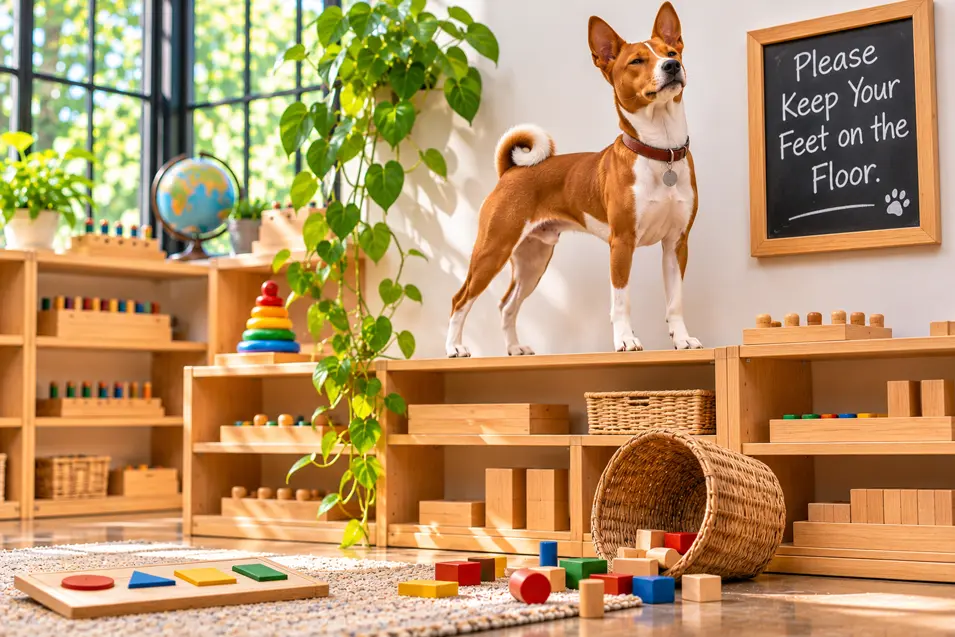
The Basenji listens to the instructions.
Considers them.
And chooses a completely different activity.
The teacher points toward the sorting blocks.
The Basenji heads for the climbing equipment.
The teacher calls it back.
The Basenji appears to be considering whether attendance is mandatory.
Basenjis are clever, curious, and famously independent dogs.
They were developed to work in ways that didn’t always involve waiting for detailed human directions.
So perhaps the Basenji isn’t failing to understand the classroom.
Perhaps it has a different understanding of how the classroom should work.
Either way, the teacher is going to need patience.
8. Bulldog — The Student Who Believes in Working Smarter, Not Harder
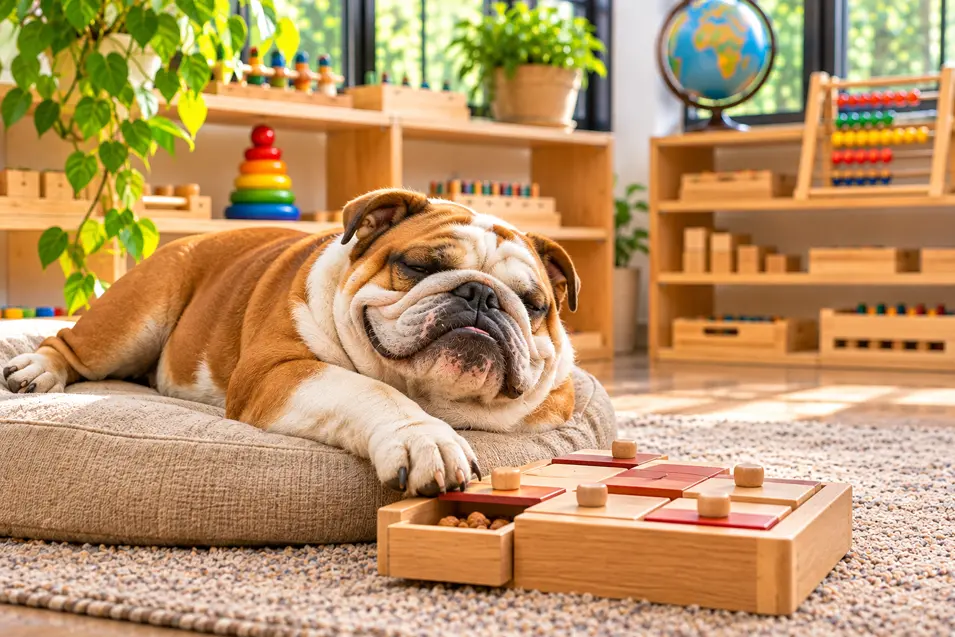
The Bulldog approaches the first activity.
It looks at the wooden blocks.
It looks at the basket.
It looks at the teacher.
Then it lies down.
Not because it can’t participate.
But because everyone else seems to be doing an excellent job of moving things around, and somebody should really supervise from a comfortable position.
Eventually, the teacher introduces a puzzle with a food reward.
Suddenly, the Bulldog discovers a renewed interest in education.
Motivation matters.
And perhaps our Bulldog has figured out something the other students haven’t.
Before working hard, make sure the reward is worth the effort.
9. Beagle — The Student Who Discovers the Hidden Curriculum
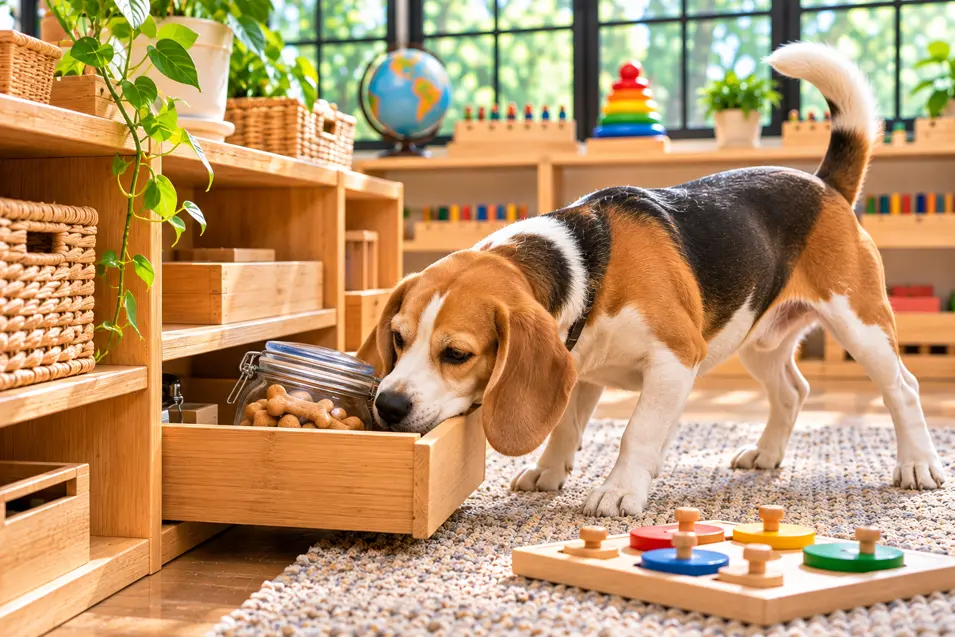
The Beagle is supposed to be matching shapes.
Instead, its nose has detected something fascinating.
Somebody has hidden treats in a cupboard.
Within minutes, the Beagle has located the cupboard, identified the shelf, and developed a plan to reach it.
Meanwhile, the teacher is still trying to explain the difference between a square and a rectangle.
According to the lesson plan, the Beagle is falling behind.
According to the Beagle, it has just solved the most important problem in the entire building.
Beagles possess extraordinary scenting abilities and were developed to follow trails with persistence and determination.
Perhaps the classroom is simply testing the wrong skills.
10. Chow Chow — The Student Who Prefers Independent Study
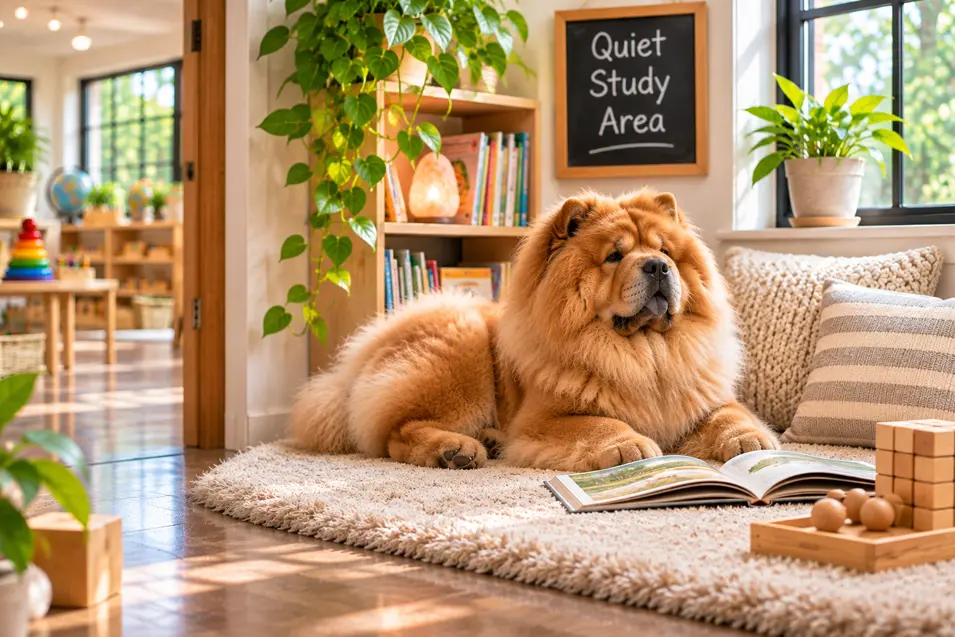
The Chow Chow arrives, surveys the classroom, and chooses a quiet corner.
It isn’t particularly interested in group activities.
It doesn’t feel the need to impress the teacher.
And it certainly isn’t going to compete with the Border Collie for the highest mark.
When offered a puzzle, it investigates on its own terms.
When invited to join the others, it considers the proposal carefully.
Then remains exactly where it is.
Chow Chows are known for their independent, sometimes reserved personalities.
Our Montessori Chow isn’t necessarily having difficulty learning.
It simply doesn’t believe every activity requires an audience.
And frankly, that’s a reasonable position.
So, Who Was Actually the Smartest Dog in the Classroom?
If we judge the students by how quickly they learn instructions, the Border Collie is probably going home with the highest marks.
But what if we change the test?
Ask the Beagle to locate something hidden by scent.
Ask the German Shepherd to perform a demanding working task.
Ask the Afghan Hound to navigate challenging terrain at speed.
Ask the Poodle to master a complicated new routine.
Suddenly, the results become more interesting.
Traditional dog intelligence rankings, including those popularized by psychologist Stanley Coren, often place considerable emphasis on working and obedience intelligence: how quickly dogs learn commands and how reliably they respond.
That’s useful information.
But it isn’t the whole story.
Dogs also possess different combinations of instinctive abilities, problem-solving skills, social awareness, memory, and independence.
A dog that doesn’t immediately obey a command isn’t necessarily incapable of understanding it.
Sometimes it simply has other priorities.
What Montessori Might Teach Us About Intelligence
Montessori education emphasizes exploration, independence, hands-on learning, and allowing students to develop at their own pace.
And that’s what makes our imaginary classroom so interesting.
We’re giving ten breeds the same opportunities, but they’re arriving with different instincts, motivations, and natural abilities.
Just like life.
Some individuals seem to understand everything effortlessly. Others take longer to discover what works for them.
Some excel academically. Others are extraordinary artists, athletes, problem-solvers, or independent thinkers.
And some have gifts that conventional tests barely recognize.
The point isn’t that everyone has the same abilities.
They don’t.
The point is that being exceptional at one thing doesn’t mean you’re exceptional at everything. And struggling with one thing doesn’t mean you have nothing exceptional to offer.
Our Border Collie deserves every bit of admiration it receives.
It’s an extraordinary dog.
But so is the Afghan Hound.
Just for entirely different reasons.
Graduation Day
At the end of the school year, the teacher announces the awards.
The Border Collie receives Outstanding Academic Achievement.
The Poodle receives Creative Problem-Solving.
The German Shepherd receives Leadership.
The Doberman receives Excellence in Practical Learning.
The Sheltie receives Most Helpful Classmate.
The Basenji receives Independent Thinking.
The Bulldog receives Work-Life Balance.
The Beagle receives Excellence in Investigative Research.
The Chow Chow receives Independent Study.
And the Afghan Hound?
Best Dressed. Unanimous decision.
Everyone graduates.
Because perhaps the greatest lesson from our imaginary Montessori school is that intelligence comes in different forms.
And sometimes the student who didn’t finish the wooden puzzle was busy being brilliant at something else.
Read More: Dog Intelligence, Learning, and Training
Every dog learns differently, and there’s plenty more to explore about canine intelligence, development, and education.
- The Smartest Dog Breeds You Can Own – Discover which breeds are considered the most intelligent and what makes them exceptional learners.
- The First Year of a Puppy’s Life – Follow the important developmental milestones that shape how puppies learn, explore, and interact with the world.
- The Benefits of Puppy Training – Learn how early training helps build confidence, encourage good behaviour, and strengthen the bond between dogs and their owners.