
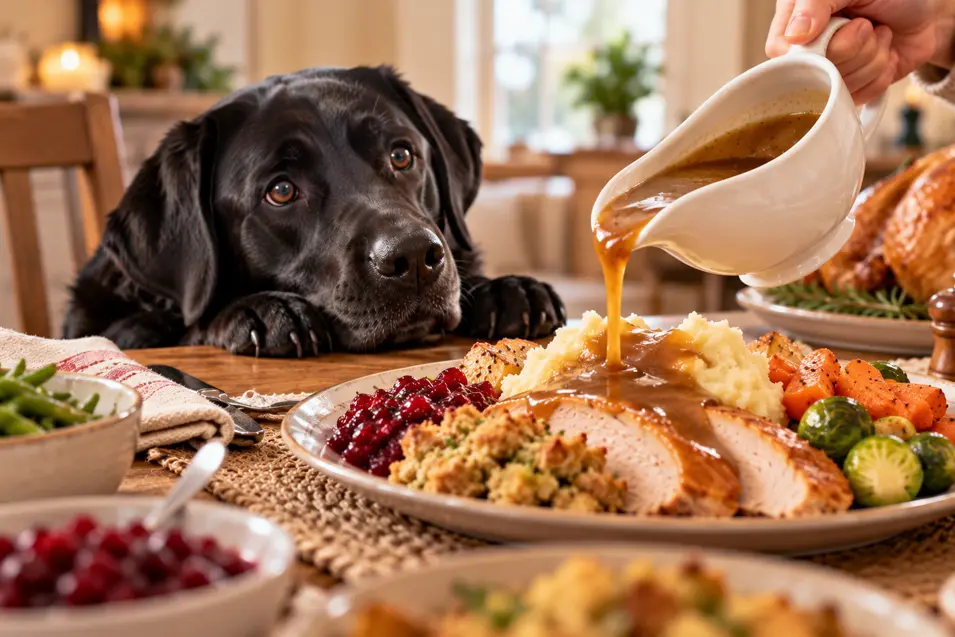
Gravy makes almost everything taste better. Whether it’s poured over roast beef, turkey, mashed potatoes, or a traditional Sunday dinner, it’s one of those comforting additions that can turn an ordinary meal into something special.
And if you have a dog sitting beside the dinner table, you’ve probably noticed that they seem just as interested in the gravy as everyone else.
But can dogs eat gravy?
The short answer is that most gravy made for humans isn’t recommended for dogs. While a small amount of plain, low-fat, unsalted gravy made without harmful ingredients may be safe for some dogs, traditional gravy often contains onions, garlic, excessive salt, and fat.
Some of these ingredients can cause digestive problems, while others are genuinely toxic to dogs.
Before you pour a spoonful of gravy over your dog’s dinner, here’s what you should know.
Why Can Gravy Be Bad for Dogs?
Gravy might seem harmless because it’s usually made from meat juices, broth, flour, and seasonings.
Unfortunately, those seasonings and other ingredients are often the problem.
1. Onions and Garlic
Onions and garlic are among the most concerning ingredients in traditional gravy.
Both belong to the Allium family and contain compounds that can damage a dog’s red blood cells, potentially leading to anemia.
They’re dangerous whether raw, cooked, dried, or powdered.
Many homemade gravy recipes use onions, garlic, onion powder, or garlic powder for flavour.
Commercial gravy mixes may contain these ingredients as well.
Gravy containing onions or garlic should never be intentionally fed to dogs.
2. Too Much Salt
Gravy is often heavily seasoned with salt, particularly when made using packaged mixes, stock cubes, or commercial broths.
Dogs need some sodium in their diets, but properly balanced dog food already provides the amount they require.
Extra salt offers no nutritional advantage and may be particularly problematic for dogs with heart disease, kidney disease, or other medical conditions.
Very large salt exposures can cause sodium poisoning.
3. High Fat Content
Traditional gravy often contains meat drippings, butter, and other fatty ingredients.
A little extra fat may cause vomiting or diarrhea, particularly in dogs with sensitive stomachs.
For susceptible dogs, a high-fat meal can also trigger pancreatitis.
Pancreatitis is a painful inflammation of the pancreas that may require veterinary treatment or hospitalization.
Dogs with a previous history of pancreatitis should generally avoid rich gravy altogether.
4. Additional Seasonings and Ingredients
Depending on the recipe, gravy may contain wine, cream, butter, mushrooms, herbs, or concentrated flavourings.
Not all of these ingredients are toxic, but some may cause digestive upset or introduce additional risks.
The safest approach is to check every ingredient rather than assuming gravy is harmless because it’s made from meat.
Can Dogs Eat Homemade Gravy?
Homemade gravy can be safer than commercially prepared gravy because you control the ingredients.
However, that doesn’t automatically make it dog-friendly.
If you’re making gravy using pan drippings from a seasoned roast, those drippings may contain salt, onions, garlic, and large amounts of fat.
Even if you don’t add seasonings directly to the gravy, they may already be present in the cooking juices.
For dogs, a safer homemade option would use plain, unseasoned meat broth with the fat removed and no onion, garlic, or added salt.
A small amount can be used occasionally to moisten food or make a meal more appealing.
Can Dogs Eat Turkey Gravy?
Turkey gravy is especially popular at Thanksgiving and Christmas.
Unfortunately, traditional turkey gravy is often made from roasting pan drippings, butter, flour, stock, and seasonings.
The turkey may have been cooked with onions, garlic, or other ingredients that shouldn’t be fed to dogs.
Turkey gravy can also be quite fatty.
Most traditional Thanksgiving and Christmas turkey gravy should be kept off your dog’s plate.
If you’d like to share a little turkey with your dog, plain, fully cooked, boneless, skinless turkey meat is a much better option.
Can Dogs Eat Chicken Gravy?
Chicken gravy presents many of the same concerns as turkey gravy.
Commercial chicken gravy frequently contains salt, onion powder, garlic powder, and flavour enhancers.
Homemade versions may be made from seasoned chicken drippings.
If the gravy is made from plain, unseasoned chicken broth without harmful ingredients, a small amount may be acceptable for some healthy dogs.
However, there’s no need to add gravy to a nutritionally balanced diet.
Can Dogs Eat Beef Gravy?
Beef gravy is another popular addition to roast dinners.
It may contain beef drippings, stock, butter, flour, onions, garlic, and other seasonings.
Commercial beef gravy can also be high in sodium.
A small amount of plain, low-fat, unsalted beef broth made without onion or garlic is generally a better alternative.
Be particularly careful with beef gravy served alongside heavily seasoned roasts.
Can Dogs Eat Store-Bought Gravy?
Most store-bought gravy products are not designed for dogs.
Packets, jars, cans, and ready-made gravies may contain:
- Onion powder
- Garlic powder
- Large amounts of sodium
- Concentrated meat flavourings
- Added fats
- Various seasonings
Always read the ingredient label.
Even if a product doesn’t contain an obviously toxic ingredient, its sodium and fat content may make it unsuitable for your dog.
It’s generally best to avoid feeding dogs store-bought gravy intended for humans.
Can Dogs Have Gravy Granules?
Gravy granules are particularly convenient for preparing a quick meal, but they’re usually not a good choice for dogs.
Many contain substantial amounts of salt, along with onion powder, garlic powder, and concentrated flavourings.
Because the ingredients are highly concentrated, it’s easy to underestimate what your dog may be consuming.
Avoid adding ordinary gravy granules to your dog’s food.
Can Dogs Eat Gravy Made for Dogs?
Yes, products specifically formulated for dogs can be a better option.
Dog-friendly gravies and food toppers are designed with canine dietary needs in mind.
However, not every product is appropriate for every dog.
Check the ingredients, calorie content, and feeding recommendations.
Dogs with food allergies, kidney disease, pancreatitis, or other health conditions may need to avoid certain products.
A dog-specific gravy should also be considered a treat or food topper unless the manufacturer identifies it as a complete and balanced food.
Can You Put Gravy on Dry Dog Food?
Some dogs become less interested in dry kibble as they age, while others are simply picky eaters.
Adding a little moisture can make dry food more appealing.
However, ordinary human gravy isn’t the best solution.
Instead, consider adding a small amount of warm water or plain, unsalted, low-fat broth made without onions or garlic.
You can also use a dog-friendly food topper.
If your dog suddenly loses interest in food, particularly if they normally have a healthy appetite, consult your veterinarian rather than simply trying to disguise the problem with gravy.
How to Make Simple Dog-Friendly Gravy
If you’d like to give your dog a special treat, making a simple gravy alternative at home is relatively easy.
Ingredients
- 1 cup plain, unsalted chicken or turkey broth, with no onion or garlic
- 1 teaspoon cornstarch
- 1 tablespoon cold water
Instructions
- Pour the broth into a small saucepan and warm it gently.
- Mix the cornstarch with the cold water until smooth.
- Stir the mixture into the warm broth.
- Heat gently while stirring until slightly thickened.
- Remove from the heat and allow it to cool completely before serving.
Use only broth made from ingredients that are safe for dogs. Many commercial broths contain onion or garlic, even when labelled low-sodium.
This simple recipe doesn’t need butter, salt, garlic, onions, or other seasonings.
Serve a small amount over your dog’s regular food as an occasional treat.
Refrigerate leftovers promptly and use within two to three days, or freeze individual portions for later.
How Much Gravy Can a Dog Have?
There isn’t one serving size that works for every dog.
The appropriate amount depends on your dog’s size, health, regular diet, and the ingredients in the gravy.
For a healthy dog, a small spoonful of appropriately prepared dog-friendly gravy may be enough to add flavour to a meal.
Start with a very small amount and watch for digestive upset.
As a general rule, treats and extras should make up no more than approximately 10% of your dog’s daily calorie intake.
Dogs with special dietary requirements should only receive food toppers approved by their veterinarian.
What Happens If My Dog Eats Gravy?
If your dog manages to lick a little gravy from a plate, don’t automatically assume something terrible will happen.
The level of concern depends on the ingredients, the amount consumed, your dog’s size, and their health.
A tiny lick of gravy without toxic ingredients is unlikely to cause serious problems in most healthy dogs.
However, eating a large amount of rich gravy may lead to vomiting, diarrhea, abdominal discomfort, or pancreatitis.
Gravy containing onions or garlic is more concerning because these ingredients can damage red blood cells. Symptoms may not appear immediately.
If you know or suspect that your dog ate gravy containing onions or garlic, contact your veterinarian or an animal poison control service promptly for advice. Don’t wait for symptoms.
Seek urgent veterinary attention if your dog develops repeated vomiting, severe abdominal pain, weakness, pale gums, collapse, or other concerning symptoms.
Do not induce vomiting unless instructed by a veterinary professional.
Healthier Alternatives to Gravy for Dogs
If your dog enjoys having something added to their dinner, there are several alternatives to traditional gravy.
Consider:
- Warm water mixed into dry kibble
- Plain, unsalted chicken or turkey broth without onion or garlic
- A small amount of plain pumpkin purée
- Dog-friendly gravy or food toppers
- A little of their regular wet dog food mixed with kibble
These options can add moisture and flavour without introducing the unnecessary salt, fat, and seasonings found in many human gravies.
The Bottom Line: Should Dogs Eat Gravy?
Most traditional gravy isn’t a good choice for dogs.
Although gravy itself isn’t automatically toxic, many recipes contain ingredients that can be harmful, including onions, garlic, excessive salt, and large amounts of fat.
This is especially true of gravy served at Thanksgiving, Christmas, and other holiday dinners.
A small amount of plain, low-fat, unsalted gravy prepared without dangerous ingredients may be suitable for some healthy dogs, but it’s not something they need.
If you want to make your dog’s dinner a little more special, a simple homemade dog-friendly gravy or a splash of safe, unsalted broth is a better option.
Your dog will probably be just as enthusiastic, and you’ll have greater peace of mind about what’s going into their bowl.
More Reading: Holiday Foods and Your Dog
Foods You Can Share With Your Dog on Thanksgiving
Wondering which Thanksgiving favourites are safe for your dog? Discover what you can share from the holiday table and which dishes are best avoided.
Christmas Foods Dogs Should Never Eat
From chocolate and fruitcake to turkey bones and rich holiday leftovers, learn which Christmas foods can be dangerous for dogs.
Preparing Your Dog for Christmas: A Complete Guide
Get ready for a safe and enjoyable Christmas with advice on holiday food, decorations, visitors, travel, and festive traditions.