Christmas is a wonderful time for family gatherings, festive meals, and delicious treats. Unfortunately, it’s also a time when curious dogs can get themselves into serious trouble.
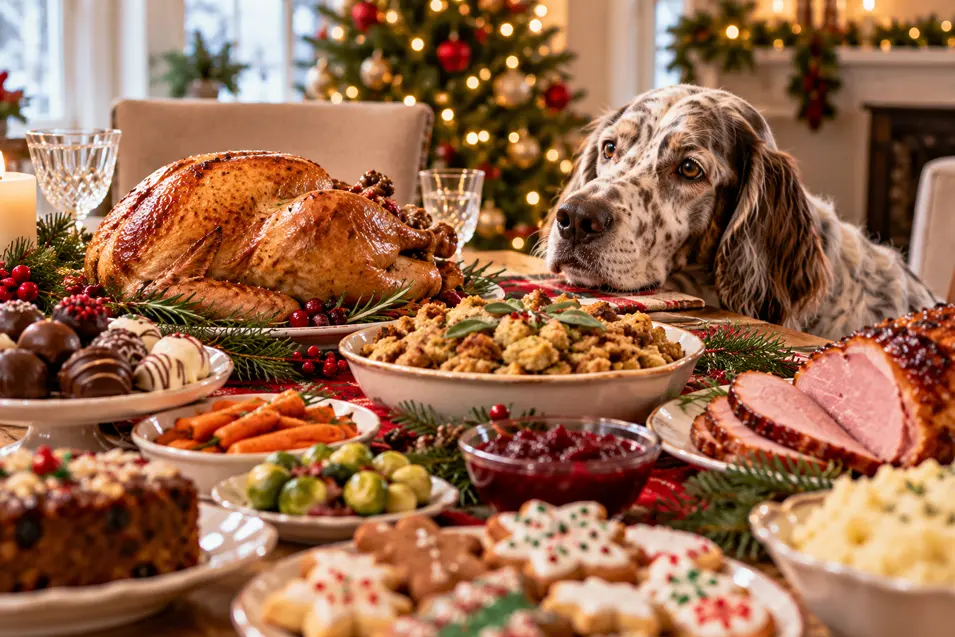
From the Christmas turkey and glazed ham to chocolate desserts, fruitcake, and bowls of holiday candy, there’s no shortage of tempting food around the house.
And if you have a dog who likes to investigate the dinner table, you already know how quickly an unattended plate can become an opportunity.
But not everything we enjoy at Christmas is safe for our four-legged family members.
Some traditional holiday foods are toxic to dogs, while others can cause choking, digestive problems, pancreatitis, or dangerous intestinal blockages.
Knowing which Christmas foods dogs should never eat can help prevent a holiday celebration from turning into an emergency visit to the veterinarian.
Here’s what every dog owner should know before the Christmas festivities begin.
1. Chocolate and Christmas Candy
Chocolate is one of the most common holiday hazards for dogs.
Chocolate Santas, boxed chocolates, truffles, chocolate-covered nuts, and Christmas baking can all contain theobromine and caffeine, substances that are toxic to dogs.
Dark chocolate and unsweetened baking chocolate are particularly dangerous because they contain higher concentrations of these compounds.
Symptoms of chocolate poisoning may include:
- Vomiting and diarrhea
- Restlessness and hyperactivity
- Increased heart rate
- Tremors
- Seizures
The severity depends on the type and amount of chocolate consumed and the dog’s body weight.
Keep all chocolate products out of your dog’s reach, including wrapped chocolates placed under the Christmas tree.
2. Grapes, Raisins, and Currants
Grapes, raisins, and currants can cause sudden kidney injury in dogs.
These ingredients are especially common in traditional Christmas desserts, including fruitcake, Christmas pudding, mince pies, and certain holiday cookies.
The dangerous amount is unpredictable. Some dogs develop severe kidney problems after eating relatively small quantities.
Because there is no reliably safe amount, any suspected ingestion should be treated seriously.
If your dog eats grapes, raisins, or currants, contact your veterinarian immediately, even if your dog appears perfectly healthy.
3. Christmas Fruitcake and Pudding
Traditional Christmas fruitcake and pudding can contain several ingredients that are unsafe for dogs.
Raisins, currants, alcohol, and sometimes chocolate make these desserts particularly concerning.
Even recipes without toxic ingredients are often extremely rich in sugar and fat.
Christmas pudding may also be served with brandy butter, rum sauce, or other alcohol-containing toppings.
Never share Christmas fruitcake or traditional Christmas pudding with your dog.
4. Onions, Garlic, Leeks, and Chives
Onions, garlic, leeks, and chives belong to the Allium family and can damage a dog’s red blood cells, potentially causing anemia.
These ingredients can be harmful whether they’re raw, cooked, dried, or powdered.
They’re also surprisingly common in Christmas meals.
You may find them in stuffing, gravy, roasted vegetables, casseroles, soups, and seasoned meat dishes.
Symptoms of poisoning can be delayed and may include weakness, pale gums, vomiting, rapid breathing, and dark urine.
Don’t assume a food is safe simply because the onion or garlic has been cooked.
5. Cooked Turkey and Chicken Bones
Christmas dinner often means turkey, chicken, or another roasted bird.
While plain, fully cooked, boneless turkey meat can be an occasional treat for many healthy dogs, cooked poultry bones are dangerous.
Cooking makes bones more brittle, increasing the risk of splintering.
Potential complications include choking, broken teeth, injuries to the digestive tract, and intestinal obstruction.
Bones from the Christmas dinner table should never be offered to dogs.
Dispose of the turkey carcass and leftover bones in a secure garbage container.
6. Christmas Ham and Fatty Meat
A small amount of plain, lean, fully cooked meat may be suitable for some dogs, but traditional Christmas ham is a different matter.
Ham is often heavily salted, cured, glazed, or seasoned.
Holiday hams may also contain sugary glazes, garlic, or other ingredients that dogs should avoid.
Fatty meat and rich leftovers can cause vomiting, diarrhea, and, in susceptible dogs, pancreatitis.
Pancreatitis is a painful inflammation of the pancreas that can require hospitalization.
Avoid giving your dog glazed ham, fatty trimmings, or heavily seasoned Christmas meat.
7. Stuffing and Gravy
Stuffing and gravy are Christmas dinner favourites, but they frequently contain ingredients that are unsuitable for dogs.
Traditional stuffing may include onions, garlic, butter, sausage, herbs, and large amounts of salt.
Gravy often contains meat drippings, fat, salt, onion powder, or garlic powder.
Even a relatively small serving can cause digestive upset, especially in dogs with sensitive stomachs.
Recipes containing onions or garlic present an additional poisoning risk.
Keep stuffing and gravy on your own plate rather than sharing them with your dog.
8. Macadamia Nuts
Macadamia nuts are toxic to dogs and can cause a distinctive poisoning syndrome.
They may appear in Christmas cookies, chocolates, nut mixes, and holiday gift baskets.
Symptoms can include weakness, particularly in the hind legs, vomiting, tremors, fever, and difficulty walking.
Signs may develop within several hours of ingestion.
Although many dogs recover with veterinary care, macadamia nut poisoning can be distressing and occasionally severe.
Keep macadamia nuts and foods containing them away from dogs.
9. Sugar-Free Sweets Containing Xylitol
Sugar-free Christmas candy, chewing gum, baked goods, and some other products may contain xylitol, also known as birch sugar.
Xylitol is extremely toxic to dogs.
It can trigger a rapid release of insulin, causing dangerously low blood sugar. Larger exposures can also cause serious liver injury.
Symptoms may include vomiting, weakness, loss of coordination, collapse, and seizures.
Some dogs develop serious complications before obvious symptoms appear.
If you suspect your dog has eaten xylitol, seek emergency veterinary care immediately.
10. Alcohol and Alcohol-Containing Desserts
Alcohol isn’t safe for dogs.
During Christmas, it can appear in more places than you might expect.
Examples include:
- Eggnog containing rum or brandy
- Christmas pudding
- Rum balls
- Brandy-soaked fruitcake
- Alcohol-filled chocolates
- Unattended beer, wine, and cocktails
Dogs are much smaller than humans and can develop alcohol poisoning after relatively modest exposures.
Symptoms can include vomiting, disorientation, difficulty walking, low body temperature, breathing problems, and seizures.
Keep alcoholic drinks and alcohol-containing foods completely out of your dog’s reach.
11. Raw Bread Dough and Unbaked Yeast Dough
Holiday baking often involves bread rolls, cinnamon buns, and homemade pastries.
Raw yeast dough presents a serious danger if swallowed.
Inside a dog’s warm stomach, the dough can continue expanding, potentially causing painful stomach distension.
Fermentation also produces alcohol, which can lead to alcohol poisoning.
This combination makes raw yeast dough a veterinary emergency.
Never allow your dog to eat raw yeast dough.
12. Christmas Cookies and Gingerbread
Christmas cookies aren’t all equally dangerous, but many contain ingredients that dogs shouldn’t eat.
Chocolate cookies, raisin cookies, and macadamia nut cookies are particularly concerning.
Gingerbread may contain nutmeg and other spices, while decorated cookies can include chocolate or sugar-free sweeteners.
Even plain sugar cookies and shortbread are usually high in butter and sugar.
A tiny piece of a plain cookie may not harm most healthy dogs, but Christmas baking is best reserved for people.
Choose treats specifically made for dogs instead of sharing holiday cookies.
13. Rich Cheese, Cream, and Dairy Desserts
Cheese boards, whipped cream, cheesecake, and creamy holiday desserts are common at Christmas gatherings.
While small amounts of certain plain dairy products aren’t necessarily toxic, many dogs have difficulty digesting lactose.
Rich dairy foods can cause vomiting, diarrhea, gas, and abdominal discomfort.
High-fat foods may also trigger pancreatitis in susceptible dogs.
Some cheese spreads and savoury dips contain onions, garlic, or other harmful ingredients.
Avoid sharing rich dairy desserts, heavily seasoned cheese spreads, and large amounts of cheese with your dog.
14. Nutmeg and Heavily Spiced Holiday Foods
Nutmeg is commonly used in eggnog, gingerbread, pumpkin desserts, and Christmas baking.
It contains myristicin, a compound that can cause poisoning when consumed in sufficiently large amounts.
Symptoms of significant nutmeg exposure may include disorientation, increased heart rate, tremors, and seizures.
The tiny amount of nutmeg in a small bite of baked food is less likely to cause serious poisoning, but concentrated amounts and large exposures are concerning.
Other heavily spiced holiday foods may also irritate a dog’s digestive system.
Keep containers of nutmeg and heavily spiced Christmas treats away from pets.
15. Corn Cobs and Other Food Scraps
Corn itself isn’t generally toxic to dogs when served plain and removed from the cob.
However, corn cobs can cause dangerous intestinal blockages if swallowed.
The same concern applies to certain fruit pits, skewers, and other food scraps that dogs may find in the garbage.
Holiday gatherings often produce overflowing bins filled with leftovers, wrappers, and discarded food.
Secure your kitchen garbage and never allow your dog to chew on corn cobs or discarded food scraps.
Christmas Food Safety Chart for Dogs
| Christmas Food | Main Danger |
|---|---|
| Chocolate | Theobromine and caffeine toxicity |
| Grapes, raisins, currants | Acute kidney injury |
| Fruitcake and Christmas pudding | Raisins, currants, alcohol |
| Onions and garlic | Red blood cell damage |
| Cooked poultry bones | Choking, splintering, obstruction |
| Glazed ham and fatty meat | Excess salt, fat, pancreatitis risk |
| Stuffing and gravy | Onion, garlic, fat, salt |
| Macadamia nuts | Neurological and muscular symptoms |
| Xylitol-containing sweets | Low blood sugar, liver injury |
| Alcohol | Alcohol poisoning |
| Raw yeast dough | Stomach expansion, alcohol production |
| Christmas cookies | Potential toxic ingredients, excess fat |
| Rich dairy desserts | Digestive upset, pancreatitis risk |
| Large amounts of nutmeg | Myristicin toxicity |
| Corn cobs | Intestinal obstruction |
What Christmas Foods Can Dogs Safely Eat?
Fortunately, there are a few Christmas dinner ingredients that many dogs can enjoy in small quantities.
The important thing is to keep them plain, properly prepared, and free of dangerous seasonings.
Some options include:
- Plain cooked turkey: Boneless, skinless, and without gravy or seasoning.
- Cooked carrots: Plain, without butter, garlic, or sugary glaze.
- Green beans: Plain and cooked, without onion or seasoning.
- Plain pumpkin: Cooked or canned pumpkin purée without spices or added sugar.
- Sweet potatoes: Fully cooked and served plain, without butter, marshmallows, or seasoning.
- Apple slices: Fresh, with the core and seeds removed.
Even safe foods should be offered in moderation. Too many extra treats can upset your dog’s stomach, and dogs with medical conditions may require special dietary restrictions.
What to Do If Your Dog Eats Something Dangerous at Christmas
If your dog eats a potentially toxic Christmas food, the most important thing is to act quickly.
First, identify what your dog ate and approximately how much was consumed.
Save any packaging or ingredient information that may help your veterinarian assess the situation.
Contact your veterinarian or an emergency veterinary clinic immediately if the food contains chocolate, raisins, currants, xylitol, macadamia nuts, onions, garlic, or alcohol.
Raw yeast dough, swallowed bones, corn cobs, and other potential obstructions also require prompt veterinary advice.
Don’t wait for symptoms to develop before seeking help.
Never induce vomiting or administer home remedies unless specifically instructed by a veterinarian or animal poison control professional.
For poison-related emergencies, you can also contact:
- ASPCA Animal Poison Control Center: 888-426-4435
- Pet Poison Helpline: 855-764-7661
Consultation fees may apply.
How to Keep Your Dog Safe During Christmas Dinner
Preventing holiday food emergencies is much easier than dealing with them afterward.
A few simple precautions can make Christmas safer for everyone.
Keep serving platters and desserts away from the edges of tables and countertops. Remind guests, especially children, not to feed your dog scraps without permission.
Store chocolate, candy, and edible gifts somewhere your dog cannot access them.
Clear plates promptly after Christmas dinner, and secure garbage bags containing bones, food wrappers, and leftovers.
If your dog is particularly determined to steal food, consider giving them a comfortable space away from the busiest areas while meals are being prepared and served.
You can also offer a dog-safe chew or a food puzzle filled with their regular food to keep them occupied.
A Safe Christmas Is a Happy Christmas
Christmas should be a time for making memories with the people and pets we love, not worrying about an unexpected veterinary emergency.
Although it’s tempting to share a little of everything from the holiday table, many traditional Christmas foods simply aren’t suitable for dogs.
Chocolate, raisins, xylitol, alcohol, and certain other ingredients can cause serious poisoning, while fatty leftovers, cooked bones, and discarded food scraps create additional risks.
The good news is that your dog doesn’t need Christmas pudding, chocolate truffles, or a plate of stuffing to enjoy the holidays.
A little plain turkey, a dog-friendly treat, and the chance to spend time with their favourite people are more than enough.
The best Christmas gift you can give your dog is a safe, healthy, and happy holiday.