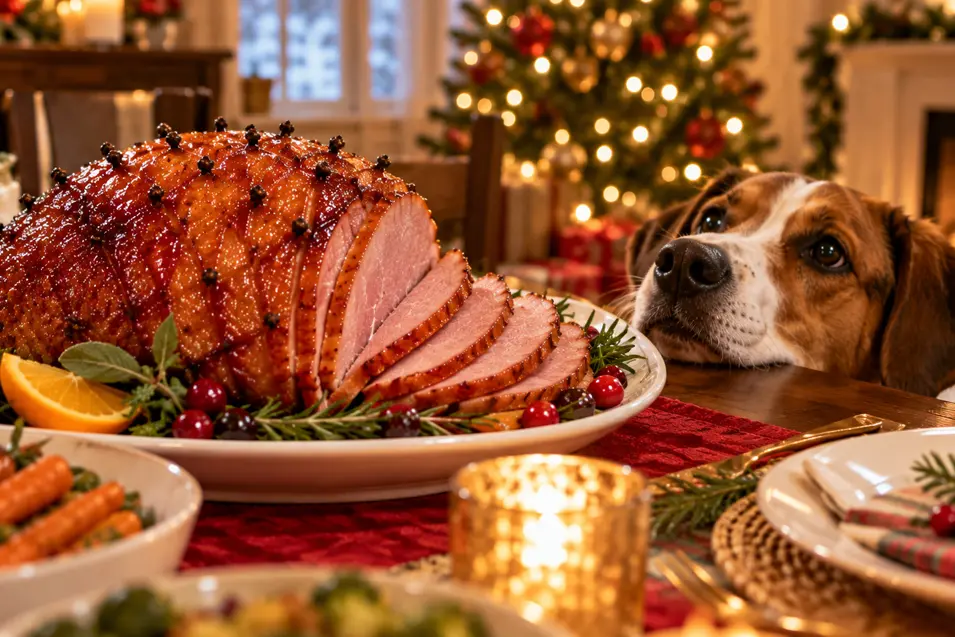
Christmas dinner is one of the most anticipated meals of the year, and for many families, a beautifully glazed ham is the centrepiece of the holiday table. Unfortunately, it’s also one of those foods that can attract a great deal of attention from the family dog.
Whether your Christmas ham is covered in honey, brown sugar, maple syrup, or a traditional mustard glaze, there’s a good chance your dog will be sitting nearby, hoping someone accidentally drops a piece.
But can dogs eat Christmas ham? Is a little slice harmless, or should you keep it off your dog’s holiday menu?
The answer depends on how the ham is prepared, how much your dog eats, and whether it contains potentially harmful ingredients.
The short answer: Dogs can eat a small amount of plain, thoroughly cooked, boneless pork, but traditional Christmas ham is not recommended. Most holiday hams are heavily salted, relatively fatty, and covered in glazes or seasonings that may cause digestive problems or contain ingredients that are toxic to dogs.
Here’s what every dog owner should know before sharing Christmas dinner with their four-legged family members.
Why Christmas Ham Isn’t a Good Choice for Dogs
Ham is pork, and pork itself isn’t inherently toxic to dogs. In fact, properly cooked, unseasoned pork can be a source of protein.
The problem is that Christmas ham is rarely just plain pork.
Most holiday hams are cured, smoked, salted, glazed, or seasoned to create their distinctive flavour. While these preparations make ham delicious for humans, they also introduce ingredients that can be problematic for dogs.
The three biggest concerns are sodium, fat, and added seasonings.
A tiny piece of ham may not cause any problems for a healthy dog, but that doesn’t make it a suitable treat. Dogs with certain health conditions may be particularly sensitive to its high fat or salt content.
Christmas Ham Contains a Lot of Salt
One of the main concerns with feeding ham to dogs is its sodium content.
Ham is commonly preserved through curing, which involves adding substantial amounts of salt. Even after cooking, the finished product can contain far more sodium than a dog needs.
Excessive sodium intake can cause increased thirst, vomiting, and diarrhea. In severe cases, particularly after consuming large amounts of salty food, dogs may develop sodium poisoning.
Symptoms of serious sodium poisoning can include:
- Excessive thirst
- Vomiting or diarrhea
- Weakness or lethargy
- Poor coordination
- Tremors
- Seizures
Dogs with heart disease, kidney problems, or conditions requiring sodium restriction may be especially vulnerable to the effects of salty foods.
A small accidental bite of Christmas ham is unlikely to cause sodium poisoning in an otherwise healthy dog, but deliberately feeding salty meat isn’t a good idea.
Fresh water should always be available, and suspected excessive salt consumption warrants veterinary advice.
The Fat in Christmas Ham Can Cause Digestive Problems
Christmas ham often contains significant amounts of fat, particularly around the edges and beneath the skin.
While dogs need some fat in their diets, large amounts of rich, fatty food can cause gastrointestinal upset.
After eating fatty ham, some dogs may experience vomiting, diarrhea, abdominal discomfort, or loss of appetite.
A more serious concern is pancreatitis, an inflammation of the pancreas that can sometimes be triggered by eating a rich, high-fat meal.
Pancreatitis can be extremely painful and, in severe cases, life-threatening.
Symptoms may include:
- Repeated vomiting
- Diarrhea
- Loss of appetite
- Abdominal pain
- Lethargy
- A hunched posture or reluctance to move
Not every dog that eats fatty ham will develop pancreatitis. However, dogs with a history of pancreatitis, obesity, or certain metabolic conditions may face greater risks.
The fatty trimmings from a Christmas ham are particularly unsuitable for dogs and should always be discarded safely.
What About Honey-Glazed Christmas Ham?
Honey-glazed ham is a Christmas favourite, but the sweet coating adds another reason to keep it away from your dog.
Many holiday glazes contain combinations of honey, brown sugar, maple syrup, mustard, fruit juice, and spices.
Although small amounts of ordinary honey or sugar aren’t generally toxic to healthy dogs, these ingredients add unnecessary calories and can contribute to digestive upset.
Some commercial glazes or sugar-free products may contain xylitol, also called birch sugar, which is extremely toxic to dogs. Xylitol can cause a dangerous drop in blood sugar and may lead to liver injury.
Other glaze ingredients can also be concerning.
Garlic and onion, including powdered forms, are toxic to dogs and can damage their red blood cells. Some spice blends may contain these ingredients even when they aren’t obvious from the name.
A glaze containing mustard, cloves, or other strong seasonings may also irritate a dog’s digestive system, depending on the ingredients and amount consumed.
The safest approach is to avoid giving dogs glazed ham altogether.
Can Dogs Eat Smoked Ham?
Smoked ham presents many of the same concerns as other types of Christmas ham.
Smoking doesn’t automatically make pork toxic to dogs, but smoked ham is frequently cured with substantial amounts of salt and may contain additional seasonings.
Some smoked products are also relatively fatty.
Whether the ham is smoked, baked, spiral-cut, or slow-cooked, the important factors are its salt content, fat content, and added ingredients.
Smoked Christmas ham should not be considered a healthy treat for dogs.
Can Dogs Eat Christmas Ham Bones?
No. Never give your dog a cooked Christmas ham bone.
This is one of the most important holiday food safety rules.
Cooked bones can become brittle and may splinter when chewed. Sharp fragments can cause serious injuries to a dog’s mouth, throat, stomach, or intestines.
Ham bones can also create choking hazards or become lodged in the digestive tract, potentially causing an obstruction.
Possible complications include:
- Choking
- Broken teeth
- Cuts inside the mouth
- Injury or perforation of the digestive tract
- Intestinal blockage
- Severe constipation
Even a large ham bone that appears too big to swallow can break into smaller pieces.
If your dog swallows a ham bone or pieces of one, contact your veterinarian promptly. Do not induce vomiting unless specifically instructed by a veterinarian, as sharp fragments could cause additional injury.
Keep leftover bones securely out of reach, including those placed in kitchen garbage bins.
What If My Dog Accidentally Eats Christmas Ham?
If your dog manages to steal a small piece of Christmas ham, there’s usually no reason to panic.
For many healthy dogs, a tiny amount of cooked ham will cause no noticeable problems.
However, the appropriate response depends on several factors, including your dog’s size, the amount eaten, the ingredients involved, and any existing medical conditions.
If Your Dog Eats a Small Piece
If your dog eats a small amount of ordinary cooked ham without bones or toxic seasonings, monitor them for signs of digestive upset.
Make sure fresh water is available and avoid offering additional rich treats.
Contact your veterinarian if symptoms develop or if your dog has a medical condition that makes fatty or salty foods particularly concerning.
If Your Dog Eats a Large Amount
A dog that consumes a substantial portion of Christmas ham may be at risk of gastrointestinal upset, pancreatitis, or excessive sodium intake.
Contact your veterinarian for advice rather than waiting for symptoms to appear.
This is especially important for small dogs, which can consume a large amount relative to their body weight surprisingly quickly.
If the Ham Contains Toxic Ingredients
If your dog eats ham containing xylitol, garlic, onion, or another potentially toxic ingredient, seek veterinary advice immediately.
Don’t wait for visible symptoms. Some toxic effects can develop hours or even days after ingestion.
If Your Dog Eats a Ham Bone
Contact your veterinarian promptly, even if your dog initially appears normal.
Bone-related complications aren’t always immediately obvious.
Can Puppies Eat Christmas Ham?
Puppies should not be given Christmas ham.
Their digestive systems are still developing, and rich, salty foods may be more likely to cause stomach upset.
Puppies are also smaller than adult dogs, meaning even a relatively modest amount of ham can represent a significant portion of their daily food intake.
Christmas is already an exciting time for puppies, with unfamiliar visitors, decorations, presents, and changes to their normal routines.
There’s no reason to add digestive problems to the festivities.
Stick with appropriate puppy food and treats designed for their age and size.
What About Senior Dogs?
Older dogs may be more sensitive to the ingredients in Christmas ham, particularly if they have underlying health problems.
Kidney disease, heart conditions, pancreatitis, and other medical concerns can make high-sodium or high-fat foods especially unsuitable.
Some senior dogs also have more sensitive digestive systems.
Even if your older dog has enjoyed the occasional piece of ham in previous years, that doesn’t necessarily mean it’s a good idea today.
If your senior dog follows a prescription diet or has dietary restrictions, Christmas dinner shouldn’t become an exception without veterinary approval.
Healthier Christmas Dinner Alternatives for Dogs
Fortunately, your dog doesn’t have to miss out on Christmas dinner entirely.
There are several safer foods you can share in small portions, provided they’re prepared appropriately and don’t conflict with your dog’s regular diet.
Plain cooked turkey: A small piece of skinless, boneless turkey without seasoning or gravy can be a suitable occasional treat.
Plain cooked chicken: Boneless, skinless chicken prepared without salt, garlic, onion, or sauces is another option.
Cooked carrots: Plain cooked carrots are a simple, dog-friendly addition to a holiday meal.
Green beans: Unseasoned green beans can be offered in small amounts, provided they aren’t cooked with butter, bacon, or onion.
Plain pumpkin: A little cooked, unseasoned pumpkin or pure pumpkin purée can be a suitable treat. Avoid pumpkin pie filling, which contains added ingredients.
Sweet potatoes: Small portions of thoroughly cooked, plain sweet potato are another option.
Remember that treats and extras should generally make up no more than about 10% of a dog’s daily calorie intake.
Dogs with medical conditions or special dietary needs may require stricter limits.
The best Christmas treat is one that doesn’t result in an emergency trip to the veterinarian.
How to Keep Your Dog Away From Christmas Ham
Dogs have an extraordinary ability to identify unattended food, and a fragrant Christmas ham can be particularly tempting.
A little preparation can prevent an unfortunate holiday incident.
Keep the ham away from the edge of countertops and dining tables. Large dogs may be able to reach food that appears safely out of reach.
Ask guests not to feed table scraps, particularly children who may not understand why certain foods are unsuitable for pets.
Dispose of fatty trimmings, bones, and leftover glaze in a secure garbage container.
If your dog is especially persistent around food, consider keeping them in another comfortable area of the house while Christmas dinner is being prepared and served.
You can also provide a food puzzle or appropriate chew to keep them occupied.
And remember that dogs are often excellent at recruiting sympathetic relatives into sharing forbidden treats.
A quick reminder to guests before dinner can prevent problems later.
Frequently Asked Questions About Dogs and Christmas Ham
Can dogs eat a little bit of Christmas ham?
A tiny piece of plain, cooked, boneless ham is unlikely to harm most healthy dogs. However, because Christmas ham is typically salty, fatty, and sometimes glazed or seasoned, it’s better to choose a healthier treat.
Is Christmas ham toxic to dogs?
Ham itself isn’t inherently toxic, but its high salt and fat content can cause problems. Certain added ingredients, particularly xylitol, garlic, and onion, can be toxic.
Can dogs eat ham fat?
No. Ham fat is particularly rich and may cause vomiting, diarrhea, or pancreatitis. Avoid feeding dogs fatty trimmings.
Can dogs eat leftover Christmas ham?
Leftover Christmas ham carries the same concerns as freshly served ham. Refrigeration or reheating doesn’t remove the excess sodium, fat, or potentially harmful seasonings.
Can dogs eat ham bones from Christmas dinner?
No. Cooked ham bones can splinter, cause choking, damage the digestive tract, or create intestinal obstructions. They should never be offered as dog chews.
What should I do if my dog eats an entire Christmas ham?
Contact your veterinarian or an emergency veterinary clinic promptly. The amount of fat and salt consumed may be substantial, and any swallowed bones or toxic glaze ingredients can create additional risks.
The Bottom Line: Keep Christmas Ham Off Your Dog’s Menu
Christmas ham might be one of the highlights of your holiday dinner, but it isn’t a good choice for your dog.
The combination of salt, fat, sugary glazes, and potentially harmful seasonings makes traditional Christmas ham an unnecessary risk. Cooked ham bones are especially dangerous and should never be given to dogs.
If your dog accidentally steals a tiny piece, they may be perfectly fine. But intentionally sharing slices of Christmas ham, fatty leftovers, or glazed portions isn’t recommended.
Instead, set aside a little plain cooked turkey, chicken, or another dog-safe treat so your four-legged family member can enjoy something special.
After all, Christmas should be remembered for family, good food, and happy memories — not for discovering that your dog managed to eat half the holiday ham while everyone was opening presents.
More Reading: Holiday Food Safety for Dogs
Can I Give My Dog Turkey Bones? – Before sharing leftovers from your holiday dinner, learn why turkey bones can be dangerous for dogs and what every pet owner should know.
How to Stop Your Dog From Stealing Food – Is your dog always looking for an opportunity to grab something from the table? Discover practical ways to discourage food stealing and keep holiday meals out of reach.
Can Dogs Eat Turkey? Raw, Cooked, and Turkey Bones Explained – Turkey is another Christmas dinner favourite, but not every part is safe for dogs. Find out what you can share, what to avoid, and how to serve turkey safely.