
Christmas morning is full of little traditions. There are presents under the tree, stockings hanging by the fireplace, wrapping paper scattered across the floor, and at least one family member who has been awake since 5 a.m. wondering when everyone else plans to get up.
And then there’s the dog.
Your dog may not understand Christmas, but they certainly understand excitement, interesting smells, and the possibility that something wonderful is happening without their involvement.
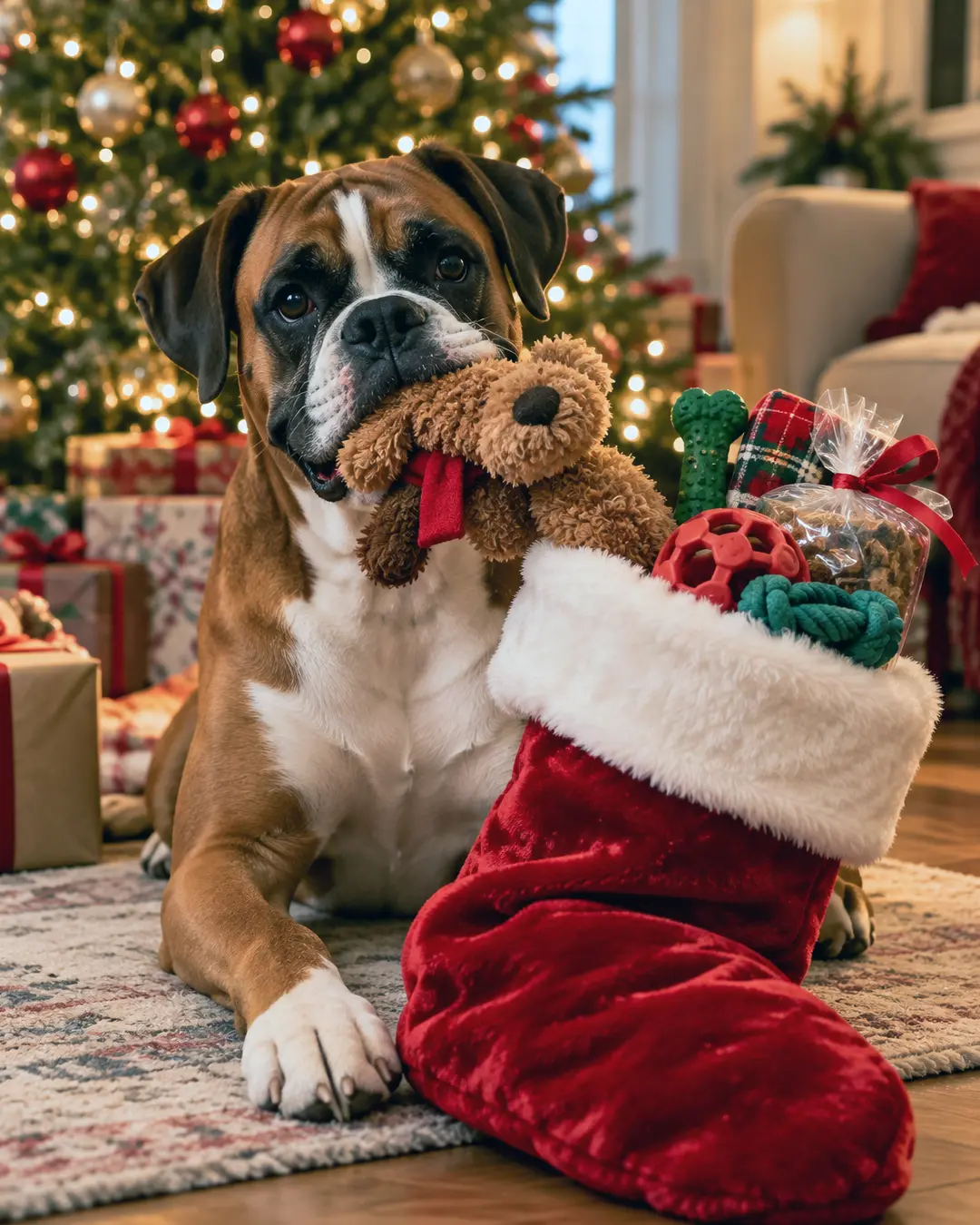
Giving your dog a Christmas stocking is a fun way to include them in the celebrations. It doesn’t need to be expensive, elaborate, or stuffed with enough toys to supply a small pet store. A handful of thoughtful gifts can make Christmas morning just as entertaining for your four-legged family member.
The trick is knowing what to put inside, what to leave out, and how to choose gifts that your dog will actually enjoy.
Why Your Dog Deserves a Christmas Stocking
Dogs don’t spend December counting down the days until Christmas. They aren’t making wish lists, checking delivery dates, or wondering whether Santa remembered their favorite brand of treats.
But dogs are remarkably good at picking up on the excitement around them.
They notice when routines change, when visitors arrive, and when the living room suddenly fills with colorful packages. Giving your dog a stocking creates an opportunity to participate in the family celebration rather than simply watching everyone else open presents.
It can also become a lovely annual tradition.
Some families hang a small stocking beside the children’s stockings. Others place one near the Christmas tree or bring it out on Christmas morning. You might even discover that your dog begins recognizing the stocking after a few years, particularly if it always contains something delicious.
Of course, your dog doesn’t need a stocking to feel loved. But if you’re already celebrating Christmas with the family, why not include the one member who never complains about the decorations?
The Best Treats for a Dog’s Christmas Stocking
If your dog could write a Christmas list, there’s a good chance treats would occupy the first five positions.
Treats are among the easiest stocking stuffers because they’re relatively inexpensive, come in countless varieties, and can be selected to suit your dog’s size and dietary needs.
Dog biscuits: Small, crunchy biscuits are a traditional favorite. Look for products made specifically for dogs, with clearly labeled ingredients and appropriate portion sizes.
Freeze-dried treats: Single-ingredient treats made from chicken, beef, or other proteins can be a good choice for dogs that prefer something particularly flavorful. Check the label for added ingredients and dietary suitability.
Soft training treats: These are especially useful for puppies, senior dogs, and dogs that enjoy training games. Their small size makes them ideal for rewarding good behavior without handing out enormous snacks.
Dental treats: Some dental chews are designed to help reduce plaque and tartar. Choose a product appropriate for your dog’s size, and consider products carrying the Veterinary Oral Health Council (VOHC) seal.
Special holiday dog treats: Pet stores often sell Christmas-themed biscuits shaped like trees, snowmen, and gingerbread people. They’re festive without requiring your dog to eat actual gingerbread or human Christmas cookies.
Remember that treats should generally account for no more than 10% of your dog’s daily calories. Christmas is an occasion for a little indulgence, not an excuse to empty an entire bag of biscuits before breakfast.
If your dog has allergies, a sensitive stomach, or a prescription diet, stick with treats you already know are suitable or ask your veterinarian before introducing something new.
Small Toys That Fit Perfectly Inside
A Christmas stocking is an excellent place for a new toy, especially if you choose something your dog hasn’t seen before.
You don’t need to buy the biggest, loudest, or most expensive toy on the shelf. Sometimes a simple rubber ball is more exciting than an elaborate gadget with seventeen different features.
Here are a few good possibilities.
Durable rubber balls: Ideal for dogs that love chasing and retrieving. Make sure the ball is large enough that it cannot become lodged in your dog’s throat.
Small plush toys: A soft stuffed animal can be a wonderful gift for dogs that enjoy carrying toys around or curling up with them. However, plush toys may not be appropriate for dogs that immediately tear them apart.
Squeaky toys: Some dogs absolutely love squeakers. Others are completely indifferent. If your dog enjoys them, a new squeaky toy can provide plenty of Christmas morning entertainment.
Treat-dispensing toys: These combine food and play, encouraging dogs to work for their rewards. They can be particularly useful when the holiday excitement begins to settle down.
Small tug toys: A sturdy tug toy can turn into a fun game with family members, provided it is suitable for your dog’s size and playing style.
The important thing is to choose toys based on your particular dog rather than simply buying whatever looks cute in the Christmas display.
A toy that’s perfect for a gentle little companion may last approximately four seconds with an enthusiastic power chewer.
Always supervise play with new toys, especially those containing squeakers, stuffing, ropes, or detachable parts.
Practical Gifts Your Dog Will Actually Use
Not every stocking stuffer needs to be edible or squeaky.
A few practical items can make excellent Christmas gifts, particularly when they’re things your dog needs anyway.
A new collar: Christmas is a good opportunity to replace a worn collar or choose something in a fresh color. Make sure it fits properly and doesn’t interfere with your dog’s comfort.
An updated identification tag: Not particularly exciting from your dog’s perspective, but certainly useful. Check that the contact information is current.
A festive bandana: A lightweight Christmas bandana can make your dog part of the holiday photos without requiring an elaborate costume. Remove it when your dog is unsupervised.
A grooming brush: For dogs that enjoy being brushed, a comfortable grooming tool can be a practical addition.
A small paw towel: Useful for wiping muddy or snowy paws after winter walks.
A portable water bowl: A collapsible bowl is handy for hikes, road trips, and visits to friends or relatives.
There’s nothing wrong with slipping a practical gift into your dog’s stocking. After all, plenty of humans receive socks for Christmas, and somehow civilization continues.
Homemade Dog Stocking Stuffers
One of the nicest things about Christmas stockings is that they don’t have to involve a shopping spree.
Homemade gifts can be inexpensive, personal, and just as enjoyable for your dog.
Homemade Dog Biscuits
If you enjoy baking, consider preparing a batch of simple dog biscuits using ingredients that are safe for your pet.
Plain pumpkin purée, certain dog-safe nut butters, and oat flour are common ingredients in homemade dog treats.
Always check ingredient labels carefully. Some peanut butter products contain xylitol, also called birch sugar, which is extremely toxic to dogs.
Avoid chocolate, raisins, macadamia nuts, nutmeg, and other ingredients that may be harmful to pets.
Homemade treats should be stored appropriately and used within a safe period, particularly when they contain ingredients that spoil easily.
A Homemade Snuffle Toy
A snuffle toy encourages dogs to use their noses to locate small treats hidden among strips of fabric.
You can purchase one or make a simple version using suitable fleece material.
However, homemade enrichment toys should only be used under supervision, especially if your dog likes chewing or swallowing fabric.
A Personalized Gift
A new blanket, a favorite toy in a different color, or even a handmade stocking with your dog’s name can become part of your annual Christmas tradition.
Your dog probably won’t appreciate the embroidery, but you will.
A Christmas Morning Treasure Hunt
Not every stocking gift needs to be a physical object.
You can place a small card in the stocking promising a Christmas morning treat hunt around the living room.
Hide a few familiar treats in safe, accessible locations and let your dog use their nose to find them.
It’s inexpensive, entertaining, and provides mental stimulation during a busy holiday morning.
Stocking Ideas for Puppies, Senior Dogs, and Small Dogs
Not every dog needs the same Christmas stocking.
Age, size, health, and personality should all influence what you choose.
Christmas Stockings for Puppies
Puppies are naturally curious, which makes Christmas morning exciting but potentially hazardous.
Choose soft, appropriately sized toys, puppy-safe treats, and durable items designed for developing teeth.
Avoid small objects, detachable decorations, and toys that can easily be torn into pieces.
A puppy’s first Christmas stocking is also a good opportunity to introduce simple enrichment activities and reward calm behavior around holiday excitement.
Christmas Stockings for Senior Dogs
Older dogs may appreciate comfort more than high-energy toys.
Consider soft treats that are easy to chew, a comfortable blanket, gentle enrichment toys, or a new grooming accessory.
If your senior dog has dental problems, arthritis, or other health concerns, choose gifts that won’t cause discomfort.
A dog that once loved chasing tennis balls may now prefer spending Christmas morning beside the fireplace with a favorite chew and a comfortable place to rest.
And there’s absolutely nothing wrong with that.
Christmas Stockings for Small Dogs
Small dogs need appropriately sized toys and treats.
Avoid hard chews that could damage teeth and small toys or pieces that present choking hazards.
Miniature plush toys, small treat-dispensing toys, and appropriately sized training treats can all make good choices.
Christmas Stockings for Large Dogs
Large dogs can be surprisingly difficult to shop for when you’re trying to fit everything inside a stocking.
Choose durable toys, properly sized chews, and treats that are appropriate for their dietary needs.
And don’t worry if a particularly large toy sticks out of the top.
That’s half the fun of a Christmas stocking anyway.
What NOT to Put in Your Dog’s Christmas Stocking
Christmas stockings are supposed to be fun, but some traditional holiday treats and decorations can be dangerous for dogs.
Before filling your dog’s stocking, take a moment to consider what should stay out.
Chocolate: Chocolate contains theobromine and caffeine, which can cause serious poisoning in dogs. Dark chocolate and baking chocolate are especially dangerous.
Sugar-free candy and gum: Some products contain xylitol, an artificial sweetener that can cause a dangerous drop in blood sugar and potentially severe liver damage in dogs.
Raisins and grapes: These can cause acute kidney injury in dogs, and even small amounts may be dangerous.
Macadamia nuts: These are toxic to dogs and can cause weakness, vomiting, tremors, and other symptoms.
Cooked bones: Bones from Christmas dinner can splinter, causing choking, digestive injuries, or intestinal obstruction.
Small decorations: Tiny ornaments, bells, plastic accessories, and other decorative objects can become choking hazards or cause intestinal blockages if swallowed.
Ribbon and tinsel: Long, string-like decorations can cause serious digestive problems if swallowed.
Inappropriate chews: Extremely hard chews may fracture teeth, while chews that are too small or break into large pieces can cause choking or digestive obstructions.
Human Christmas cookies: Many contain ingredients that aren’t suitable for dogs, including chocolate, raisins, macadamia nuts, or excessive sugar and fat.
It’s also important to remember that even dog-specific products aren’t automatically safe for every dog.
Read labels, select the correct sizes, and supervise your pet with unfamiliar toys or chews.
If you suspect your dog has swallowed something toxic, contact your veterinarian or an animal poison control service immediately rather than waiting for symptoms to appear.
How to Build a Great Dog Stocking on a Budget
You don’t need to spend a fortune to create a Christmas stocking your dog will enjoy.
In fact, a simple combination of a few well-chosen items is often better than a stocking crammed with unnecessary products.
Here’s an example of an affordable stocking:
| Stocking stuffer | Approximate cost (USD) |
|---|---|
| Small bag of dog treats | $5–$8 |
| Durable rubber toy | $6–$10 |
| Festive bandana | $4–$7 |
| Small enrichment toy | $7–$12 |
| Homemade treat or activity | $0–$5 |
| Estimated total | $22–$42 |
These are illustrative prices, not current retail quotes, and you can easily spend less by using items you already have.
You might also create a stocking around your dog’s personality.
For a food-loving dog, focus on a few favorite treats and a treat-dispensing toy.
For an energetic dog, include a new ball, a tug toy, and a promise of an extra-long walk.
For a relaxed older dog, choose a soft blanket, a gentle toy, and a favorite snack.
The best stocking isn’t necessarily the fullest one. It’s the one that suits the dog receiving it.
Should You Let Your Dog Open Their Own Stocking?
This might be the most entertaining part of the entire tradition.
Some dogs love investigating a stocking, pushing their noses inside, and pulling out whatever smells interesting.
Others prefer to sit politely while their humans remove the gifts.
And some will simply attempt to eat the stocking.
If you decide to let your dog participate in opening their presents, keep the experience safe and supervised.
Remove plastic packaging, tags, ribbons, and small decorative pieces before handing over any toys or treats.
Avoid encouraging your dog to tear apart wrapping paper if they’re likely to swallow it.
You can also place one or two unwrapped toys inside the stocking and allow your dog to discover them naturally.
For particularly enthusiastic dogs, it’s often easier to remove the gifts yourself and present them one at a time.
There’s no need to turn Christmas morning into a wrestling match over a sock filled with biscuits.
A Little Christmas Stocking Tradition
One fun idea is to let your dog choose which gift comes out first.
Hold out two suitable toys and see which one catches their attention.
You might be surprised by their preference.
That expensive interactive toy you’ve been excited about for weeks?
Ignored.
The simple rubber ball you almost didn’t buy?
Best Christmas ever.
Where Should You Hang Your Dog’s Christmas Stocking?
While a stocking hanging beside the fireplace looks wonderful in Christmas photographs, its location matters.
If your dog can reach it, a stocking filled with treats may become an irresistible temptation long before Christmas morning.
Hanging stockings from a fireplace mantel also introduces the possibility that a determined dog could pull down the stocking, its holder, or nearby decorations.
Keep stockings out of reach until you’re ready to supervise the celebration.
Avoid placing them near open flames, hot fireplace surfaces, candles, or electrical decorations.
If you want a Christmas morning photograph, you can always move the stocking into position temporarily.
The photograph will look just as festive, and you won’t have to explain to your veterinarian how your dog managed to eat six Christmas biscuits, a ribbon, and half a stocking at 3 a.m.
The Best Christmas Gift Might Not Fit in a Stocking
There’s something charming about watching a dog discover a new toy on Christmas morning.
But the things dogs value most don’t always come wrapped in festive paper.
A long walk through a snowy neighborhood, an afternoon playing in the backyard, a quiet cuddle on the couch, or a few extra minutes spent together can mean more than another squeaky toy.
Christmas can be a busy and sometimes overwhelming time for pets. Visitors, unfamiliar sounds, disrupted routines, and excitement can all affect how comfortable a dog feels.
Make sure your dog has somewhere quiet to retreat if the festivities become too much.
Keep regular meals, walks, and rest periods as consistent as possible.
And remember that not every dog enjoys being the center of attention.
Some are happiest participating in the celebrations. Others would prefer to sleep through the entire event.
Both are perfectly acceptable Christmas traditions.
A Stocking Full of Christmas Happiness
Creating a Christmas stocking for your dog doesn’t require expensive gifts, elaborate planning, or a shopping cart overflowing with pet products.
A favorite treat, a new toy, something practical, and a little time together can make the morning special.
Choose items that suit your dog’s personality, pay attention to safety, and remember that the best holiday traditions are the ones everyone can enjoy.
And if your dog spends Christmas morning playing with the empty stocking instead of the carefully selected presents inside?
Well, anyone who’s ever bought a cat an expensive bed knows exactly how that feels.
Merry Christmas to you and your four-legged family members!
More Reading: Celebrating Christmas With Your Dog
From filling Christmas stockings to starting new holiday traditions, there are plenty of ways to make your dog part of the festive fun. Explore these articles for more Christmas inspiration, gift ideas, and a little holiday humour.
- Christmas Traditions You Can Share With Your Dog – Discover fun and meaningful ways to include your dog in holiday celebrations, from decorating the tree to enjoying festive outings together.
- Dogs Who Took Their Christmas Costumes Way Too Seriously – Some dogs really get into the Christmas spirit! Enjoy a hilarious collection of dogs dressed for the holidays and taking their festive roles very seriously.
- Is It Weird to Buy Your Dog a Christmas Present? – If your dog has a spot on your Christmas shopping list, you’re certainly not alone. Explore why so many pet owners love including their dogs in the gift-giving tradition.