Decorating the Christmas tree is one of the most enjoyable traditions of the holiday season. From treasured family ornaments to sparkling glass decorations, every Christmas tree tells a story.
Unfortunately, some of those beautiful decorations can pose unexpected dangers to our dogs.
A curious puppy might mistake a shiny ornament for a toy, while an older dog may discover something interesting hanging from the lower branches. And sometimes, all it takes is an enthusiastic wagging tail to send a fragile decoration crashing to the floor.
Broken glass, swallowed ornament hooks, salt dough decorations, and battery-operated ornaments can all create serious problems for dogs.
Before hanging your favourite decorations this Christmas, it’s worth knowing which ornaments deserve a little extra caution.
Why Are Dogs Attracted to Christmas Ornaments?
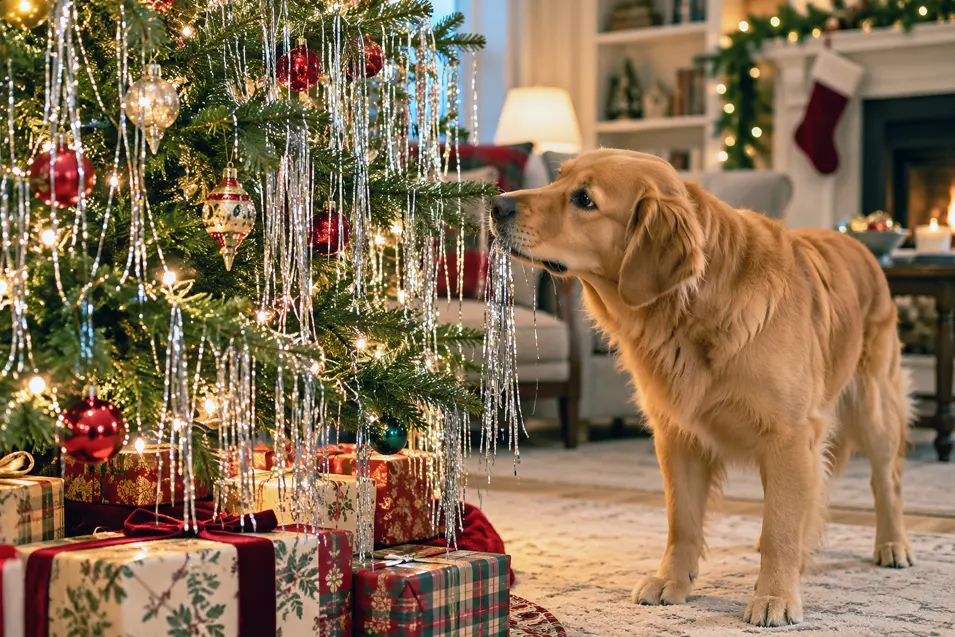
Dogs explore their surroundings through smell, movement, and touch. A Christmas tree introduces dozens of unfamiliar objects into their environment, many positioned at exactly the right height for investigation.
Shiny ornaments reflect light and movement, making them particularly interesting to curious dogs.
Dangling decorations may resemble toys, while wooden ornaments can look surprisingly similar to chew toys.
Some decorations even smell appealing, especially those made from food, cinnamon, or other scented materials.
Puppies are especially vulnerable because they are naturally inclined to investigate objects with their mouths.
But even a well-behaved adult dog can become interested in a Christmas decoration, particularly if it falls from the tree.
The problem is that ornaments aren’t designed to withstand chewing, and some contain materials that can cause serious injuries if swallowed.
1. Glass Christmas Ornaments
Glass ornaments are among the most obvious Christmas tree hazards for dogs.
They’re beautiful, reflective, and often surprisingly fragile.
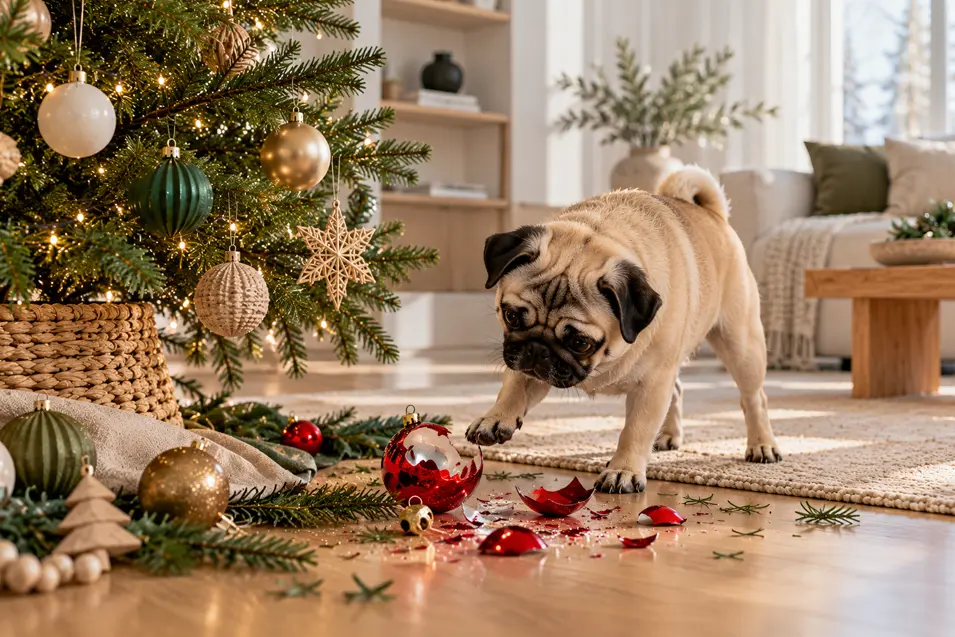
A dog brushing against the tree, pulling on a branch, or knocking an ornament to the floor can cause it to shatter.
Broken glass can cut a dog’s paws, nose, tongue, or gums.
If a dog attempts to chew or swallow the pieces, sharp fragments may also injure the throat, stomach, or intestines.
Even small pieces can be dangerous.
What to do: Keep fragile glass ornaments on higher branches, well beyond your dog’s reach. If one breaks, immediately move your dog away and thoroughly clean the surrounding area.
If you suspect your dog has swallowed glass, contact your veterinarian immediately. Never attempt to induce vomiting.
2. Salt Dough Christmas Ornaments
Homemade salt dough ornaments are a popular Christmas craft, particularly in households with children.
They’re often made using flour, water, and a surprisingly large amount of salt.
Unfortunately, that salt content makes them potentially dangerous for dogs.
If a dog eats a salt dough ornament, it may consume enough sodium to develop salt poisoning, also called sodium ion toxicosis.
Symptoms can include vomiting, diarrhea, excessive thirst, weakness, tremors, seizures, and, in severe cases, life-threatening neurological complications.
The amount required to cause poisoning depends on the dog’s size and the quantity consumed.
Small dogs may be particularly vulnerable.
What to do: Avoid hanging salt dough ornaments anywhere your dog can reach them. If your dog eats one, contact a veterinarian or animal poison control service immediately rather than waiting for symptoms.
Do not attempt home treatments or force your dog to drink large quantities of water.
3. Chocolate Christmas Ornaments
Chocolate decorations wrapped in colourful foil are a familiar sight on Christmas trees.
Unfortunately, they’re also among the most tempting ornaments for dogs.
Chocolate contains theobromine and caffeine, substances that dogs metabolize much more slowly than humans.
The severity of chocolate poisoning depends on the type of chocolate, the amount consumed, and the dog’s size.
Dark chocolate and baking chocolate generally contain higher concentrations of theobromine than milk chocolate.
Symptoms may include vomiting, diarrhea, restlessness, increased heart rate, tremors, and seizures.
The foil wrappers can also create additional problems if swallowed.
What to do: Keep chocolate decorations off the Christmas tree entirely in homes with dogs. Store chocolate gifts and treats securely out of reach.
If your dog eats chocolate, contact your veterinarian promptly with information about the type and estimated quantity.
4. Metal Ornament Hooks
Traditional Christmas ornament hooks are small, inexpensive, and easy to overlook.
They’re also potentially dangerous if swallowed.
The thin metal hooks used to hang ornaments can have sharp ends capable of injuring a dog’s mouth or digestive tract.
A swallowed hook may become lodged in the throat, stomach, or intestines.
In some cases, veterinary treatment may involve endoscopy or surgery to remove the object.
Hooks can also fall unnoticed when ornaments are being hung or removed.
What to do: Consider replacing traditional metal hooks with securely attached hanging loops or other safer fastening methods.
Check the floor regularly during decorating and when taking the tree down.
If your dog swallows an ornament hook, seek veterinary advice immediately.
5. Small Plastic Christmas Ornaments
Plastic ornaments are often recommended as alternatives to glass because they are less likely to shatter.
However, that doesn’t make every plastic ornament safe for dogs.
Small ornaments can become choking hazards, particularly for larger dogs that may swallow them whole.
Chewed plastic can also break into sharp fragments.
Swallowed pieces may cause intestinal obstructions, depending on their size and shape.
Decorations with detachable beads, plastic eyes, bells, or other small components present additional risks.
What to do: Choose larger, durable, shatter-resistant ornaments without easily detachable pieces.
Avoid placing small decorations on lower branches where curious dogs can reach them.
6. Battery-Operated Christmas Ornaments
Musical ornaments, illuminated decorations, and animated Christmas figures often contain small batteries.
These can be especially dangerous if a dog chews through the battery compartment.
Button batteries are a serious concern because they can cause severe tissue damage when swallowed or lodged in the digestive tract.
Other batteries can also cause chemical injuries or intestinal obstructions.
Even when the battery itself isn’t swallowed, chewing a damaged battery may expose a dog to irritating or corrosive substances.
What to do: Keep battery-operated ornaments out of reach and make sure battery compartments are securely closed.
If your dog swallows a battery or chews one open, seek emergency veterinary assistance immediately.
7. Wooden Christmas Ornaments
Wooden decorations are popular in Scandinavian, rustic, and minimalist Christmas decorating.
Although they may look more natural than glass or plastic, they aren’t automatically safe for dogs.
Some dogs enjoy chewing wood, and a wooden Christmas ornament may be mistaken for an appropriate chew toy.
Chewing can produce splinters that injure the mouth or digestive tract.
Small wooden pieces can also become choking hazards or cause intestinal obstructions.
Paints, glues, varnishes, and decorative finishes introduce additional concerns, depending on their ingredients.
What to do: Keep wooden ornaments away from dogs that enjoy chewing sticks or wooden objects.
Choose sturdy decorations without loose components, and avoid ornaments with unknown coatings if your dog is likely to investigate them.
8. Ceramic and Porcelain Ornaments
Ceramic ornaments can be just as fragile as glass.
A dropped ornament may break into sharp pieces capable of cutting paws or mouths.
Small ceramic figurines may also contain detachable components that dogs could swallow.
Hand-painted or vintage decorations can introduce uncertainty about the materials used in their finishes.
What to do: Display fragile ceramic ornaments on higher branches or in locations your dog cannot access.
If an ornament breaks, remove your dog from the area before cleaning up the fragments.
9. Edible Christmas Ornaments
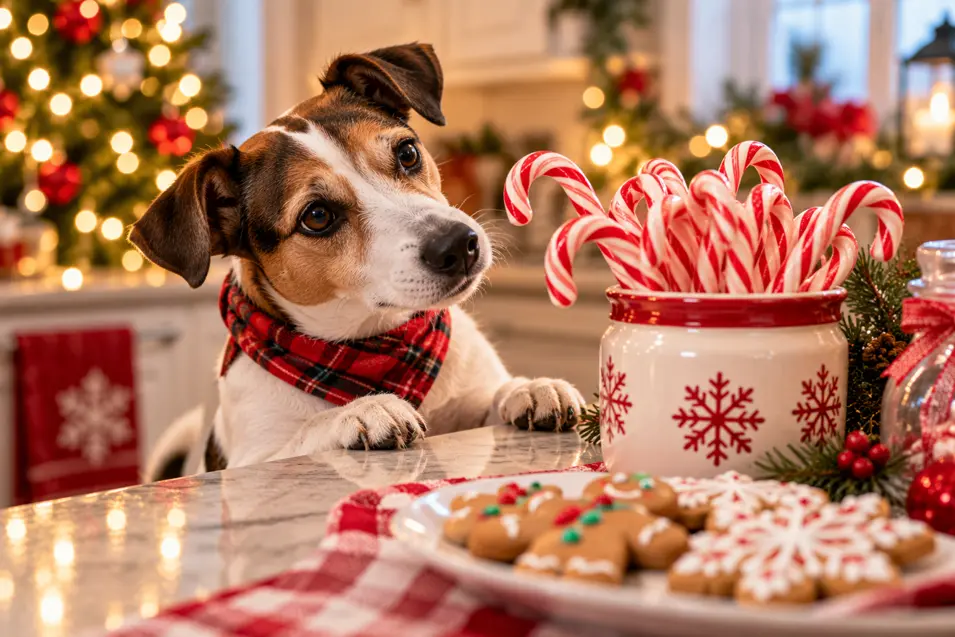
Decorating Christmas trees with cookies, candy canes, popcorn strings, or other edible treats is a tradition in many households.
Unfortunately, these decorations can be irresistible to dogs.
Some foods are more dangerous than others.
Chocolate is toxic to dogs, while sugar-free candies containing xylitol can cause severe poisoning.
Hard candies may present choking hazards, and strings used to hang edible decorations can cause intestinal injuries if swallowed.
Even ordinary cookies may contain ingredients that are unsuitable for dogs.
What to do: Avoid decorating your Christmas tree with edible ornaments when dogs have access to it.
Keep holiday treats in secure containers rather than hanging them within reach.
10. Vintage and Antique Christmas Ornaments
Older Christmas ornaments often have sentimental value, especially when they’ve been passed down through generations.
However, some vintage decorations were manufactured using materials that would not meet modern safety expectations.
Certain older painted ornaments may contain lead-based pigments, while some metallic decorations may contain other potentially harmful substances.
Old glass ornaments can also become fragile over time.
Not every vintage ornament contains hazardous materials, but the uncertainty is worth considering.
What to do: Keep antique ornaments out of reach, particularly if their materials are unknown.
Consider displaying especially fragile or valuable decorations in a cabinet or another protected location.
11. Glitter-Covered Christmas Ornaments
Glitter-covered ornaments can add sparkle to a Christmas tree, but they may also shed small particles.
If a dog licks or chews a glitter-covered decoration, it may swallow glitter, adhesive, or pieces of the ornament itself.
Small amounts of ordinary craft glitter are not typically associated with severe poisoning, but they may cause irritation or gastrointestinal upset.
Larger fragments, sharp decorative materials, and unknown adhesives can present additional risks.
What to do: Avoid ornaments that shed glitter easily, particularly on lower branches.
Choose decorations with securely attached finishes and remove any that begin to deteriorate.
What Should You Do If Your Dog Eats a Christmas Ornament?
If your dog swallows part or all of a Christmas ornament, the appropriate response depends on what was eaten.
A small piece of soft plastic presents different concerns than a sharp glass fragment, a metal hook, or a salt dough ornament.
However, it’s important not to assume an object is harmless simply because your dog appears normal.
Take the following steps:
- Remove access to the remaining decorations. Prevent your dog from swallowing additional pieces.
- Identify the ornament. Determine whether it contained glass, metal, batteries, salt dough, chocolate, or other potentially hazardous materials.
- Contact your veterinarian. Explain what was swallowed, approximately how much, and when the incident occurred.
- Do not induce vomiting unless instructed. Sharp objects and certain chemicals can cause additional injuries if vomited.
- Watch for symptoms while following veterinary instructions. Vomiting, abdominal pain, drooling, difficulty swallowing, loss of appetite, and lethargy can indicate a problem.
- Seek emergency care when necessary. Swallowed batteries, suspected salt poisoning, sharp objects, breathing difficulties, or severe symptoms require urgent attention.
If possible, keep an identical ornament or its packaging available to help your veterinarian identify the materials involved.
Signs of an Intestinal Blockage in Dogs
Swallowed ornament pieces can sometimes become trapped in a dog’s digestive system.
An intestinal obstruction is a potentially life-threatening condition that may require emergency surgery.
Warning signs include:
- Repeated vomiting
- Loss of appetite
- Abdominal pain or swelling
- Lethargy
- Excessive drooling
- Difficulty passing stool
- Diarrhea
- Restlessness or unusual behaviour
Symptoms may not appear immediately after an object is swallowed.
If you know or suspect your dog has eaten a potentially dangerous ornament, contact your veterinarian rather than waiting for signs of an obstruction.
How to Decorate a Dog-Friendly Christmas Tree
Having a dog doesn’t mean giving up a beautifully decorated Christmas tree.
It simply means making thoughtful choices about the decorations you use and where you place them.
Choose Shatter-Resistant Ornaments
Larger, durable, shatter-resistant decorations are generally preferable to fragile glass or ceramic ornaments.
However, they should still be kept away from dogs that are likely to chew them.
Keep the Lowest Branches Simple
Consider leaving the bottom branches undecorated, particularly if you have a puppy or a dog that enjoys investigating the tree.
This reduces the number of tempting objects within easy reach.
Avoid Edible Decorations
Chocolate, candy, cookies, and other edible ornaments can encourage dogs to investigate the Christmas tree.
Keep food decorations elsewhere.
Secure Ornaments Carefully
Use sturdy, securely attached hanging loops rather than loose metal hooks whenever practical.
Make sure ornaments cannot easily fall if the tree is bumped.
Consider a Christmas Tree Barrier
A decorative fence or pet gate can help keep dogs away from ornaments, electrical cords, and other hazards.
Supervise Curious Dogs
Some dogs completely ignore Christmas decorations, while others treat the tree as a collection of exciting new toys.
If your dog is particularly curious, restrict access to the room when supervision isn’t possible.
Are Any Christmas Ornaments Completely Safe for Dogs?
No Christmas ornament should be considered completely safe for a dog to chew or swallow.
Even decorations marketed as pet-friendly may contain small parts or materials that become hazardous when damaged.
The safest choices are generally durable, non-edible, shatter-resistant ornaments that are securely attached and kept out of reach.
It’s also worth remembering that every dog is different.
A calm senior dog that has ignored Christmas trees for years may present a very different decorating challenge than an energetic puppy experiencing its first Christmas.
Understanding your dog’s habits is one of the best ways to make sensible decorating decisions.
Frequently Asked Questions About Christmas Ornaments and Dogs
Are glass Christmas ornaments dangerous for dogs?
Yes. Broken glass can cut a dog’s paws or mouth, and swallowed fragments may injure the digestive tract. Keep fragile ornaments out of reach and clean up broken decorations immediately.
Are salt dough ornaments poisonous to dogs?
Yes. Salt dough ornaments can contain enough sodium to cause serious salt poisoning if eaten. Contact a veterinarian immediately if your dog consumes one.
Can dogs swallow plastic Christmas ornaments?
Yes. Small plastic ornaments or broken pieces can cause choking or intestinal obstructions. Even shatter-resistant decorations should be kept away from dogs that chew objects.
Are wooden Christmas ornaments safe for dogs?
Wooden ornaments may splinter when chewed, and some contain paints, glues, or finishes that are unsuitable for ingestion. They should not be treated as dog toys.
What happens if my dog swallows an ornament hook?
A metal hook may become lodged in the digestive tract or cause
More Reading: Keeping Your Dog Safe at Christmas
Christmas decorations can make your home feel festive, but some holiday favourites can pose unexpected dangers to curious dogs. From electrical cords to tempting decorations, these articles will help you create a safer Christmas environment for your four-legged family members.
- Preparing Your Dog for Christmas: A Complete Guide – Discover practical ways to prepare your home and your dog for the holiday season, including decorations, visitors, festive foods, and other Christmas safety concerns.
- Are Christmas Lights Dangerous for Dogs? – Learn about the risks associated with Christmas lights, including chewing electrical cords, broken bulbs, and how to keep your holiday lighting pet-friendly.
- The Dangers of Christmas Tinsel for Dogs – Tinsel may look beautiful on a Christmas tree, but swallowing it can cause serious intestinal problems. Find out why it can be dangerous and what safer decorating alternatives are available.