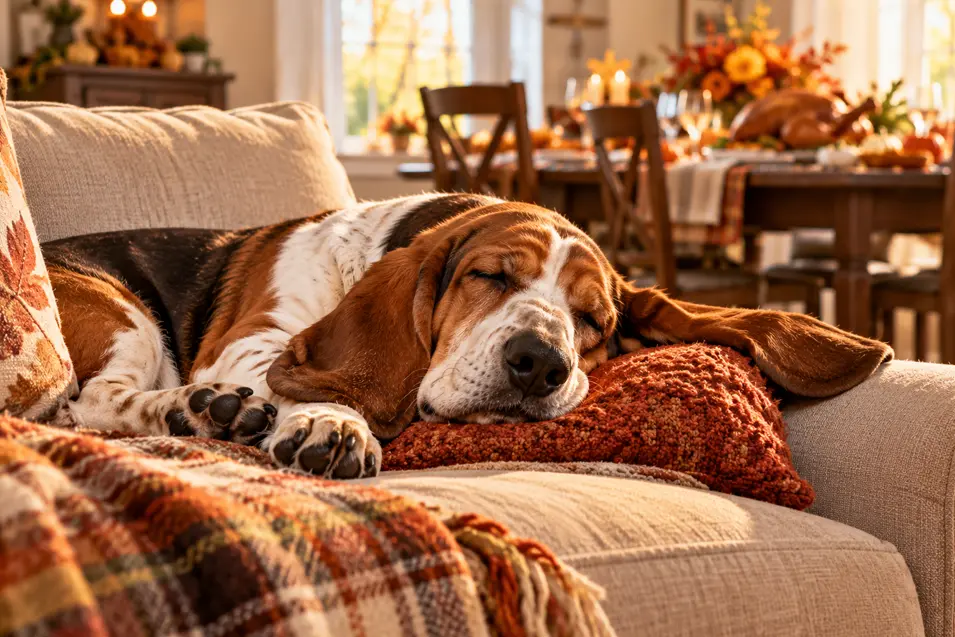
Thanksgiving dinner is over. The turkey has been carved, the dishes are piling up, and your dog has abandoned their usual position beneath the dining table for a well-deserved nap on the sofa.
Naturally, someone announces that the turkey must have made the dog sleepy.
After all, turkey contains tryptophan, and everybody knows tryptophan makes you tired.
But is that actually true?
Does turkey make dogs sleepy, or is this one of those Thanksgiving myths that refuses to go away?
The answer might surprise you.
Does Turkey Really Make Dogs Sleepy?
No, eating a normal serving of turkey isn’t expected to make your dog noticeably sleepy because of its tryptophan content.
Turkey does contain tryptophan, an amino acid involved in several important processes in the body, including the production of substances associated with sleep.
But turkey isn’t a natural sleeping pill.
In fact, many common protein-rich foods contain tryptophan, including chicken, beef, fish, eggs, and dairy products.
Turkey isn’t particularly unusual in this regard.
And while tryptophan is involved in sleep regulation, eating a little turkey doesn’t automatically translate into a sleepy dog.
So if your dog is snoring beneath the coffee table after Thanksgiving dinner, there’s probably another explanation.
What Is Tryptophan?
Tryptophan is an essential amino acid, meaning dogs must obtain it through their diet because their bodies cannot produce it themselves.
It plays several important roles.
One of those roles involves the production of serotonin, a chemical messenger associated with mood and other functions.
Serotonin can also be used by the body to produce melatonin, a hormone involved in regulating sleep and wake cycles.
That connection is where the famous turkey-and-sleepiness story comes from.
But there’s a catch.
The process is much more complicated than eating turkey, absorbing tryptophan, and immediately falling asleep.
Tryptophan must compete with other amino acids for transport into the brain. The amount consumed, the composition of the meal, and the body’s normal regulatory processes all influence what happens next.
A few bites of turkey aren’t likely to produce a meaningful sedating effect.
If they did, dogs would be falling asleep every time they ate chicken.
And anyone who has watched a dog enthusiastically finish a chicken-flavoured treat knows that isn’t generally what happens.
Why Does My Dog Seem Sleepy After Thanksgiving Dinner?
If turkey isn’t the reason, why do so many dogs appear exhausted after Thanksgiving?
There are several possibilities, and most have nothing to do with tryptophan.
1. Thanksgiving Is an Exciting Day
Think about everything your dog experiences during a typical holiday gathering.
The doorbell rings repeatedly. Relatives arrive. Children run around. Strange coats appear on familiar furniture.
And the kitchen smells like the greatest event in canine history.
Even dogs who spend most of the day observing the festivities can become tired from all that excitement.
By the time dinner is over, a nap may be exactly what they need.
2. Their Normal Routine Has Changed
Dogs often thrive on predictable routines.
Thanksgiving can disrupt almost everything familiar, including walks, feeding schedules, rest periods, and household activity.
Some dogs become overstimulated by the changes, while others simply get less sleep than usual.
Once the house settles down, they finally have an opportunity to rest.
3. They’ve Eaten More Than Usual
A dog who has enjoyed a few extra treats may settle down after eating.
However, a large or unusually rich meal should not be treated as a harmless explanation for pronounced sleepiness or weakness.
Fatty Thanksgiving leftovers can cause digestive upset and may contribute to pancreatitis in susceptible dogs.
If your dog seems unusually lethargic after eating a large amount of holiday food, particularly if they also show signs of discomfort, contact your veterinarian.
4. They’re Simply Comfortable
Sometimes the explanation is wonderfully uncomplicated.
The family is home. The house is warm. Everyone has finally stopped moving around.
Your dog has found a comfortable spot on the sofa.
And there’s absolutely nothing left to do except sleep.
Not every Thanksgiving nap requires a scientific investigation.
Can Tryptophan Affect a Dog’s Behaviour?
This is where the subject becomes more interesting.
Tryptophan has been studied in relation to animal behaviour because of its role as a precursor to serotonin.
Some research has explored whether dietary tryptophan levels, sometimes alongside other dietary changes, may influence certain behaviours in dogs.
However, the findings are limited and don’t establish that simply feeding a dog turkey will make them calmer, happier, or sleepier.
The amount of tryptophan in a normal turkey treat is not equivalent to a carefully formulated dietary intervention.
Owners should not use turkey or tryptophan supplements as a treatment for anxiety, sleep problems, or behavioural issues without veterinary guidance.
If your dog struggles with anxiety or sleep disturbances, a veterinarian can help identify appropriate solutions.
When Is Sleepiness After Eating Turkey a Concern?
There’s an important difference between a dog who is relaxed and ready for a nap and one who is unusually lethargic.
A normally sleepy dog should generally respond to familiar sounds, wake readily, and behave normally when alert.
Concerning lethargy may involve unusual weakness, reduced responsiveness, reluctance to move, or behaviour that is clearly different from your dog’s normal routine.
Seek veterinary advice promptly if your dog develops:
- Repeated vomiting or diarrhea
- A painful, swollen, or tense abdomen
- Unusual weakness or difficulty standing
- Markedly reduced responsiveness
- Repeated retching or signs of choking
- Loss of appetite accompanied by illness
- Signs of distress after eating turkey bones or fatty leftovers
Difficulty breathing, collapse, or inability to wake your dog normally requires emergency veterinary care.
Thanksgiving foods can present several risks unrelated to tryptophan.
Cooked turkey bones can cause serious digestive injuries. Fatty skin and gravy can contribute to gastrointestinal problems, including pancreatitis. Seasonings containing onion or garlic can be toxic.
If your dog has eaten something potentially dangerous, don’t wait for symptoms to develop before contacting your veterinarian.
Is It Safe to Give Your Dog Turkey?
Yes. Most healthy dogs can enjoy a small amount of plain, fully cooked, boneless, skinless turkey as an occasional treat.
The safest approach is to offer turkey without butter, gravy, onions, garlic, or other seasonings.
Avoid turkey bones, skin, fatty drippings, and heavily processed turkey products.
Keep portions modest, especially if your dog has a sensitive stomach or hasn’t eaten turkey before.
For a complete guide, including raw turkey, cooked turkey, bones, and Thanksgiving leftovers, read Can Dogs Eat Turkey? Raw, Cooked, Turkey Bones & Safety Tips.
And if you’re planning a special holiday treat, our guide to Foods You Can Share With Your Dog on Thanksgiving explains which festive favourites can be served safely.
Frequently Asked Questions
Does turkey contain more tryptophan than chicken?
Not necessarily. Both turkey and chicken contain tryptophan, and the amounts vary depending on the cut and preparation. Turkey isn’t uniquely high in tryptophan compared with many other protein-rich foods.
Can turkey help an anxious dog relax?
There’s no good evidence that feeding ordinary portions of turkey reliably reduces anxiety in dogs. If your dog experiences persistent anxiety, consult your veterinarian rather than relying on dietary treats.
Why does my dog sleep after eating?
Many dogs naturally rest after meals, especially following an active day. However, pronounced lethargy, weakness, vomiting, or abdominal discomfort after eating should be evaluated by a veterinarian.
Can too much turkey make a dog sick?
Yes. Large portions may cause digestive upset, and fatty turkey skin, gravy, or rich leftovers can be particularly problematic. Bones and certain seasonings create additional risks.
Should I give my dog tryptophan supplements to help them sleep?
Not without veterinary guidance. Supplements can have unwanted effects or interact with medications, and sleep problems may have underlying medical or behavioural causes that require proper evaluation.
The Bottom Line: Does Turkey Make Dogs Sleepy?
Turkey contains tryptophan, but that doesn’t mean sharing a little turkey with your dog will send them straight to dreamland.
A normal serving of turkey is unlikely to produce a noticeable sedating effect.
If your dog curls up for a nap after Thanksgiving dinner, they’re probably recovering from a busy day filled with visitors, excitement, unfamiliar smells, and the exhausting responsibility of supervising the turkey.
As long as they’re comfortable, responsive, and behaving normally, there’s usually no reason to worry about an ordinary nap.
But unusual lethargy, weakness, vomiting, or signs of abdominal pain should never be dismissed as the effects of tryptophan.
And if your dog happens to fall asleep with one eye open, facing the kitchen?
That’s probably not the turkey.
They’re just making sure nobody starts serving leftovers without them.
Continue Reading
Thanksgiving With Dogs & Cats: The Best Seat at the Family Table
A humorous look at Thanksgiving through the eyes of the four-legged family members who believe the entire holiday was invented for their benefit.