
Most of us have some idea of what will happen to our belongings when we die. The house may go to a spouse or children. Someone gets the car. Family members divide up furniture, photographs and everything else accumulated over a lifetime.
But what happens to the dog sleeping at the end of your bed?
Or the cat who has spent the last twelve years following you from room to room?
For many pet owners, the answer is something along the lines of, “My daughter will take him.”
Maybe she will.
But have you actually asked her?
Planning for what happens to your pet after you die isn’t particularly pleasant. It is, however, part of being responsible for an animal that may outlive you. And a good plan involves considerably more than mentioning your dog or cat in a will.
In fact, one of the most important parts of the plan concerns what happens long before anyone sits down to read your will.
What Actually Happens to Your Pet After You Die?
In the United States, pets are generally treated as property under the law. That sounds terribly impersonal when we’re talking about an animal you consider part of the family, but it has an important consequence: your dog or cat cannot simply inherit money or property from you the way a person can.
You can, however, make arrangements for who will receive and care for your pet, and estate-planning tools such as pet trusts may be available to provide money for that animal’s care.
The exact legal options and requirements vary by state, so this is one area where speaking with an estate-planning attorney in your state makes sense.
But the legal paperwork is only part of the problem.
There is a much more immediate question:
Who is going to feed your pet tonight?
The First 24 Hours May Matter More Than Your Will
Imagine someone who lives alone suffers a medical emergency and dies at the hospital.
Their cat is still at home.
The cat doesn’t know what happened. He only knows that dinner hasn’t arrived.
Does anyone know there is a cat in the house? Does someone have a key? Does anyone know that the cat takes medication every morning? Where is the food? Who is the veterinarian?
A will sitting in a filing cabinet doesn’t solve any of those problems.
Every pet owner should have at least one trusted person who knows they have animals and can access the home in an emergency. That person should know enough to provide immediate care until longer-term arrangements can be made.
If your pet requires medication or has a serious medical condition, this becomes even more important.
You can also carry an emergency card in your wallet stating that pets are alone at home and listing the person who should be contacted.
The goal is simple: if something happens to you today, someone should know that an animal is waiting for you at home.
“My Daughter Will Take the Dog” Isn’t a Plan
Families make assumptions about pets all the time.
“My son loves her.”
“My sister has dogs.”
“My daughter would never let him go to a shelter.”
Those things may all be true. They still don’t mean that person is prepared to take your pet.
Ask.
And don’t make it a casual question over Thanksgiving dinner.
Explain what you’re asking them to take responsibility for.
A 12-pound older dog who sleeps most of the afternoon is one thing. A young 90-pound dog who needs two long walks every day is another.
Your chosen caregiver may live in an apartment that doesn’t allow pets. Their existing dog may not tolerate another animal. Their spouse may be allergic to cats. They may travel extensively. They may love your dog dearly while knowing that bringing him into their household simply wouldn’t work.
Give people permission to say no.
A truthful no today is much kinder to your pet than a reluctant yes after you’re gone.
Choose a Backup Caregiver
Even after someone agrees to take your pet, don’t stop there.
Life changes.
Your chosen caregiver could become ill. They could move. Their housing situation could change. They might develop financial problems or have children. They could even die before you do.
Choose at least one backup person and have the same conversation with them.
Review those arrangements periodically, particularly after major changes in your family or your pet’s health.
The perfect arrangement you made when your dog was three may no longer make sense when he’s thirteen.
Can You Leave Money to Your Pet?
You generally cannot simply leave $25,000 directly to your Labrador and expect him to open a checking account.
What you can do is make financial arrangements intended to pay for his care.
One option in the United States is a pet trust. Depending on applicable state law and how the trust is structured, money can be set aside and managed for expenses related to your pet’s care.
Another estate plan may provide money to the person who receives your pet.
There are important differences between these approaches, and poorly written instructions can create problems. If you’re putting significant money aside or creating a trust, speak with an attorney familiar with estate planning and the laws in your state.
The important principle isn’t the particular legal document.
It’s recognizing that your pet costs money.
How Much Money Should You Leave for Your Pet?
There isn’t one correct number.
Think about what your animal actually costs now and how many years he or she might reasonably need care.
Include things such as:
- Food
- Routine veterinary care
- Medications
- Grooming
- Pet insurance, if applicable
- Boarding or pet sitting
- Training or behavioral care
- Emergency veterinary expenses
- Increasing medical expenses as the animal ages
Then consider the animal.
Leaving behind a healthy four-year-old cat could mean someone assumes responsibility for well over a decade. An elderly dog with several medical conditions may have a shorter expected lifespan but considerably higher monthly expenses.
You aren’t trying to predict every veterinary bill your pet will ever have.
You’re trying to avoid giving someone you love a wonderful animal along with a financial burden they weren’t expecting.
What About Two Dogs or a Bonded Pair of Cats?
If you have multiple animals, decide whether keeping them together is important to you.
For bonded pets, losing their person, their home and their animal companion at the same time could create another enormous disruption.
But keeping animals together also makes finding a caregiver more difficult.
Taking one cat may be easy for your brother. Taking four may not be.
Talk about it now.
If keeping certain animals together is your priority, make that clear in your planning and choose caregivers who realistically have the space, finances and lifestyle to make it possible.
Your New Caregiver Needs More Than Veterinary Records
Think about everything you know about your pet that isn’t written anywhere.
Your dog won’t eat breakfast unless a little warm water is added to his food.
Your cat hides when strangers arrive but eventually comes out if everyone ignores her.
Your dog is friendly with people but terrified of other dogs.
The cat sleeps in the basement during the afternoon and will appear at precisely 5:15 expecting dinner.
Thunderstorms are terrifying.
Car rides are wonderful.
Chicken causes an upset stomach.
The blue stuffed elephant has somehow become the most important possession in the house.
None of these things belong in a legal document.
They belong in a pet care file.
Write down your pet’s normal routine, food, medications, veterinarian, medical history, microchip information, insurance information, behavior, fears, favorite activities and anything else another person would need to know.
Include photographs and identifying information as well.
Update it occasionally.
If someone suddenly has to care for your pet, you will have given them something incredibly valuable: the owner’s manual for an animal who cannot explain any of this himself.
Remember That Your Pet May Be Grieving Too
From your pet’s perspective, the world may change almost overnight.
Their person disappears.
Their routine changes.
Strangers enter the house.
Furniture may move.
They may suddenly be transported somewhere unfamiliar.
Some dogs and cats show behavioral changes following the loss of a person or animal companion. They may search for the missing person, vocalize more, sleep differently, eat less or become unusually clingy or withdrawn.
A new caregiver should know that adjustment may take time.
Whenever practical, maintaining familiar routines can help make the transition less overwhelming.
Send the bed.
Send the blanket.
Send the ridiculous stuffed elephant.
Keep the same food initially. Maintain familiar walking and feeding times where possible. Let the animal bring recognizable smells and possessions into the new home.
Those objects may look insignificant to us.
To the animal, they may be some of the few familiar things left.
What If Nobody in Your Family Can Take Your Pet?
This is exactly why the conversation needs to happen while you’re alive.
Your family may love your pet without being able to care for him.
If there isn’t an appropriate friend or relative, investigate other possibilities well in advance. Depending on where you live and your circumstances, these might include breed-specific rescues, humane organizations, sanctuaries or other organizations that have programs or arrangements for pets whose owners die.
Don’t simply write, “Give my dog to XYZ Rescue,” and assume the organization will automatically accept him ten years from now.
Organizations change. Policies change. Capacity changes.
If you hope an organization will care for or rehome your animal, contact them and find out whether they offer such a program, what arrangements are required and whether those arrangements need to be updated.
And still have a backup.
Create a Pet Emergency File
You don’t need to wait until your estate plan is finished to do something useful.
You can create a basic pet emergency file today.
Include:
- Your pet’s name, age and photograph
- Primary caregiver
- Backup caregiver
- Contact information for both
- Veterinarian and emergency veterinarian
- Medication and dosage information
- Medical conditions and allergies
- Food and feeding schedule
- Microchip number and registry
- Pet insurance information
- Daily routine
- Exercise requirements
- Behavioral information
- Where the carrier, leash and other supplies are kept
- Information about other animals in the household
- Copies or locations of relevant estate-planning documents
- Any financial arrangements you’ve made for your pet
Give copies to the appropriate people or make sure they know where the information is stored.
And somewhere easily visible in your home, make it clear how many pets live there.
In an emergency, nobody should have to discover three days later that there was also a cat hiding upstairs.
Don’t Forget to Update the Plan
A plan for your pet isn’t something you create once at 65 and never look at again.
Pets change.
People change.
Homes change.
The friend who happily agreed to take your dog five years ago may now live somewhere that doesn’t allow animals. Your backup caregiver may have moved across the country. Your previously healthy cat may now require twice-daily medication.
Review the plan every year or two and whenever something significant changes.
It can be as simple as asking:
If I died tomorrow, would this plan still work?
If the answer is no, fix it while you can.
Don’t Make Your Family Figure It Out After You’re Gone
Thinking about your own death is uncomfortable.
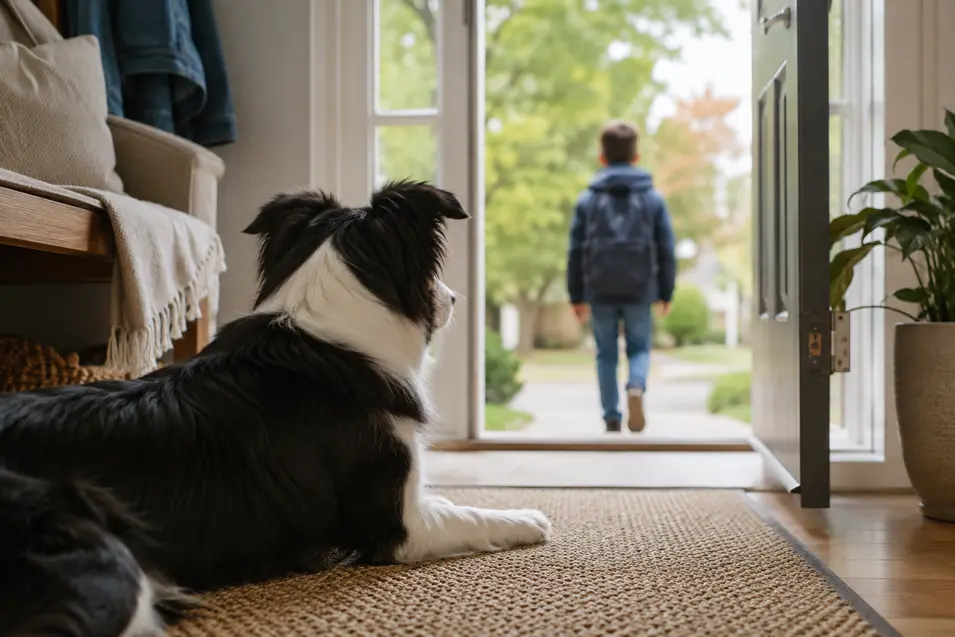
Thinking about your dog waiting beside the front door for someone who isn’t coming home is considerably worse.
So have the conversation.
Ask the person you hope will take your pet. Ask someone else to be the backup. Make sure somebody can get into your house during an emergency. Write down the things only you know. Make appropriate legal and financial arrangements for your circumstances.
Most importantly, don’t leave behind an assumption.
Leave behind a plan.
Because the kindest version of this story is also the least dramatic one.
Everyone already knows where the dog is going. The person taking him has said yes. His veterinarian and medical history are known. His food, bed and favorite toys go with him. Money has been set aside for his care when appropriate.
And during one of the biggest changes of his life, there is already someone waiting to take him home.
This article provides general information and is not legal advice. Estate and pet-trust laws vary by state. Consider speaking with a qualified estate-planning attorney about arrangements appropriate for your circumstances.