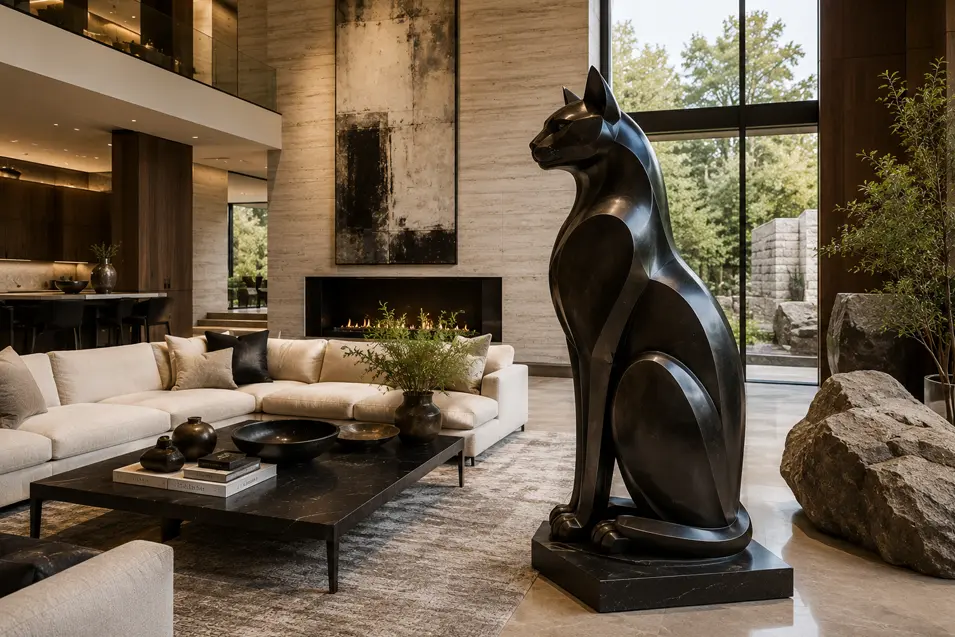
There is something about cats that artists have never been able to leave alone.
Maybe it is the shape. The long curve of a back, the unmistakable ears, the tail that can somehow communicate irritation without the rest of the animal moving at all.
Or perhaps cats simply know how to pose.
Whatever the reason, they have appeared in sculpture for thousands of years, and they work just as beautifully in contemporary homes today.
But we aren’t talking about the little cat figurine sitting beside the family photographs.
These are pieces of art.
Some are enormous. Others might be small enough to sit on an end table. They can be carved from stone, cast in bronze, formed from glass, welded from steel or shaped by hand from clay.
And just like a great painting, the right sculpture can completely change a room.
Here are 12 ways we would let the cat become the art.
The Monumental Cat
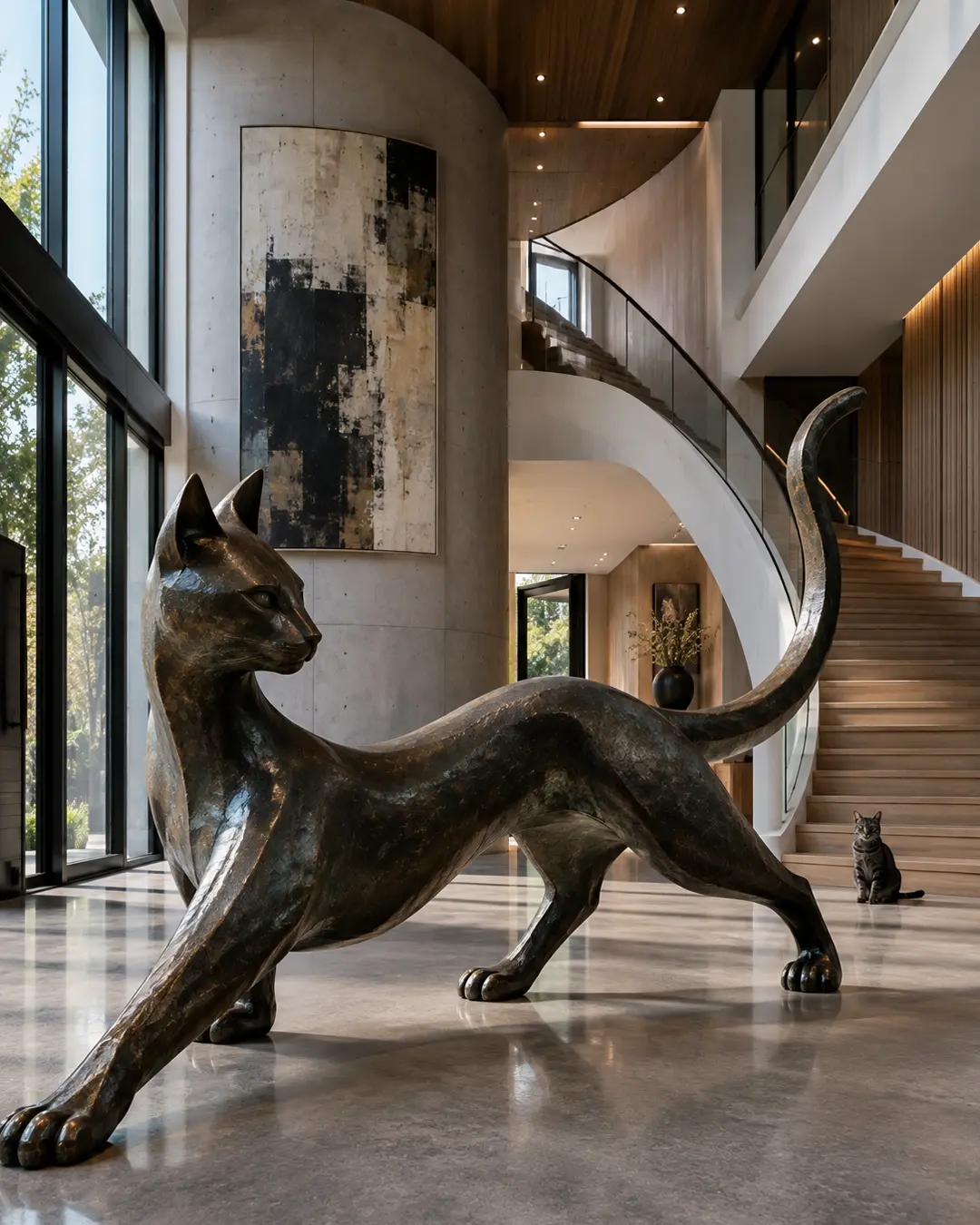
Sometimes subtlety is overrated.
Imagine an enormous geometric cat constructed from blackened steel, standing several feet tall in the entrance of an extraordinary limestone-and-walnut home.
Its angular body feels almost architectural. Light catches different planes of the metal as you move through the space, revealing details that disappear again into black.
It doesn’t decorate the entrance.
It owns it.
And somewhere behind this monumental tribute to the feline form, a perfectly ordinary little tabby walks casually across the polished stone floor.
Apparently nobody consulted the actual cat.
The Cat on the Mantel
At the opposite end of the scale is something you could almost miss.
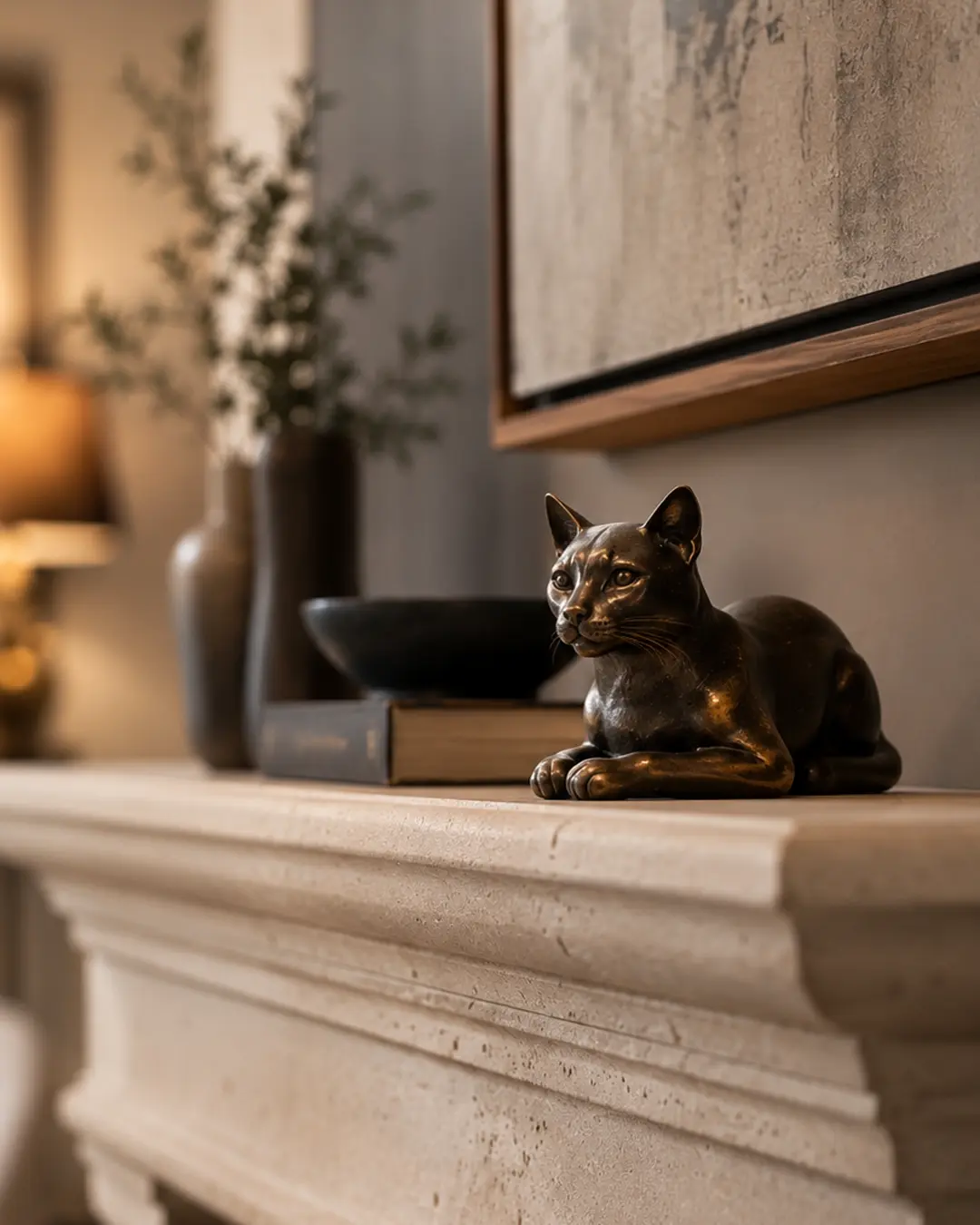
A beautifully cast bronze cat sits on the edge of a substantial limestone fireplace mantel.
Perhaps it is only eight inches tall.
Above it hangs an enormous contemporary painting. Beside it are a few carefully chosen objects, and the fireplace anchors a sophisticated living room filled with beautiful furniture.
The little bronze cat isn’t demanding attention.
It doesn’t need to.
Eventually everyone notices it.
The Marble Bust
There is something wonderfully ridiculous about treating a cat with the same artistic seriousness once reserved for emperors, philosophers and aristocrats.
So let’s do exactly that.
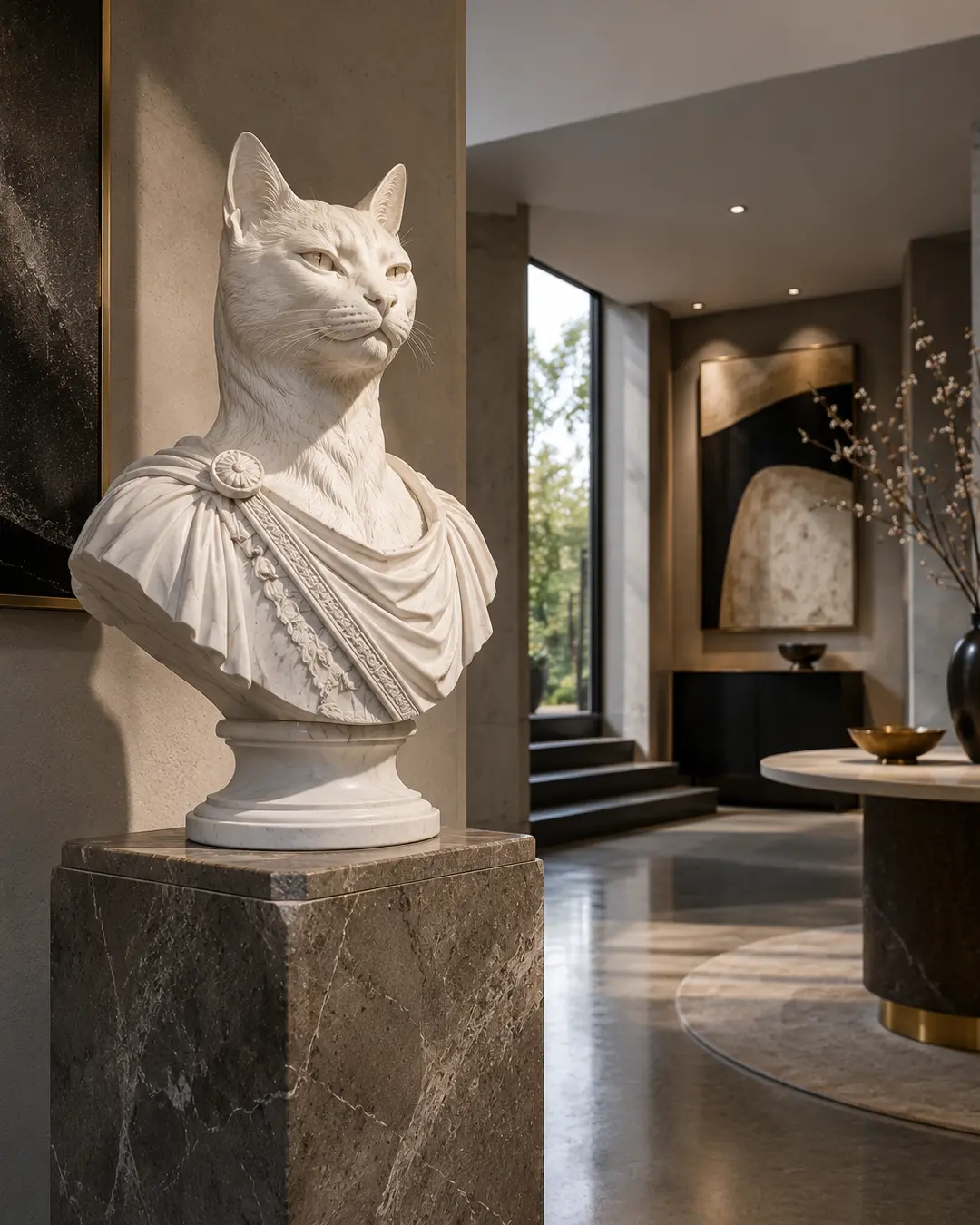
A beautifully carved white marble cat bust sits on a substantial stone pedestal in a very contemporary entrance hall.
The shoulders are formal. The expression is dignified. The ears are perfectly upright.
There may even be the faint suggestion that this particular cat disapproves of the guests.
Against clean contemporary architecture, the classical treatment becomes both beautiful and slightly funny.
The Art Deco Cat
Cats seem almost purpose-built for Art Deco.
Long lines. Elegant posture. A certain amount of unnecessary glamour.
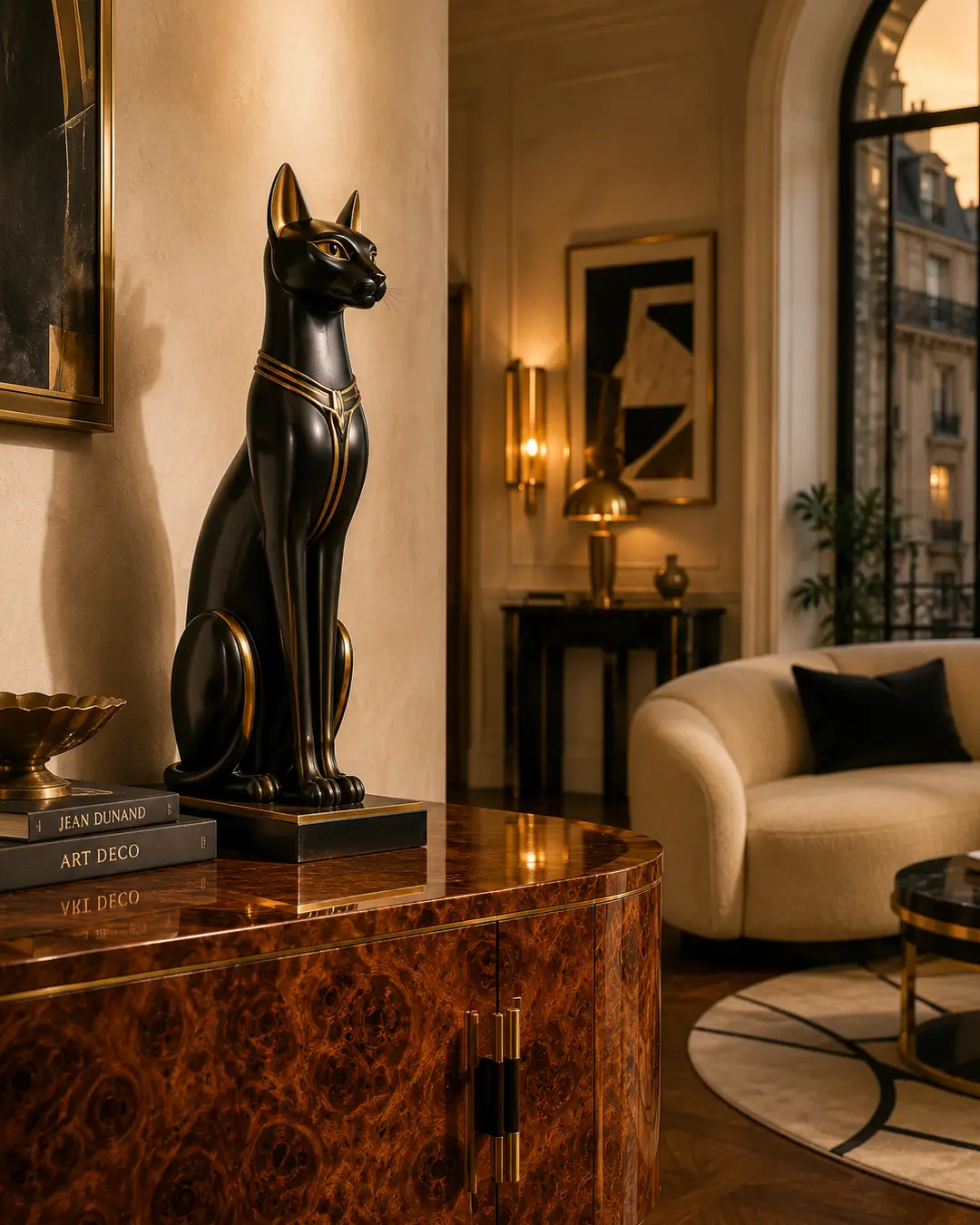
Here, a sleek black cat sculpture with polished brass details stands on a spectacular burl-wood console.
Perhaps it is two feet tall — large enough to command attention without dominating the room.
Behind it are warm plaster walls, beautiful lighting, curved furniture and just enough brass to catch the evening light.
The cat looks like it belongs in 1930s Paris.
Or possibly owns the building.
The Little Bronze
Not every piece of art needs its own pedestal.
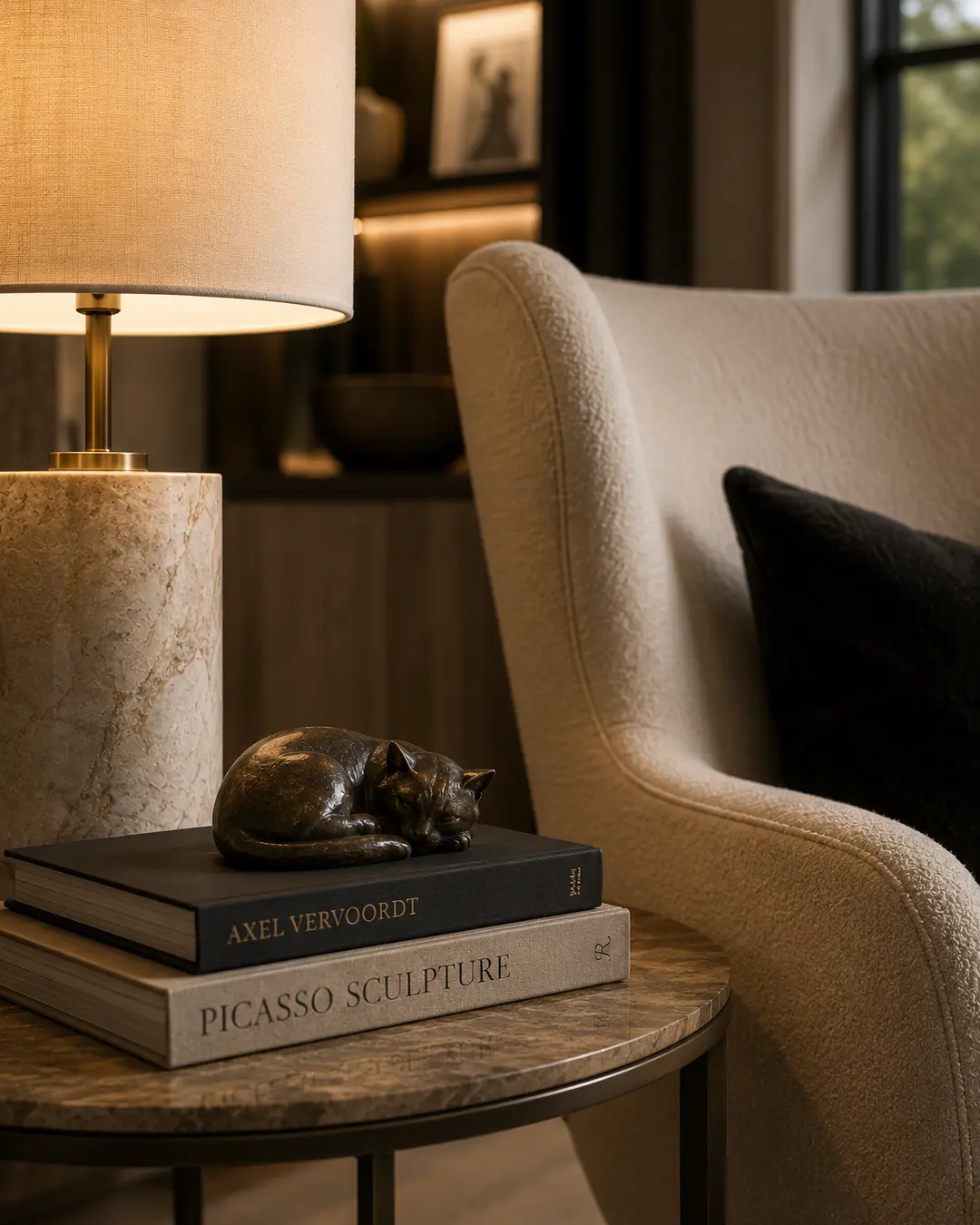
Beside a beautiful reading chair sits a small end table with a lamp, two books and a tiny bronze sculpture of a sleeping cat.
That’s it.
The cat may only be six inches long.
But the sculptor has captured that completely boneless way cats sleep, curled tightly into themselves with one paw disappearing beneath the body.
From across the room, you notice the chair.
When you sit down, you notice the cat.
Sometimes the smallest pieces become the ones people remember.
The White Stone Cat
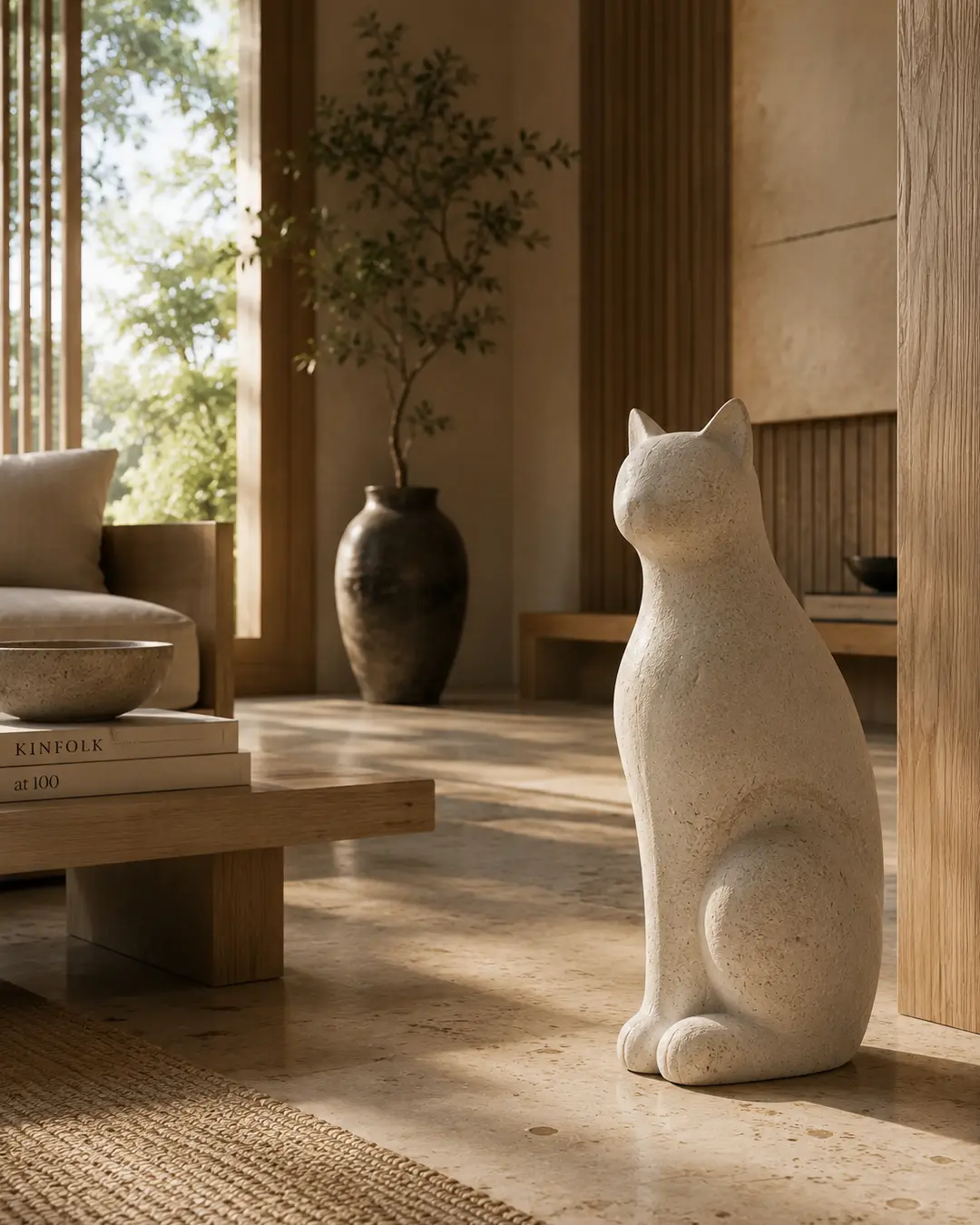
Now we strip the cat down to almost nothing.
No whiskers. No eyes. No carefully carved fur.
Just shape.
A substantial cat is carved from pale limestone or travertine, its body reduced to a few beautiful curves.
It sits directly on the floor in a quiet Japandi-inspired room surrounded by warm wood, linen, stone and natural light.
There is something almost ancient about it.
You immediately know it is a cat, even though very little was required to tell you.
The Ceramic Cat
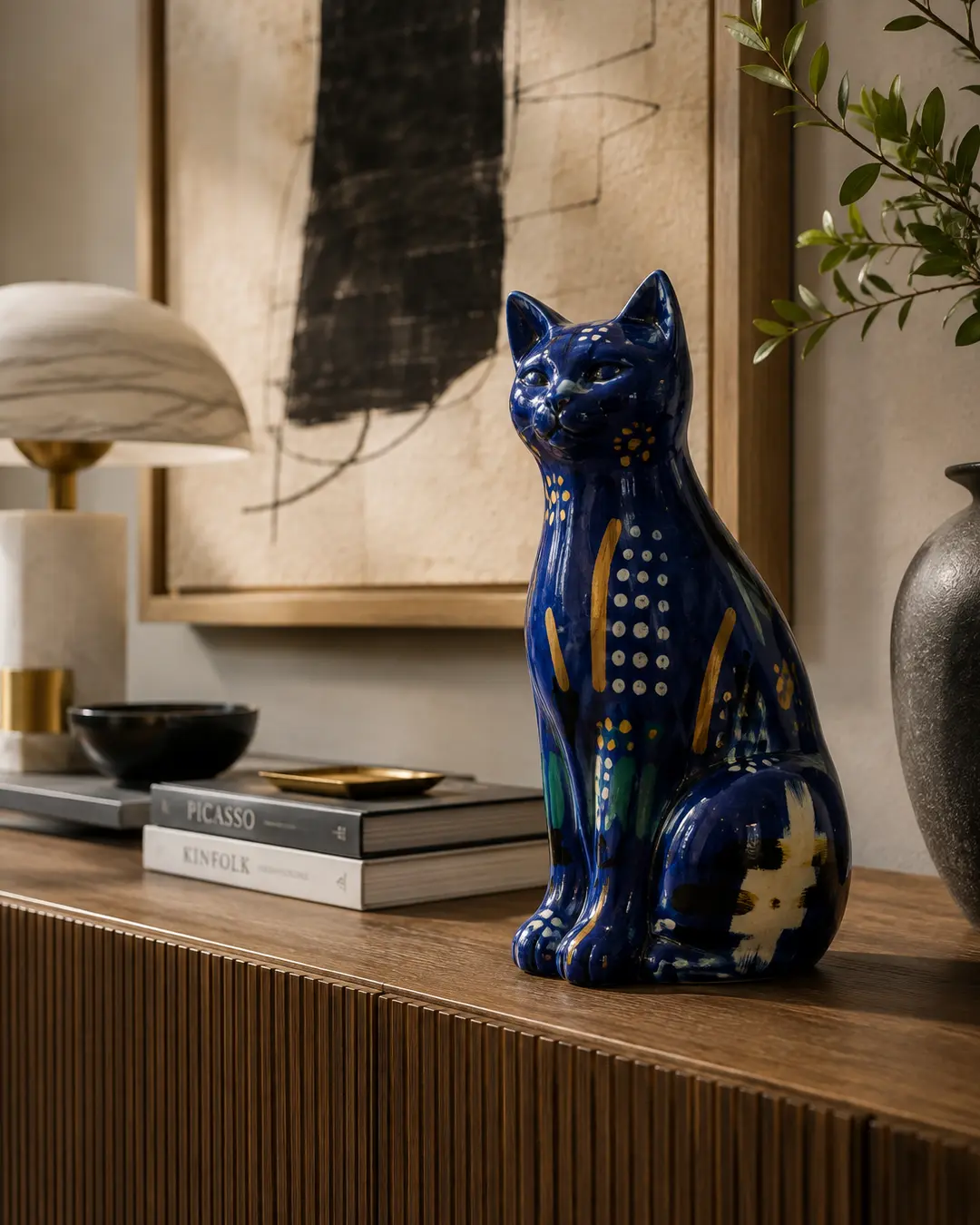
Serious art doesn’t have to be serious-looking.
An expressive ceramic cat sits on a long credenza in an otherwise sophisticated contemporary room.
Maybe it is cobalt blue.
Maybe deep green.
Maybe it is covered in irregular hand-painted marks that make every angle slightly different.
The shape isn’t perfect. The glaze pools differently around the paws. You can see evidence of the artist’s hands.
Instead of disappearing politely into the room, this cat brings the colour.
And the room is better because of it.
The Glass Cat
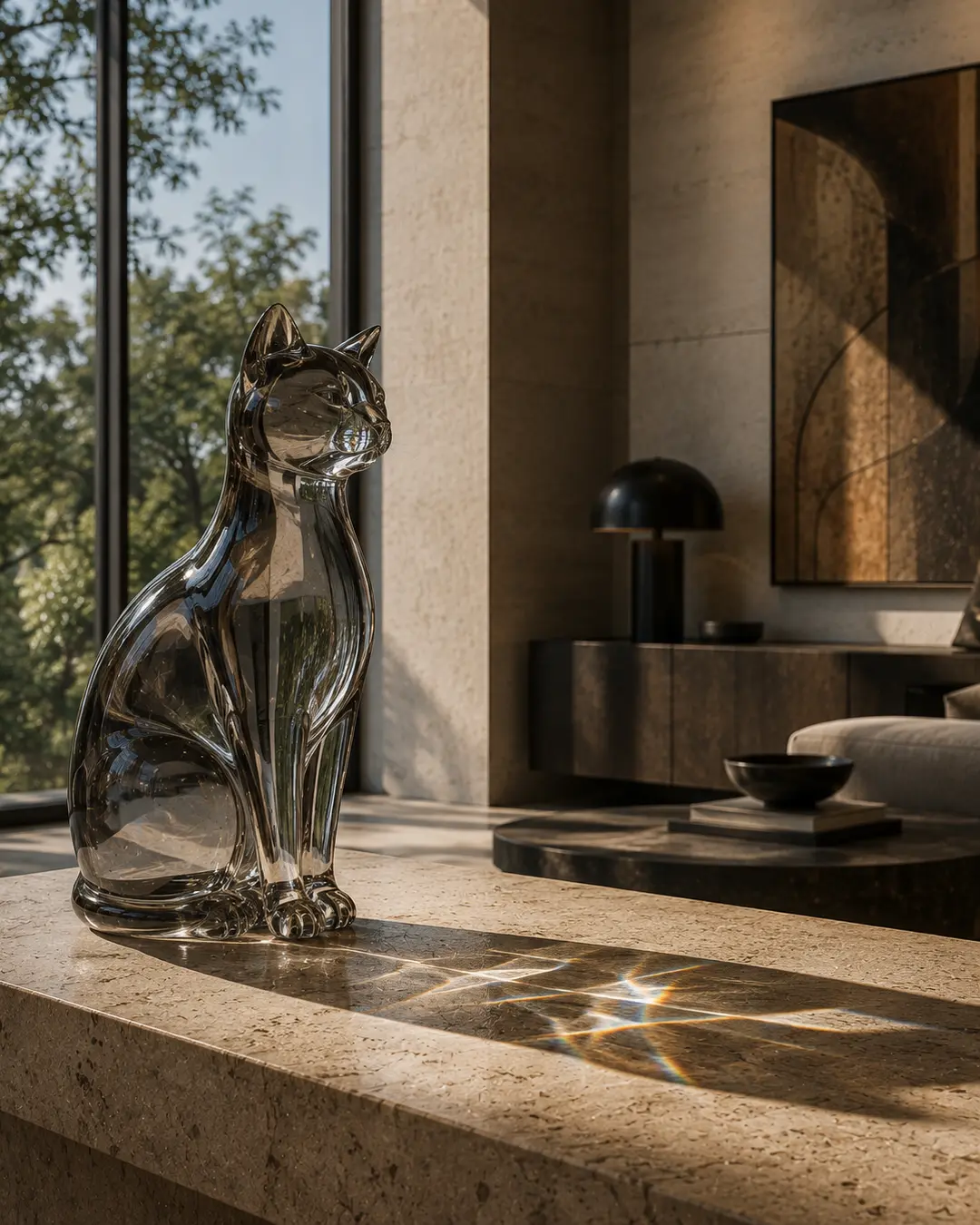
A sculpture can change throughout the day.
A smoky cast-glass cat sits on a stone table near an enormous window.
In the morning it is almost transparent.
By afternoon, sunlight passes through the body and bends across the tabletop, creating strange shadows and fractured shapes.
At night, it becomes darker and more mysterious.
The sculpture itself hasn’t moved.
The room around it has.
Which, when you think about it, is remarkably appropriate for a cat.
The Fireplace Guardians
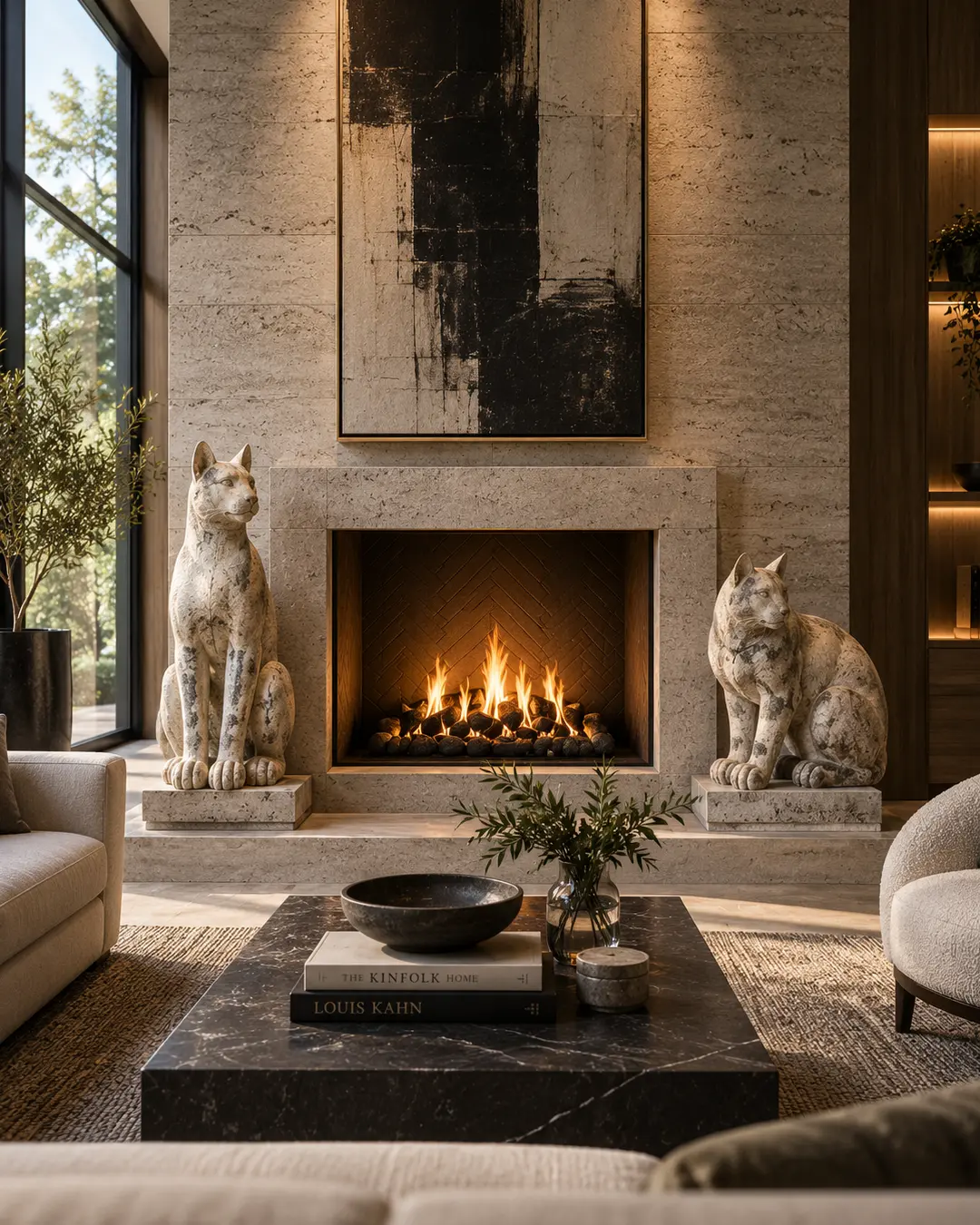
Why have one?
Two substantial stone cats sit on either side of a dramatic fireplace.
They aren’t identical.
One sits upright while the other crouches slightly lower. Their surfaces are worn and imperfect, as though they might have been removed from some ancient building and brought into this very contemporary home.
The fireplace is impressive.
The cats make it unforgettable.
They aren’t accessories sitting beside the architecture.
They feel like part of it.
The Cat You Don’t See at First
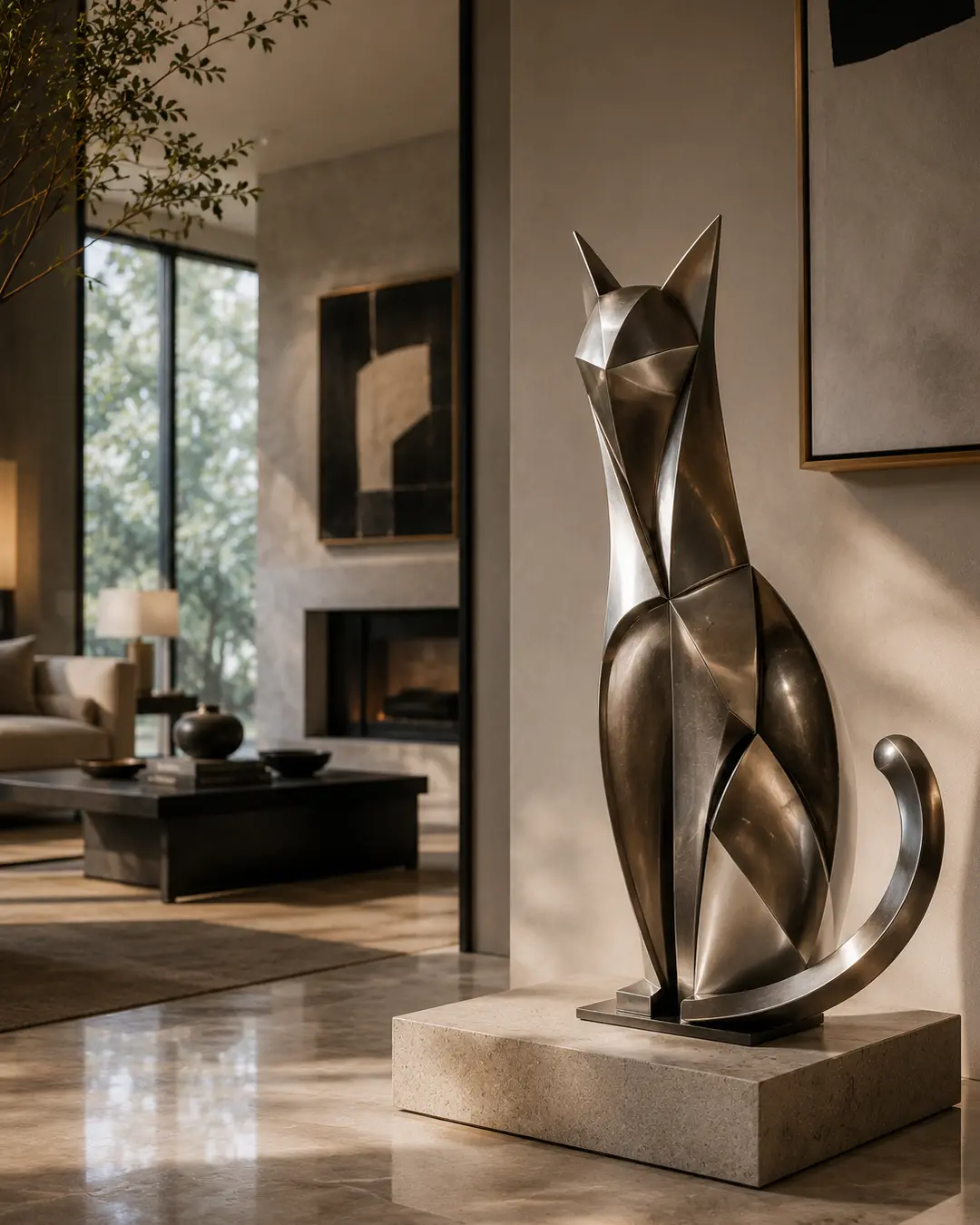
From across the room, it looks like an abstract piece of polished metal.
There are intersecting planes, sweeping curves and negative spaces that change depending on where you stand.
Walk a little closer.
Two points become ears.
A long piece of metal becomes a tail.
Suddenly the entire sculpture resolves itself.
It’s a cat.
And once you’ve seen it, you can’t quite understand how you didn’t see it immediately.
The Old Cat
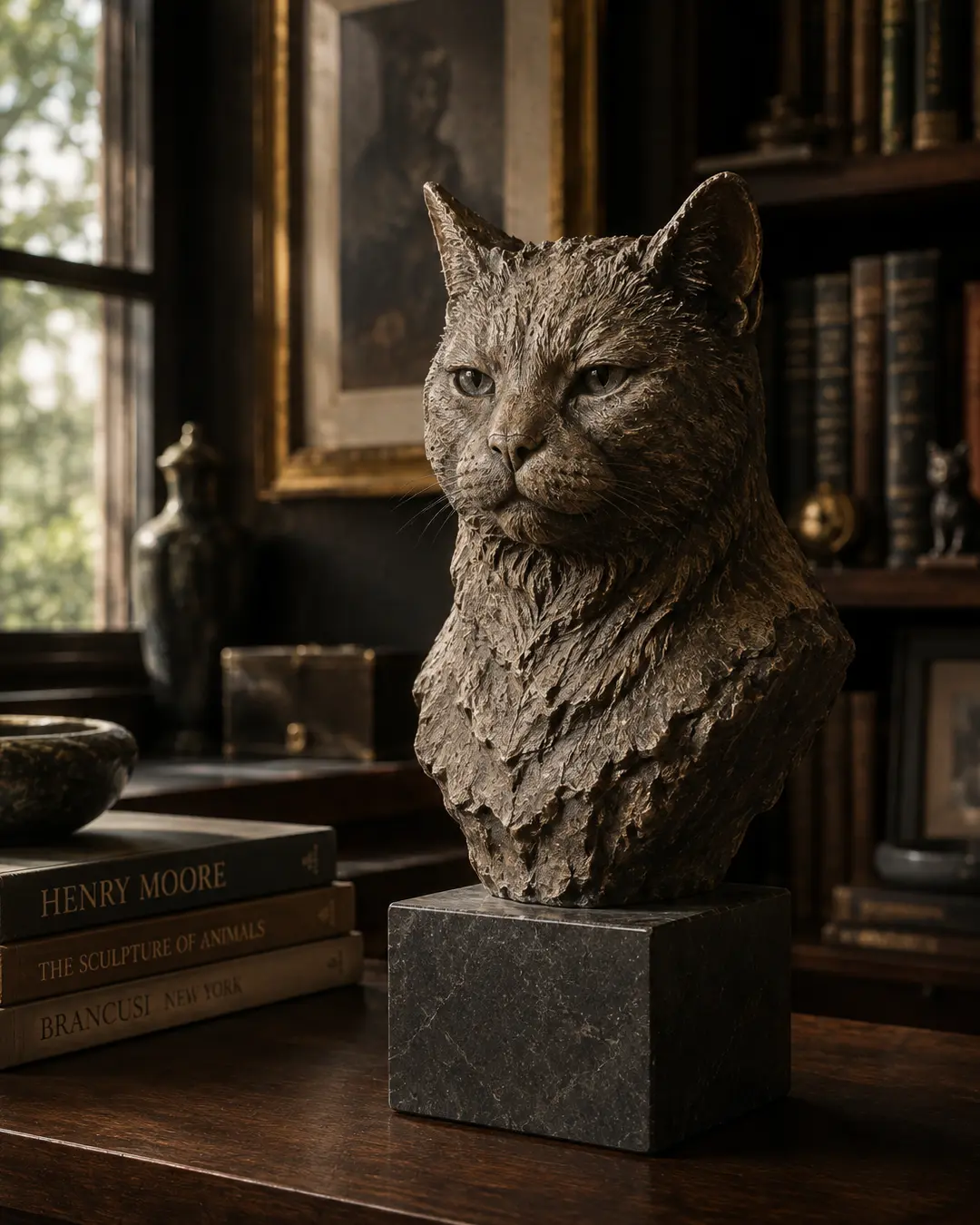
Not every sculpture needs to celebrate feline perfection.
This one celebrates a life.
A beautifully modeled bust captures an elderly cat exactly as it is: the slightly uneven ears, heavier eyes, imperfect fur and face that has acquired character over many years.
It isn’t sentimental.
It is simply observant.
Placed on a pedestal in a library or beside a collection of books and objects gathered over decades, the sculpture becomes something more than decoration.
It feels like a portrait.
Because that’s exactly what it is.
The Cat in the Garden
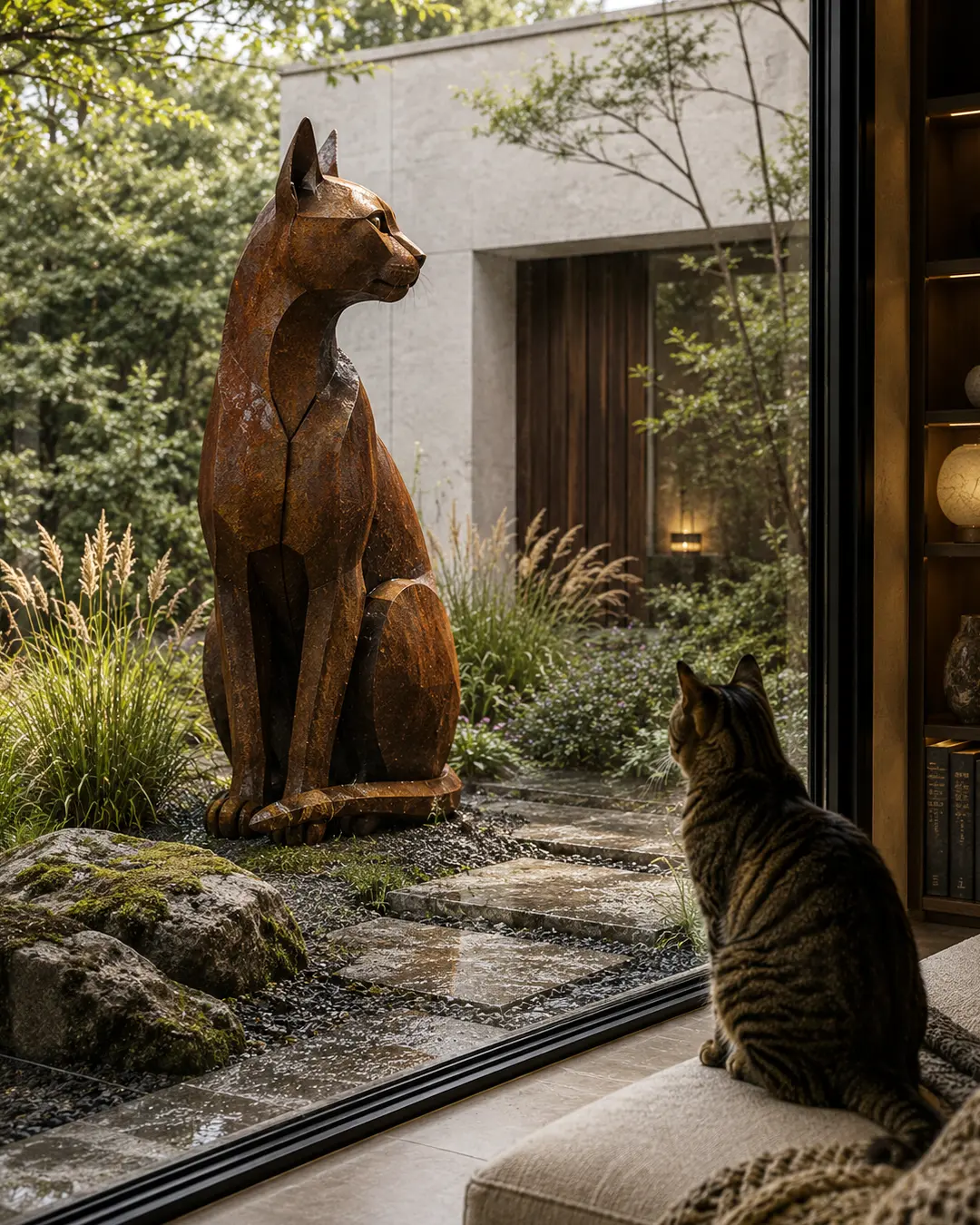
Finally, we take the sculpture outside.
Beyond enormous glass doors, a weathered bronze or Corten steel cat stands among ornamental grasses, stone and carefully considered landscaping.
Rain changes its surface.
Snow collects along its back.
Plants grow around its feet.
Viewed from inside the house, the sculpture becomes part of the landscape and part of the architecture at the same time.
And perhaps one afternoon, the family’s real cat sits safely inside the window staring directly at its enormous outdoor counterpart.
Whether that’s admiration or judgment is probably best left to the cat.
When the Cat Becomes Part of the Room
There is no reason art inspired by our animals has to feel like “pet decor.”
A cat sculpture can be funny without becoming novelty art. It can be personal without becoming sentimental. And it can be unmistakably feline while still belonging in an extraordinary interior.
Perhaps that is why cats work so well as sculptural subjects.
Reduce one to a handful of lines and we still recognize it.
Make it six inches long and it can quietly occupy an end table.
Make it eight feet tall and somehow we’re not entirely surprised that the cat has taken over the house.
That part, at least, feels perfectly realistic.