For several weeks, the children have been everywhere.
They have spent long mornings at home, played in the backyard, shared family outings and provided a steady stream of sounds, movement and dropped crumbs. Even when they were not actively playing with the dog, their presence became part of the household’s summer rhythm.
Then school begins, and the house becomes quiet.
Dogs do not understand the school calendar or know that the children will return when the final bell rings. They simply recognize that familiar people who were home yesterday have suddenly disappeared.
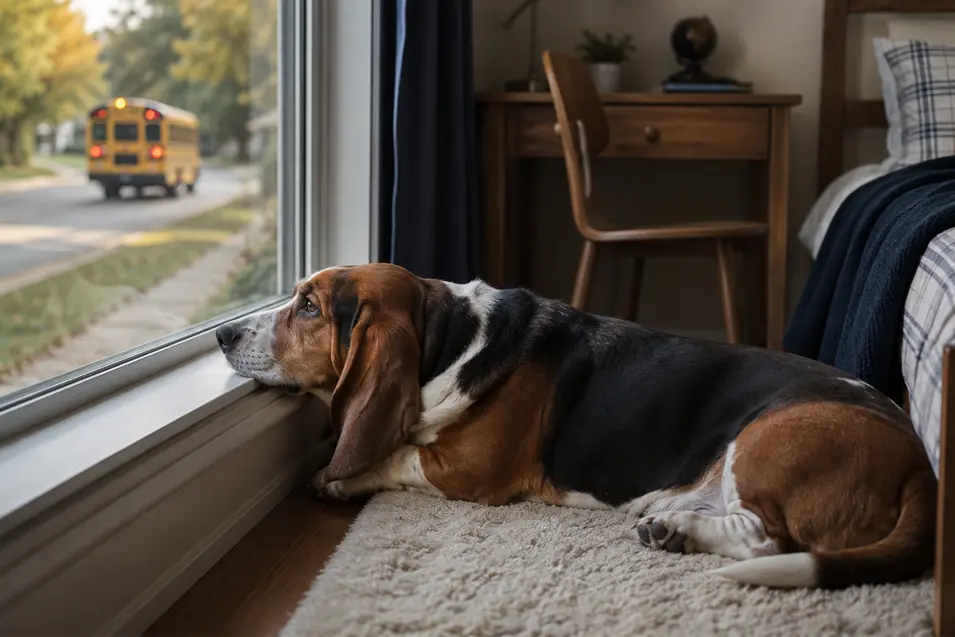
Some dogs barely react. Others wait by the door, wander through the children’s rooms or become unusually excited when the school bus arrives.
So, does your dog actually miss the kids?
In many cases, the answer is yes—but the way dogs experience and express that absence can vary considerably.
Dogs Form Real Relationships With Children
Dogs learn to associate individual family members with different experiences.
One person may provide breakfast, another may lead the longest walks and a child may be responsible for games, affection or quiet companionship on the sofa.
When that child is suddenly gone for several hours each weekday, the dog loses more than a playmate. They also lose a familiar part of their routine.
The dog may notice:
- The child is no longer present at breakfast
- Morning play has disappeared
- The house becomes quiet earlier
- Walks happen at different times
- Bedroom doors remain closed
- Fewer people move through the house
- Afternoon activities have changed
Dogs cannot explain these changes, but they are very capable of noticing them.
How Do Dogs Know the Kids Are Gone?
Dogs recognize patterns extraordinarily well.
The sound of an alarm, a lunchbox closing or a backpack being lifted may signal that the morning departure is approaching. The school bus, a particular car or activity near the front door may tell the dog that the children are about to return.
Dogs also use scent to understand their environment. A child’s bedroom, clothing and belongings continue to smell familiar even when the child is away.
Some dogs may spend time near those familiar scents during the day. Others simply settle in their usual resting place and wait for the household to become active again.
Signs Your Dog May Miss the Kids
A dog cannot say that they miss someone, so owners must look at changes in behaviour.
Possible signs include:
- Waiting near the front door
- Looking out the window around dismissal time
- Resting in the child’s bedroom
- Carrying the child’s clothing or belongings
- Following the child closely after school
- Becoming unusually excited when the child returns
- Appearing quieter during the day
- Wandering through the house
- Losing interest in play
- Barking at school buses or familiar vehicles
- Seeking more attention from the adults at home
These behaviours do not prove that a dog is experiencing sadness in the same way a person would. They do suggest that the dog has noticed the child’s absence and the change in routine.
Some Dogs Are Simply Enjoying the Quiet
Not every dog is distressed when school begins.
A senior dog may appreciate having several uninterrupted hours to sleep. A shy dog may relax once a busy summer household becomes calmer. Even a highly social dog may eat breakfast and nap peacefully until the children return.
Owners should avoid creating a problem where none exists.
If your dog is eating normally, resting comfortably, behaving normally when awake and showing no signs of distress, they may be adjusting perfectly well.
Missing the children does not necessarily mean suffering throughout the day.
Boredom Can Look Like Missing Someone
Children often provide a great deal of entertainment without anyone realizing it.
They open doors, move toys, go into the yard and create opportunities for the dog to follow, watch and participate. Once they return to school, the dog may have fewer things to do.
Signs of boredom can include:
- Chewing household objects
- Searching garbage bins
- Stealing items
- Repeated barking
- Digging
- Pacing
- Demanding attention when someone is home
- Becoming overly energetic in the evening
The dog may indeed miss the children, but they may also miss the activity the children created.
A morning walk, food puzzle, sniffing game or midday visit can help replace some of that lost stimulation.
Stress Can Be More Serious
Some dogs have a more difficult reaction to the household becoming empty.
Watch for:
- Continuous pacing
- Panting when the house is not warm
- Repeated whining, barking or howling
- Drooling
- Scratching or chewing at doors
- Destructive behaviour near exits
- Accidents despite being housetrained
- Refusing food when alone
- Attempts to escape
- Injuries caused while trying to get out
These behaviours may indicate significant separation-related distress rather than ordinary boredom.
A dog that panics when left alone will not necessarily improve with another toy. Contact your veterinarian if the behaviour is severe, begins suddenly or continues despite a gradual adjustment period.
A veterinarian can rule out medical causes and help determine whether a qualified behaviour professional should be involved.
Puppies May Find the Change Especially Difficult
A puppy brought home during summer may have rarely experienced an empty house.
If the family has been present almost constantly, the return to school and work can be an abrupt introduction to being alone. Puppies also need frequent bathroom breaks, meals, supervision and gradual training.
They should not suddenly be expected to remain alone for a full school or workday.
Arrange dependable daytime care and practise short periods apart before the household schedule changes. The goal is to help the puppy learn that being alone is safe and temporary.
Senior Dogs May Need Extra Support
Older dogs can also struggle with a changing routine.
A senior dog may need more frequent bathroom breaks, medication or help moving around the home. Changes in vision, hearing or cognitive function may make an empty house feel different from previous school years.
Some senior dogs become more dependent on familiar people and routines. Others prefer the quiet but still require practical support during the day.
Speak with your veterinarian if an older dog develops new pacing, nighttime restlessness, accidents, confusion or changes in social behaviour.
Prepare Before School Begins
Whenever possible, begin adjusting the dog’s routine before the first day of school.
Gradually move wake-up times, walks and meals toward the schedule the family will follow in September. Practise leaving the dog for short periods, even if someone has been home throughout summer.
This helps separate two major changes:
- The household adopts a new routine
- The dog begins spending time alone
Introducing both abruptly on the same morning can make the transition more difficult.
Keep Important Parts of the Routine Consistent
Dogs do not need every day to be identical, but predictable anchors can help them adjust.
Try to maintain consistent times for:
- Morning bathroom breaks
- Meals
- Walks
- Midday care
- After-school interaction
- Evening relaxation
- Bedtime
The dog may not know when school ends, but they can learn that a walk or game reliably happens once the children return.
Make Mornings Easier
School mornings can become rushed and chaotic. The dog’s needs should not disappear between packed lunches and missing shoes.
A useful morning routine may include:
- A bathroom break
- A sniff-focused walk
- Breakfast in a puzzle feeder
- Fresh water
- A calm departure
The walk does not need to be an enormous adventure. A short outing with time to sniff may help the dog settle more effectively than a hurried trip to the yard.
Give the Dog Something to Do
Enrichment can help make a quiet school day more satisfying.
Options include:
- Food puzzles
- Frozen food-filled toys
- Snuffle mats
- Treat-dispensing toys
- Kibble hidden in safe locations
- Rotated chew toys
- A comfortable window-viewing area for calm dogs
- White noise or quiet background sound
Every new toy or activity should be tested while someone is home. What is safe for one dog may be destroyed or swallowed by another.
Use part of the dog’s regular meal when possible rather than adding large amounts of rich treats.
Arrange a Midday Visit
A long school and workday may be too much time without a bathroom break or social contact.
A family member, neighbour, pet sitter or professional dog walker can provide:
- A bathroom opportunity
- A water check
- A short walk
- Gentle play
- A little companionship
Puppies, seniors and dogs with medical conditions may require more frequent visits.
The midday break does not need to exhaust the dog. Its purpose is to divide a long period of solitude into manageable sections.
Create an After-School Ritual
One of the best ways to maintain the relationship between children and their dog is to protect a small piece of time after school.
The ritual might be:
- A walk around the block
- Ten minutes of fetch
- A short training session
- Gentle grooming
- Preparing the dog’s dinner
- Sitting together during homework
- A quiet cuddle when the dog chooses it
The activity does not need to be long or elaborate. What matters is that it happens consistently enough to remain part of the relationship.
Keep Greetings Calm
Some dogs become extremely excited when the children return.
Running, squealing and dropping to the floor may increase the dog’s excitement, leading to jumping, mouthing or accidental collisions.
Teach children to enter calmly, put their belongings away and greet the dog once everyone has settled. If the dog jumps, wait for all four paws to return to the floor before offering attention.
A calm greeting does not weaken the bond. It makes the reunion safer and easier for everyone.
Let the Dog Choose How to Reconnect
A child may want an enthusiastic reunion while the dog prefers to continue sleeping.
Teach children to invite interaction rather than demand it. They can call the dog, offer a toy or sit nearby and allow the dog to approach.
Do not encourage children to hug, climb on or wake a resting dog.
Respecting the dog’s boundaries builds trust and helps ensure that after-school attention remains positive.
Use the Child’s Scent Carefully
A dog may find familiar scents comforting.
A plain item of worn clothing can be placed near the dog’s bed, but only if the dog will not chew or swallow it. Avoid clothing with drawstrings, buttons, zippers or other removable pieces.
This is not necessary for every dog, and it will not treat serious separation anxiety. It may simply provide another familiar element in the resting area.
Avoid Weekend Whiplash
Weekends can become packed with walks, games, visitors and outings after five quiet weekdays.
Family adventures are valuable, but an extreme contrast between weekdays and weekends may make Monday feel especially abrupt.
Try to maintain a few consistent elements every day, including mealtimes, walks and periods of quiet rest.
The dog can still enjoy a weekend hike without having every waking hour filled with activity.
Use a Camera to See What Happens
A home camera can help answer the question more clearly.
Your dog may watch the door for five minutes and then sleep peacefully. They may become active shortly before the children usually return. Or they may pace and vocalize for much of the day.
Observing the dog’s actual behaviour is more useful than guessing based only on an enthusiastic reunion.
Avoid repeatedly speaking through the camera unless you know it helps. Hearing a familiar voice without finding the person may confuse some dogs.
Do Not Punish After-School Discoveries
If the dog chewed a shoe or had an accident hours earlier, punishment after the family returns will not clearly communicate what the dog did wrong.
It may instead make the dog anxious about the children’s arrival or the owner’s reaction.
Clean up calmly and look for the cause. The dog may need more exercise, a midday bathroom break, safer confinement, different enrichment or professional help for separation-related distress.
When to Contact a Veterinarian
Speak with your veterinarian if your dog:
- Stops eating
- Develops sudden behaviour changes
- Injures themselves while alone
- Attempts to escape
- Destroys doors or windows
- Vocalizes continuously
- Has repeated accidents
- Becomes unusually withdrawn
- Shows severe distress before departures
- Does not improve as the routine becomes familiar
Medical conditions can sometimes cause changes that resemble anxiety or poor adjustment.
Video of the dog’s behaviour while alone can provide useful information during a veterinary or behavioural consultation.
The Children Still Matter—Even When They Are at School
A dog may not understand where the children go each morning, but they recognize that someone important is missing from the house.
They may wait by the door, sleep in a child’s room or simply notice that the day has become much quieter. Most dogs adjust as the new routine becomes predictable, particularly when their needs for exercise, enrichment, companionship and rest continue to be met.
The strongest relationships do not require children and pets to spend every hour together.
A short morning goodbye, a dependable after-school walk and quiet time together in the evening can reassure the dog that the school year has changed the schedule—not the friendship.