Why September Can Be Hard on Dogs
September often feels like a fresh start. Children return to school, adults settle back into regular work schedules and households begin moving at a more predictable pace after summer.
For many dogs, however, the change is not necessarily welcome.
Summer may have meant people being home more often, children available for play, longer walks, weekend trips, backyard afternoons and plenty of activity throughout the house. Then September arrives and, seemingly overnight, everyone disappears.
Dogs do not understand the school calendar or why vacations must end. They simply know that the people, routines and activities they enjoyed have suddenly changed. Some dogs adjust within days, while others need considerably more help navigating the transition.
Dogs Notice Changes in the Household
Dogs are remarkably good at recognizing patterns. They learn when people wake up, when meals are served, when walks usually happen and which everyday sounds suggest that someone is about to leave the house.
During summer, those patterns frequently become more relaxed. Morning alarms may ring later, children spend more time at home and families are more likely to include their dogs in outings and activities.
September can abruptly replace that relaxed schedule with early mornings, packed lunches, school buses and long stretches of quiet.
Even if your dog has experienced the same transition in previous years, it may still take time to adjust. Age, health, changes within the family and recent experiences can all affect how a dog responds.
The Children Suddenly Disappear
For a family dog, children can be a major source of companionship and entertainment. They may spend the summer playing in the yard, dropping crumbs beneath the kitchen table or simply providing another warm body to nap beside.
When school begins, that companionship may disappear for six or more hours each weekday.
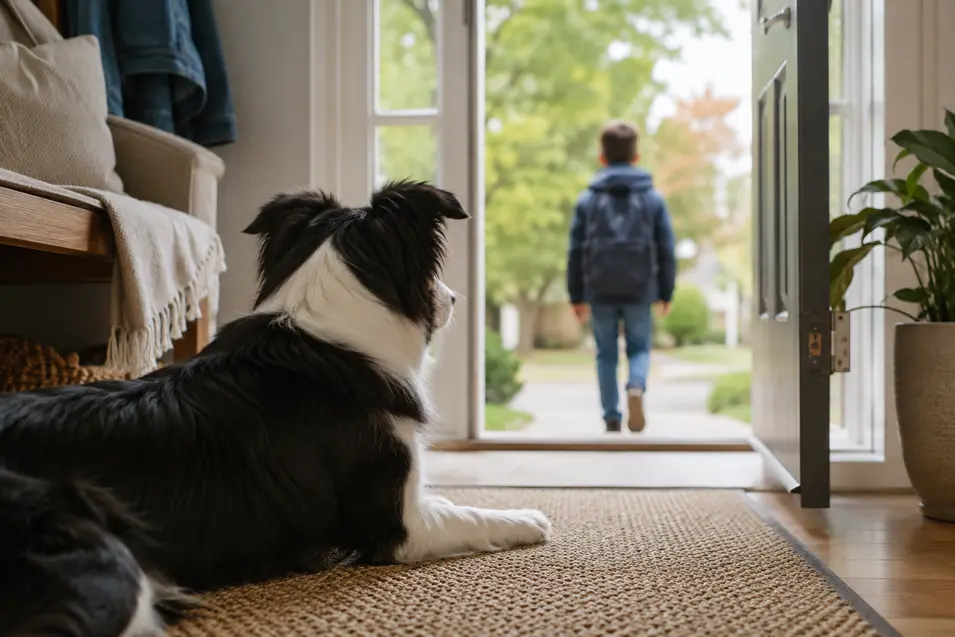
Some dogs will enjoy the opportunity to sleep in peace. Others may wait near the door, wander through the house or become unusually excited when the children return.
Children can also miss their dogs during the school day. Creating a small after-school ritual—such as a short walk, a few minutes of play or quiet time together—can help both the dog and the child reconnect.
Owners Return to Regular Work Schedules
Children are not the only ones whose schedules change in September. Summer holidays end, flexible hours become less flexible and many adults return to spending more time away from home.
A dog that has rarely been alone during July and August may suddenly face several quiet hours each day.
Possible signs that your dog is struggling with this adjustment include:
- Following family members more closely than usual
- Pacing or appearing unsettled as people prepare to leave
- Barking, whining or howling when left alone
- Chewing or scratching near doors and windows
- Having accidents despite being housetrained
- Refusing food until someone returns
- Becoming excessively excited when the family comes home
- Sleeping much more than usual or seeming withdrawn
These behaviours should not be treated as spite or revenge. Dogs do not damage a door because they are angry that someone went to work. The behaviour may be connected to stress, boredom, unmet physical needs or difficulty coping with being alone.
Daily Activity Often Drops
September schedules can become busy very quickly. Parents are juggling work, school drop-offs, homework, activities and appointments. The dog’s long summer walk can gradually become a rushed trip around the block.
At the same time, children who once spent hours playing with the dog may now be sitting in classrooms, doing homework or attending after-school activities.
Reduced exercise can affect more than a dog’s physical fitness. Walks allow dogs to sniff, explore and experience the world beyond their property. When those opportunities suddenly decline, some dogs become restless, frustrated or more likely to create their own entertainment.
Maintaining a realistic activity schedule can make the transition easier. It does not need to recreate every summer adventure. A brisk morning walk, a longer evening outing and a few short play sessions may be enough to give the day structure.
On especially busy days, consider using a dog walker, arranging a visit from a trusted friend or sending a sociable dog to a reputable daycare occasionally.
Shorter Days Change the Rhythm of the Home
As September progresses, daylight hours begin to shrink. Morning walks may happen before sunrise, while evening walks become cooler and darker.
The weather may also become less inviting. Rain, wind and colder temperatures can shorten outdoor time for both dogs and their people.
Rather than allowing activity to disappear with the daylight, prepare for the seasonal change. Reflective clothing, a lighted collar or leash and a small flashlight can make darker walks safer. Indoor games can help fill the gaps when the weather is particularly unpleasant.
Hide treats around a room, practise basic commands, introduce a puzzle feeder or play a gentle game of tug. Ten minutes of focused interaction can be more satisfying than an hour spent wandering around the house with nothing to do.
How to Make the September Transition Easier
Whenever possible, begin changing your dog’s routine before the first day of school or the return to work. Gradual adjustments tend to be easier than an immediate switch from constant company to an empty house.
Practise Short Periods Apart
Leave your dog alone for brief, manageable periods while summer schedules are still flexible. This helps re-establish the idea that people leave and reliably return.
Keep departures and arrivals calm. A lengthy, emotional goodbye may make leaving feel like a much bigger event.
Create a Predictable Morning Routine
Dogs generally cope better when they can anticipate what happens next. Try to keep wake-up times, meals, bathroom breaks and walks reasonably consistent.
A dog who receives a walk, breakfast and a chance to settle before everyone leaves may be better prepared for a quiet morning.
Provide Something Safe to Do
A food-filled toy, puzzle feeder or long-lasting chew can help create a positive association with the household becoming quiet.
Choose items that are appropriate for your dog’s size and chewing style. New toys and chews should be tested while someone is home before they are left with an unsupervised dog.
Protect the Evening Walk
When schedules become crowded, the dog’s walk is often the first activity to be shortened or skipped. Treating it as part of the household routine makes it less likely to disappear.
The walk does not always need to be long or strenuous. Allowing a dog to move at a comfortable pace and spend time sniffing can provide valuable mental stimulation.
Add Small Moments of Connection
Dogs do not require constant entertainment, but they do benefit from meaningful interaction. A short training session before dinner, a game after homework or a quiet brushing session can provide attention without overwhelming an already busy evening.
Let the Dog Rest
Not every dog needs a full schedule of replacement activities. After a busy summer, some dogs may appreciate having more time to sleep.
The goal is not to keep your dog occupied every minute. It is to provide an appropriate balance of exercise, enrichment, companionship and rest.
Be Careful About Creating Weekend Whiplash
Families sometimes fall into a pattern of leaving the dog alone throughout the week and then packing the weekend with hikes, visitors, road trips and other activities.
While weekend adventures can be wonderful, an extreme difference between weekdays and weekends may make Monday mornings more difficult for some dogs.
Try to maintain a few consistent anchors throughout the week, including regular mealtimes, walks and bedtime routines. Predictability can help a dog feel secure even when individual days look different.
When Your Dog Needs More Help
Mild changes in behaviour may improve as the household settles into its new routine. More serious distress should not be ignored.
Speak with your veterinarian if your dog’s behaviour changes suddenly, becomes severe or continues despite your efforts to make the transition easier. Medical problems can sometimes resemble anxiety or cause a dog to behave differently.
Dogs that panic when left alone may need a structured treatment plan developed with a veterinarian or qualified behaviour professional. Simply allowing a distressed dog to “get used to it” can make the problem worse.
September Is an Adjustment for Everyone
The return to school and regular work schedules can be hectic for the entire household. Dogs may not have backpacks to pack or alarms to answer, but they experience the disruption in their own way.
A consistent routine, sufficient exercise and a little extra attention can make September much easier. Most importantly, remember that unusual behaviour is communication. Your dog is not trying to make a busy month more difficult—they may simply be trying to understand where everyone went.