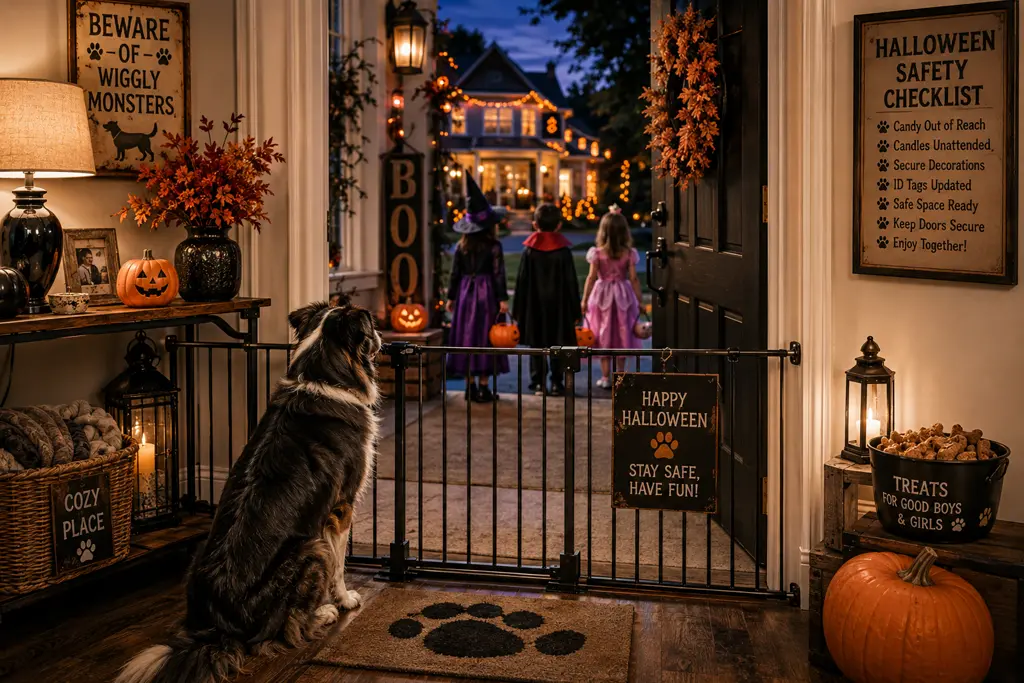
Halloween is one of the most entertaining nights of the year for families, but our dogs don’t necessarily understand why the neighbourhood suddenly fills with strangers in costumes, the doorbell rings every few minutes and bowls of food they aren’t allowed to eat appear throughout the house.
Even dogs that are normally relaxed can find Halloween unusually stressful.
Then there are the practical dangers: chocolate, sugar-free candy, discarded wrappers, candles, electrical decorations, costumes, glow sticks and a front door that may open dozens of times in a single evening.
Fortunately, most Halloween problems are preventable.
Whether your dog will be joining the festivities or spending October 31st somewhere quiet, a little preparation can make Halloween considerably safer—and more enjoyable—for everyone.
Keep Halloween Candy Away From Your Dog
The enormous bowl of Halloween candy sitting near the front door is probably the most obvious danger of the evening.
Chocolate can be toxic to dogs, with darker chocolates generally presenting a greater risk because of their higher concentrations of theobromine and caffeine.
Sugar-free candy and gum can present another serious danger if they contain xylitol, a sweetener that can cause a rapid drop in a dog’s blood sugar and potentially lead to severe complications.
Other Halloween foods can create problems too.
Raisins can be toxic to dogs. Macadamia nuts can cause illness. Candy wrappers and lollipop sticks can become choking hazards or cause gastrointestinal obstruction if swallowed.
Even ordinary candy that doesn’t contain a specifically toxic ingredient can contain enough fat and sugar to cause stomach problems.
Keep candy in a secure location your dog cannot reach rather than assuming a bowl on a high table will be safe.
Dogs can be remarkably resourceful when chocolate is involved.
Know What to Do If Your Dog Eats Halloween Candy
If you discover that your dog has eaten Halloween candy, don’t wait for symptoms before deciding whether it matters.
Try to determine:
- what your dog ate
- approximately how much was eaten
- when it happened
- your dog’s approximate weight
- whether any wrappers or packaging are also missing
Keep the packaging if possible because the ingredient list can help determine the level of risk.
Contact your veterinarian, an emergency veterinary clinic or an animal poison-control service promptly for advice.
Don’t induce vomiting or try a home remedy unless a veterinary professional specifically tells you to do so. The appropriate response depends on what was eaten, how much was consumed and your dog’s individual circumstances.
Halloween is one night when knowing the location and phone number of your nearest emergency veterinary clinic before you need it is particularly worthwhile.
Don’t Forget About Candy Wrappers
The candy may disappear, but the danger doesn’t necessarily disappear with it.
Dogs can swallow foil, cellophane, paper wrappers, plastic packaging and lollipop sticks while investigating the remnants of Halloween night.
That can create choking hazards or intestinal blockages.
Pay particular attention to children’s bedrooms, sofa cushions, treat bags and the floor around the front entrance on Halloween night and the following morning.
The morning-after cleanup isn’t just about getting the house back in order.
It’s part of keeping your dog safe.
Create a Safe Place Before Trick-or-Treating Begins
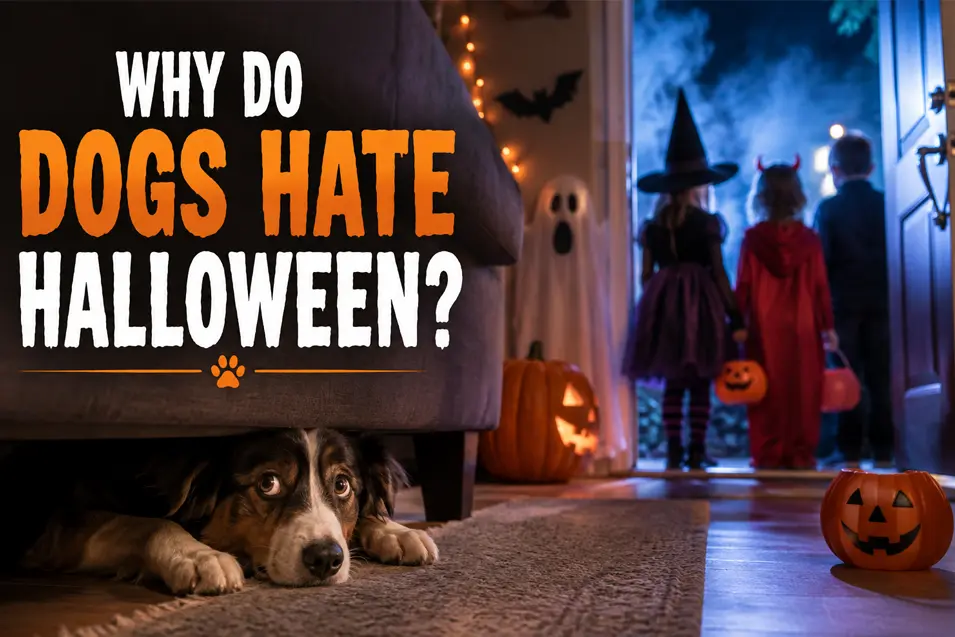
For many dogs, the biggest Halloween problem isn’t candy.
It’s the front door.
The doorbell rings.
Someone knocks.
The door opens.
Several strangely dressed people appear.
The door closes.
Two minutes later, the entire process happens again.
For a dog that normally reacts to a single visitor, dozens of trick-or-treaters can quickly become overwhelming.
Set up a comfortable area away from the entrance before visitors begin arriving. Depending on your dog, that might be a bedroom, family room, crate or another familiar space.
Include a comfortable bed, water and something appropriate to occupy your dog.
Closing curtains and playing music, television or white noise may also help reduce the sights and sounds coming from outside.
The goal isn’t to punish or isolate your dog.
It’s to give them somewhere predictable where Halloween isn’t happening quite so loudly.
Don’t Force Your Dog to Greet Trick-or-Treaters
A dog that loves meeting your friends may react very differently to a stranger wearing a mask, cape, enormous hat or inflatable dinosaur costume.
Dogs rely heavily on familiar body shapes, movement, facial expressions and scent when interpreting people.
Halloween changes many of those cues.
Children may also move unpredictably, shout excitedly or approach dogs more quickly than adults would.
Never assume your normally friendly dog wants to participate.
If your dog backs away, hides, barks, growls, freezes or otherwise appears uncomfortable, give them more distance.
Halloween isn’t the night to insist that your dog socialize.
Be Extra Careful With the Front Door
A constantly opening front door creates one of Halloween’s most preventable risks.
Even a dog that normally shows no interest in escaping may become frightened by a costume, loud noise or excited group of children and suddenly bolt outside.
A baby gate, closed interior door or other physical barrier can provide valuable backup between your dog and the entrance.
Don’t rely solely on commands such as “stay.”
Halloween introduces too many unusual distractions to make an open doorway worth the gamble.
If your dog is particularly anxious or inclined to rush the door, keeping them in another room during peak trick-or-treating hours may be the safest solution.
Check Your Dog’s Identification
Halloween is an excellent reminder to check that your dog’s identification information is current.
Make sure their collar fits properly and their ID tag is readable.
If your dog is microchipped, confirm that the registration contains your current telephone number and contact information.
A microchip doesn’t prevent a dog from becoming lost, but accurate registration can dramatically improve the chances of getting them home if someone finds them.
Take a recent photograph of your dog as well.
Hopefully you’ll never need it.
But on a night when doors are constantly opening, being prepared costs nothing.
Think Carefully About Halloween Costumes
Some dogs genuinely seem comfortable wearing costumes.
Others tolerate them.
And some make their opinion unmistakably clear.
A Halloween costume should never restrict your dog’s breathing, vision, hearing or natural movement. Avoid tight elastic, dangling pieces that can be chewed, small decorations that could be swallowed and anything that interferes with walking or going to the bathroom.
Check carefully around the neck, chest and legs for rubbing or pressure.
Let your dog try the costume before Halloween rather than introducing it five minutes before everyone leaves the house.
And watch your dog’s behaviour.
If your dog freezes, repeatedly tries to remove the costume, pants excessively, hides or appears distressed, take it off.
The photograph isn’t worth making your dog miserable.
A Halloween bandana or festive collar can provide plenty of seasonal personality for a dog that doesn’t enjoy dressing up.
Keep Candles and Jack-o’-Lanterns Out of Reach
Real candles create beautiful Halloween atmosphere.
They also create open flames at exactly the height curious noses and wagging tails can reach.
Dogs can knock over candles, brush against flames or send a decorated pumpkin tumbling from a table.
Place burning candles somewhere genuinely inaccessible to pets and never leave them unattended.
Battery-operated LED candles are an excellent alternative for jack-o’-lanterns and many indoor displays. They create much of the same effect without an exposed flame.
Even then, batteries and small electronic components should remain inaccessible to dogs that like to chew.
Secure Electrical Cords and Decorations
Halloween decorating increasingly involves lights, animated figures, projectors and other powered decorations.
That means cords.
Keep electrical cords away from areas where your dog walks, sleeps or plays, particularly if your dog is inclined to chew.
Secure loose wires so they don’t create tripping or entanglement hazards.
Decorations with moving parts, sudden noises or motion sensors can also frighten dogs unexpectedly.
That seven-foot skeleton that screams when somebody approaches may be hilarious to visitors.
Your dog may disagree.
Introduce animated decorations gradually rather than surprising your dog with them on Halloween night.
Be Careful With Fake Cobwebs and Small Decorations
Artificial cobwebs look wonderfully spooky stretched across furniture and doorways, but loose synthetic fibres aren’t something you want your dog chewing or swallowing.
The same applies to small plastic spiders, decorative bones, miniature pumpkins and other seasonal accessories.
Think about Halloween decorations the same way you would think about dog-proofing anything else in your home.
If it is small enough to swallow, interesting enough to chew or fragile enough to break, don’t leave it within reach.
Watch Glow Sticks and Glow Jewellery
Glow sticks, bracelets and necklaces are everywhere on Halloween.
Dogs occasionally bite into them.
The liquid inside many glow products is intensely bitter and can cause drooling, pawing at the mouth and distress. The plastic itself can also become a chewing or swallowing hazard.
Keep glow products away from pets and pick up discarded ones promptly after trick-or-treating.
If your dog bites into one, contact your veterinarian or an animal poison-control service for advice.
Walk Your Dog Before the Neighbourhood Gets Busy
If possible, take your dog’s main walk earlier than usual.
A quiet late-afternoon walk can be considerably easier than trying to navigate sidewalks filled with excited children, costumes, decorations and increased traffic after dark.
It also gives your dog exercise before spending part of the evening indoors.
If you do walk after dark, use a secure leash and consider reflective or illuminated gear so drivers, cyclists and other pedestrians can see both of you.
Don’t use retractable leashes in crowded Halloween environments where you may need immediate control.
And remember that decorations can change familiar surroundings dramatically.
A dog that walks past the same house every day may suddenly be confronted by an enormous inflatable ghost moving in the wind.
Give them space and let them investigate at their own pace.
Keep Dogs Away From Halloween Parties If They Aren’t Enjoying Them
A Halloween party introduces many of the same issues as trick-or-treating, except the strangers are now inside the house.
There may be loud music, costumes, food, drinks, decorations and people moving through rooms your dog normally considers predictable.
Some social dogs will enjoy being part of the evening.
Others won’t.
Give your dog access to a quiet retreat where guests aren’t allowed to follow them.
Make sure visitors understand not to feed your dog from the party table.
If your dog is clearly uncomfortable, letting them spend the evening somewhere peaceful is far kinder than expecting them to participate.
Keep Human Halloween Drinks Away From Dogs
Party food isn’t the only concern.
Alcohol should always remain inaccessible to pets.
Sweet cocktails, creamy drinks and unattended glasses can be particularly tempting because they may smell interesting or contain ingredients dogs enjoy.
Cannabis products and other intoxicating substances should likewise be stored securely away from pets.
Guests may not automatically think about where they leave a glass, plate or bag, so the responsibility ultimately falls to the person hosting the party.
Be Careful With Pumpkins
Plain cooked pumpkin is commonly used in dog foods and treats, but that doesn’t mean your Halloween jack-o’-lantern should become a snack.
Pumpkins sitting outside for days can begin to rot or develop mould.
Decorated pumpkins may also contain candles, wax, paint, glitter, adhesives or other materials that aren’t intended for consumption.
Let the jack-o’-lantern remain decoration.
If you want your dog to enjoy pumpkin, give them an appropriate dog-safe food or treat instead.
Remember That Halloween Doesn’t End at Midnight
November 1st deserves a quick safety inspection.
Walk through the house and yard looking for dropped candy, wrappers, glow sticks, broken decorations and anything else that appeared during the previous night’s festivities.
Check the sidewalk and front yard as well.
Trick-or-treaters can leave behind surprising amounts of candy and packaging.
If you normally walk your dog first thing in the morning, pay particular attention to what they’re sniffing.
That mysterious object beside the sidewalk may be nothing.
Or it may be a chocolate bar somebody dropped twelve hours earlier.
Pay Attention to Your Dog, Not the Calendar
The best Halloween plan ultimately depends on the dog.
One dog may happily wear a ridiculous costume, accompany the family around the neighbourhood and greet visitors until the last jack-o’-lantern goes dark.
Another may be happiest sleeping upstairs while Halloween happens somewhere else.
Both are perfectly good ways for a dog to spend October 31st.
Watch your dog’s body language, anticipate the obvious hazards and give them the ability to retreat when they need to.
Halloween should be fun because your dog feels safe—not because they were required to participate.
With the candy secured, decorations dog-proofed, identification updated and a quiet retreat ready, the humans can worry about the truly difficult Halloween decisions.
Like deciding who gets the last chocolate bar.
The dog doesn’t.
More Halloween Fun for Pet Lovers
Once you’ve taken care of the practical side of Halloween, it’s time for the fun stuff.
From wonderfully spooky dog houses to pet-inspired artwork and entire rooms transformed with incredible murals, we’ve been imagining what happens when pets become part of Halloween itself.
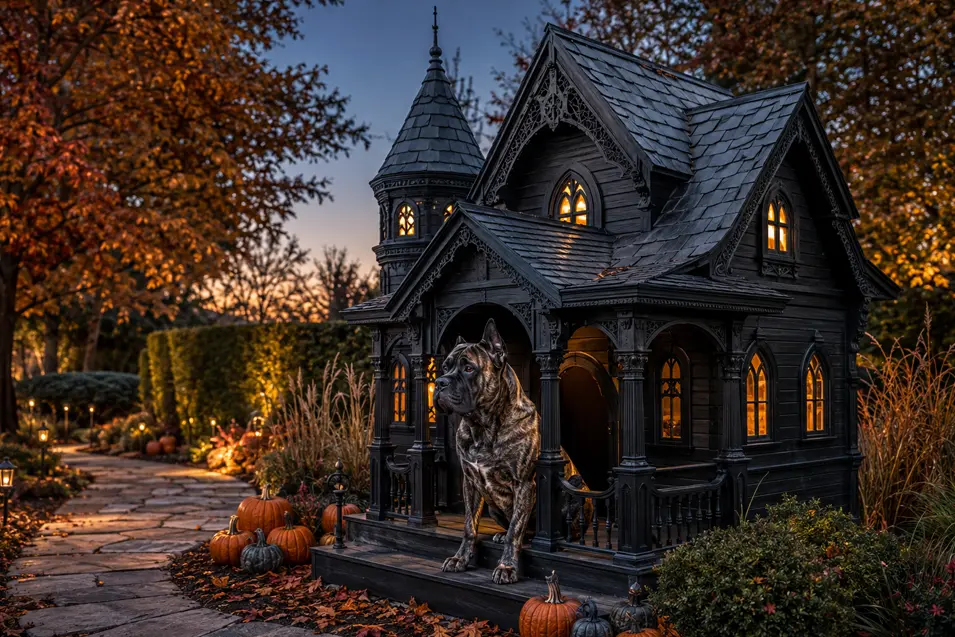
10 Incredible Halloween Dog Houses That Are Beautifully Spooky
From Gothic mansions to wonderfully creepy hideaways, these Halloween dog houses prove your dog’s home can get into the spooky-season spirit too.
Halloween Pet Art in Beautiful Homes
Dogs, cats and a few unexpected animals become the stars of Halloween-inspired artwork displayed in genuinely beautiful interiors.
12 Incredible Halloween Pet Murals That Transform a Room
See how oversized Halloween-inspired pet murals can turn an ordinary wall into something imaginative, dramatic and completely unforgettable.
20 Dogs Who Took Their Halloween Costumes Way Too Seriously
Some dogs wear a costume.
These dogs apparently received a character brief, hired a stylist and committed completely to the role.
A Safer Halloween Is a Better Halloween
Halloween doesn’t need to be stressful or dangerous for dogs.
Most of the biggest risks are remarkably easy to manage once you know they’re there: put the candy away, control access to the front door, keep flames and decorations out of reach, check identification and give your dog somewhere quiet to escape the commotion.
Then let your dog decide how much Halloween they actually want.
They may want to greet the neighbourhood.
They may want to wear the costume.
They may want to investigate every pumpkin on the block.
Or they may want absolutely nothing to do with any of it.
Sometimes the best Halloween treat you can give your dog is simply letting them spend the evening exactly the way they choose.