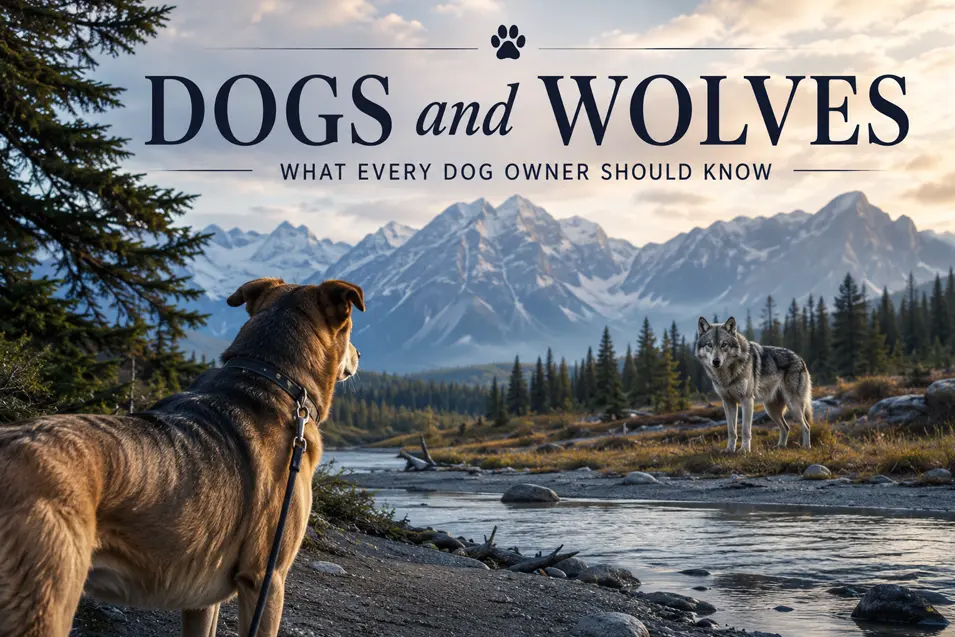
For most dog owners, seeing a wolf in the wild would be an extraordinary experience. Wolves generally avoid people, and even in places where healthy wolf populations live close to hiking trails, campgrounds and communities, many people will spend years outdoors without ever seeing one.
The situation changes somewhat when a dog is involved.
Domestic dogs and wolves are close relatives, but that doesn’t mean a wild wolf will recognize your dog as a potential friend. A free-running dog can be perceived as a competitor, territorial intruder, threat or, in some circumstances, prey. Wildlife agencies have documented wolves attacking and killing free-roaming dogs, which is why keeping dogs under physical control is particularly important in wolf country.
That doesn’t mean you should be frightened to take your dog outdoors. It means understanding where the risks are, recognizing situations that deserve extra caution and knowing what to do if you actually encounter a wolf.
Are Wolves Dangerous to Dogs?
They can be.
Wolves generally keep their distance from people, but dogs can provoke a different response. Parks Canada specifically warns that predators such as wolves may view free-running dogs as competition or prey, and an off-leash dog can trigger aggressive behaviour that might not otherwise have occurred.
The greatest concern is typically a dog that runs away from its owner and approaches, chases or otherwise interacts with a wolf. Once your dog is dozens or hundreds of metres ahead of you, you have very little ability to control the encounter.
A leash changes that situation dramatically. It keeps your dog from initiating a chase or approaching a wolf and keeps the animal close to the human presence wolves ordinarily prefer to avoid.
Do Wolves See Dogs as Prey or Rivals?
Potentially either.
A dog wandering through occupied wolf territory is another canid entering an area used by a highly territorial social predator. Wolves may therefore react to dogs as competitors or intruders.
Smaller dogs may also fall within the size range of animals a large predator could potentially kill as prey.
There isn’t a simple rule that says a particular breed or size of dog will always produce one response. The safest assumption is that any uncontrolled interaction between a domestic dog and a wild wolf is unpredictable and should be prevented.
Off-Leash Dogs Face the Greatest Risk
This is one of the most important lessons for anyone walking a dog in wolf country.
Your normally reliable recall isn’t much protection once your dog spots wildlife and instinct takes over. A dog may chase a retreating wolf, disappear into vegetation or run toward something you haven’t even noticed.
The encounter can also come back to you. Wildlife authorities warn that a dog pursued by a predator may retreat toward its owner, potentially bringing the predator with it.
In Parks Canada protected places, dogs must generally remain on a leash no longer than three metres and under control. The rule protects wildlife, but it also protects dogs and their owners.
If you’re travelling elsewhere, check the regulations for that particular park, trail or public land before leaving home.
Where Are Encounters Most Likely?
Wolf populations occur across large portions of Canada, Alaska and parts of the contiguous United States, as well as regions of Europe and Asia. But merely being in wolf range doesn’t mean you’re likely to encounter one.
Risk can increase in places where wolves are actively travelling, feeding, denning or raising pups. Extra caution also makes sense around:
- Recent wildlife carcasses
- Areas with fresh wolf activity or sightings
- Wildlife corridors
- Remote forest and backcountry trails
- Rural properties bordering extensive wild land
- Dawn, dusk and nighttime travel
- Areas temporarily placed under wildlife warnings or closures
Never investigate a carcass with your dog. A predator may still be nearby and could return to defend its food.
Similarly, never approach a den or wolf pups. Leave the area immediately and give them considerable space.
What Should You Do If You See a Wolf With Your Dog?
First, do not approach it.
Bring your dog close and maintain firm control of the leash. Don’t allow barking, lunging or chasing if you can prevent it.
Give the wolf plenty of room and allow it an escape route. If possible, calmly retreat the way you came while continuing to watch the animal.
Do not run.
Running can encourage pursuit from predators, and it also makes controlling your dog considerably more difficult.
Parks Canada recommends staying at least 100 metres away from wolves and other large carnivores when viewing wildlife. If you’re already closer than that when you unexpectedly encounter one, your priority should be calmly increasing the distance rather than trying to get a better photograph.
What If the Wolf Approaches You?
A wolf that deliberately approaches people or fails to maintain normal distance deserves a different response.
Stand your ground rather than running. Make yourself appear large. Shout, wave your arms and act assertively.
Current Parks Canada guidance for an approaching fearless carnivore recommends aggressive hazing behaviour such as yelling, stomping, throwing objects and, where appropriate and legal, using wildlife deterrent spray.
Keep your dog immediately beside you and under control throughout the encounter.
If you’re carrying bear spray in an area where its possession and use are permitted, it should be readily accessible rather than buried somewhere at the bottom of your backpack. Learn how to use it before you need it.
What You Should Never Do
Even an apparently calm wolf remains a wild predator.
Never:
- Allow your dog to approach a wolf
- Let the two animals “meet”
- Encourage your dog to chase it away
- Approach a wolf for a photograph
- Follow a wolf that moves away
- Feed or entice wolves
- Leave dog food outside
- Approach wolf pups or a den
- Investigate an animal carcass with your dog
- Run from an approaching wolf
And don’t assume that because your dog is large, protective or powerful, he can handle himself.
A German Shepherd, Rottweiler or livestock guardian dog may be formidable by domestic-dog standards. A confrontation with one or more wild wolves is an entirely different situation.
Camping With Dogs in Wolf Country
Good campsite habits protect both dogs and wildlife.
Keep your dog with you rather than allowing him to wander around the campground or surrounding forest. Don’t leave him tethered outside unattended, particularly overnight.
Food management matters too.
Store human food, dog food, treats, garbage and food dishes securely according to the rules for the area you’re visiting. Wolves that learn to associate people, campsites or roads with food can lose their natural wariness, creating dangerous situations for everyone.
Your dog’s kibble may not smell particularly exciting to you. To a wild animal, it’s food.
Hiking With Your Dog
Before heading into the backcountry, check the park or land-management agency’s website for current closures and wildlife warnings.
On the trail:
- Keep your dog leashed.
- Stay aware of your surroundings.
- Avoid headphones that prevent you from hearing wildlife.
- Make your presence known rather than moving silently through dense vegetation.
- Give wildlife plenty of room.
- Turn around if conditions don’t feel safe.
- Leave immediately if you encounter a fresh carcass.
- Carry appropriate wildlife deterrents where recommended and legal.
- Keep your dog’s vaccinations current.
That last point isn’t only about your dog’s health. Domestic dogs and wild canids can potentially transmit diseases to one another. Keeping pets vaccinated helps protect both populations.
Protecting Dogs on Rural Properties
Living in wolf country requires a slightly different approach from visiting it.
Don’t leave dogs outside unattended when wolves are known to be active nearby, particularly overnight. Secure pet food, garbage and other attractants, and investigate local wildlife reports rather than assuming an unusual canine seen near the property was simply someone’s loose dog.
A fenced yard can provide another layer of protection, but fencing shouldn’t create a false sense of security. The appropriate setup depends heavily on local predators and conditions.
If wolves repeatedly appear around homes or show unusual interest in people or pets, contact the appropriate local wildlife authority for advice.
What If Your Dog Is Attacked?
Your first instinct may be to physically jump between the animals, but putting yourself within biting distance of a wolf can turn a terrible situation into one involving serious human injuries as well.
Use available deterrents and make yourself loud and threatening. Follow the wildlife-agency guidance appropriate to the region you’re visiting.
If you manage to end the encounter, move yourself and your dog to safety and seek veterinary attention immediately.
Puncture wounds can be much deeper than they initially appear beneath a dog’s coat, and serious internal injuries may not be obvious.
Report the encounter to park staff or the relevant wildlife authority as soon as possible. Accurate reports help officials identify unusual predator behaviour and warn other visitors.
Are Wolves Dangerous to People?
Wild wolves generally avoid humans, and attacks on people are rare. The risk increases when wolves become habituated to people or associate humans with food.
That’s one reason feeding wildlife is so damaging.
An animal that learns people are a source of food may gradually lose the behaviour that normally keeps both humans and wolves safe.
If you are fortunate enough to see a wolf behaving naturally at a distance, enjoy the experience from there.
A wolf that walks away when it realizes people are nearby is doing exactly what we want a wild wolf to do.
How Closely Related Are Dogs and Wolves?
Very closely.
Domestic dogs and modern wolves belong to the genus Canis and share a relatively recent evolutionary history. Dogs did not simply descend from the wolves living in today’s forests, however. Current scientific understanding points to dogs descending from an ancient wolf population through a domestication process that unfolded over thousands of years.
That shared ancestry explains why wolves and dogs have many physical and behavioural similarities.
Domestication, however, changed dogs enormously.
Thousands of years of living alongside humans produced animals that differ from wolves in behaviour, development, appearance and their relationships with people. A Chihuahua and a grey wolf may belong to the same broader canine family, but their lives and behaviour are obviously worlds apart.
Can Wolves and Dogs Breed?
Yes.
Wolves and domestic dogs are genetically close enough to interbreed and produce offspring commonly called wolf-dog hybrids or wolfdogs.
That biological compatibility should not be mistaken for evidence that wolves are simply undomesticated pet dogs.
A wolf is a wild animal. Even wolves raised around people retain behavioural characteristics very different from those deliberately selected in domestic dogs over many generations.
Wolfdogs can also present significant behavioural, welfare and ownership challenges, and laws regulating them vary by location. Anyone considering one should investigate the legal requirements and the realities of caring for such an animal rather than choosing one simply because it looks impressive.
Wolf or Coyote?
From a distance, especially in poor light, people sometimes confuse wolves with coyotes.
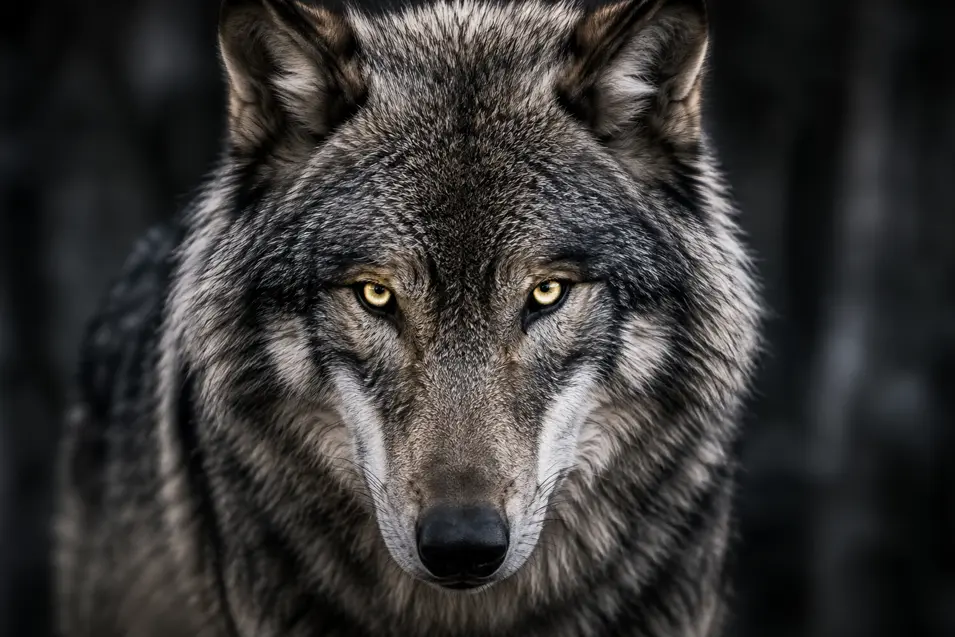
Wolves are generally much larger and more heavily built. They tend to have broader muzzles, proportionally smaller-looking ears, large feet and a more substantial overall appearance.
Coyotes are lighter and narrower, usually with a more delicate muzzle and proportionally prominent pointed ears.
Size can be surprisingly difficult to judge when an animal is standing alone, though, so don’t move closer just to identify it.
If you’re uncertain whether the animal ahead is a wolf, coyote or someone’s loose dog, maintain your distance and keep your own dog under control.
Should You Avoid Wolf Country With Your Dog?
Usually, no.
Millions of people live, hike and camp in regions inhabited by large predators. The goal isn’t to eliminate every possible encounter with wildlife; it’s to avoid creating unnecessary ones.
There may be occasions when leaving your dog home is the sensible choice. Parks Canada specifically suggests considering this for some backcountry trips, and temporary trail closures or wildlife warnings should always be respected.
But responsible dog ownership and healthy wolf populations can coexist.
Keep your dog close. Give wildlife space. Store food properly. Follow local regulations. Know what to do if an encounter occurs.
Those relatively simple habits dramatically reduce the chances that an extraordinary glimpse of a wild wolf becomes a dangerous interaction.
Respect the Wolf, Protect the Dog
Wolves deserve neither the fairy-tale reputation of monsters lurking in the forest nor the romantic assumption that they’re simply bigger versions of our dogs.
They’re intelligent, powerful wild predators with an important place in the ecosystems where they live.
Our dogs occupy a very different world, even if they share distant ancestry and sometimes an uncanny resemblance.
If you enter wolf country with a dog, respecting that distinction is one of the best things you can do for both animals. Keep your companion close, let wolves remain wild and, if you’re lucky enough to see one disappearing quietly into the trees, give it the distance it deserves.
More Adventures With Dogs in the Wild
Sharing the outdoors with your dog can mean everything from a quiet evening beside the campfire to unexpectedly finding yourself in territory shared with some very large wild neighbours. A little knowledge can make those adventures considerably safer—and a lot more enjoyable.
If you spend time hiking, camping or exploring wild places with your dog, read our guides to Dogs and Coyotes, Dogs and Bears and How to Keep Your Dog Safe Around Moose.
And after all that talk about predators, perhaps you and your dog deserve something a little more comfortable. Explore our 25 Luxury Dog Glamping Setups You’ll Want to Book This Weekend for a very different way to experience the great outdoors—preferably with a real bed waiting at the end of the trail.