
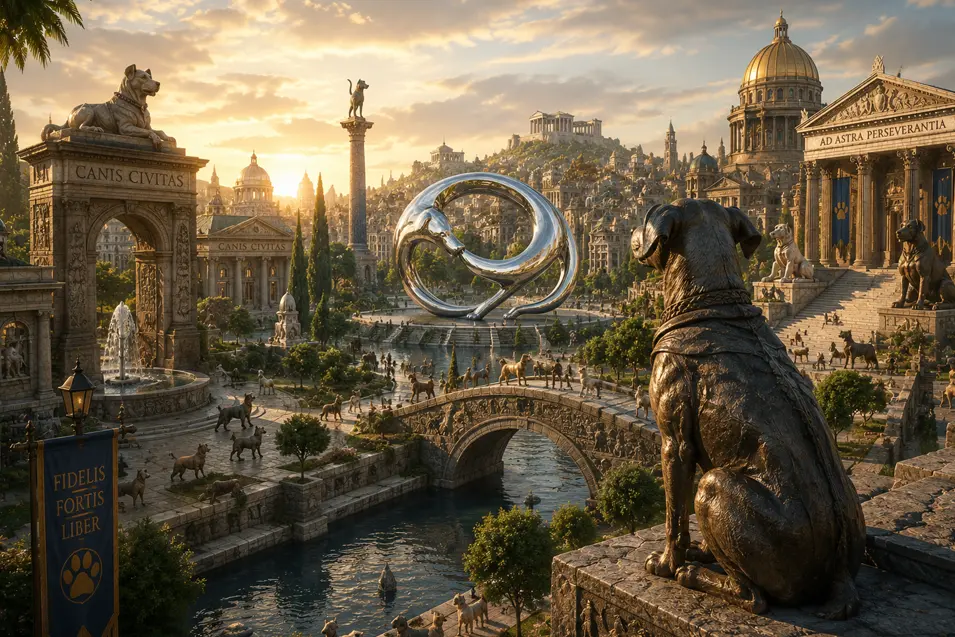
Public art has a way of making history feel permanent. A bronze figure in a town square, a weathered carving above an ancient gate, a memorial beside a harbor, or a strange modern sculpture in a city park can hint at the people, events, beliefs, and stories that shaped a place long before we arrived.
But imagine if dogs had been part of that story.
What if dogs had explored unknown territories, founded towns, sailed across oceans, made scientific discoveries, created music, survived disasters, become local heroes, and developed their own artistic traditions? What would centuries of their history leave behind in our streets and public spaces?
The result probably wouldn’t be a world filled with giant statues of dogs. It would be something much more interesting: layers of monuments, memorials, fountains, murals, carvings, civic oddities, and ambitious works of art accumulated over generations, each with a story behind it.
So we’re taking a trip through an alternate version of our world to discover 18 pieces of public art from a civilization that never existed. Some commemorate great figures and historic events. Others celebrate ordinary lives or mysterious local traditions. A few may leave you wondering what on earth happened here.
None of it is real.
But hopefully, every once in a while, you’ll have to look twice.
1. The Frontier Pathfinder
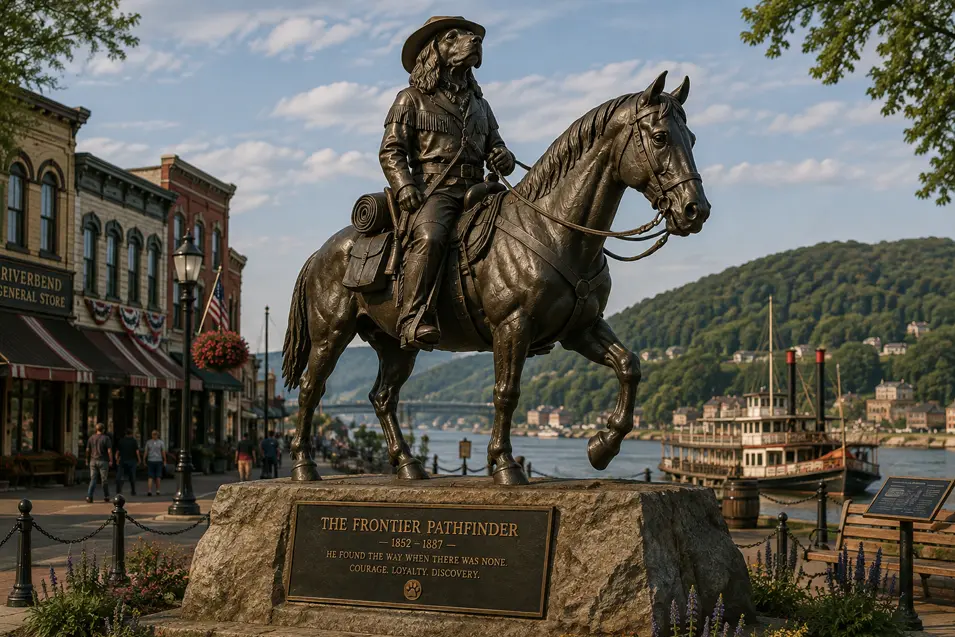
In the heart of a small American river town stands a monument to one of the great figures of the western frontier. Known simply as the Frontier Pathfinder, this legendary explorer is said to have spent years charting routes through mountains, forests, and territories that had barely been mapped. The late-19th-century bronze captures him as generations chose to remember him: sitting tall in the saddle, dressed for the trail, with his horse stepping confidently forward and his eyes fixed somewhere beyond the town square. More than a century of rain, snow, and summer sun has softened the monument’s original finish, but the Pathfinder still watches over a town that might never have existed without the route he found.
2. The Last Voyage of Captain Alder
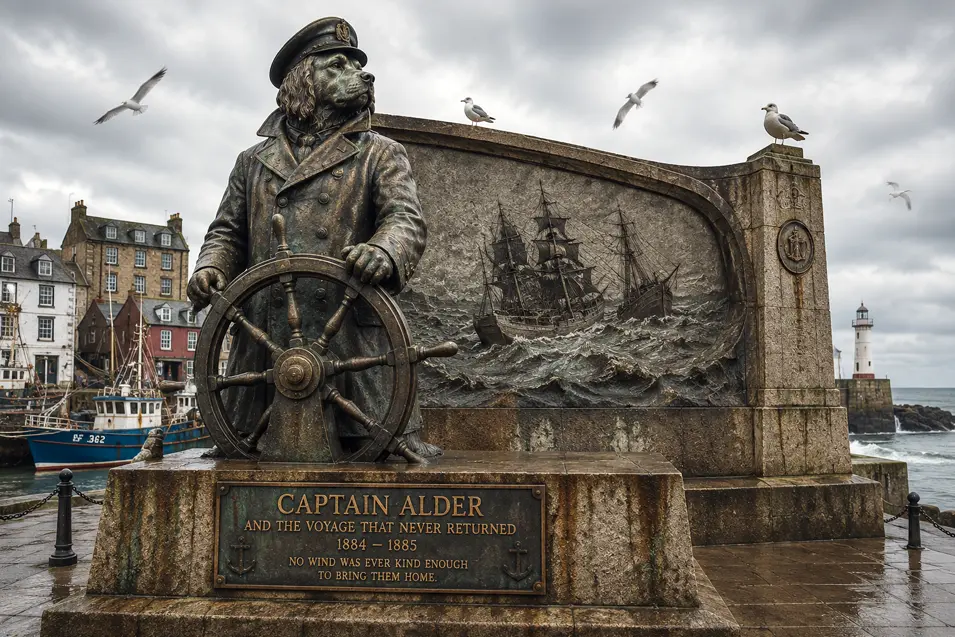
For generations, sailors leaving this old harbor have passed beneath the watchful gaze of Captain Alder. The Newfoundland captain led one of the most ambitious maritime expeditions of his age, setting out with his crew in search of a passage through notoriously dangerous northern waters. Neither ship nor crew ever returned. Decades later, the harbor raised this memorial facing the sea: Alder at the wheel, his heavy naval coat caught in an imaginary wind, with a bronze relief behind him depicting the expedition’s final departure into increasingly violent waves. Salt and weather have streaked the stone, gulls routinely occupy the monument, and fishing boats still pass beneath it every morning. No one knows exactly where Captain Alder’s voyage ended, which may be why he has never stopped looking for the way home.
3. The Great Crossing
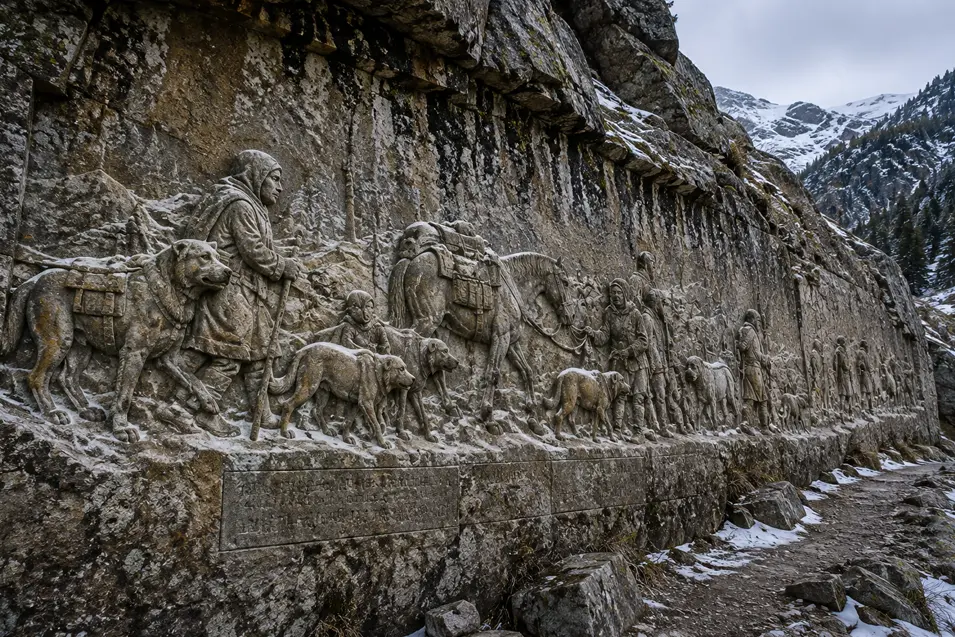
No names survive from the Great Crossing. According to local history, entire communities once passed through this mountain corridor during a brutal winter migration, carrying what they could and leaving almost everything else behind. Centuries later, their journey was carved into the rock itself: families of dogs moving through deep snow alongside horses and other pack animals, some carrying supplies while others help the young and exhausted onward. Time has erased almost as much as the sculptors recorded. Faces have disappeared, entire figures have softened into the stone, and sections are stained with moss and mountain runoff. Yet the procession can still be followed across the rock face, disappearing around the mountainside just as the travelers themselves once did.
4. The Fountain of the Seven Streams
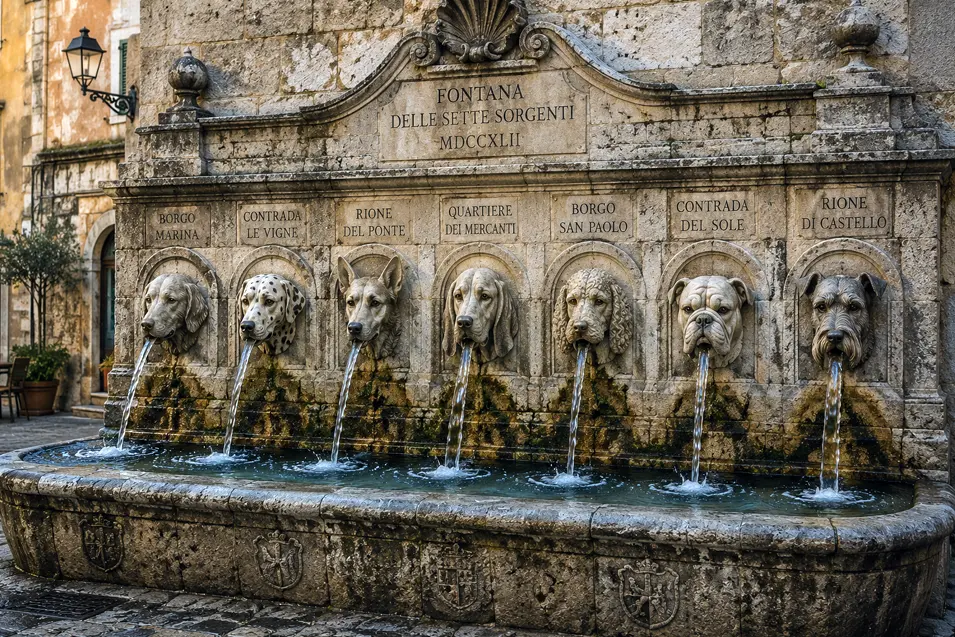
At the center of one of the city’s oldest squares, seven streams of water have flowed into this worn stone basin for hundreds of years. Each emerges from the mouth of a different sculpted head, representing the seven historic districts that eventually grew together to form the modern city. Generations of weather, mineral deposits, and countless hands have softened the carvings, but their individual features remain surprisingly distinct. Look closely and the symbolism becomes clear: all seven are dogs, each a different breed traditionally associated with one of the original districts. Locals still argue about which stream produces the best-tasting water, although nobody seems able to explain why.
5. The Unknown Working Dog
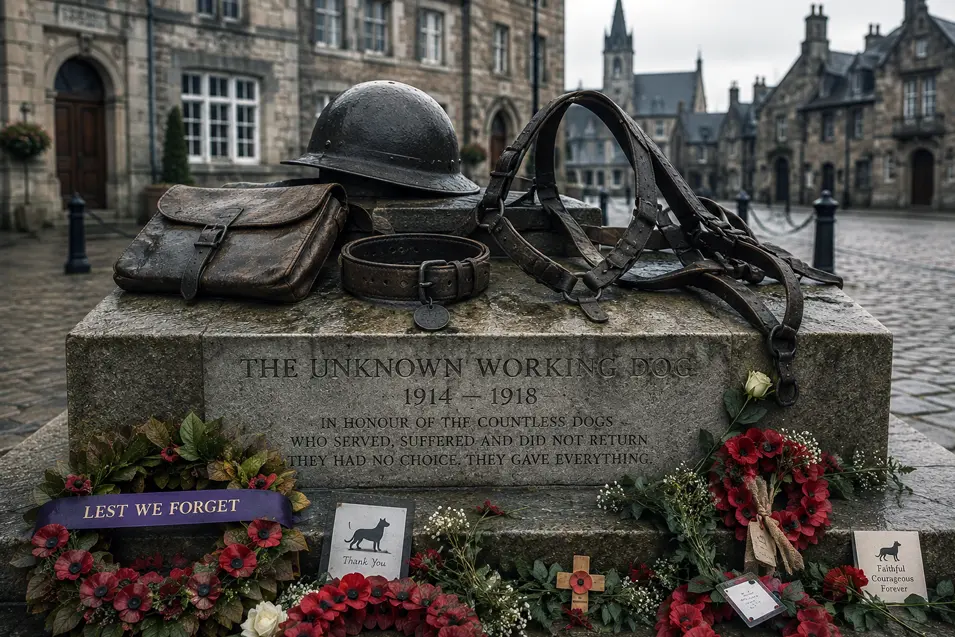
There is no figure standing on this memorial and no famous name carved into its stone. Instead, a battered bronze helmet, worn satchel, collar, and empty working harness rest where a statue might normally stand. Dedicated after the war to the thousands of ordinary working dogs who never returned home, the monument deliberately represents no individual animal, regiment, or battle. Over the years, residents have adopted their own quiet traditions around it. Wreaths appear on remembrance days, fresh flowers are tucked beneath the harness, and occasionally someone leaves an old collar at the foot of the plinth. In a square filled with monuments to celebrated leaders and victories, this small collection of empty belongings has become the one people tend to approach most quietly.
6. The Old Gate of Returning
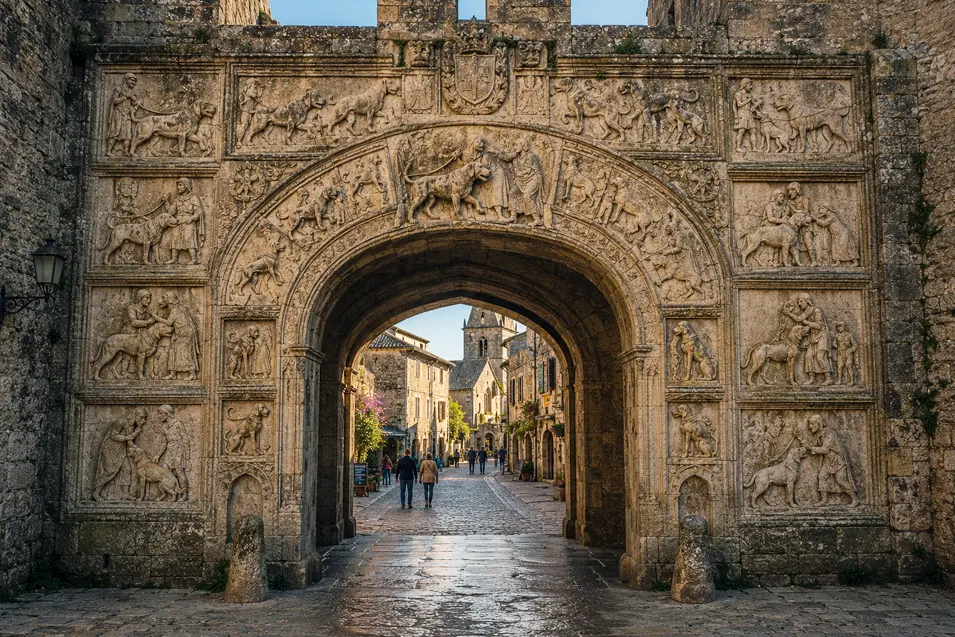
For nearly seven centuries, travelers have entered the old city through the Gate of Returning. Its enormous stone arch is covered with carvings added by successive generations, depicting dogs coming home from distant journeys, long hunts, military campaigns, and voyages whose stories have largely been forgotten. Some return proudly beneath banners; others are welcomed by families waiting at the city walls. The oldest scenes have been worn almost smooth by weather, while later additions remain surprisingly detailed. At ground level, countless paws passing through the gateway have polished the stone threshold to a soft shine. These days, tourists stop to photograph the carvings while residents hurry beneath them without looking up—another ordinary morning beneath a monument that has watched the city say welcome home for hundreds of years.
7. The Harbor Guardians
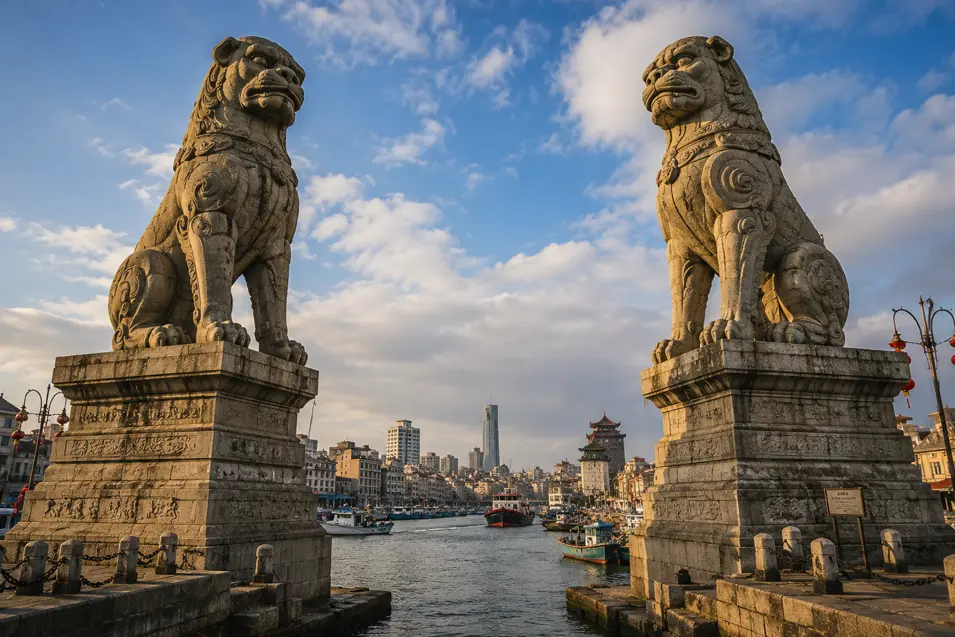
For centuries, every ship entering this ancient port has passed between the Harbor Guardians. The two colossal stone figures were never intended to represent particular dogs. Instead, they symbolize vigilance, strength, and the city’s responsibility to protect everyone who passes through its harbor. Their exact age is disputed because earthquakes, storms, wars, and repeated restorations have altered them so many times that little of the earliest stone may remain. Even so, their distinctive silhouettes have become inseparable from the city itself. Ferries, cargo vessels, and fishing boats still travel beneath their gaze while towers and modern waterfront buildings rise behind them—a pair of ancient guardians continuing a job the city apparently decided they should never be allowed to retire from.
8. The Bell-Ringer of San Vero
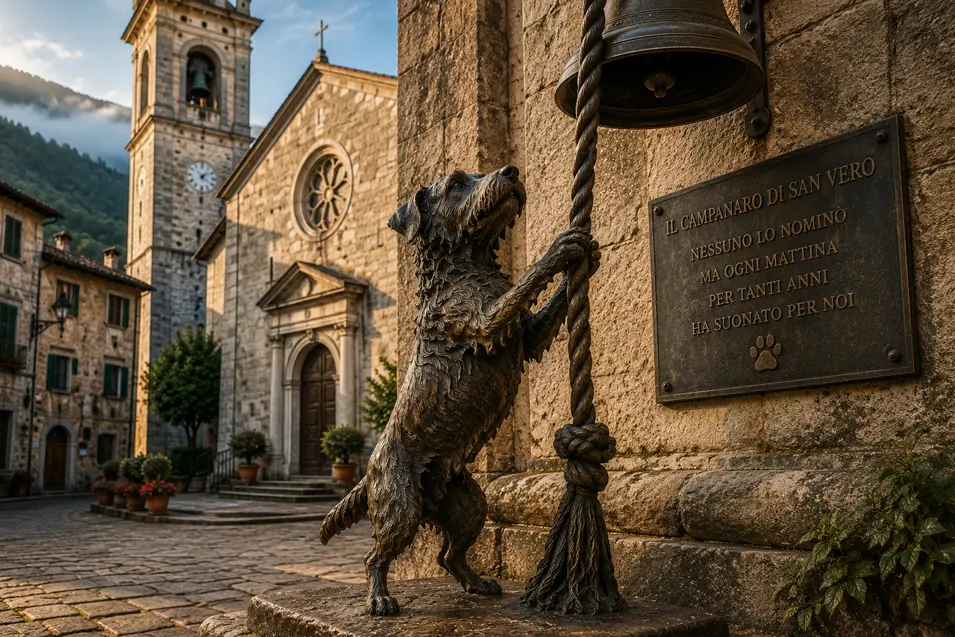
Tucked beside the church of San Vero is a small bronze dedicated to a local figure who never held any official position at all. For more than thirty years, according to town tradition, this scruffy little dog appeared at the church shortly before sunrise, took hold of the bell rope, and announced the beginning of another day. Nobody seems to know who first taught him, and parish records contain no evidence that anyone ever asked him to do it. He simply did. After his death, residents quietly raised enough money for this modest memorial, showing their unofficial bell-ringer leaning enthusiastically into a rope several times his size. Visitors often walk straight past it. Locals rarely do.
9. The Miners’ Descent
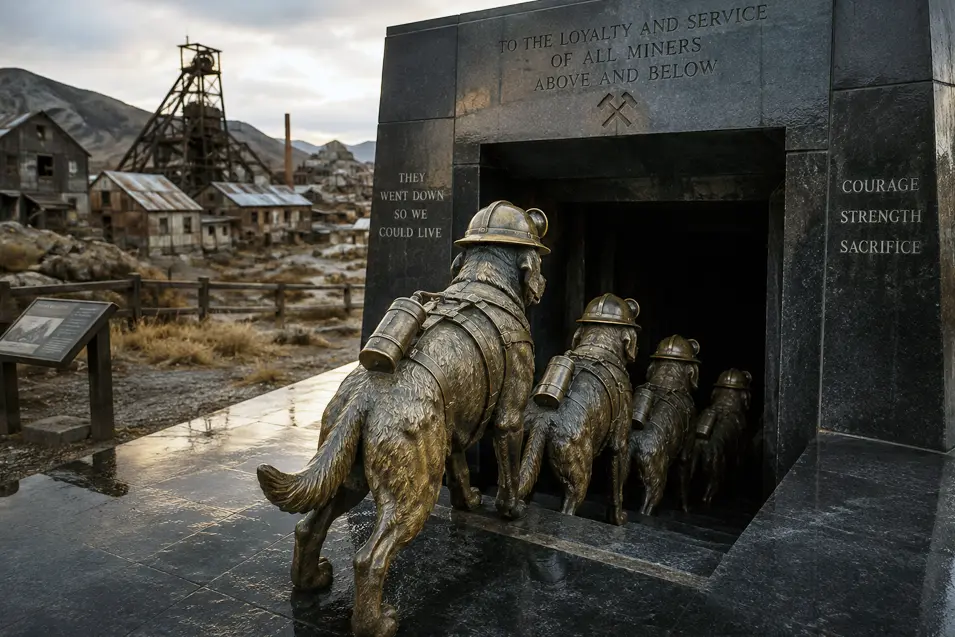
At the edge of a mining town that has been quiet for decades, a line of bronze workers still begins the journey underground. The memorial depicts several working dogs in helmets and heavy mining gear descending one after another into a dark opening cut through polished black stone. Their faces are deliberately hidden from anyone approaching the monument; visitors see them from behind, just as families once watched generations of miners disappear below ground at the beginning of each shift. Built after the final pit closed, the memorial commemorates everyone who worked beneath these hills rather than any single disaster or individual. The mines are gone, the machinery is rusting, and much of the town has disappeared with them. But every morning, the bronze miners still go down.
10. The Broken Expedition
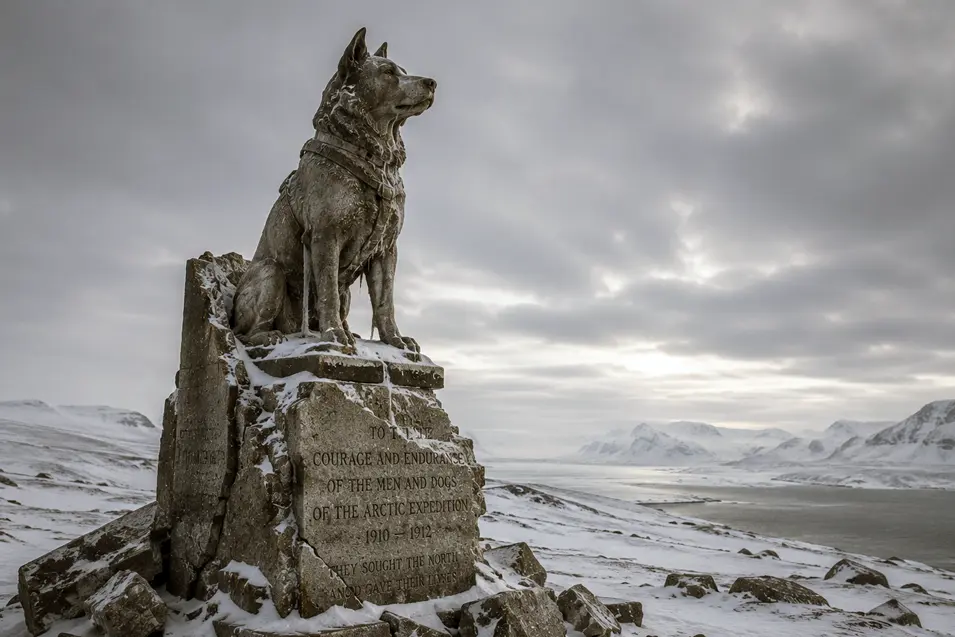
Far beyond the last permanent settlement, a damaged stone monument stands alone on a windswept stretch of northern coast. It commemorates an expedition that set out across the polar ice more than a century ago and never completed its journey. Most of the original memorial has since collapsed, leaving only fragments of its inscription and the weather-beaten figure of the expedition’s lead sled dog, carved facing north into the prevailing wind. Ice has split the stone, storms have erased much of its detail, and snow regularly buries the lower half of the monument for months at a time. There are no roads here and few visitors. Yet the old leader remains exactly where the sculptor placed him, staring toward the empty horizon his expedition never crossed.
11. The Civic Listener
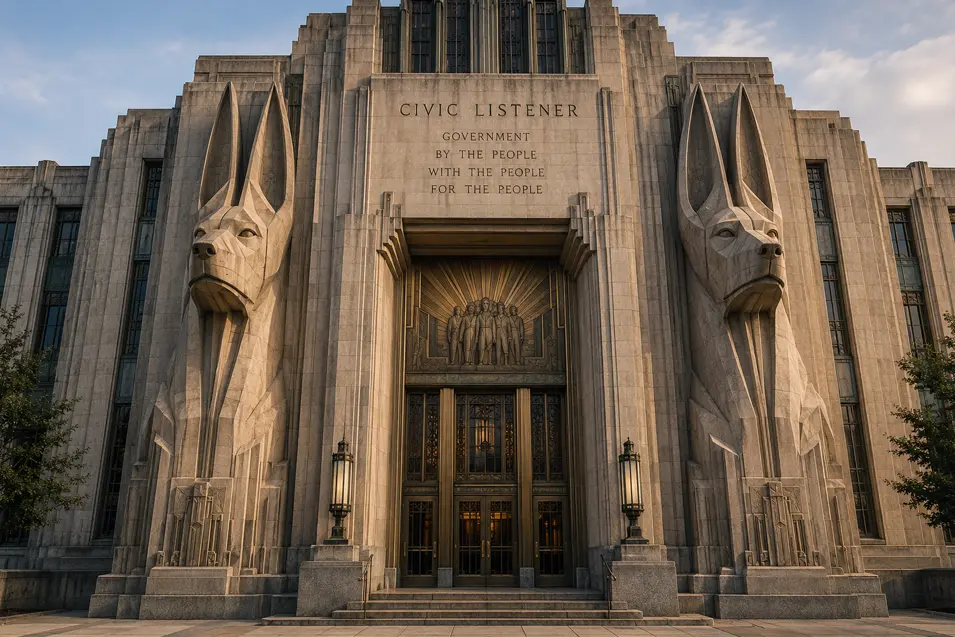
When the city’s new municipal headquarters opened in the 1930s, its architects wanted a symbol that would express the government’s promise to listen to the citizens it served. Their solution was difficult to miss. Rising several stories beside the main entrance is an enormous streamlined stone ear, reduced to the sweeping curves and geometric forms fashionable at the height of the Art Deco movement. There is no face, no body, and nothing that immediately identifies the sculpture as canine until its proportions begin to look strangely familiar. Officially titled The Civic Listener, it has survived changing governments, architectural fashions, and several proposals to remove it. Whether the government inside has always listened quite as carefully as the building suggests is a question the sculpture wisely leaves unanswered.
12. The Musician in the Metro
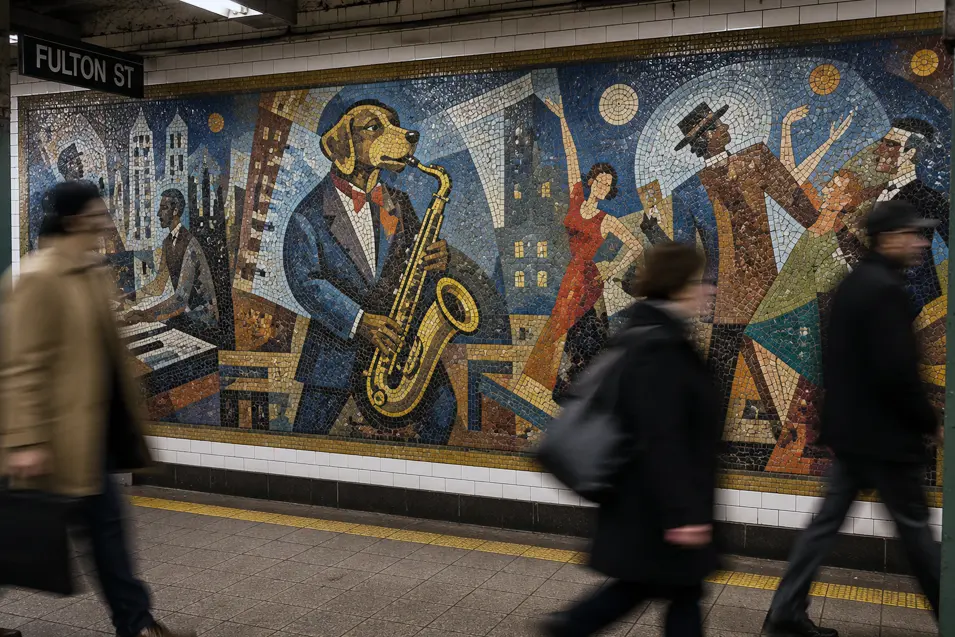
Thousands of commuters pass this mosaic every day, and most barely glance at it. Installed during the station’s renovation in the 1950s, the sprawling work celebrates a jazz musician who grew up only a few streets away and later became one of the city’s most influential performers. Broken tiles and sweeping blocks of color form the unmistakable outline of a dog leaning into a saxophone, surrounded by dancers, instruments, streetlights, and fragments of the neighborhood at night. Once controversial for its modern style, the mosaic is now considered one of the finest surviving works from the city’s mid-century public-art program. The musician has been gone for generations, but every few minutes another train arrives and sends a new audience rushing past.
13. The Children of the Flood
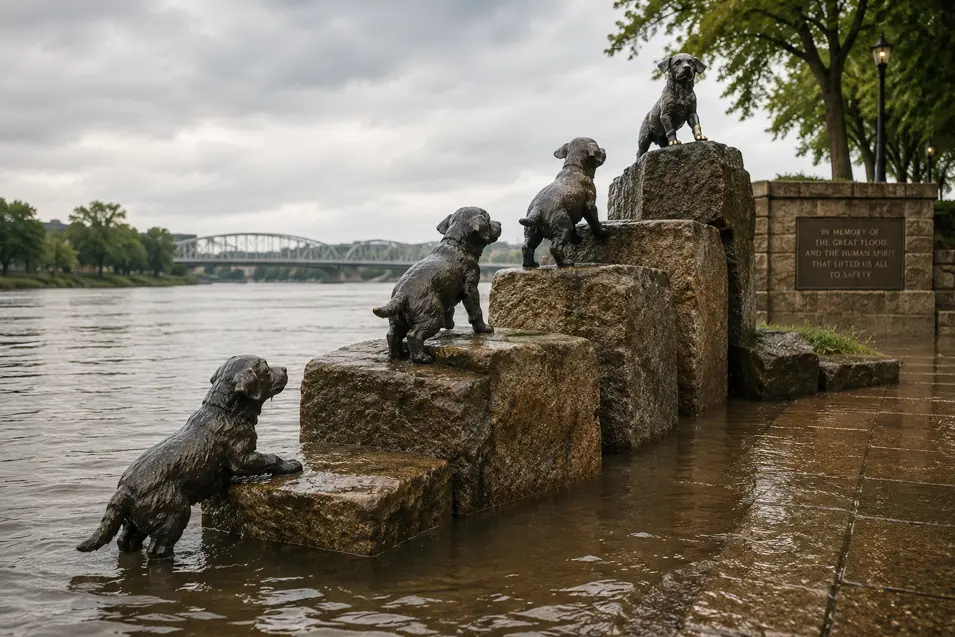
Along the riverbank, a series of small bronze figures climbs gradually away from the water. The memorial remembers the great flood that overwhelmed the old riverside districts generations ago, when neighbors formed improvised rescue teams to carry children and families to higher ground. Rather than depicting the disaster itself, the sculptor chose several young dogs scrambling from one stone to the next, each a little higher and closer to safety than the last. Most days, the lowest figures stand safely above the river. After heavy rain, however, the water rises around their paws and sometimes reaches their chests, temporarily recreating the danger the memorial was built to remember. The final puppy, safely above the flood line, has one polished bronze paw where generations of visitors have touched it.
14. The Founder Who Refused the Pedestal
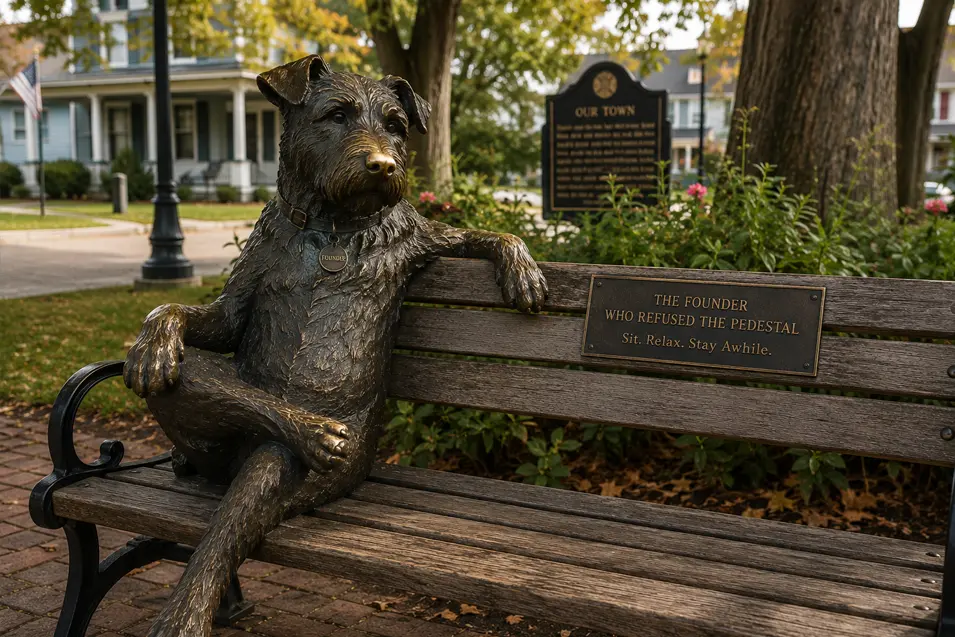
Every town seems to have a monument to its founder. This one just happens to be sitting on a park bench. According to local legend, the famously unpretentious terrier who established the settlement repeatedly insisted that nobody should ever put him on a pedestal. When the town finally decided to honor him decades after his death, the sculptor took the request literally. The life-sized bronze shows the founder sitting casually at one end of an ordinary bench, leaving plenty of room for anyone who wants to join him. Generations of residents have done exactly that. Children climb beside him, visitors pose for photographs, and locals occasionally add scarves, flowers, or seasonal decorations. His nose and one paw have been polished bright by countless hands—perhaps exactly the sort of monument he would have preferred.
15. The Observatory Monument
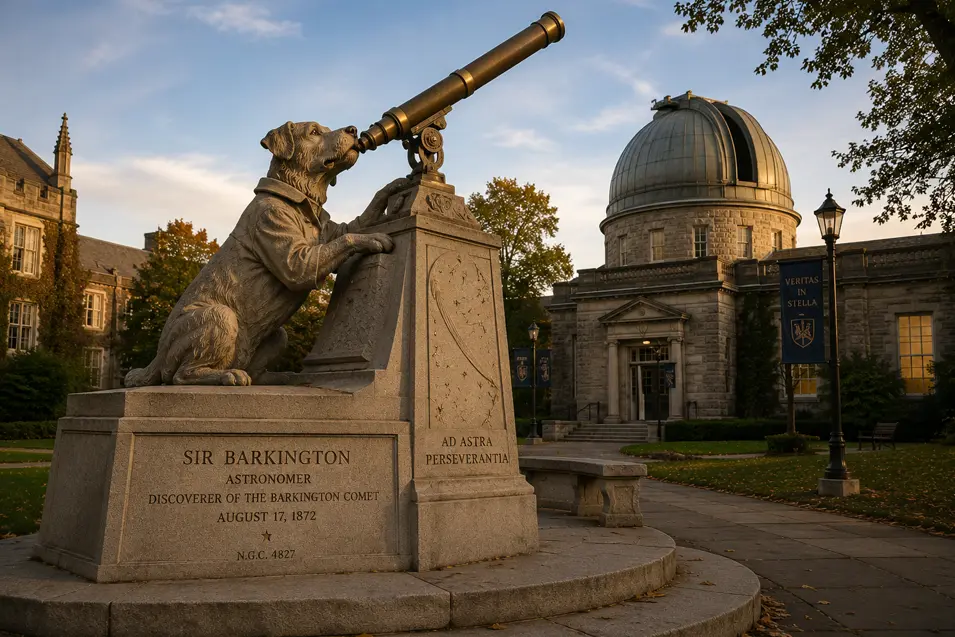
On the lawn outside the university’s old observatory stands a monument to the astronomer credited with one of the most important discoveries in its history. Carved from pale stone, the figure leans toward a long early telescope, its muzzle raised toward the same patch of sky the astronomer is said to have been studying on the night of the discovery. The instrument is modeled on the original telescope still preserved inside the observatory, while a small celestial diagram carved into the base marks the position of the object that changed his career. Students have passed the monument for generations, and the astronomer’s nose has been polished smooth by a campus tradition that claims touching it before an exam brings good luck. Whether that works remains considerably less certain than his astronomy.
16. The Endless Chase
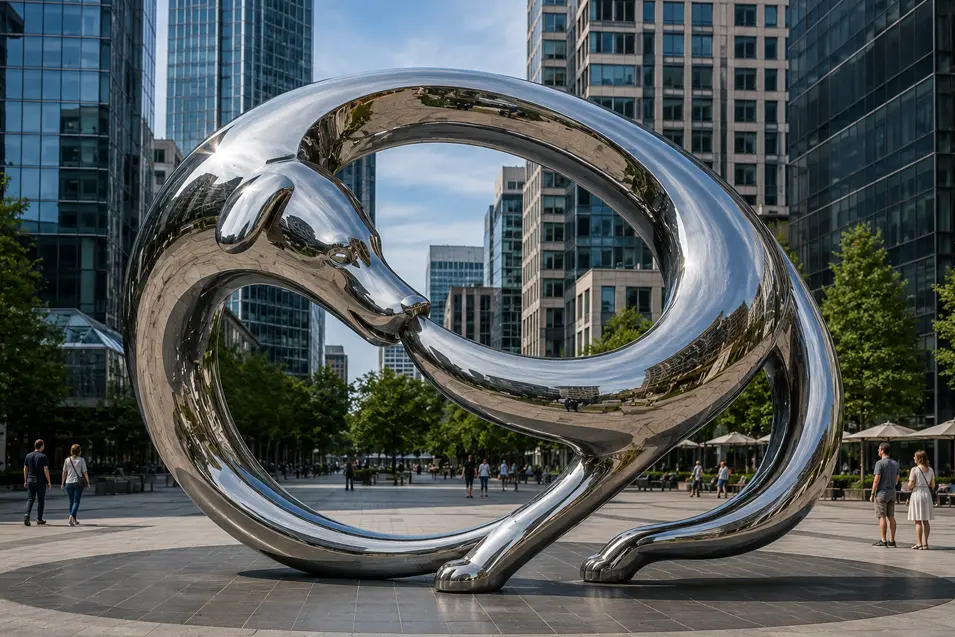
At first glance, the enormous stainless-steel sculpture in the center of this modern plaza appears to be little more than a looping ribbon of polished metal. Walk around it, however, and the curves gradually align: a head reaches forward, a tail sweeps away, and suddenly the entire work becomes a dog caught forever in the act of chasing itself. Titled The Endless Chase, the sculpture was created as a meditation on ambition, repetition, and the human tendency to pursue things forever just beyond our reach—or at least that’s what the critics say. Everyone else simply recognizes a very familiar piece of canine behavior rendered at monumental scale. On sunny days, the mirrored surface reflects the surrounding towers, pedestrians, and sky, ensuring that the city itself gets dragged into the chase.
17. The Wall of Names
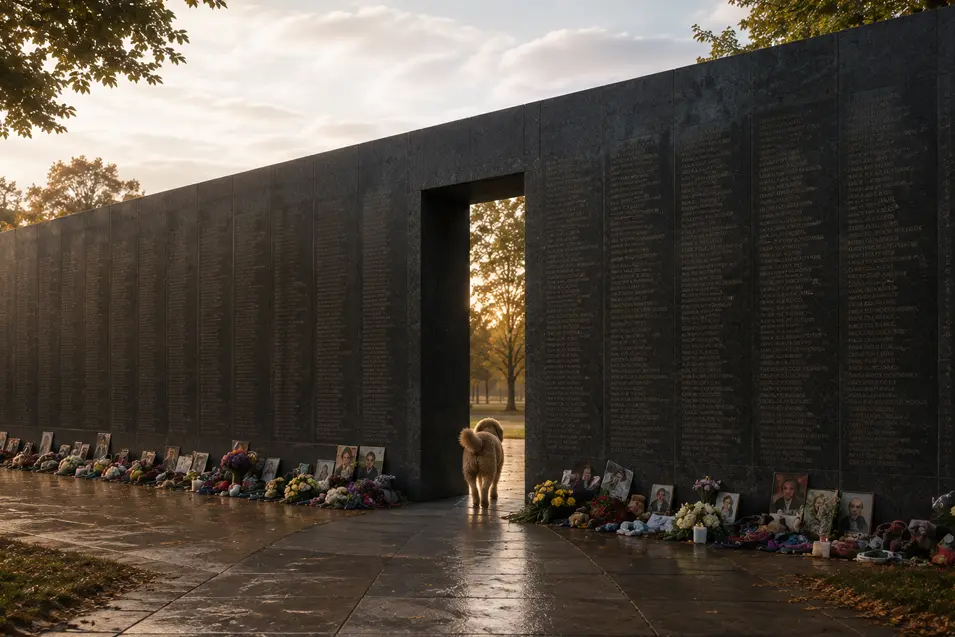
There is no statue at this memorial and almost nothing to explain what happened here. A long wall of dark stone carries thousands of names, arranged in quiet rows that seem to continue far beyond where you expect them to end. At its center is a single narrow opening, deliberately made just wide enough for one dog to pass through. Visitors walk alongside the wall rather than through it. At the base, flowers are mixed with old collars, tags, photographs, worn toys, and small objects whose significance is known only to the people who left them. The memorial never attempts to recreate the tragedy it remembers. It simply records those who were lost—and leaves one empty passage through the stone for all those who never came home.
A World Built in Their Image
Perhaps the strangest thing about imagining public art created by dogs is how quickly it stops feeling strange. Give them cities, history, heroes, disasters, artists, scientists, musicians, and a few thousand years to remember it all, and of course they would leave their stories everywhere. Some would be carved into mountains. Others would stand forgotten in town squares, decorate subway stations, guard harbors, or turn an ordinary park bench into a piece of local history. And eventually, someone would build an enormous polished-steel sculpture of a dog chasing its own tail and insist that it was a profound meditation on the endless pursuit of desire. Maybe the real difference wouldn’t be what dogs chose to commemorate at all. It would simply be that, in their world, every city would carry a little more evidence of who had lived there, what they had loved, what they had lost—and what they still thought was worth remembering.