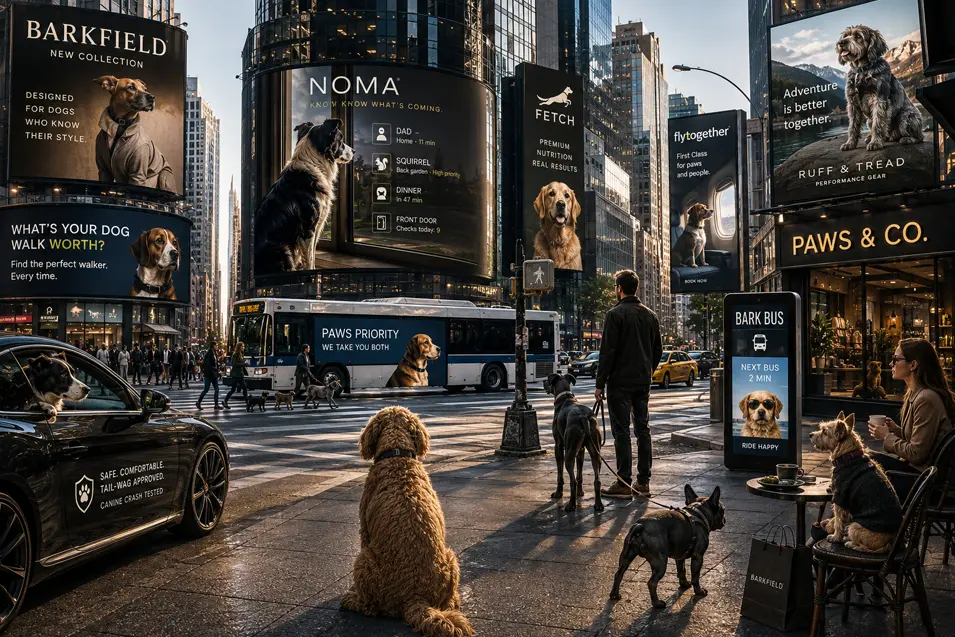
Imagine, for a moment, that dogs weren’t just along for the ride. They were the ones choosing the car.
Imagine an advertising world where dogs bought houses, opened bank accounts, booked vacations, ordered dinner, shopped for furniture, worried about insurance, compared hotels and occasionally decided that what they really needed was a better furnace.
What would advertisers do if dogs were a genuine consumer demographic?
We decided to find out.
So we gave ourselves an absurd advertising brief and treated it completely seriously: sell to the dog.
Not dog food. Not chew toys. Everything.
We imagined automotive companies competing for drivers who judge a vehicle by its windows. Real estate agents selling homes based on fenced yards, sunny floors and local squirrel activity. Banks trying to understand canine wealth. Hotels promoting the things their four-legged guests actually care about. Home-service companies, restaurants, technology brands, travel companies and luxury marketers all fighting for a share of the canine wallet.
Then we imagined the agencies fighting for those accounts.
The result is a collection of campaigns from an alternate world where dogs aren’t appearing in the advertising.
They’re the target audience.
Welcome to the canine economy.
1. Finally, a Car Designed for the Passenger Who Actually Matters
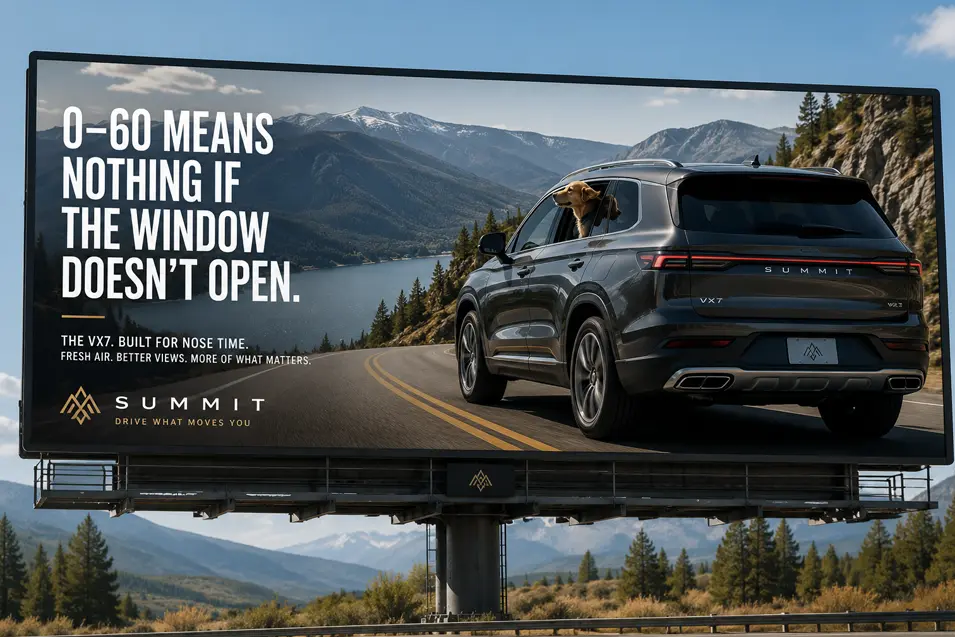
Automakers have spent decades talking about horsepower, handling and what happens from zero to sixty. But none of that addresses the question millions of drivers really want answered: how good is the window? In this world, one automaker has finally stopped designing around humans and built a vehicle for the customer who judges every journey by fresh air, interesting smells, an unobstructed view and the possibility that the destination might be a park. This oversized roadside campaign introduces our canine consumer economy with the confidence of a major automotive launch—and one very different definition of performance.
2. The Neighborhood Has Excellent Squirrel Traffic
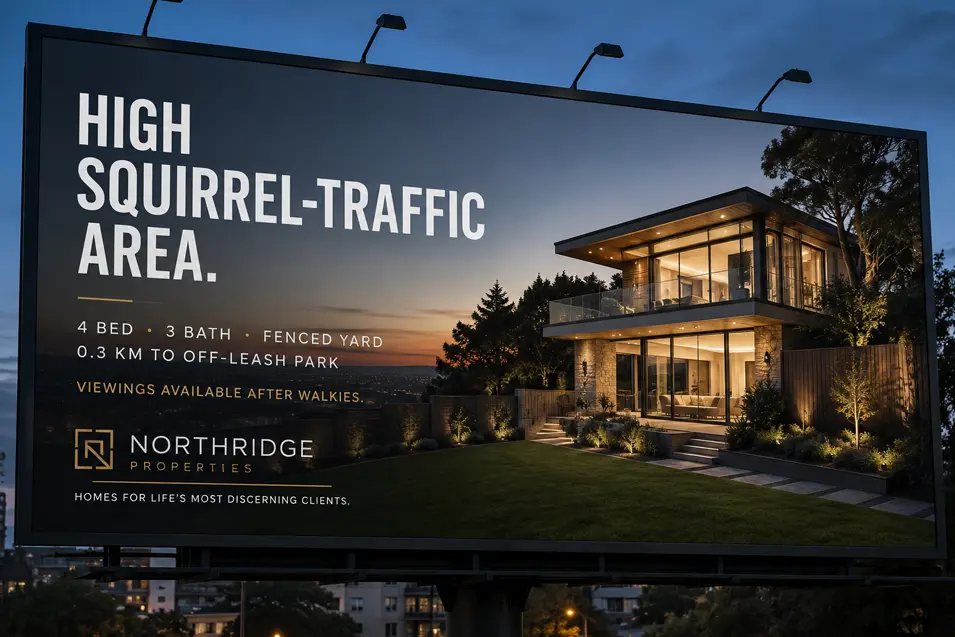
Humans obsess over square footage, countertops and school districts. Dogs have their own definition of location, location, location. A serious real estate company targeting canine buyers would understand that the truly desirable neighborhood has a secure yard, interesting walking routes, sunny windows, nearby parks—and enough squirrel activity to keep property values strong. This outdoor campaign sells the home exactly as a good realtor should: by understanding what its buyer values most.
3. Furniture for the Life You Share
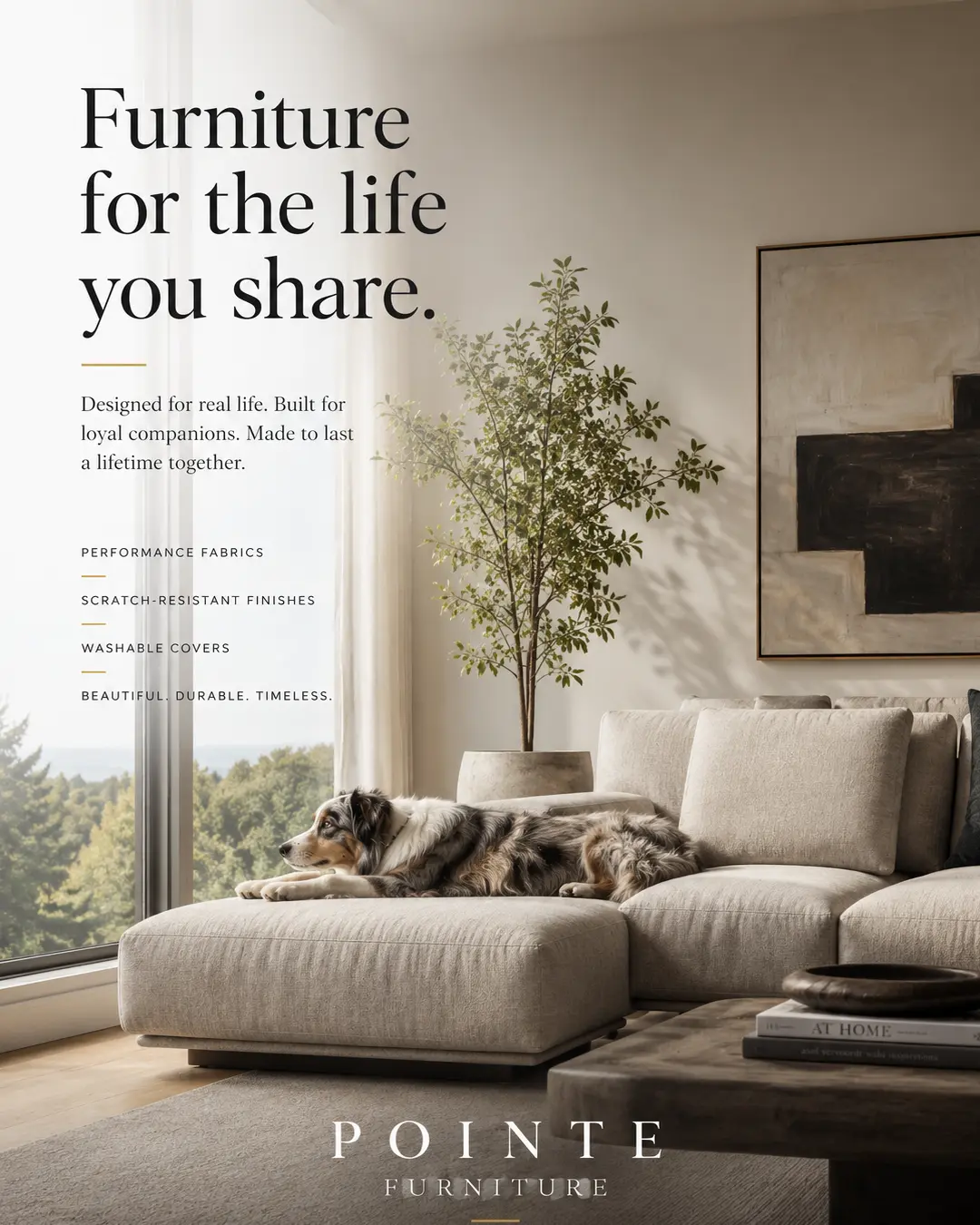
Some furniture companies design around entertaining. Others design around families. Pointe Furniture understands that the most demanding member of the household may be the one who sleeps on the sofa, tracks in the occasional muddy paw and considers personal space more of a suggestion than a rule. Its restrained magazine campaign doesn’t treat pet-friendly furniture as a compromise. Washable fabrics, durable materials and room to stretch out are simply features of beautifully designed furniture made for the way its customers actually live.
4. Whatever You’re Saving For, Start Now
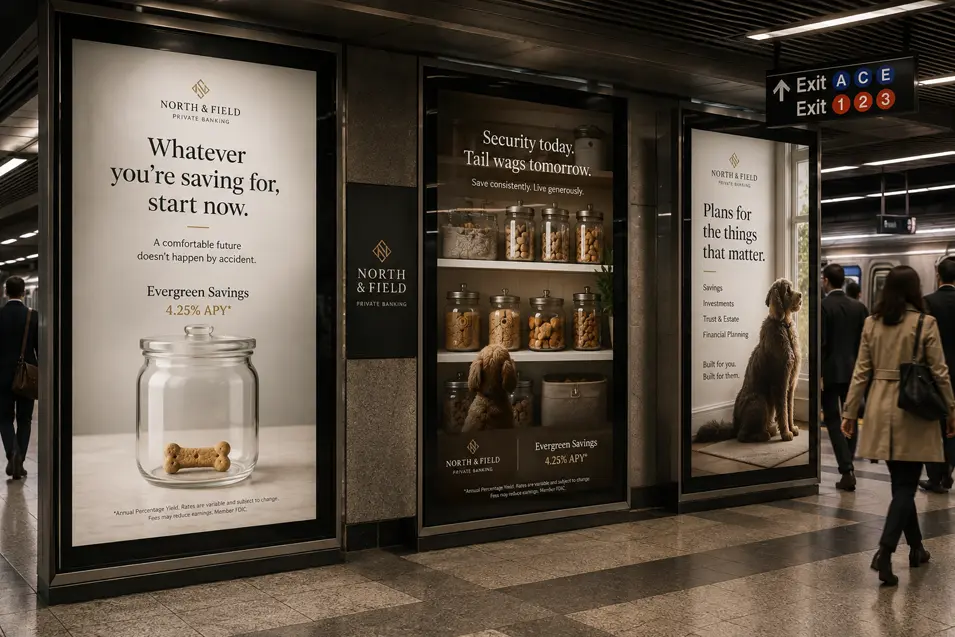
Financial security means different things to different customers. For some, it’s a comfortable retirement. For others, it’s knowing there will still be something in the treat jar tomorrow. North & Field approaches canine banking with all the seriousness of traditional wealth management, turning one very simple dog instinct—save the good stuff—into a complete transit-station campaign. From everyday savings to long-term planning, the message is reassuringly familiar: whatever matters most to you, a little preparation today can make for a much more comfortable tomorrow.
5. We Deliver. You Enjoy.
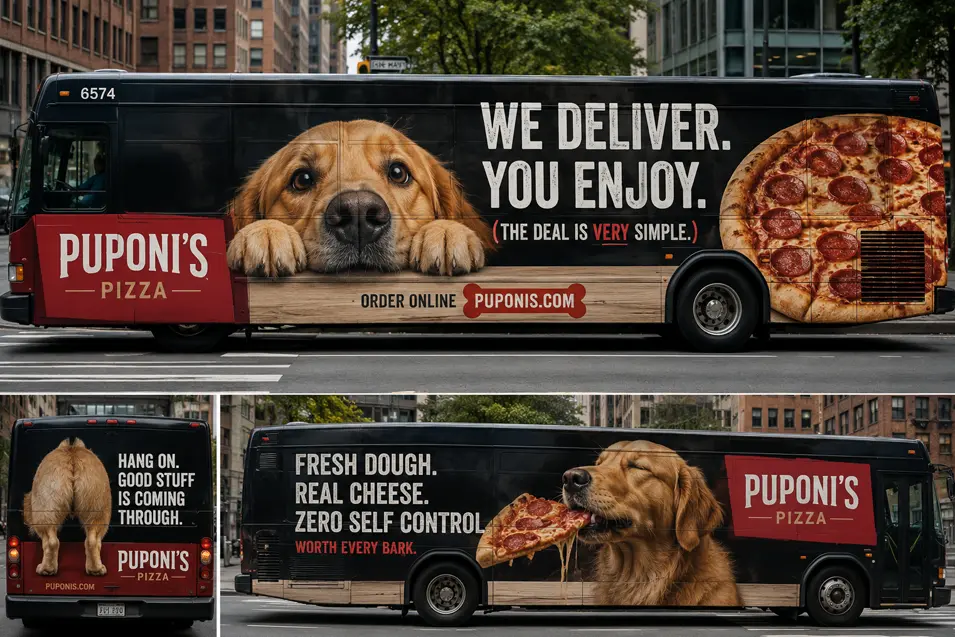
Pizza delivery has always depended on one powerful consumer insight: once you know something delicious is on its way, waiting becomes almost impossible. Puponi’s turns that anticipation into a full-scale city bus campaign for customers with absolutely no intention of pretending they have self-control. Huge food photography, shameless appetite and a passenger who can practically smell dinner coming make this the loudest campaign so far. Because when your audience can hear a cheese wrapper open from three rooms away, subtlety probably isn’t the media strategy.
6. Some Things Are Worth Waiting by the Door For
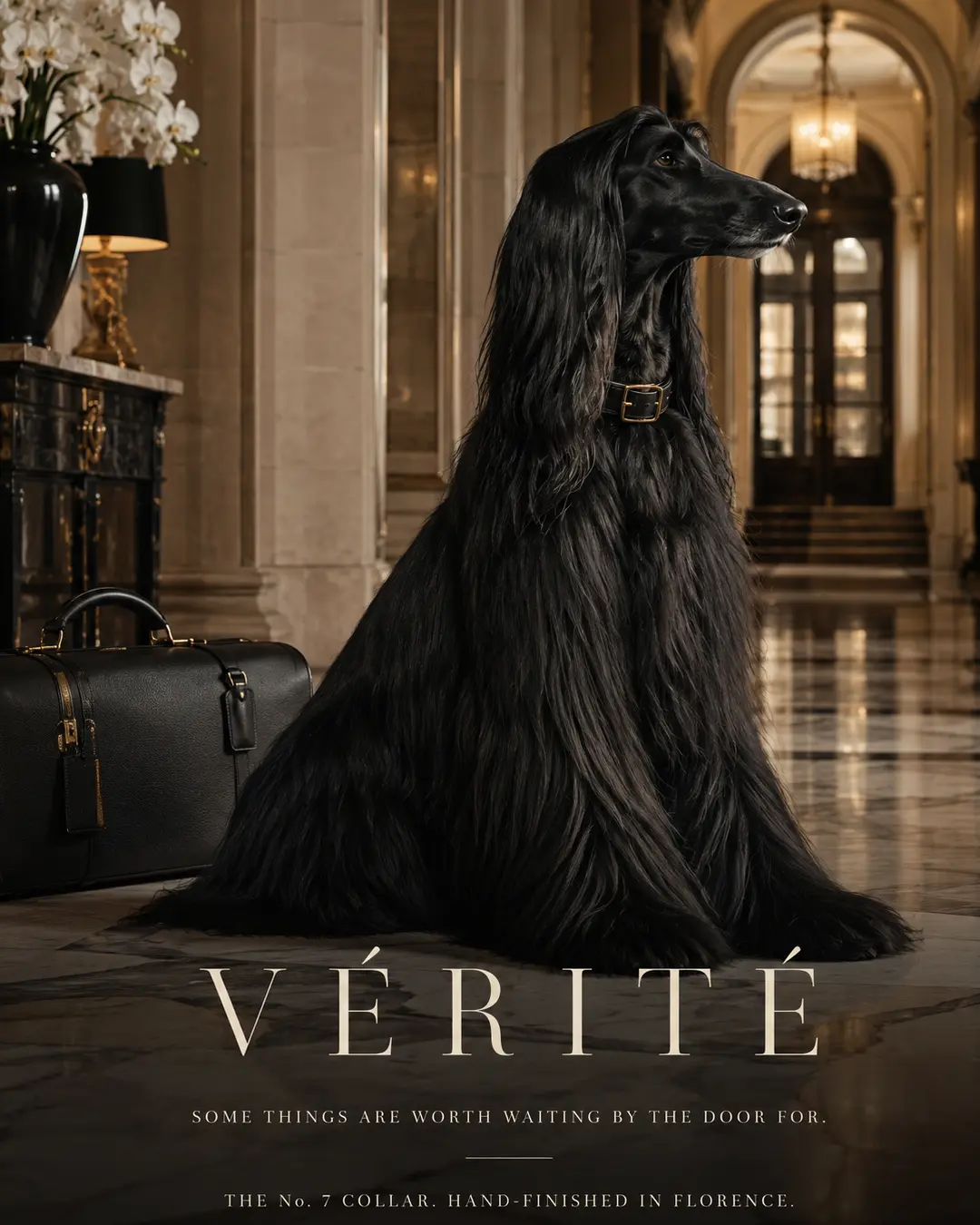
Luxury has never been about necessity. It’s about craftsmanship, identity, desire and knowing that the smallest details can say something about who you are. VÉRITÉ understands that its clientele feels exactly the same way. With the No. 7 Collar, hand-finished in Florence and presented with all the restraint of a European fashion house, the brand makes no attempt to justify indulgence. Some customers simply appreciate beautiful things—and apparently some of them have four legs, impeccable hair and somewhere important to be.
Your Dog Isn’t a Qualified Contractor
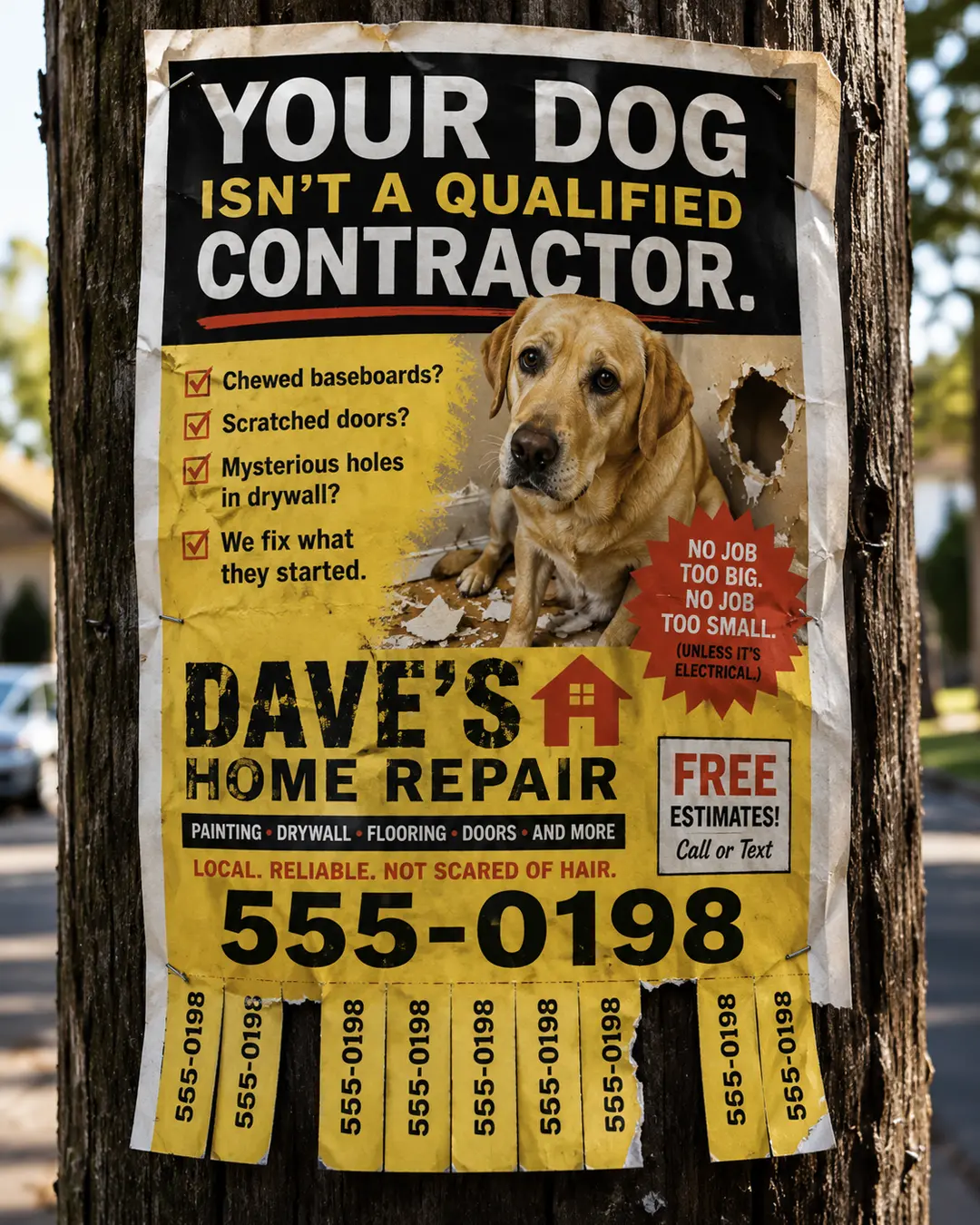
There’s nothing polished about this neighborhood home-repair ad—and that’s exactly the point. Stapled to a utility pole with tear-off phone numbers and unapologetically loud graphics, the flyer turns chewed baseboards, scratched doors, and suspicious drywall damage into a pitch for the local handyman. It’s scrappy, funny, instantly recognizable, and proof that great pet-friendly advertising doesn’t need a luxury budget to get noticed.
7. Room to Run Out of Room
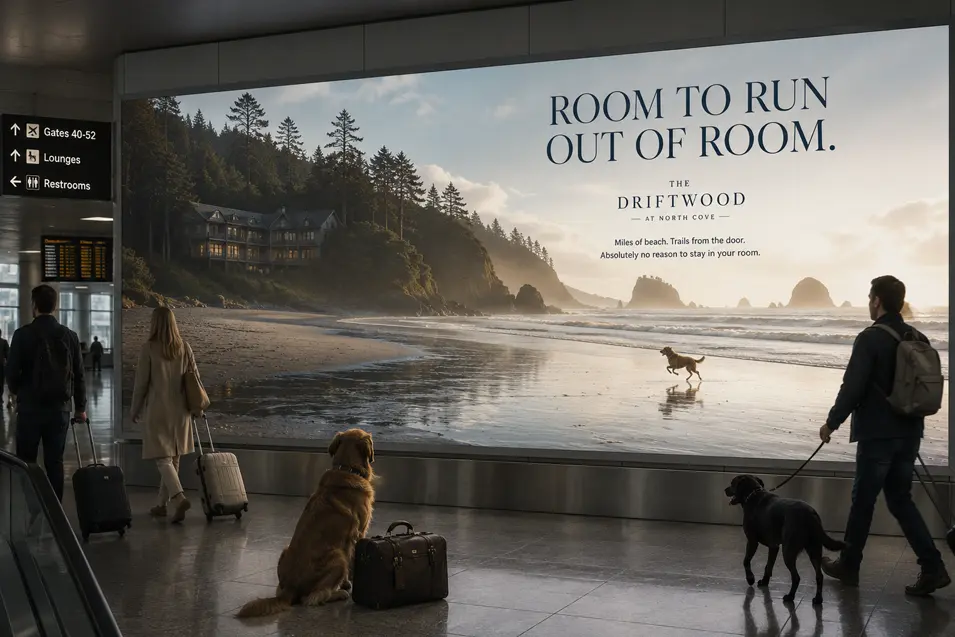
Most hotels sell the room. The Driftwood at North Cove understands that some travelers are far more interested in what begins the moment they step outside it. Miles of open beach, forest trails straight from the door and enough space to run until somebody finally remembers there was supposed to be a vacation itinerary. Placed inside the airport itself, the campaign sells canine travelers something more compelling than thread counts or room service: the irresistible possibility of getting there, dropping the luggage and disappearing down the beach.
8. You Already Know. Now Know Sooner.
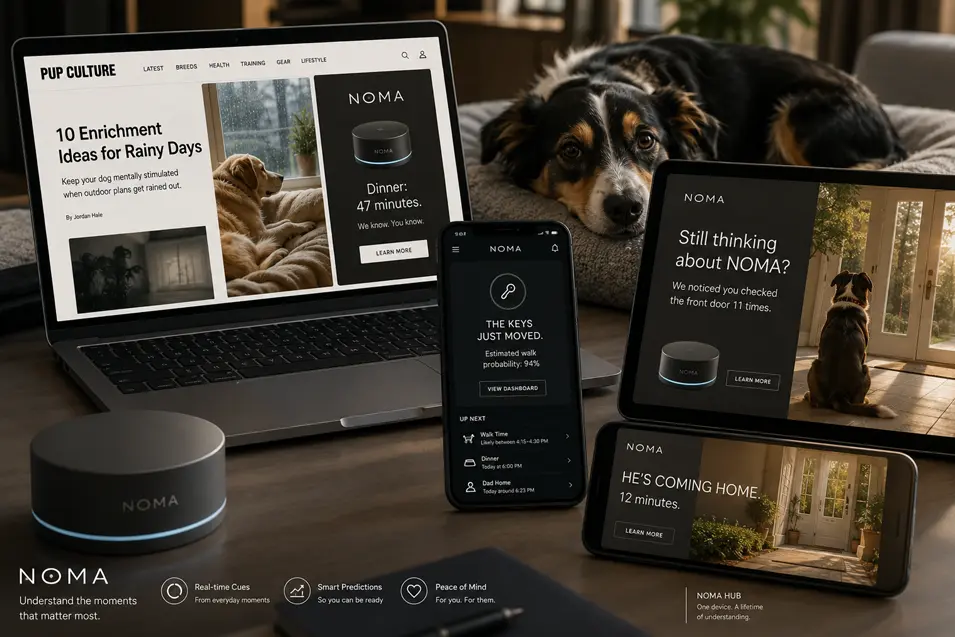
Dogs have always been remarkably good at predictive technology. A hand reaches for the keys and a walk becomes imminent. Dinner is approaching and somehow they know. Someone they love is coming home and the front door suddenly deserves their undivided attention. NOMA simply gives its customers better data. Through connected devices, real-time cues and predictive alerts, the platform turns the tiny signals of everyday life into the information that matters most—because when your entire schedule revolves around walks, meals and somebody coming through that door, knowing twelve minutes sooner is a very big deal.
9. Value Isn’t Always What You Paid for It
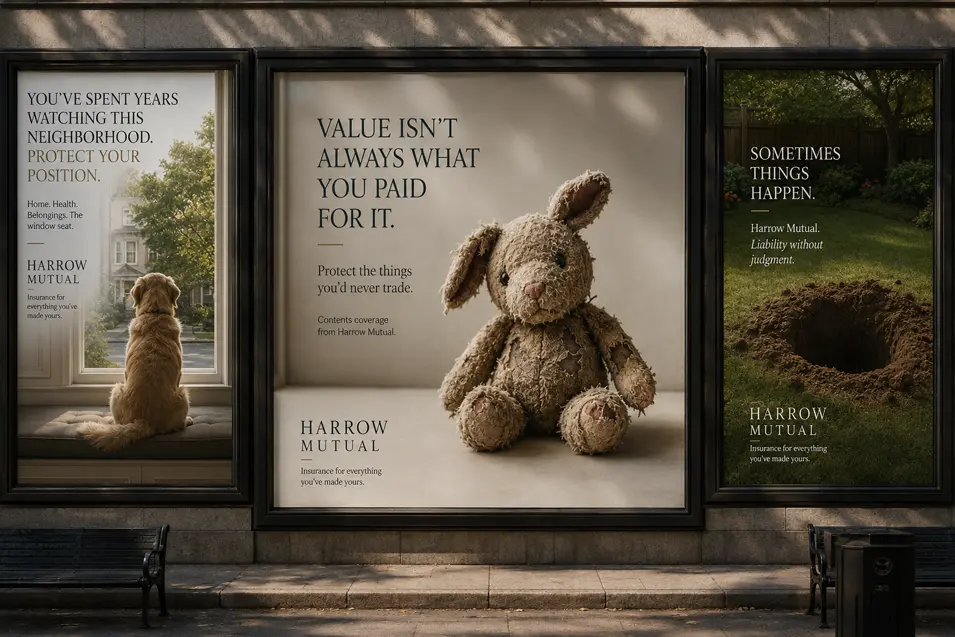
Insurance is ultimately about protecting what matters, and Harrow Mutual understands that value isn’t always something an appraiser can calculate. It might be the window seat you’ve claimed for years, the backyard where things occasionally get out of hand, or a battered old rabbit that wouldn’t fetch fifty cents at a garage sale but couldn’t be replaced for anything. By treating canine possessions, territory and mishaps with the same seriousness as any other customer’s assets, Harrow turns a familiar insurance promise into something unexpectedly emotional: protect the things you’d never trade.
10. Trust Your Nose
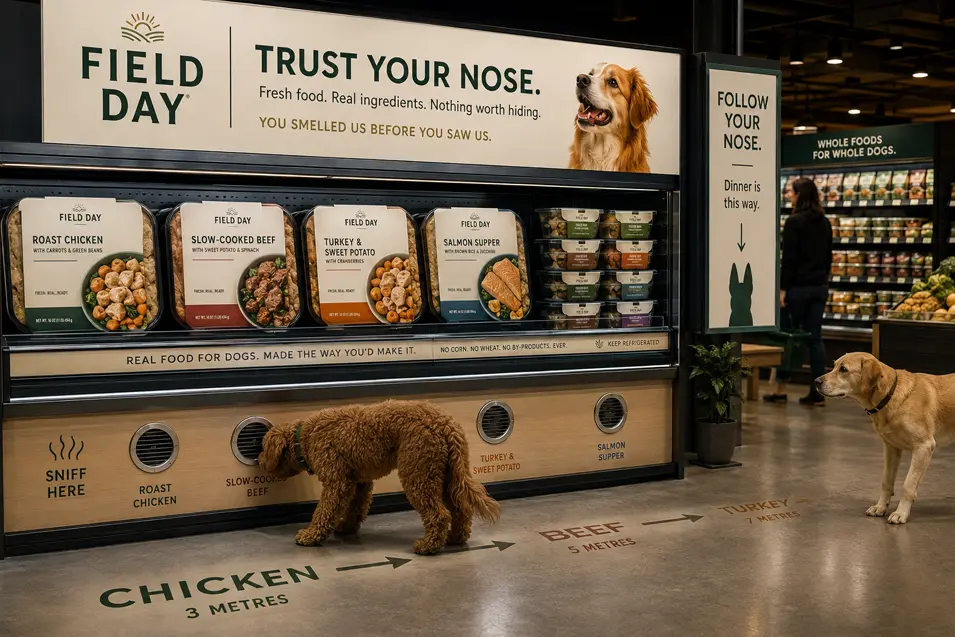
Grocery stores have spent decades perfecting shelf placement, packaging and displays around the way people shop. FIELD DAY starts with a different piece of consumer research: its customers usually smell dinner before they see it. So the entire shopping experience has been rebuilt around the canine nose, from fresh refrigerated meals and scent stations positioned at sniffing height to floor-level directions pointing shoppers toward chicken, beef and turkey. It’s packaging, merchandising and sensory marketing designed for an audience that doesn’t need to read the ingredients to know exactly which aisle it wants to visit.
11. You Crossed the Property Line 14 Seconds Ago
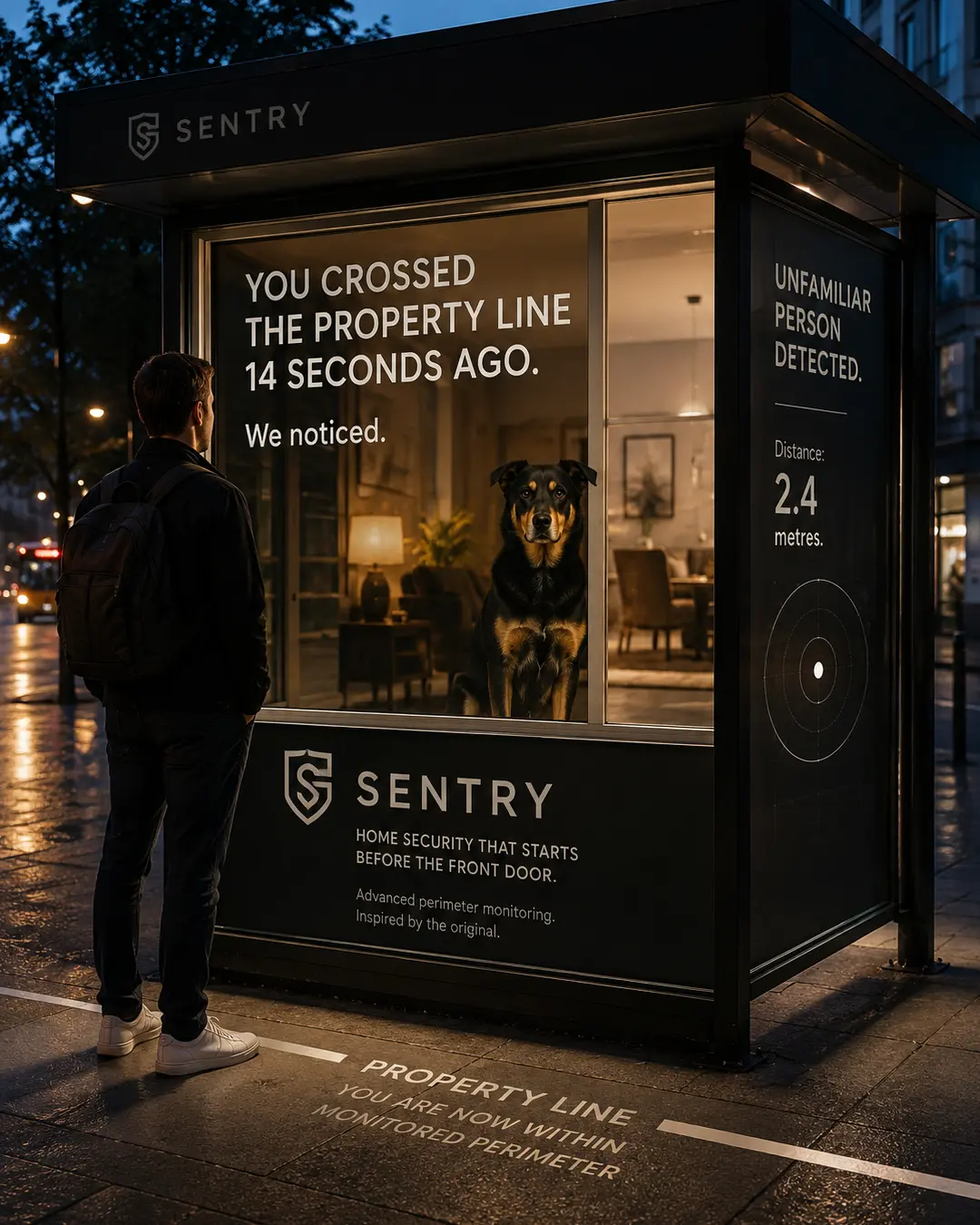
Long before cameras, motion sensors and smart doorbells, dogs had already perfected perimeter security. SENTRY takes its inspiration from the original system: notice everything, recognize everyone and treat an unfamiliar person approaching the house as information worth acting on. Here, the bus shelter itself becomes the monitored property, turning the person waiting for a ride into the suspicious activity. The closer they get, the better the campaign works—because when it comes to home security, some customers have always believed protection should start long before anyone reaches the front door.
12. Together Means Together
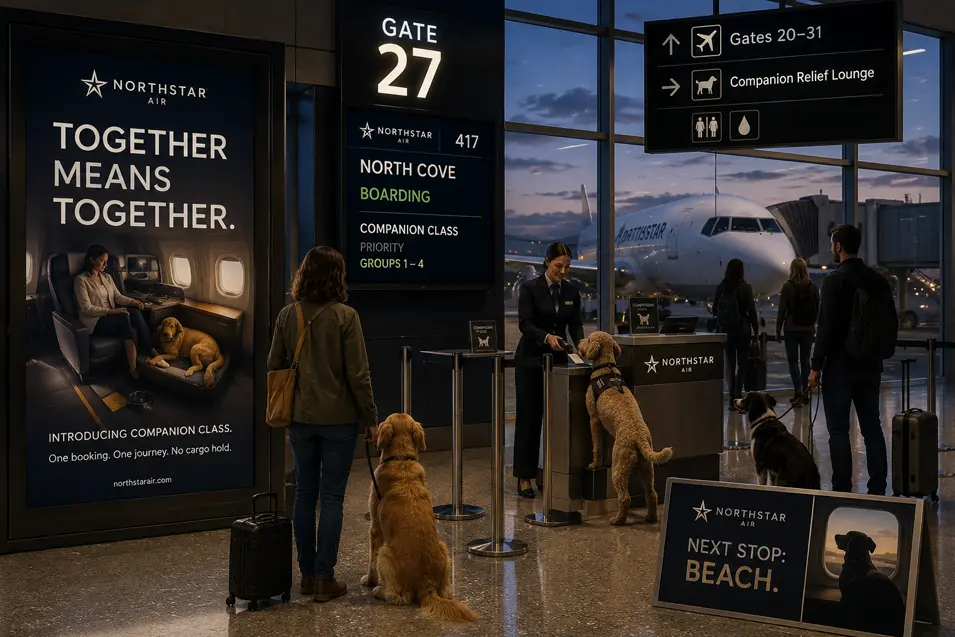
Airlines have spent years competing over seats, lounges and boarding privileges. NORTHSTAR starts with a more fundamental promise: if two passengers are taking the same trip, they should actually get to take it together. Companion Class reimagines the entire journey around that idea, from shared cabin spaces and dedicated airport facilities to boarding procedures designed for travelers on four legs. The result isn’t an airline making accommodations for dogs. It’s an airline recognizing them as customers—and understanding that sometimes the most important part of getting somewhere is simply knowing who will be beside you when you arrive.
13. Finally. Something Worth Getting Off the Couch For.
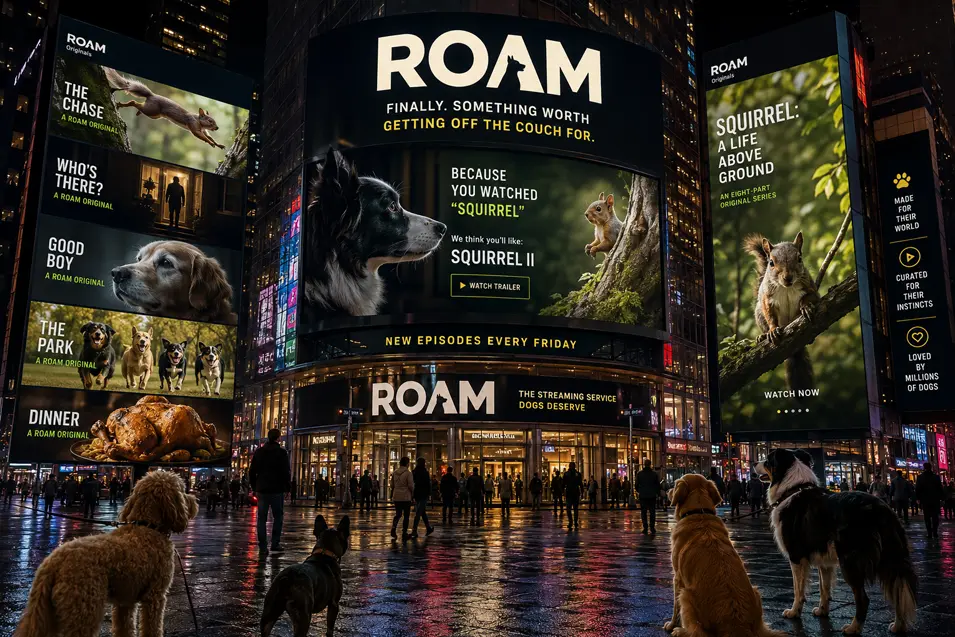
Every streaming service claims to know its audience. ROAM actually does. Its originals are built around the subjects canine viewers find impossible to ignore: suspicious visitors, open parks, spectacular dinners and, naturally, an apparently endless supply of squirrels. Even the recommendation engine has learned not to overcomplicate things—if you watched Squirrel, there’s an excellent chance you’ll enjoy Squirrel II. Wrapped in the scale and swagger of a major entertainment launch, ROAM imagines what pop culture looks like when dogs aren’t appearing on the screen for us. They’re the subscribers everyone is fighting to keep watching.
14. Built for the Way You Move

Some athletes train because they want to win. Others seem to run simply because standing still has never made much sense. The KERN Ridgeline 100 turns that instinct into a major international sporting spectacle: 100 kilometres of unforgiving mountain terrain, 4,200 metres of vertical climbing and some of the fastest four-legged endurance athletes in the world. From live broadcasting and performance labs to recovery teams, sponsor activations and thousands of fans lining the course, KERN treats canine sport with exactly the scale it deserves. Because when movement itself is the reward, taking it easy was never really an option.
15. Calls It Tuesday
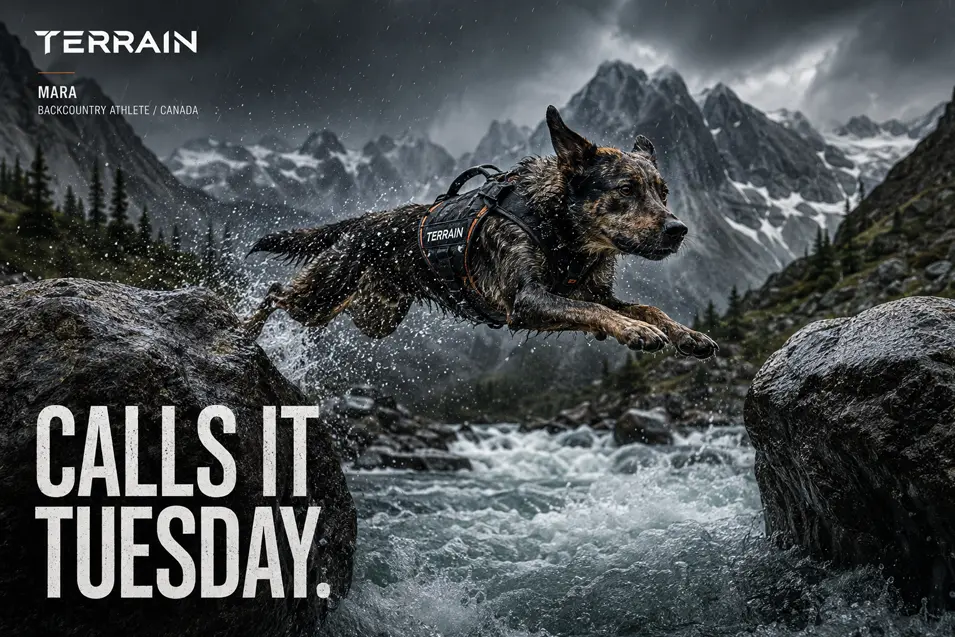
Most people would call it an expedition: bad weather, raging water, unforgiving terrain and the kind of mountain conditions that make turning around seem perfectly reasonable. Mara just calls it Tuesday. TERRAIN treats its canine athletes with the same seriousness as anyone else pushing equipment to its limits, pairing uncompromising action photography with gear engineered for the backcountry. There’s no need to manufacture an adventure when your athlete wakes up every morning hoping somebody opens the door and points toward the mountains.
16. Did Someone Say Walk?
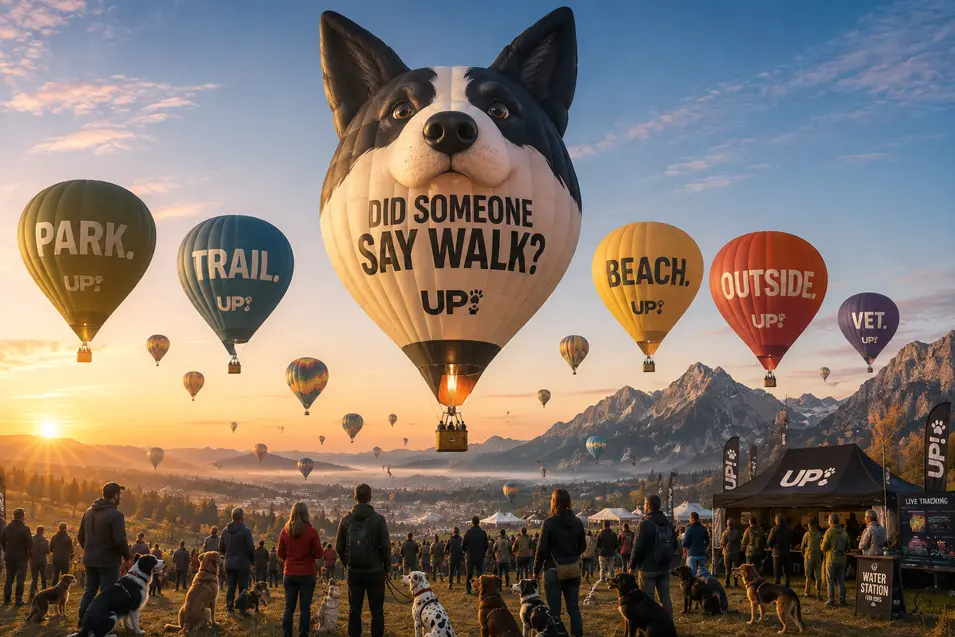
There are certain words you simply don’t say around a dog unless you’re prepared to follow through. UP! takes the most powerful of them and puts it somewhere impossible to ignore: across the morning sky. Led by a colossal canine-shaped balloon and followed by an airborne invitation to the park, trail, beach and great outdoors, the Morning Walk turns a simple brand message into a spectacle an entire city can experience. Because when “walk” is enough to send one dog racing for the door, imagine what happens when you launch the word from a field with a fleet of hot-air balloons.
17. Something From the Mail for Once
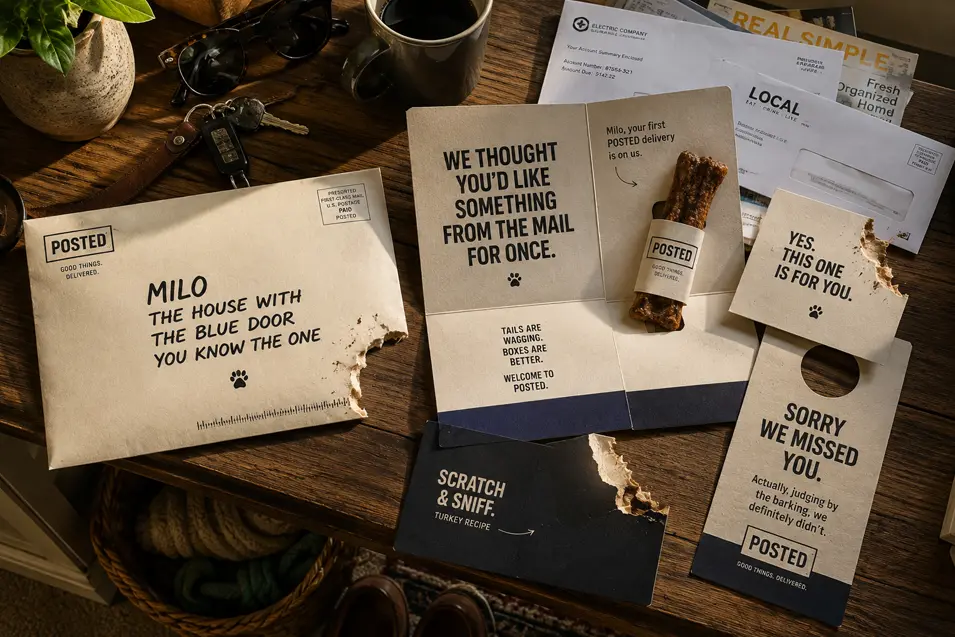
For most brands, direct mail has to fight for attention. POSTED has a different problem: its customer has already been waiting at the window for the person delivering it. Personalized envelopes, scent-treated cards, samples and door hangers turn one of the dog’s most complicated daily relationships into a tactile acquisition campaign designed to be sniffed, investigated and, occasionally, partially eaten. Because after years of barking at everything that comes through the letterbox, it seems only fair that once in a while the mail should actually contain something worth getting excited about.
19. You Were Going to Watch Anyway
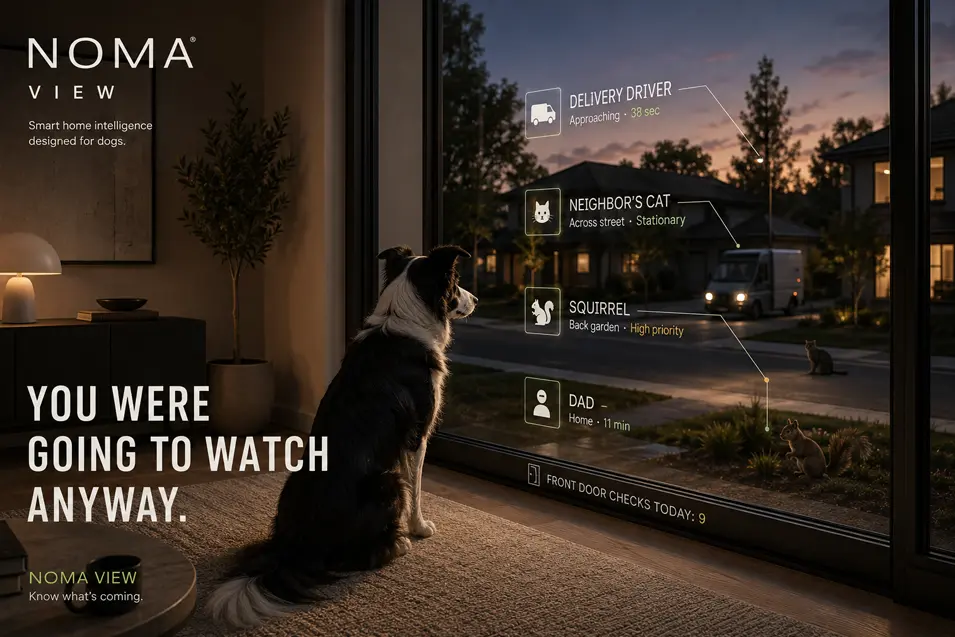
NOMA first appeared in #8 as the smart-home technology that could turn moved keys, approaching dinner and an expected arrival home into the information dogs actually care about. Eleven campaigns later, the brand returns with NOMA VIEW, transforming another familiar canine habit—the hours spent monitoring the world through the window—into a predictive interface for delivery drivers, neighborhood cats, squirrels and the people they’re waiting for. Even the front-door counter returns, quietly continuing a joke that began with NOMA noticing exactly how many times its customer had checked it. It’s a second execution built from the same consumer insight, brand voice and technology platform, because a strong campaign shouldn’t produce one good ad. It should give the next one somewhere to begin.
20. They Always Knew
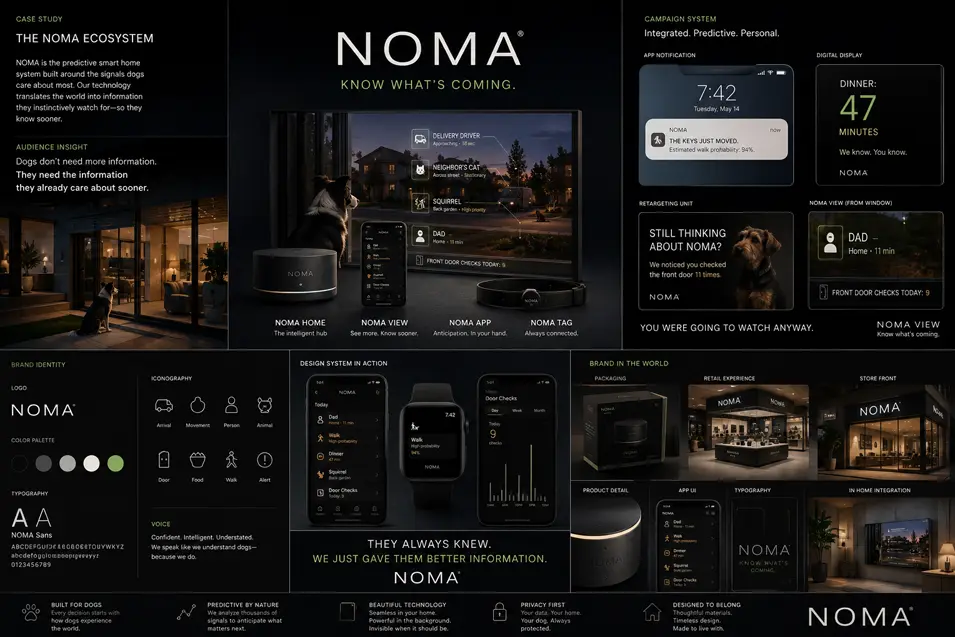
NOMA began in #8 with a simple observation: dogs already notice the tiny signals that predict the things they care about most. By #19, that idea had expanded into NOMA VIEW, turning the front window into another source of useful intelligence. The final execution pulls everything together—product design, connected devices, predictive interfaces, advertising, retail, packaging and brand identity—into one complete ecosystem built from the same original insight. NOMA doesn’t give dogs instincts they didn’t have before. It simply gives those instincts better information, sooner. They always knew. We just gave them better information.
The Dogs Were Never the Joke
The fun of this project was imagining a world where dogs had become an economically important consumer demographic. The more interesting part was discovering how quickly that world began to make sense.
Change the customer and everything changes with them. Cars are judged by their windows. Real estate by squirrel traffic. Grocery stores merchandise at nose height. Airlines rethink what it means to travel together. Technology learns which signals actually matter. Insurance begins protecting possessions no appraiser could possibly value correctly. Even the front window becomes an interface.
What started as an absurd advertising brief became something much bigger: a demonstration of how differently familiar industries can look when viewed through another set of priorities.
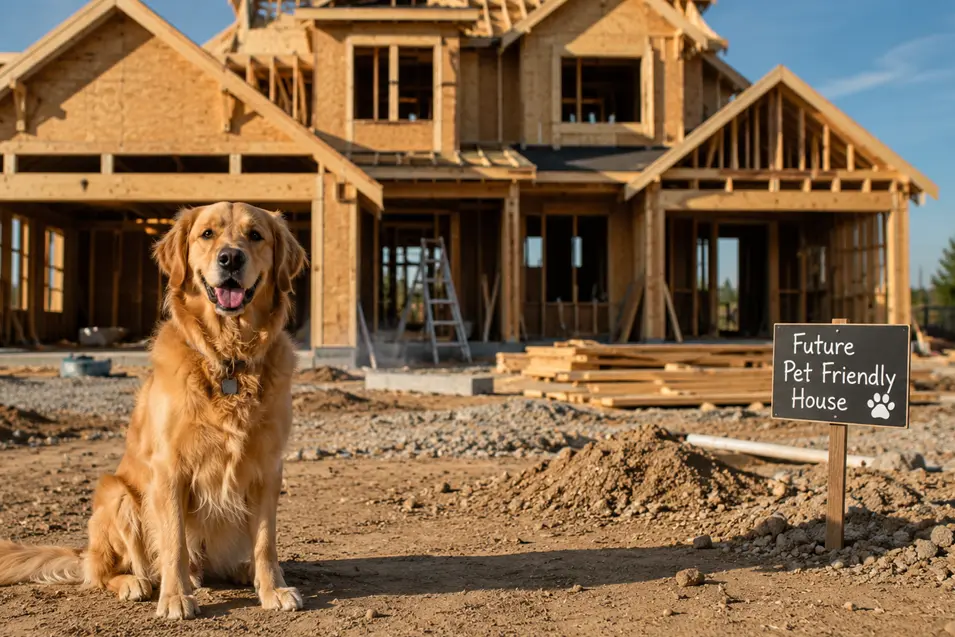
That has always been the larger idea behind Pet Friendly House.
Pets are the lens, not the limitation.
They give us another way to look at homes, travel, design, technology, culture, advertising and everyday life—and sometimes that different perspective reveals ideas we might never have found by looking at the world in the usual way.
So yes, these are advertisements from a world where dogs are the customers.
But perhaps the more interesting question is what happens when we keep changing the perspective.
We have a feeling this won’t be the last time we find out.