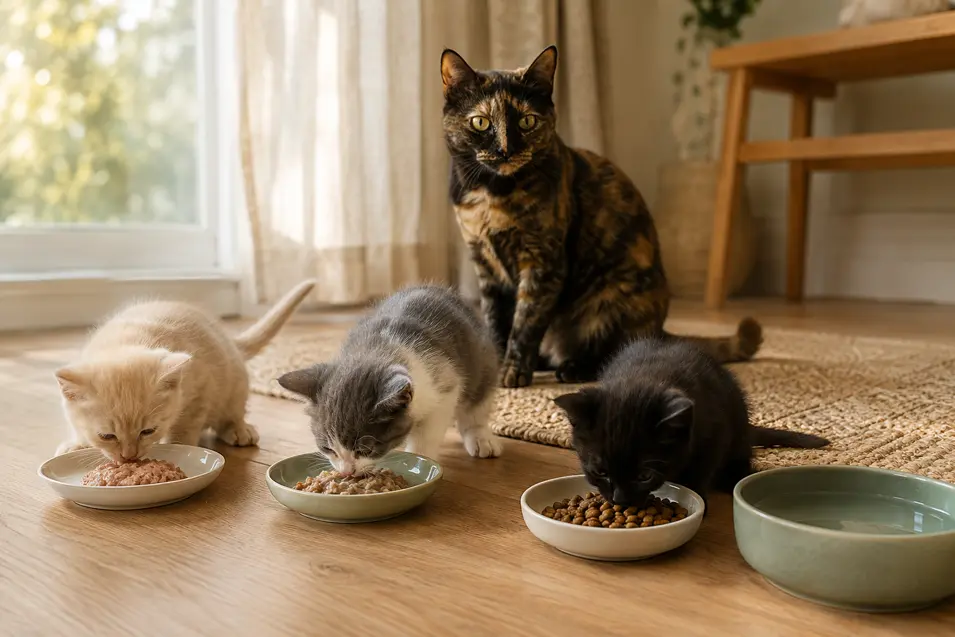
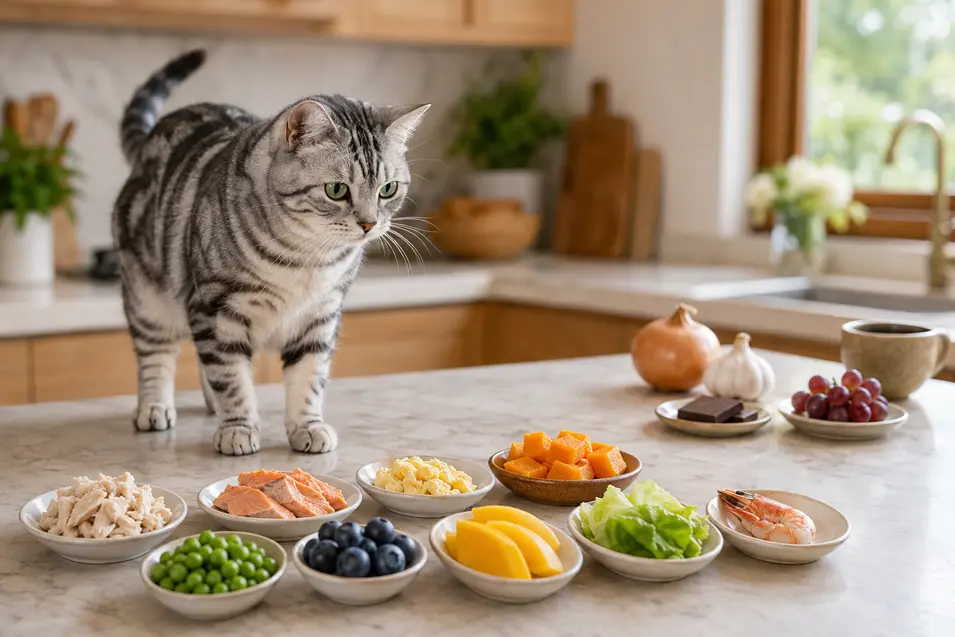
Cats are naturally curious about what their people are eating, but sharing food with them is not always as harmless as it seems. Some human foods can be offered safely as occasional treats, others may cause digestive discomfort, and a smaller group can be genuinely dangerous. Even foods considered safe must be prepared correctly and given in amounts appropriate for a cat’s much smaller body.
Cats are obligate carnivores, meaning they rely on nutrients found primarily in animal tissue. A bite of plain chicken or cooked egg may complement a cat’s regular diet, but fruits, vegetables and other human foods are not nutritionally necessary. Your cat’s main food should always be a complete and balanced diet formulated for the appropriate life stage.
Human Foods Cats Can Eat at a Glance
The following guide provides a quick overview. “Safe” does not mean a food should become a major part of your cat’s diet. Unless otherwise stated, these foods should be served plain, fully cooked when appropriate and in very small portions.
| Human food | Can cats eat it? | What you should know |
|---|---|---|
| Chicken | Yes | Serve fully cooked, boneless and unseasoned |
| Turkey | Yes | Plain cooked meat is suitable as an occasional treat |
| Beef | Yes | Choose lean, thoroughly cooked, unseasoned pieces |
| Pork | Occasionally | Cook thoroughly and avoid fatty or processed pork |
| Lamb | Yes | Offer small amounts of plain, lean, cooked meat |
| Salmon | Occasionally | Serve fully cooked, boneless and without seasoning |
| Tuna | Occasionally | A small taste is acceptable, but human tuna is not a balanced cat food |
| Sardines | Occasionally | Choose plain sardines without added salt, sauces or seasoning |
| Crab | Yes | Serve plain, fully cooked meat with all shell removed |
| Prawns | Yes | Cook thoroughly and remove the shell, head and tail |
| Eggs | Yes | Serve fully cooked and without butter, oil or seasoning |
| Cheese | Occasionally | Many cats cannot digest dairy well |
| Milk | Best avoided | Lactose commonly causes diarrhea or stomach discomfort |
| Plain yogurt | Occasionally | Only a tiny amount, provided it contains no unsafe sweeteners |
| Whipped cream | Best avoided | It contains dairy, fat and often added sugar |
| Apples | Occasionally | Remove the stem, seeds and core |
| Bananas | Occasionally | High in sugar and unnecessary for cats |
| Blueberries | Occasionally | Offer one or two washed berries |
| Strawberries | Occasionally | Remove the leaves and cut the fruit into small pieces |
| Watermelon | Occasionally | Remove the rind and every seed |
| Cantaloupe | Occasionally | Serve without seeds or rind |
| Mango | Occasionally | Remove the skin and pit |
| Pineapple | Occasionally | Only fresh, peeled fruit in a tiny portion |
| Pears | Occasionally | Remove the seeds, stem and core |
| Peaches | Occasionally | Remove the pit, leaves and stem |
| Oranges | Best avoided | Citrus may cause digestive irritation |
| Grapes and raisins | No | Avoid because their safety in cats cannot be assured |
| Avocado | Best avoided | Fatty flesh may upset the stomach, and the skin and pit present additional risks |
| Pumpkin | Yes | Plain cooked or canned pumpkin may be offered in small amounts |
| Carrots | Yes | Cook until soft and cut into very small pieces |
| Peas | Yes | Plain cooked peas are found in some commercial cat foods |
| Green beans | Yes | Serve plain, cooked and chopped |
| Broccoli | Occasionally | Small pieces of plain cooked broccoli are acceptable |
| Cucumber | Occasionally | Offer a small, peeled piece |
| Zucchini | Occasionally | Plain cooked zucchini can be given in a small amount |
| Lettuce | Occasionally | Wash it and tear it into small, manageable pieces |
| Spinach | With caution | Ask your veterinarian before offering it to a cat with urinary or kidney problems |
| Sweet potato | Occasionally | Serve fully cooked, plain and in a tiny amount |
| White potato | Occasionally | Only fully cooked, plain potato; never offer raw or green potato |
| Corn | Occasionally | Plain cooked kernels are acceptable, but never let a cat chew a corncob |
| Cilantro | Occasionally | A small amount is generally acceptable |
| Rice | Occasionally | Plain, fully cooked rice is safe but offers limited nutritional value |
| Oatmeal | Occasionally | Cook it with water and serve it plain |
| Bread | Occasionally | A tiny piece of plain baked bread is acceptable |
| Popcorn | Best avoided | Plain pieces are not generally toxic, but kernels and toppings create risks |
| French fries | Best avoided | High in fat and salt and often covered in unsafe seasonings |
| Chicken nuggets | Best avoided | Processed, fatty and frequently seasoned with onion or garlic |
| Peanut butter | Best avoided | Fatty, sticky and potentially made with unsafe ingredients |
| Pistachios | Best avoided | High in fat and pose choking and digestive risks |
| Coconut | Occasionally | The high fat content may cause digestive upset |
| Honey | Best avoided | Very high in sugar and provides little benefit to cats |
| Cinnamon | Best avoided | Powder can irritate the mouth and lungs; concentrated oils are more dangerous |
| Onion | No | Can damage a cat’s red blood cells |
| Garlic | No | Highly concentrated and potentially toxic to cats |
| Chives and leeks | No | Members of the same dangerous plant family as onions and garlic |
| Chocolate | No | Contains stimulants that can cause serious poisoning |
| Coffee and caffeine | No | Can affect the heart and nervous system |
| Alcohol | No | Even a small amount can be life-threatening |
| Raw yeast dough | No | Can expand in the stomach and produce alcohol |
| Raw meat and eggs | Best avoided | May carry harmful bacteria or parasites |
| Cooked bones | No | Can splinter, obstruct or injure the digestive tract |
The Best Human Foods to Share With a Cat
If you want to give your cat an occasional taste of human food, plain cooked animal protein is generally the most appropriate choice. It is closer to a cat’s natural nutritional needs than fruit, bread, dairy products or snack foods.
Plain Cooked Chicken
Small pieces of plain, skinless chicken are among the simplest human-food treats for a healthy cat. Remove every bone and cook the meat thoroughly without salt, sauce, breading, butter, onion, garlic or other seasonings. Dark meat and chicken skin contain more fat, so lean breast meat is usually the better choice.
Chicken should not replace balanced cat food. Meat alone does not contain every vitamin, mineral and nutrient a cat requires in the correct proportions.
Turkey
Cats can eat small amounts of thoroughly cooked turkey. Choose plain, lean meat and remove the skin, bones and visible fat. Holiday turkey may contain butter, brine, gravy, onion, garlic or other ingredients that make it unsuitable. Processed turkey slices are also commonly high in sodium.
Beef, Lamb and Pork
Plain cooked beef and lamb may be offered in bite-sized portions. Choose lean meat and drain excess fat. Pork must be cooked thoroughly, and fatty cuts should be avoided because they may trigger digestive upset.
Bacon, ham, sausage, pepperoni and other cured or processed meats are poor choices. They tend to contain large amounts of salt and fat, along with seasonings that may include onion or garlic.
Cooked Eggs
Eggs provide protein, but they should be fully cooked before being given to a cat. A small piece of boiled or scrambled egg is acceptable if it was prepared without milk, butter, salt or seasoning. Raw and undercooked eggs may expose cats and people to harmful bacteria, and regularly feeding raw egg white can interfere with the absorption of biotin.
Cooked Fish and Seafood
Many cats enjoy fish, but it is better used as an occasional treat than as the foundation of the diet. Fish intended for people may not provide complete feline nutrition, and canned varieties can contain considerable salt or oil.
Plain, fully cooked salmon is acceptable after every bone has been removed. Tuna can be offered as a rare taste, but routinely feeding canned tuna intended for people may create nutritional imbalances. Tuna packed in brine or oil is less suitable than tuna packed in water.
Cats can eat crab when the meat is completely cooked, plain and separated from the shell. Crab legs and shell fragments can cause choking or internal injury. Imitation crab is less appropriate because it is processed and may contain added starch, salt, sugar and flavorings.
Prawns and shrimp should also be thoroughly cooked and served without butter, garlic, cocktail sauce or seasoning. Remove the shell, head, legs and tail before offering a small piece.
Can Cats Eat Fruit?
Cats do not need fruit, and they cannot taste sweetness in the way people do. Nevertheless, small pieces of certain fruits may be acceptable as occasional treats. Fruit contains natural sugar and fiber, so portions should remain tiny, particularly for cats that are overweight or have diabetes.
Safe choices include a small piece of banana, peeled apple, pear, strawberry, blueberry, seedless watermelon, cantaloupe, pineapple or mango. Always wash fresh fruit and remove inedible peels, stems, leaves, pits, cores and seeds.
Cats can eat mango in moderation once the skin and hard central pit have been removed. Cut the flesh into a piece no larger than the tip of your finger. Mango is high in sugar, so it should remain a rare novelty rather than a regular snack.
Apple and pear seeds should never be deliberately fed to a cat. Peach, plum, apricot and cherry pits are also hazardous and can cause choking or intestinal obstruction. Parts of these plants contain compounds capable of releasing cyanide, making careful preparation essential.
Citrus fruits are best left off the feline menu. The peel, leaves, stems and seeds contain essential oils and other compounds that can irritate or harm cats. A tiny lick of orange flesh may cause nothing more than mild stomach upset, but there is no nutritional reason to offer it.
Grapes and raisins should be avoided. Their association with acute kidney injury is firmly established in dogs, while the level of risk to cats is less certain. Because a safe feline amount has not been established and kidney problems have been reported, the cautious approach is to keep grapes, raisins and foods containing them away from cats.
Can Cats Eat Vegetables?
Cats cannot thrive on vegetables in place of animal-based nutrition, but several vegetables can be offered in small amounts. Cook firm vegetables until soft, leave off seasonings and cut them into pieces that cannot become lodged in the throat.
Plain pumpkin is a familiar example. A small amount of cooked pumpkin or pure canned pumpkin—not sweetened pumpkin pie filling—is sometimes added to a cat’s food as a source of fiber. Too much can cause diarrhea or interfere with a balanced diet, so ask your veterinarian how much is appropriate if you intend to use pumpkin for a digestive problem.
Cooked carrots, peas, green beans, zucchini and broccoli can also be offered occasionally. Cucumber and lettuce have high water content but little nutritional value for cats. Cats can eat lettuce if it is washed, unseasoned and torn into small pieces that are easy to swallow.
Cilantro is not considered toxic to cats in small culinary amounts. A cat that nibbles a leaf is unlikely to be harmed, although eating a large quantity could cause vomiting or diarrhea. Concentrated extracts and essential oils are different from the fresh herb and should not be given to cats.
Fully cooked, plain sweet potato is acceptable in a small amount. White potatoes require more caution. Raw potatoes, green potatoes, sprouts and the green portions of the plant contain solanine and should be kept away from cats. A tiny piece of thoroughly cooked, ripe potato flesh is less concerning, but it provides little nutritional benefit.
Spinach is not automatically dangerous to every cat, but it contains soluble calcium oxalates. Owners of cats with kidney disease, bladder stones or other urinary problems should consult their veterinarian before offering it.
Can Cats Eat Rice, Oatmeal and Bread?
Plain cooked rice and oatmeal are not toxic to cats, but cats have no dietary requirement for grains. A teaspoon-sized taste may be tolerated, while larger servings can add unnecessary calories or cause digestive upset. Oatmeal should be cooked with water rather than milk and served without sugar, syrup, raisins or artificial sweeteners.
A tiny piece of fully baked, plain bread is generally acceptable, but bread is mostly empty calories for a cat. Garlic bread, raisin bread, heavily salted bread and bread containing unsafe sweeteners or seasonings should not be shared.
Raw yeast dough is an emergency rather than a treat. Dough can continue to expand inside the warm stomach, causing painful bloating and potentially dangerous pressure. Fermenting yeast also produces alcohol, creating an additional poisoning risk.
Can Cats Have Dairy Products?
The familiar image of a cat drinking from a saucer of milk is misleading. Many adult cats produce too little lactase to digest lactose properly. Milk, cream and other dairy products can consequently cause gas, abdominal discomfort, vomiting or diarrhea.
A tiny piece of a low-lactose cheese may not bother every cat, but cheese is high in fat and salt and should not become a routine treat. Plain, unsweetened yogurt may contain less lactose than milk, yet it can still upset a sensitive stomach.
Whipped cream is best avoided. It combines dairy and fat and may contain added sugar, vanilla, chocolate or sugar substitutes. A single lick of ordinary whipped cream is unlikely to poison a healthy cat, but it could produce digestive discomfort and provides no useful nutrition. Sugar-free whipped toppings require particular caution because their ingredient lists can vary.
Specially formulated lactose-reduced “cat milk” is different from ordinary cow’s milk, but it still contributes calories and should be treated as an occasional extra rather than a substitute for water.
Human Snack Foods Cats Should Avoid
Many processed foods are not acutely poisonous, but that does not make them appropriate. Their salt, fat, sugar, breading, sauces and seasonings can turn an otherwise harmless ingredient into a poor choice.
Chicken Nuggets
Cats should not be deliberately fed chicken nuggets. Although the center contains chicken, nuggets are processed, breaded and high in fat and sodium. They may also contain onion powder, garlic powder or other unsafe seasonings. Removing the breading does not necessarily remove ingredients mixed into the meat.
If a cat steals a small piece, check the ingredient list and watch for vomiting, diarrhea, lethargy or other unusual behavior. Contact a veterinarian if the nugget contained onion, garlic or another dangerous ingredient, or if the cat ate a substantial amount.
French Fries
French fries offer cats no nutritional advantage. They are oily, salty and sometimes coated with onion, garlic, cheese or spicy seasoning. Raw potato and green potato are more concerning than a bite of fully cooked potato, but fried potatoes are still best avoided.
A cat stealing one small, plain fry is unlikely to experience serious poisoning. The appropriate response is usually to provide water and monitor the cat, unless unsafe seasonings were present.
Popcorn
A fully popped piece of plain, air-popped popcorn is not generally toxic, but popcorn is still an unnecessary treat. Butter, salt, cheese powder, caramel, chocolate and other toppings make it less suitable. Unpopped or partly popped kernels can become choking hazards or damage teeth.
If you decide to share popcorn, offer no more than one plain, soft, fully popped piece and remove the hard center. Never allow a cat to eat directly from a bowl containing loose kernels.
Pistachios and Other Nuts
Pistachios are not known as a classic feline poison, but they are high in fat and difficult for cats to chew and digest. Whole nuts and shells may cause choking or intestinal blockage, while salted or flavored pistachios add further risks. Moldy nuts may contain dangerous toxins.
Other nuts, including almonds, pecans and walnuts, are similarly fatty and unsuitable. Nut butters are calorie-dense and sticky, and flavored products may contain salt, chocolate or sweeteners. Cats obtain more appropriate nutrition from a tiny piece of plain cooked meat.
Cinnamon
A trace of cinnamon baked into food is unlikely to cause serious poisoning, but cats should not be deliberately given cinnamon. The powder may irritate the mouth, stomach or lungs, particularly if inhaled. Cinnamon sticks can also be chewed into sharp fragments.
Concentrated cinnamon oil and other essential-oil products present a more serious concern. Cats process certain plant compounds poorly, and exposure can occur through swallowing, skin contact or inhalation. Do not add cinnamon or essential oils to a cat’s food, fur, bedding or drinking water.
Foods That Are Toxic or Dangerous to Cats
Some foods require more than simple moderation. Keep the following products where cats cannot lick, chew or knock them from a counter.
Onions, Garlic, Chives, Leeks and Shallots
Members of the Allium family can damage feline red blood cells and cause anemia. Cats are particularly susceptible. These ingredients remain unsafe whether raw, cooked, dried, powdered or incorporated into another food.
Onion and garlic powder are concentrated and appear in an enormous range of products, including soup, broth, gravy, stuffing, sauces, chips, seasoned meat, baby food, chicken nuggets and restaurant meals. Symptoms may include vomiting, weakness, pale gums, rapid breathing, an elevated heart rate or dark urine. Because signs of anemia can be delayed, seek veterinary advice after a known exposure rather than waiting for symptoms.
Chocolate, Coffee and Other Sources of Caffeine
Chocolate contains theobromine and caffeine, substances that stimulate the nervous and cardiovascular systems. Dark chocolate, baking chocolate and cocoa powder generally contain higher concentrations than milk or white chocolate, but no chocolate should be considered an appropriate feline treat.
Coffee grounds, beans, tea bags, energy drinks, caffeine tablets and caffeinated desserts should also be secured. Possible signs include restlessness, vomiting, rapid breathing, an abnormal heartbeat, tremors and seizures.
Alcohol
Alcohol is dangerous to cats in beverages and in foods made with alcohol. It can cause vomiting, loss of coordination, low body temperature, breathing difficulty, coma and death. Cats may encounter it in cocktails, fermented products, alcohol-soaked desserts, unbaked yeast dough, mouthwash or spilled hand sanitizer.
Do not wait for a visibly intoxicated appearance. Contact a veterinarian or animal poison service promptly after a suspected exposure.
Excessively Salty Foods
A small amount of salt contained in a complete commercial diet is not the same as a cat consuming a large quantity of salt or a heavily salted product. Salt dough ornaments, homemade play dough, seasoning mixtures, brine, bouillon, salty snacks and some preserved foods can create a risk.
Excessive salt may cause vomiting, diarrhea, pronounced thirst, frequent urination, lethargy, tremors, seizures or worse. Cats should always have access to fresh water, but drinking water is not a substitute for veterinary help following a significant salt exposure.
Grapes and Raisins
The evidence concerning grape and raisin toxicity is much stronger in dogs than in cats, but the uncertainty is not a reason to experiment. Avoid fresh grapes, raisins, currants and foods containing them, including trail mix, breads, cereals and desserts. Contact a veterinarian or poison service if your cat consumes any.
Foods Containing Xylitol
Xylitol is a sweetener used in some sugar-free gum, candy, baked goods, peanut butter, toothpaste and other products. Severe low blood sugar and liver injury are well documented in dogs. Current evidence has not established the same sensitivity in cats, but products containing xylitol are still inappropriate and may contain other hazardous ingredients. If a cat eats a xylitol-containing product, contact a veterinarian or animal poison expert for advice based on the exact formulation and amount.
Why Preparation Matters
A food can move from acceptable to unsafe because of the way it is prepared. When sharing an occasional treat, follow these rules:
- Cook meat, fish and eggs thoroughly.
- Remove bones, shells, pits, seeds, cores, tough rinds and stems.
- Do not add onion, garlic, salt, butter, oil, sauces or seasoning.
- Cut food into pieces small enough to swallow safely.
- Avoid burned, spoiled, moldy or heavily processed food.
- Check packaged-food labels instead of assuming the ingredients are harmless.
- Never feed cooked bones or allow access to skewers, wrappers, foil or string.
- Introduce only one new food at a time.
Raw meat may contain Salmonella, E. coli, parasites and other pathogens capable of affecting cats and people. Raw fish can also create specific nutritional problems when fed repeatedly. Bones—raw or cooked—can cause choking, broken teeth, constipation, intestinal obstruction or internal injury. Cooking does not make a bone safe; it can make the bone more brittle and prone to splintering.
How Much Human Food Can a Cat Have?
Human food should remain an occasional treat, not a separate meal. Treats of all kinds should generally account for no more than about 10 percent of a cat’s daily calories. For a typical indoor cat, that allowance can be surprisingly small.
A suitable portion may be one or two bite-sized pieces of plain cooked chicken, half a teaspoon of cooked egg or a tiny piece of an approved fruit or vegetable. Portion sizes should be even smaller for kittens, petite cats, overweight cats and cats with medical conditions.
Cats with diabetes, kidney disease, heart disease, pancreatitis, food allergies, inflammatory bowel disease, urinary problems or a prescription diet should not be given new foods without veterinary approval. Even an ordinarily safe treat may conflict with the nutritional purpose of a therapeutic diet.
How to Introduce a New Food Safely
Begin with a piece no larger than a pea or the tip of your finger. Give the food plain and by itself so that you know exactly what your cat consumed. Do not introduce several unfamiliar foods on the same day.
Monitor your cat for vomiting, diarrhea, excessive gas, itching, facial swelling, coughing, unusual tiredness or a reduced appetite. Mild digestive signs may indicate intolerance rather than poisoning, but persistent or severe symptoms require veterinary attention.
Stop offering the food if it causes any reaction. A cat does not need variety from human foods, so there is no benefit in repeatedly testing something that disagrees with the digestive system.
What to Do If Your Cat Eats a Dangerous Food
Remove the remaining food and prevent further exposure. Identify the exact product, ingredients, approximate amount eaten and likely time of ingestion. Save the package or take a clear photograph of its label.
Call your veterinarian, an emergency veterinary hospital or an animal poison-control service for instructions. Do not induce vomiting, give hydrogen peroxide or administer a home remedy unless a veterinary professional specifically directs you to do so. Hydrogen peroxide can severely irritate a cat’s digestive tract and is not considered a safe at-home method of making cats vomit.
Seek urgent veterinary help if your cat develops:
- Difficulty breathing
- Tremors or seizures
- Collapse or inability to stand
- Repeated vomiting
- Extreme weakness
- Pale, blue, yellow or brown-tinged gums
- A very rapid or irregular heartbeat
- Severe abdominal swelling or pain
- Loss of coordination
- Unresponsiveness
Do not wait for symptoms after a known exposure to onion, garlic, chocolate, caffeine, alcohol, raw yeast dough or another potentially toxic product. Some effects are delayed, and early treatment may make a meaningful difference.
Frequently Asked Questions
What human food is healthiest for cats?
The most appropriate human-food treats are generally tiny pieces of plain, fully cooked, lean meat such as chicken, turkey or beef. Cooked egg and certain types of cooked fish can also be offered occasionally. These foods must not replace complete and balanced cat food.
Can cats eat human food every day?
A healthy cat may be able to receive a very small approved treat each day, but human food should remain within the cat’s overall treat allowance. Feeding table scraps daily can add excess calories, encourage begging and unbalance the diet. Using a few pieces of the cat’s regular food as treats is often the simpler choice.
What can I feed my cat if I run out of cat food?
For a single short-term meal, a healthy adult cat can usually have plain, fully cooked, boneless chicken, turkey, lean beef or cooked egg. Do not add salt, oil, sauce, onion or garlic. This is only a temporary solution because plain meat and eggs do not constitute a complete feline diet. Obtain appropriate cat food as soon as possible, and contact a veterinarian for guidance if your cat has a medical condition or prescription diet.
Can cats eat dog food?
A small accidental taste is unlikely to harm most cats, but dog food is not formulated to meet feline nutritional requirements. Cats require nutrients, including taurine and preformed vitamin A, in amounts and forms that differ from dogs. Regularly feeding dog food can cause serious nutritional deficiencies.
Can kittens eat human food?
Kittens have high nutritional requirements for growth and should receive food formulated for kittens. Their small size also makes choking, digestive upset and excess calories more concerning. It is best to use kitten food as treats or ask a veterinarian which extras are appropriate for the kitten’s age.
Why does my cat want my food?
Cats may be attracted by the smell of meat, fish, fat or dairy products. Some also learn that begging receives attention or rewards. Interest does not indicate that a food is safe or that the cat has a nutritional deficiency. Avoid sharing food from your plate, and reward calm behavior away from the table instead.
Is seasoned meat safe for cats?
Seasoned meat is not a good choice. Onion and garlic are toxic, while salt, butter, spicy sauces and excess fat can create additional problems. Set aside a small piece before seasoning if you intend to share cooked meat with your cat.
Are homemade meals better than commercial cat food?
Not automatically. Creating a nutritionally complete feline diet is considerably more complicated than combining meat with a few other ingredients. Homemade diets can be deficient in taurine, calcium, vitamins, essential fatty acids or other nutrients. Anyone wanting to prepare a long-term homemade diet should use a recipe formulated specifically for the individual cat by a board-certified veterinary nutritionist.
The Bottom Line
Cats can safely taste certain human foods, but “safe” does not mean necessary or suitable in unlimited quantities. Plain cooked chicken, turkey, lean meat, egg and carefully prepared seafood are among the more appropriate options. Selected fruits, vegetables and grains can be offered in tiny amounts, although they provide little that a complete feline diet does not already supply.
Processed snacks, fatty foods and dairy products are better avoided, while onion, garlic, chives, leeks, chocolate, caffeine, alcohol and raw yeast dough should be kept completely out of reach. Grapes and raisins should also be avoided because their safety in cats cannot be assured.
When in doubt, do not let your cat be the taste tester. Read the ingredients, consider how the food was prepared and ask your veterinarian before offering anything that could interfere with your cat’s health or regular diet.