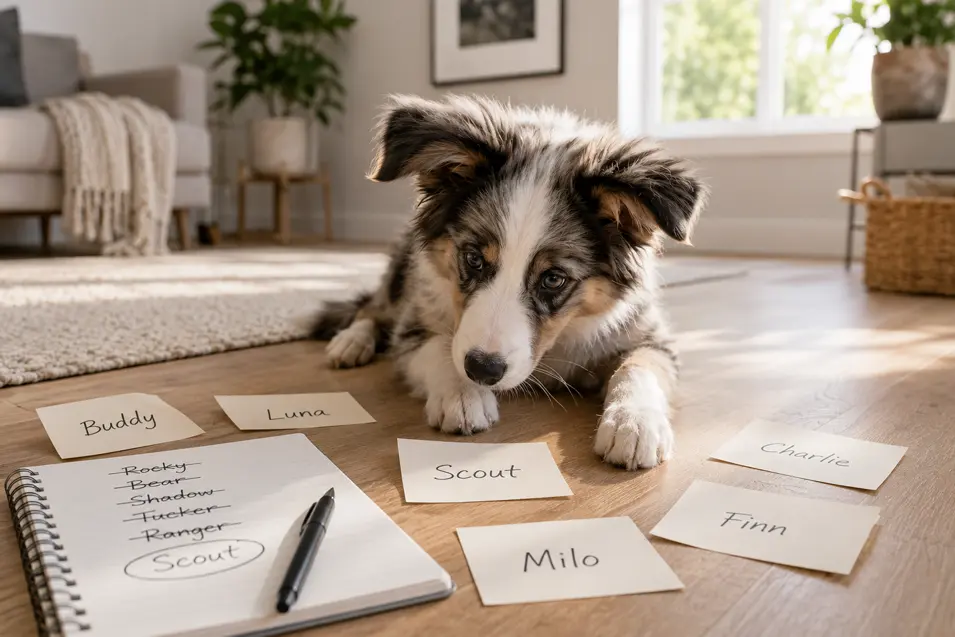
Choosing your dog’s name is one of the most enjoyable parts of welcoming a new companion into your life. Whether you’ve just brought home a playful puppy or adopted an older rescue, the right name helps build your bond from day one.
With thousands of names to choose from, it’s easy to focus on finding something unique or funny. But in the excitement, many owners unknowingly make choices that can create confusion, make training more difficult, or simply become frustrating over time.
The good news is that most naming mistakes are easy to avoid. By thinking ahead, you can choose a name that suits your dog today and for many happy years to come.
Choosing a Name Too Quickly
One of the most common mistakes is deciding on a name before getting to know your dog.
You might have had the perfect name picked out for months, only to discover it doesn’t fit your puppy’s personality at all.
Instead, spend a few days observing your dog.
Notice their:
- Energy level
- Confidence
- Playfulness
- Curiosity
- Unique habits
- Facial expressions
Many owners find that the perfect name becomes obvious once their dog’s personality begins to shine.
Picking a Name That’s Too Long
Long names can sound elegant, but they aren’t always practical.
Imagine calling your dog across a busy dog park every day.
Most owners naturally shorten long names anyway.
For example:
- Maximilian becomes Max
- Anastasia becomes Ana
- Theodore becomes Theo
- Penelope becomes Penny
One- or two-syllable names are often easier for both people and dogs.
Choosing a Name That’s Difficult to Pronounce
If you struggle to say your dog’s name, everyone else probably will too.
You’ll use your dog’s name thousands of times throughout their life.
Choose something that feels natural and comfortable to say.
Ask yourself:
- Can I say it quickly?
- Will friends pronounce it correctly?
- Can children say it?
- Would I feel comfortable calling it at the park?
If the answer is no, you may want to keep looking.
Picking a Name That Sounds Like a Command
Dogs learn through repetition and sound recognition.
Names that resemble common commands can create unnecessary confusion.
Examples include:
- Kit and “Sit”
- Bo and “No”
- Shay and “Stay”
- Ray and “Stay”
While dogs can eventually learn the difference, choosing a clearly distinct name makes training easier.
Using a Name That Sounds Like Another Pet’s Name
If you have more than one dog—or even a cat—avoid choosing names that sound almost identical.
For example:
- Bella and Stella
- Milo and Mylo
- Coco and Koko
- Bailey and Hailey
Distinct names help each pet understand when you’re speaking to them.
Choosing a Name Based Only on Current Trends
Popular television shows, movies, and viral social media moments often inspire pet names.
That’s perfectly fine if you genuinely love the name.
However, don’t choose a trendy name simply because everyone else is.
Ask yourself whether you’ll still enjoy saying it ten years from now.
Timeless names rarely go out of style.
Forgetting That Puppies Grow Up
Tiny puppies often inspire adorable names.
But your puppy won’t stay tiny forever.
A name like Peanut, Tiny, or Baby may suit an eight-week-old Labrador, but it might feel less fitting when they’re a full-grown adult.
Imagine introducing your dog several years from now.
Does the name still feel right?
Choosing a Name You’ll Be Embarrassed to Say
Humorous names can be entertaining.
But remember that you’ll probably be calling your dog in public for years.
You’ll say their name:
- At the veterinarian
- At obedience classes
- At the dog park
- During neighborhood walks
- Around family and friends
If saying the name out loud makes you uncomfortable now, it probably won’t improve later.
Letting Everyone Pick a Different Name
Families often spend days calling the puppy by several different names.
One person says Charlie.
Another says Buddy.
Someone else says Bear.
This inconsistency can slow down the learning process.
Instead, agree on one final name as soon as possible and encourage everyone to use it consistently.
Changing the Name Repeatedly
It’s perfectly fine to change your dog’s name once if the original doesn’t feel right.
Changing it several times, however, can make it harder for your dog to learn what to respond to.
Once you’ve made your decision, stick with it.
Consistency is one of the most important parts of helping your dog recognize their name.
Ignoring Your Dog’s Personality
Sometimes owners become so focused on a particular name that they ignore the dog standing in front of them.
A calm, gentle puppy may not suit a fierce warrior name.
Likewise, an energetic, adventurous dog might deserve something more playful.
The best names often reflect who your dog truly is rather than who you expected them to be.
Making the Name Too Complicated
Unusual spellings may seem creative, but they often create unnecessary confusion.
For example:
- Jaxsyn instead of Jackson
- Myloh instead of Milo
- Khailee instead of Kaylee
Simple spellings make life easier for everyone, including veterinarians, groomers, boarding facilities, and pet sitters.
Choosing a Name Just Because It’s Unique
Many owners feel pressure to avoid popular names.
But uniqueness shouldn’t come at the expense of choosing a name you truly love.
If Charlie feels perfect for your puppy, don’t reject it simply because you’ve met another Charlie at the park.
Your relationship with your dog is far more important than having a completely original name.
Forgetting That Nicknames Will Happen
Most dogs end up with multiple nicknames.
Charlie becomes Chuck.
Bella becomes Bells.
Cooper becomes Coop.
Luna becomes Lulu.
Choose a name that still sounds good even after it naturally evolves.
Not Thinking About Training
Your dog’s name will become one of the most frequently used words during training.
Ideally, it should be:
- Easy to say
- Easy to hear
- Distinct from commands
- Positive to use
- Consistent across family members
A practical name helps create clear communication from the very beginning.
Remember That There Is No Perfect Name
Many owners spend weeks searching for the one perfect name.
In reality, what makes a name special isn’t the word itself—it’s the memories attached to it.
Almost any name becomes meaningful after years of adventures, training, holidays, road trips, and quiet evenings spent together.
Choose a name that makes you smile.
That’s often the best choice.
Frequently Asked Questions
Is it bad to give my dog a long name?
Not necessarily, but most owners eventually shorten longer names. One- or two-syllable names are generally easier for everyday use and training.
Can two dogs have similar names?
It’s possible, but choosing names that sound noticeably different helps prevent confusion.
Is it okay to rename my puppy?
Yes. Puppies usually adapt quickly to a new name, especially when it’s used consistently and paired with praise and rewards.
Should I avoid popular dog names?
Only if you want something different. Popular names become popular because they’re easy to remember and enjoyable to say.
What’s the biggest mistake people make?
Rushing the decision. Spending a few days getting to know your dog’s personality often leads to a name that’s a much better fit.
Final Thoughts
Naming your dog should be fun, not stressful. While it’s easy to overthink the decision, avoiding a few common mistakes can make the process much simpler.
Choose a name that’s easy to say, fits your dog’s personality, and feels comfortable to use every day. Once you’ve found the right one, use it consistently, make it part of positive experiences, and before long your dog will recognize it as one of their favorite words.
The best dog names aren’t chosen because they’re trendy or unusual—they’re chosen because they become part of a lifetime of shared memories.