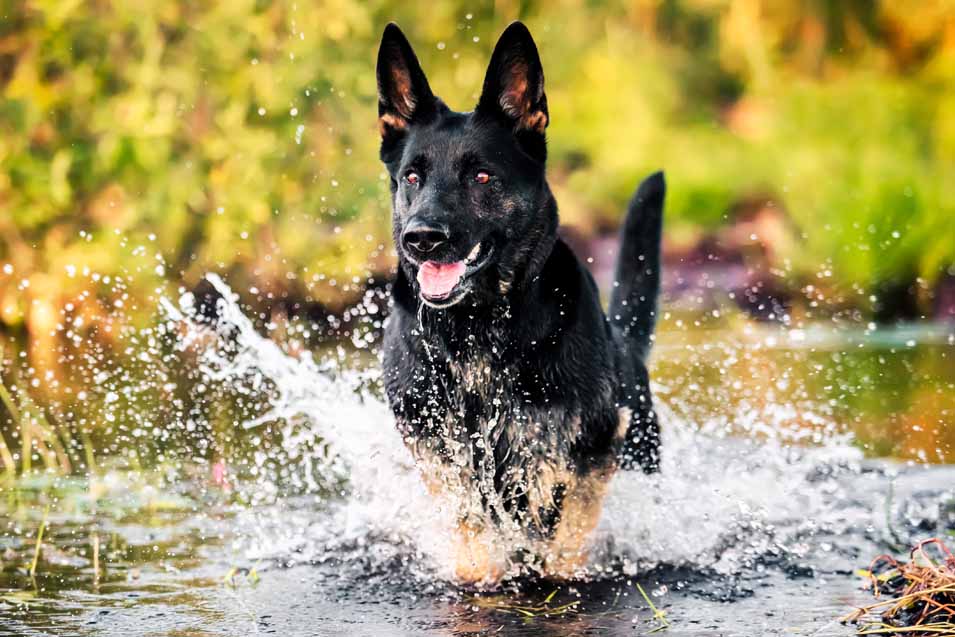
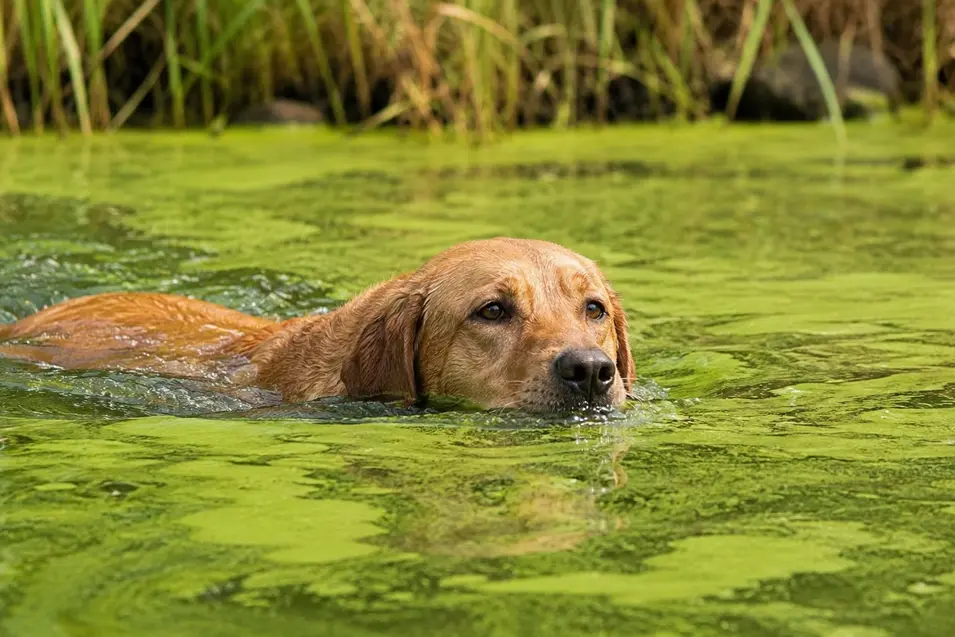
A peaceful afternoon at the lake can turn into a life-threatening emergency in minutes if your dog encounters toxic blue-green algae.
Every summer, veterinary clinics across North America treat dogs that become seriously ill after drinking contaminated water or swimming in lakes and ponds where blue-green algae are present. Tragically, some dogs die within hours of exposure because the toxins act so quickly.
The danger is that blue-green algae doesn’t always look dramatic or obvious. Sometimes it forms thick green mats floating on the surface, but it can also appear as thin streaks, cloudy water, or even be present in water that looks relatively normal.
Knowing how to recognize the risk—and acting immediately if your dog is exposed—can save your dog’s life.
What Is Blue-Green Algae?
Blue-green algae is the common name for cyanobacteria, microscopic organisms that naturally occur in freshwater lakes, ponds, rivers, and reservoirs.
While many cyanobacteria are harmless, certain species produce extremely powerful toxins that affect the liver or nervous system.
These toxins cannot be seen with the naked eye, and unfortunately there is no reliable way to determine whether an algae bloom is toxic simply by looking at it.
Because of this uncertainty, every suspicious bloom should be treated as potentially dangerous.
Why Are Dogs More Vulnerable?
Dogs are particularly susceptible because they often:
- Drink directly from lakes and ponds
- Swim through algae blooms
- Retrieve balls or sticks from contaminated water
- Lick algae-contaminated water from their fur and paws
- Eat floating algae mats or shoreline debris
Even a relatively small amount of contaminated water may contain enough toxin to cause severe illness.
Where Is Blue-Green Algae Found?
Blue-green algae can develop almost anywhere conditions are favorable.
Common locations include:
- Lakes
- Ponds
- Slow-moving rivers
- Reservoirs
- Marshes
- Farm dugouts
- Irrigation ponds
Blooms are most common during:
- Warm summer weather
- Early fall
- Periods of little rainfall
- Hot, sunny conditions
- Water with high nutrient levels
How to Recognize Blue-Green Algae
Although appearances vary, warning signs often include:
- Bright green surface scum
- Thick paint-like streaks
- Pea soup appearance
- Blue-green or turquoise water
- Green floating mats
- Foam along the shoreline
- Musty or unpleasant odors
However, some dangerous blooms are much less obvious.
If the water looks unusual—or local authorities have posted warnings—keep your dog completely out of the water.
Can Clear Water Still Be Dangerous?
Yes.
While dense blooms are easier to recognize, toxins may remain in the water after a bloom has dispersed or died off.
Wind can also concentrate algae along shorelines where dogs naturally drink.
Never assume water is safe simply because it appears clear.
How Do Dogs Become Poisoned?
Dogs may be exposed by:
- Drinking contaminated water
- Swimming in affected lakes
- Chasing toys through algae
- Eating algae mats
- Grooming themselves after swimming
Many owners don’t realize their dog has been exposed until symptoms begin.
Symptoms of Blue-Green Algae Poisoning
Symptoms often appear within minutes to several hours, depending on the type and amount of toxin involved.
Liver toxin exposure may cause:
- Vomiting
- Diarrhea
- Weakness
- Loss of appetite
- Pale gums
- Abdominal pain
- Collapse
- Jaundice (yellowing of the eyes or gums)
Nervous system toxins may cause:
- Excessive drooling
- Muscle tremors
- Difficulty walking
- Stumbling
- Seizures
- Difficulty breathing
- Paralysis
- Sudden collapse
Because symptoms can progress rapidly, every suspected exposure should be treated as an emergency.
What Should You Do Immediately?
If you believe your dog has been exposed:
- Remove your dog from the water immediately.
- Prevent further drinking or licking.
- Rinse your dog’s coat thoroughly using clean fresh water while wearing gloves if possible.
- Contact your veterinarian or the nearest emergency veterinary hospital immediately.
- If available, tell the veterinarian where the exposure occurred and approximately when it happened.
Do not wait for symptoms to develop before seeking advice.
Can Blue-Green Algae Poisoning Be Treated?
Unfortunately, there is no antidote for blue-green algae toxins.
Treatment focuses on supportive care and minimizing toxin absorption.
Your veterinarian may recommend:
- Intravenous fluids
- Medications to control seizures
- Activated charcoal (in some cases)
- Liver-protective medications
- Oxygen therapy
- Intensive monitoring
The sooner treatment begins, the better the chances of recovery.
Can Dogs Recover?
Some dogs recover completely, particularly when exposure is limited and treatment begins quickly.
Unfortunately, severe poisonings can progress rapidly and may be fatal despite aggressive veterinary care.
Prompt recognition and immediate veterinary treatment offer the best chance of survival.
How to Prevent Blue-Green Algae Poisoning
Prevention is far easier than treatment.
When visiting lakes or ponds:
- Carry fresh drinking water for your dog.
- Bring a collapsible travel bowl.
- Never encourage dogs to drink directly from lakes or ponds.
- Obey posted water quality warnings.
- Avoid water with visible algae or unusual coloration.
- Keep dogs on leash near questionable water.
- Rinse your dog after swimming in natural water.
- Prevent dogs from eating shoreline algae or plant material.
When in doubt, choose another location.
Is Blue-Green Algae Dangerous to People?
Yes.
Some cyanobacteria toxins can also affect people.
Children are especially vulnerable because they may accidentally swallow contaminated water while swimming.
Anyone who comes into contact with suspicious algae should wash thoroughly with clean water.
Frequently Asked Questions
Can dogs die from blue-green algae?
Yes. Unfortunately, severe poisonings can become fatal within hours if large amounts of toxin are consumed.
How quickly do symptoms appear?
Symptoms may begin within minutes or several hours after exposure, depending on the toxin involved.
Is every algae bloom toxic?
No.
Many algae blooms are harmless, but it is impossible to determine whether a bloom is toxic simply by looking at it.
For safety, every bloom should be treated as potentially dangerous.
Can my dog get sick just from swimming?
Yes.
Dogs often swallow small amounts of water while swimming and may ingest additional toxins while licking their fur afterward.
Should I rinse my dog after swimming?
If you suspect blue-green algae exposure, rinse your dog immediately using clean fresh water and contact your veterinarian.
Can boiling contaminated water make it safe?
No.
Boiling does not reliably remove cyanobacteria toxins and may actually concentrate some toxins as water evaporates.
Final Thoughts
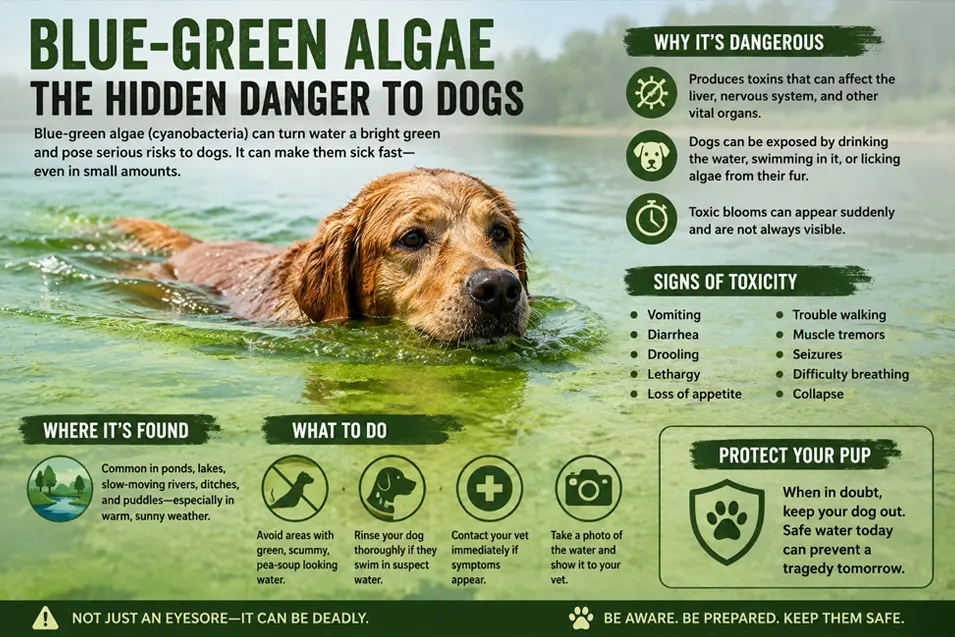
Blue-green algae is one of the most serious water-related hazards dogs face during the warmer months. Because toxic blooms can develop in lakes, ponds, and slow-moving rivers across North America, every dog owner who enjoys hiking, camping, or spending time near the water should know the warning signs.
The safest approach is simple: bring plenty of fresh drinking water, avoid any water that looks unusual or has posted advisories, and never allow your dog to drink from or swim in suspicious water. If exposure does occur, act immediately—remove your dog from the water, rinse their coat, and seek veterinary care without delay.
A little caution at the shoreline can prevent a tragedy and help ensure your outdoor adventures remain safe and enjoyable for both you and your dog.