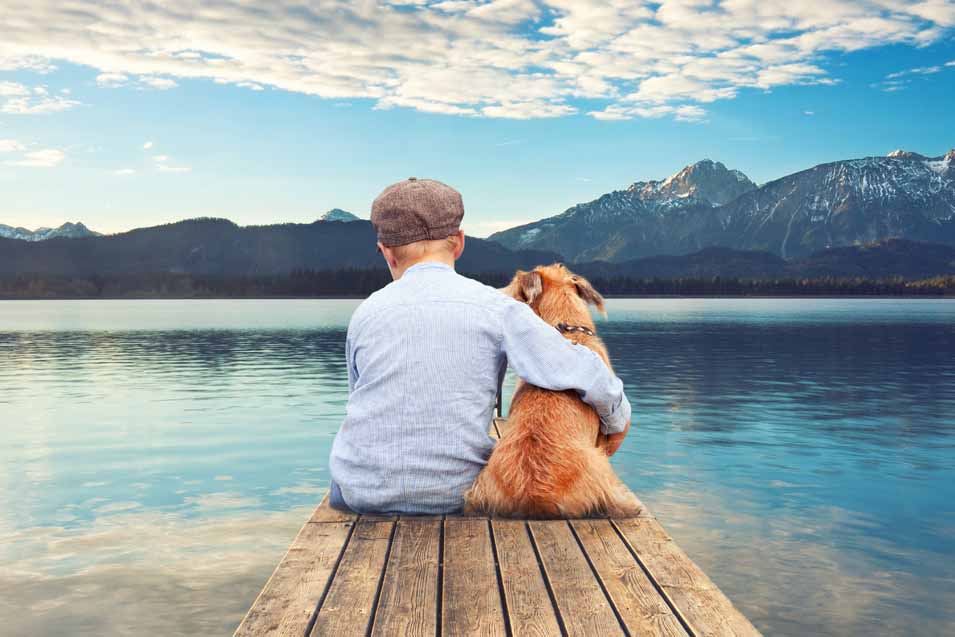
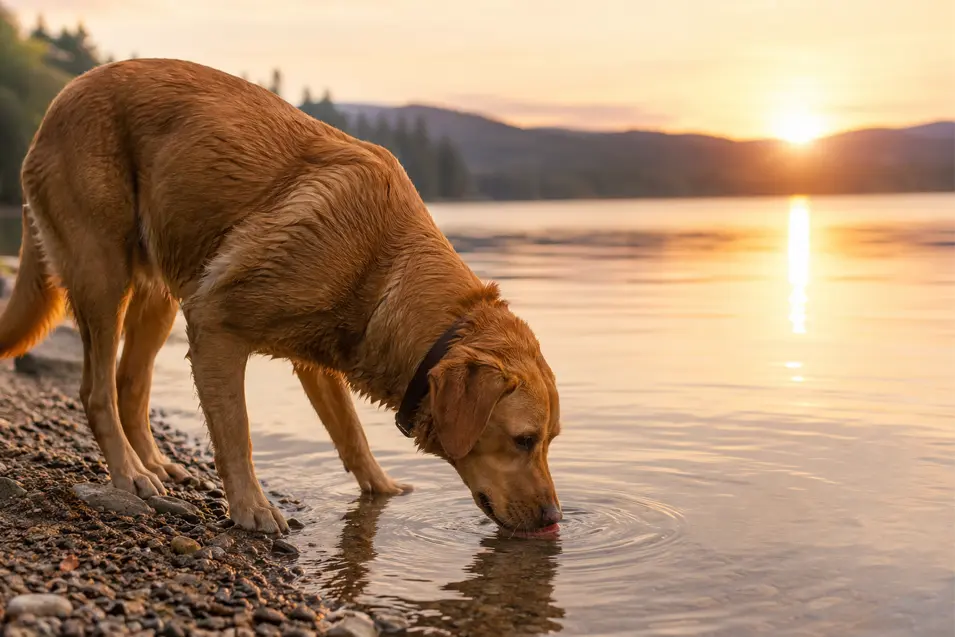
For many dogs, a hike or camping trip isn’t complete without splashing through a creek or stopping for a drink beside a mountain lake. While natural water may look clean and refreshing, appearances can be deceiving.
Unlike the treated water that comes from your tap, lakes, rivers, ponds, and streams can contain bacteria, parasites, toxins, and other hazards that may make your dog seriously ill. Even crystal-clear water in remote wilderness isn’t always safe.
The good news is that with a little preparation, most of these risks are easy to avoid.
This guide explains when natural water is relatively safe, when it isn’t, and what every dog owner should know before heading outdoors.
Is It Safe for Dogs to Drink From Natural Water Sources?
Sometimes—but not always.
The safety of any lake, river, or stream depends on many factors, including:
- Water movement
- Temperature
- Wildlife activity
- Agricultural runoff
- Recent rainfall
- Time of year
- Algae growth
Unfortunately, it’s impossible to judge water quality simply by looking at it.
Even pristine alpine streams can carry disease-causing organisms, while stagnant ponds often present much higher risks.
Whenever possible, offer your dog clean drinking water that you’ve brought from home.
The Biggest Risks
Blue-Green Algae
One of the most dangerous hazards is toxic blue-green algae (cyanobacteria).
Some blooms produce toxins capable of causing liver failure, neurological damage, or death within hours. Dogs are especially vulnerable because they often drink while swimming and may lick contaminated water from their coats afterward.
Blooms are most common during warm summer weather in still or slow-moving water.
Article: Blue-Green Algae and Dogs
Giardia
Giardia is one of the most common parasites dogs can pick up from untreated water.
It spreads through microscopic cysts shed in the feces of infected animals and can survive for long periods in cool water.
Symptoms often include:
- Diarrhea
- Weight loss
- Vomiting
- Poor appetite
Many dogs recover with veterinary treatment, but prevention is much easier than treatment.
Article: Giardia in Dogs
Leptospirosis
Leptospirosis is a bacterial disease spread primarily through the urine of infected wildlife and livestock.
Dogs become infected when they drink or swim in contaminated water.
Symptoms may include:
- Fever
- Lethargy
- Vomiting
- Kidney disease
- Liver damage
Because leptospirosis can also infect people, early veterinary care is essential.
Artice: Leptospirosis in Dogs
Harmful Bacteria
Natural water may contain bacteria such as E. coli, Salmonella, and Campylobacter.
These bacteria may originate from:
- Wildlife
- Livestock
- Human activity
- Agricultural runoff
While healthy adult dogs may tolerate small amounts, heavy exposure can lead to gastrointestinal illness.
Other Parasites
Giardia isn’t the only concern.
Depending on your location, untreated water may contain other parasites capable of causing digestive problems or more serious illness.
Avoid allowing your dog to drink from stagnant puddles, marshes, or heavily contaminated shoreline areas.
Moving Water vs. Standing Water
As a general rule:
Safer Choices
- Cold mountain streams
- Fast-moving rivers
- Fresh flowing creeks
Higher Risk
- Stagnant ponds
- Warm lakes with algae
- Marshes
- Flooded ditches
- Small puddles
Even moving water isn’t guaranteed to be safe, but flowing water generally contains fewer concentrated contaminants than stagnant water.
What About Salt Water?
Ocean water presents a completely different set of risks.
Drinking too much salt water can cause:
- Vomiting
- Diarrhea
- Excessive thirst
- Dehydration
- Salt poisoning
Dogs should always have access to fresh drinking water at the beach.
Can Dogs Drink Too Much Water?
Yes.
Although uncommon, drinking excessive amounts of water over a short period can lead to water intoxication (water poisoning).
This condition is most often seen in dogs that:
- Retrieve balls repeatedly from lakes
- Bite at sprinkler streams
- Constantly chase waves
- Swim for long periods while swallowing water
Signs include:
- Loss of coordination
- Vomiting
- Extreme lethargy
- Collapse
- Seizures
This is a veterinary emergency.
Dehydration Can Be Just as Dangerous
Ironically, some dogs refuse to drink enough while hiking because they are excited or distracted.
Signs of dehydration include:
- Thick saliva
- Dry gums
- Panting
- Sunken eyes
- Weakness
Carry fresh water and offer small drinks every 20–30 minutes during strenuous activity.
Heatstroke Increases Water Needs
Hot summer hikes dramatically increase your dog’s water requirements.
Dogs cool themselves primarily through panting, making dehydration occur much faster than many owners realize.
Always combine regular water breaks with:
- Shade
- Rest periods
- Avoiding midday hikes
- Watching for signs of overheating
Future internal link: Heatstroke in Dogs
Tips for Keeping Your Dog Safe
- Carry more water than you think you’ll need.
- Bring a collapsible travel bowl.
- Encourage frequent small drinks instead of waiting until your dog is thirsty.
- Avoid stagnant or algae-covered water.
- Keep dogs on leash near questionable water sources.
- Rinse your dog after swimming if water quality is uncertain.
- Watch for vomiting, diarrhea, weakness, or unusual behavior after your trip.
Frequently Asked Questions
Is clear lake water safe for dogs?
Not necessarily. Clear water can still contain bacteria, parasites, or toxins that aren’t visible to the naked eye.
Can dogs drink from mountain streams?
Flowing mountain streams are generally lower risk than stagnant water, but no untreated natural water source can be considered completely safe.
Should I let my dog drink river water?
It’s safer to offer clean water you’ve brought with you. If your dog drinks from a river, choose fast-moving, clear water and avoid areas downstream from farms, campgrounds, or heavy wildlife activity.
What should I do if my dog drinks questionable water?
Monitor your dog closely for vomiting, diarrhea, lethargy, weakness, fever, or changes in behavior. Contact your veterinarian if symptoms develop or if you suspect exposure to toxic algae.
Final Thoughts
Natural lakes, rivers, and streams are part of what makes hiking and camping with dogs so enjoyable, but they also present risks that aren’t always obvious. Most illnesses can be prevented by carrying fresh drinking water, avoiding stagnant or algae-covered water, and paying attention to your dog’s condition throughout your adventure.
With a little planning, you and your dog can safely enjoy the outdoors while minimizing the risks hidden in natural water sources.